
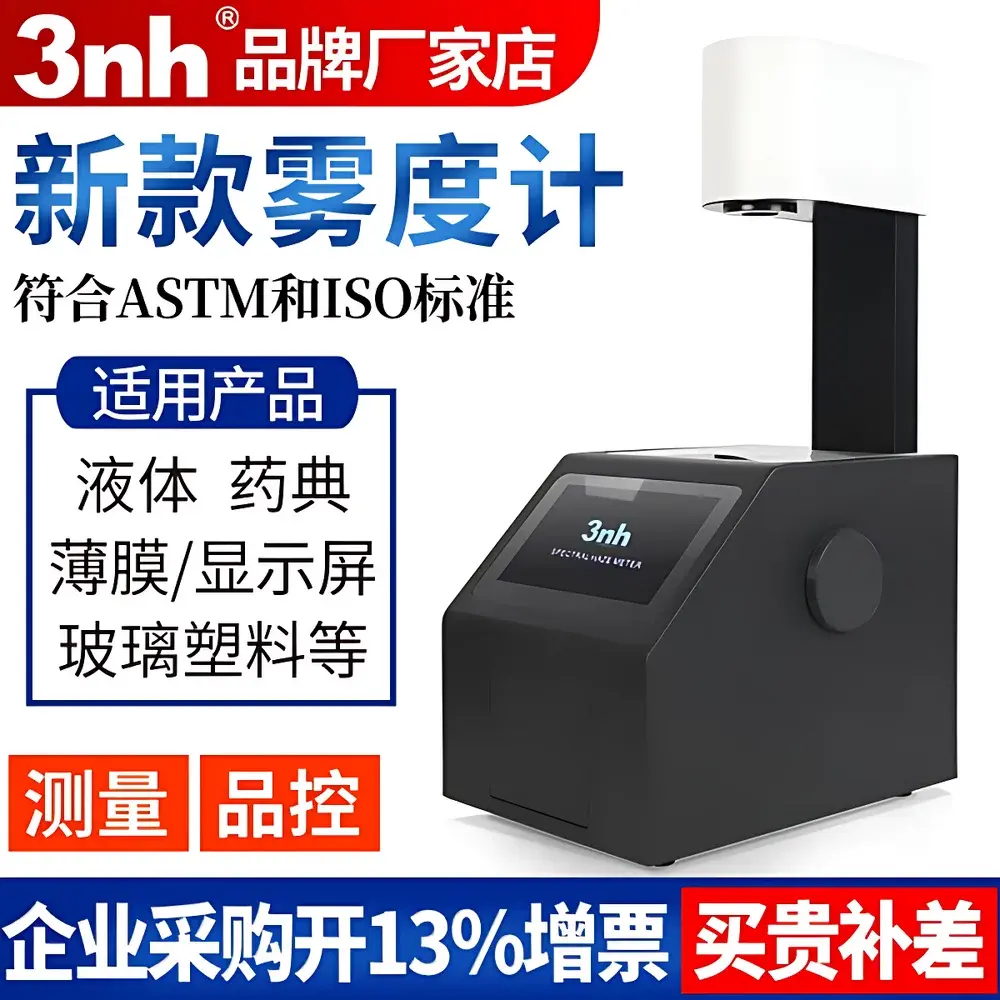
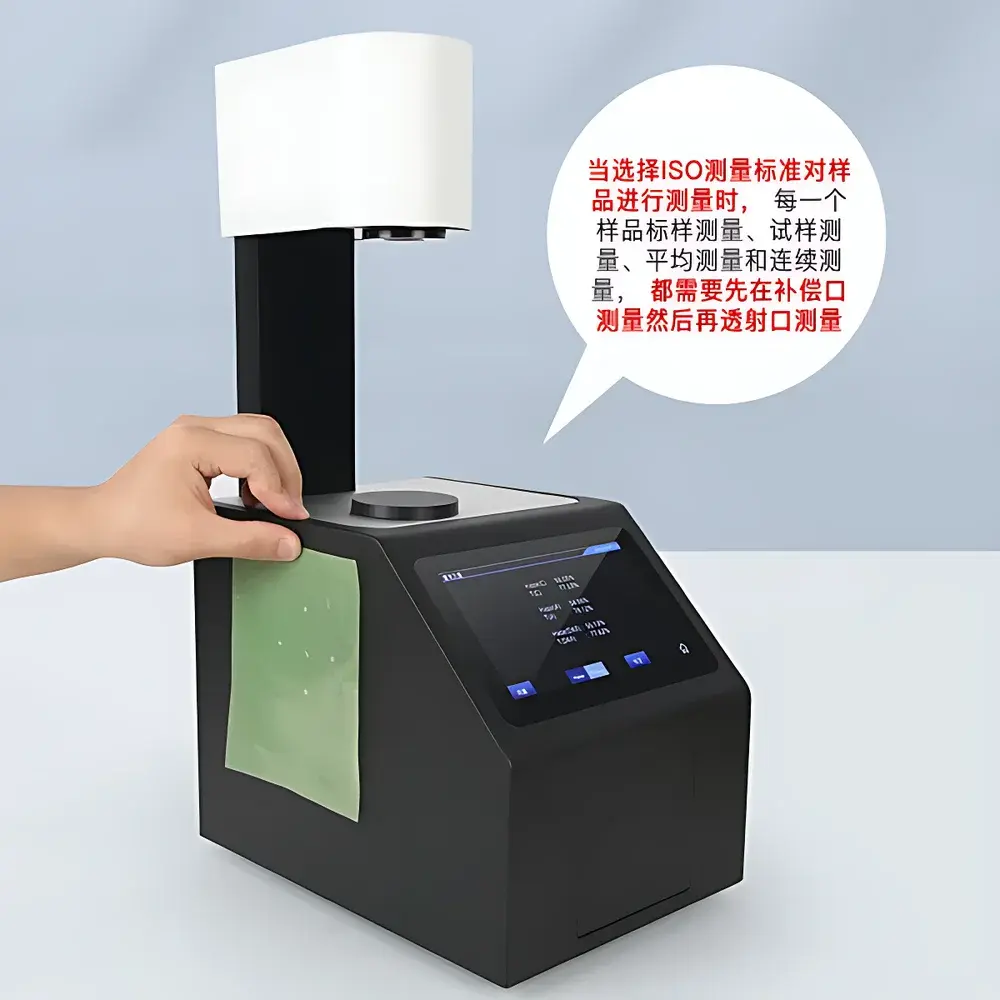
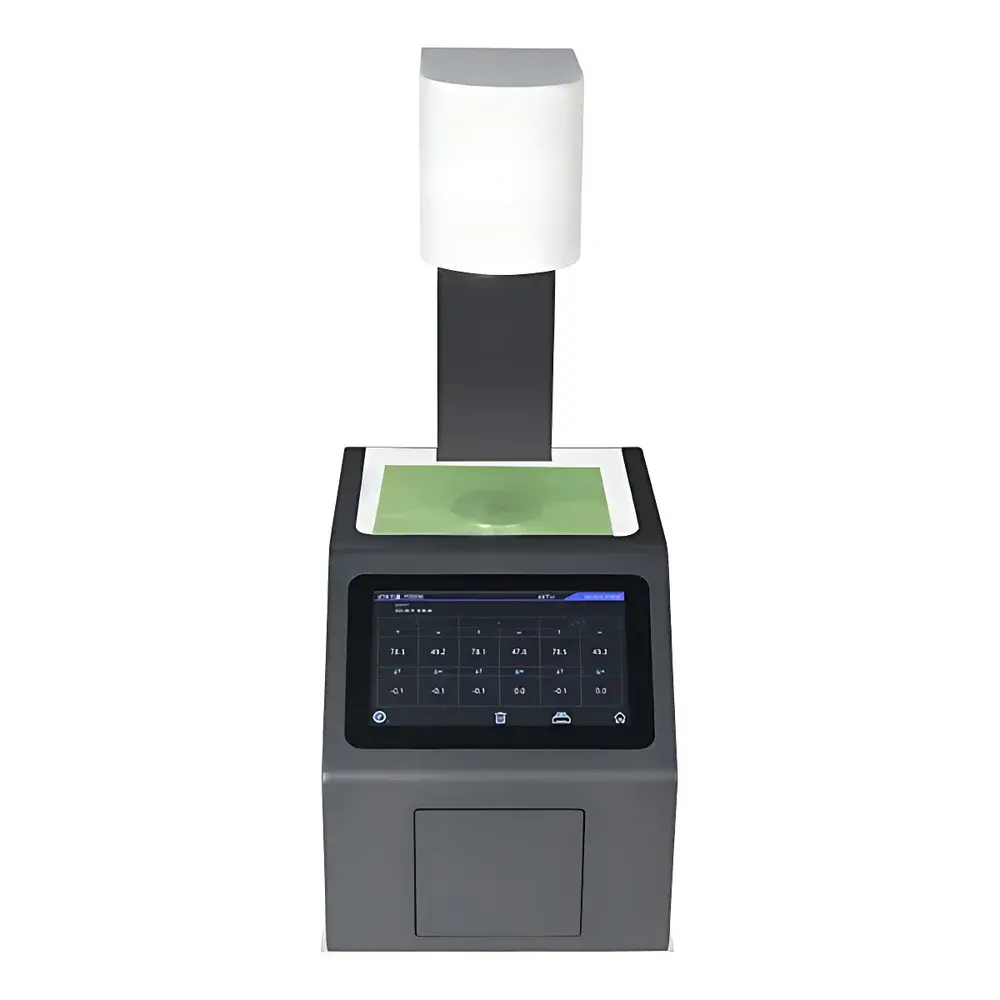
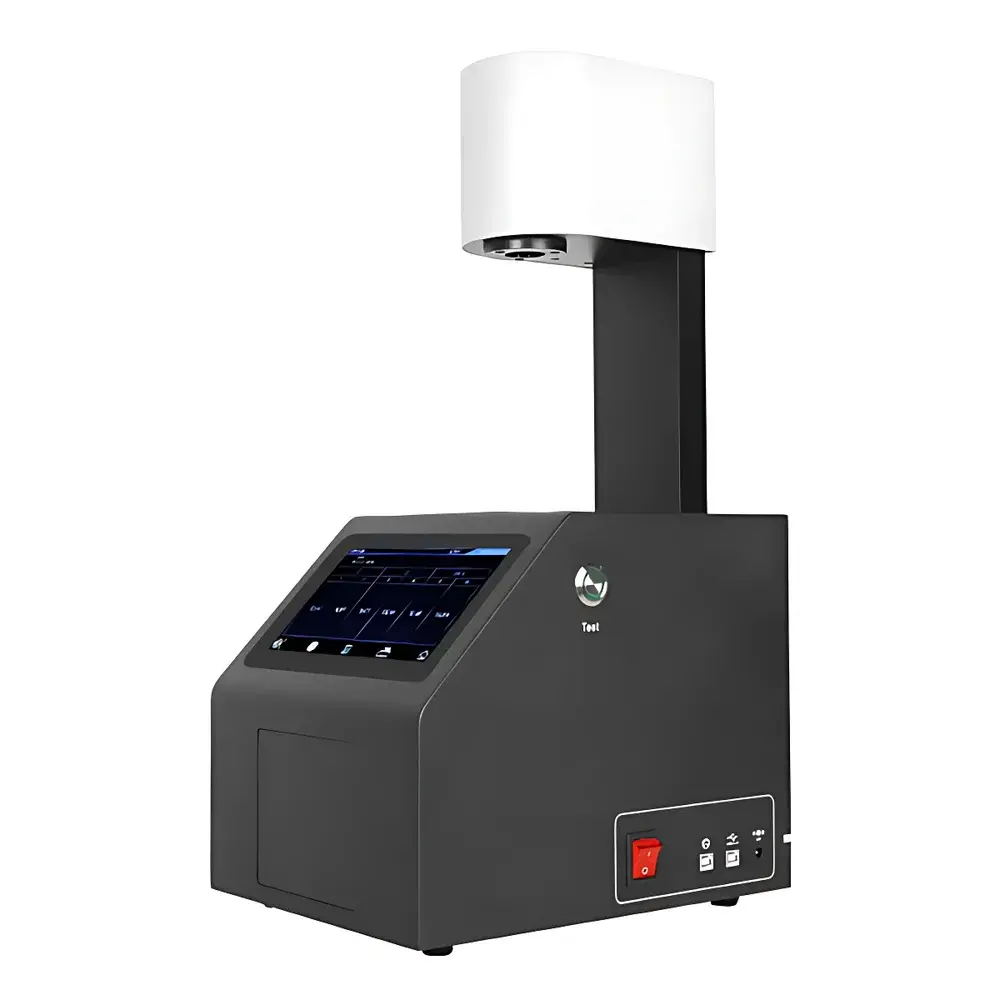
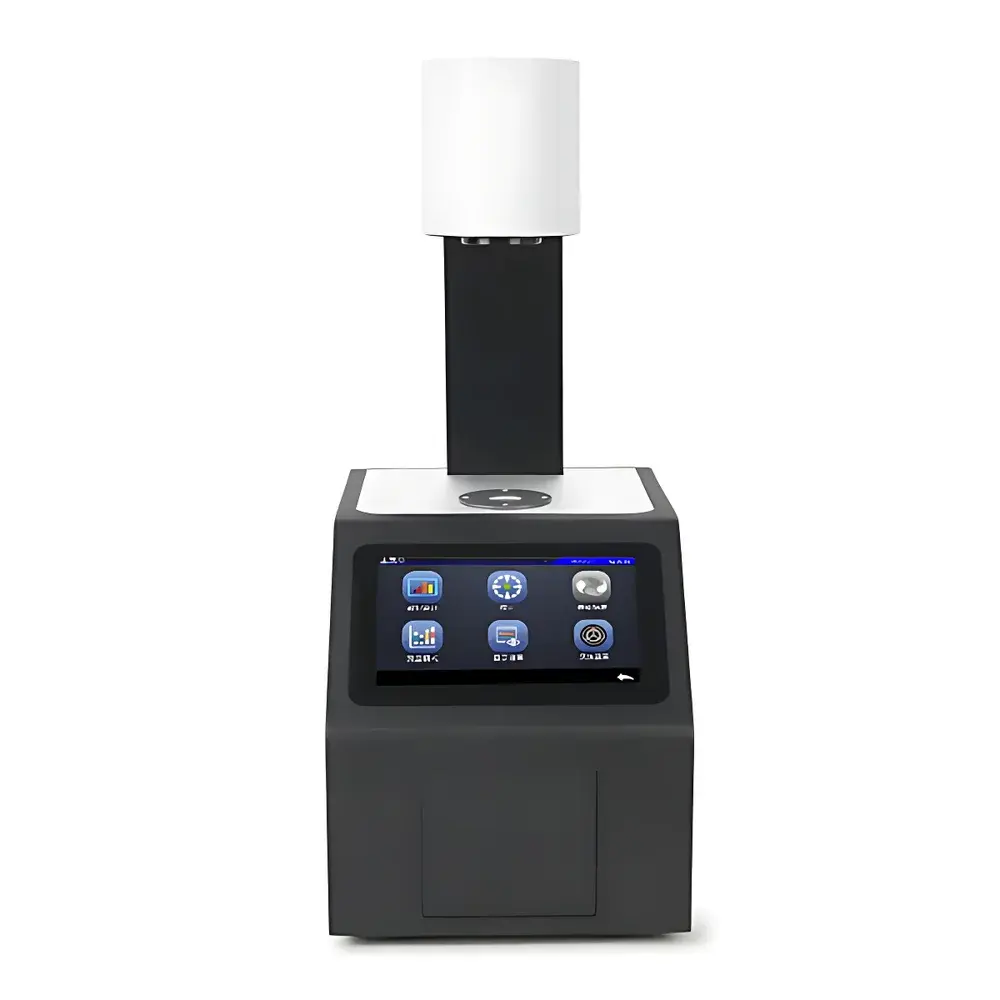
3nh YH1100 Automated Haze and Total Transmittance Meter
| Brand | 3nh |
|---|---|
| Origin | Guangdong, China |
| Manufacturer Type | Direct Manufacturer |
| Product Category | Domestic |
| Model | YH1100 |
| Pricing | Upon Request |
| Type | Fully Automatic |
| Haze Range | 0–100% |
| Total Transmittance Range | 0–100% |
| Haze Repeatability (Φ20 mm aperture) | < 0.08% (after warm-up and calibration |
| Transmittance Repeatability (Φ20 mm aperture) | < 0.5% (same test condition) |
Overview
The 3nh YH1100 Automated Haze and Total Transmittance Meter is an ISO- and ASTM-compliant optical measurement instrument engineered for precise, repeatable quantification of haze and total transmittance in transparent and translucent materials. It operates on the principle of integrating sphere photometry with dual-mode illumination geometry—supporting both ASTM D1003 non-compensated (0/D) and ISO 13468 compensated (d/0) measurement configurations. The system employs a spectrally optimized 400–700 nm LED light source and a photodiode (PD) array detector calibrated to the CIE 1931 2° standard observer spectral luminous efficiency function V(λ), ensuring metrological traceability to international photometric standards. Designed for industrial quality control laboratories and R&D environments, the YH1100 delivers high reproducibility in optical property characterization across polymers, glass, films, coatings, pharmaceutical packaging, and display substrates.
Key Features
- Dual-standard compliance: Simultaneously supports ASTM D1003 (non-compensated method) and ISO 13468 (compensated method), as well as ISO 14782, JIS K7105, JIS K7361, GB/T 2410, and JJF 1303–2011 for regulatory alignment in global manufacturing.
- Integrated PD array detector with V(λ)-matched spectral response ensures accurate photopic weighting of transmitted radiant flux, minimizing spectral mismatch errors inherent in single-sensor systems.
- Modular aperture selection (Φ20 mm, Φ15 mm, Φ8 mm, Φ4 mm) enables optimization for sample size and thickness constraints—up to 170 mm maximum specimen height accommodated in open-bay configuration.
- Real-time environmental monitoring via integrated temperature sensor and stabilized LED drive circuitry maintains optical output consistency across ambient fluctuations (0–40 °C operating range).
- 7-inch capacitive touchscreen interface with multilingual support (English, Simplified/Traditional Chinese) provides intuitive navigation, real-time pass/fail evaluation, and on-device result review without external software dependency.
- Dynamic compensation port allows seamless switching between measurement modes, eliminating manual reconfiguration and reducing operator-induced variability.
Sample Compatibility & Compliance
The YH1100 accommodates flat, rigid, or flexible specimens—including molded plastic parts, laminated safety glass, PET films, OLED encapsulation layers, medical IV bags, and liquid-filled vials—without requiring custom fixtures. Its open measurement chamber permits vertical or horizontal orientation, facilitating testing of oversized or irregularly shaped samples. All optical paths conform to CIE Publication 15.2 (2004) and are validated against NIST-traceable haze standards. Instrument performance meets GLP-relevant requirements for data integrity: measurement timestamps, operator ID logging (via optional network integration), and full audit trail capability when paired with 3nh’s Quality Management Software (QMS). While not inherently 21 CFR Part 11 compliant out-of-the-box, QMS supports electronic signature workflows and secure user access controls suitable for regulated environments under internal SOP governance.
Software & Data Management
The included Quality Management Software (QMS) enables centralized data acquisition, statistical process control (SPC), and comparative analysis across batches, suppliers, or material lots. Raw transmittance and haze values are exportable in CSV, Excel, and PDF report formats—with customizable templates for internal QA documentation or customer-facing certificates. QMS supports up to 1,000 reference standards and 20,000 test records per database instance. USB 2.0 connectivity allows direct synchronization with LIMS or ERP systems; optional RS-232 serial interface supports legacy lab automation integration. All measurement metadata—including aperture size, illumination mode, date/time stamp, and instrument serial number—is embedded in exported files to satisfy traceability requirements per ISO/IEC 17025 Clause 7.7.
Applications
The YH1100 is routinely deployed in polymer extrusion facilities for in-line film clarity verification, in automotive glazing labs for laminated windshield homogeneity assessment, in pharmaceutical packaging QA for blister foil transparency validation, and in display manufacturing for cover glass haze screening prior to AR coating. It also serves academic optics research groups studying scattering mechanisms in nanocomposite films and biomedical device developers evaluating light transmission through hydrogel-based contact lenses. Its ability to resolve subtle haze differences (<0.01% resolution) makes it suitable for detecting early-stage degradation in UV-stabilized acrylics or microvoid formation in thermoplastic elastomers during accelerated aging studies.
FAQ
What international standards does the YH1100 comply with?
ASTM D1003, ASTM D1044, ISO 13468, ISO 14782, JIS K7105, JIS K7361, JIS K7136, GB/T 2410, and JJF 1303–2011.
Can the YH1100 measure curved or textured surfaces?
It is optimized for flat, planar specimens; curved or heavily textured surfaces may require custom fixturing to ensure consistent beam incidence and minimize edge-scattering artifacts.
Is calibration traceable to national metrology institutes?
Yes—factory calibration uses NIST-traceable haze standards; users may perform periodic verification using supplied 0% black trap and certified haze reference tiles.
How is data security handled in regulated environments?
While the standalone instrument lacks built-in Part 11 features, QMS supports role-based access control, electronic signatures, and immutable audit logs when deployed on validated Windows platforms per internal validation protocols.
What maintenance is required to sustain measurement accuracy?
Annual recalibration is recommended; routine cleaning of the integrating sphere interior and aperture edges with lint-free optical tissue and isopropyl alcohol is sufficient for daily operation.




