
3nh CR7 Portable High-Precision Spectrophotometric Colorimeter
| Brand | 3nh |
|---|---|
| Origin | Guangdong, China |
| Manufacturer Type | Manufacturer |
| Product Category | Domestic |
| Model | CR7 |
| Product Type | Spectrophotometric Colorimeter |
| Instrument Type | Portable |
| Optical Geometry | d/8° integrating sphere |
| Illuminants | D65, A, F2 (CWF) |
| Spectral Range | 400–700 nm |
| Repeatability | ΔE*ab ≤ 0.1 (MAV/SCI, after warm-up and calibration, avg. of 30 measurements on white tile at 5 s intervals) |
Overview
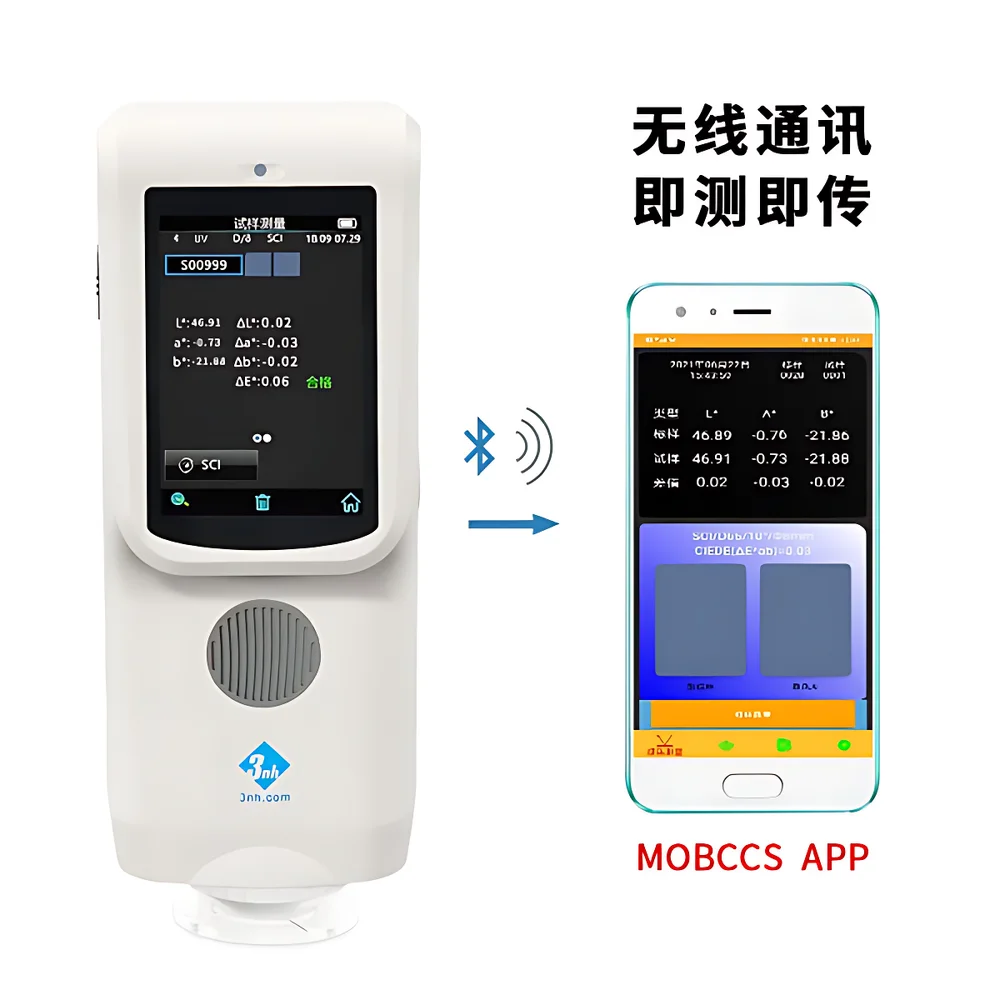
The 3nh CR7 Portable High-Precision Spectrophotometric Colorimeter is an engineered solution for industrial color quality control where portability, metrological rigor, and operational consistency converge. Based on the CIE standard d/8° geometry with specular component included (SCI), the CR7 employs grating-based spectral separation coupled with a dual-row 24-element silicon photodiode array to capture reflectance spectra across the full visible range (400–700 nm) at 10 nm wavelength intervals. This architecture ensures compliance with ISO 7724-1, ASTM E1164, DIN 5033 Teil 7, GB/T 3978, and CIE Publication No. 15—enabling traceable, inter-laboratory comparable color data. Unlike filter-based tristimulus meters, the CR7 delivers full-spectrum acquisition, supporting post-acquisition calculation of multiple color spaces (CIELAB, CIE XYZ, CIE Yxy, CIELCh), observer angles (10° standard), and illuminants (D65, A, F2/CWF), making it suitable for R&D validation, production line verification, and supplier auditing in regulated environments.
Key Features
- Grating-based spectral engine with 10 nm spectral bandwidth ensures high-resolution reflectance profiling and eliminates interpolation artifacts inherent in LED-filtered systems.
- Dual 24-element silicon photodiode array provides extended dynamic range: linear response under both low-reflectance (e.g., dark textiles) and high-reflectance (e.g., coated ceramics) conditions without saturation or signal loss.
- Full-spectrum balanced LED illumination system delivers uniform radiant power across 400–700 nm—avoiding spectral gaps common in single-white-LED sources and improving measurement accuracy for metameric samples.
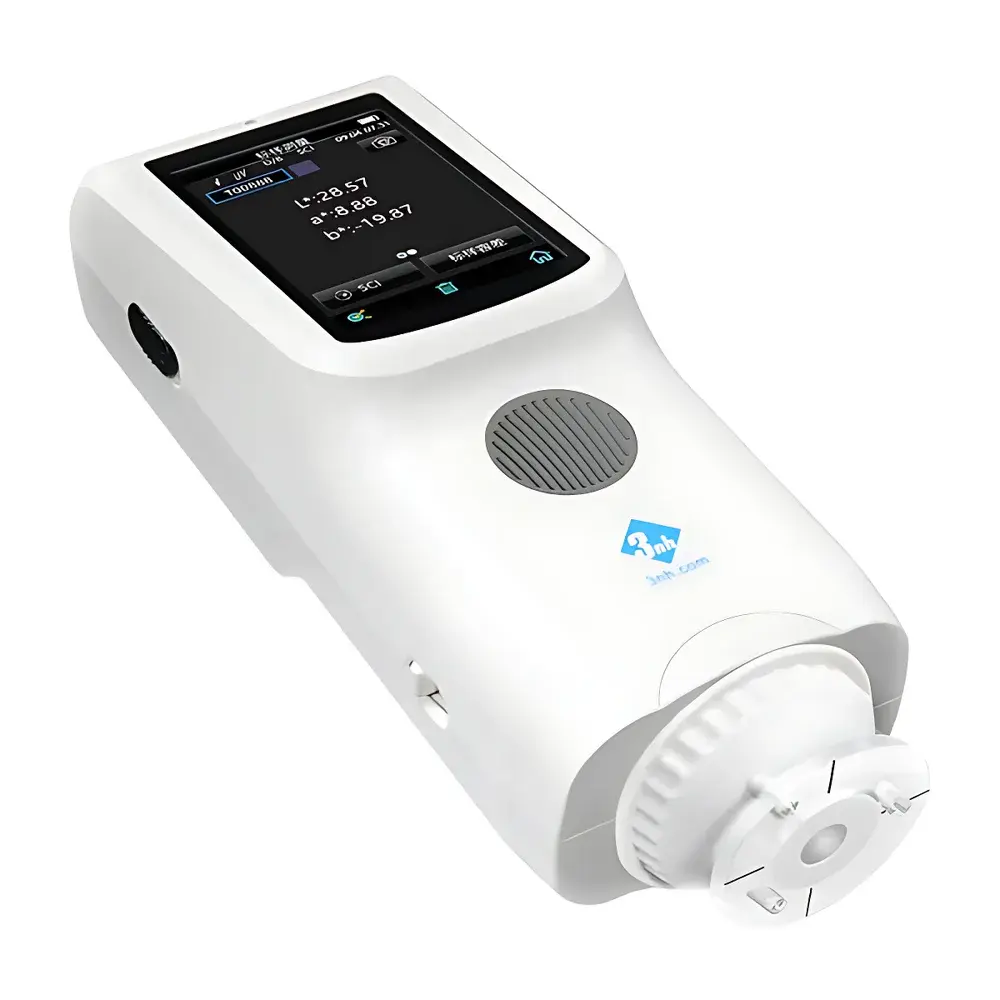
- Ergonomically optimized handheld form factor (81 × 71 × 214 mm, 460 g) with tactile measurement button placement and anti-slip surface finish supports extended field use and one-handed operation.
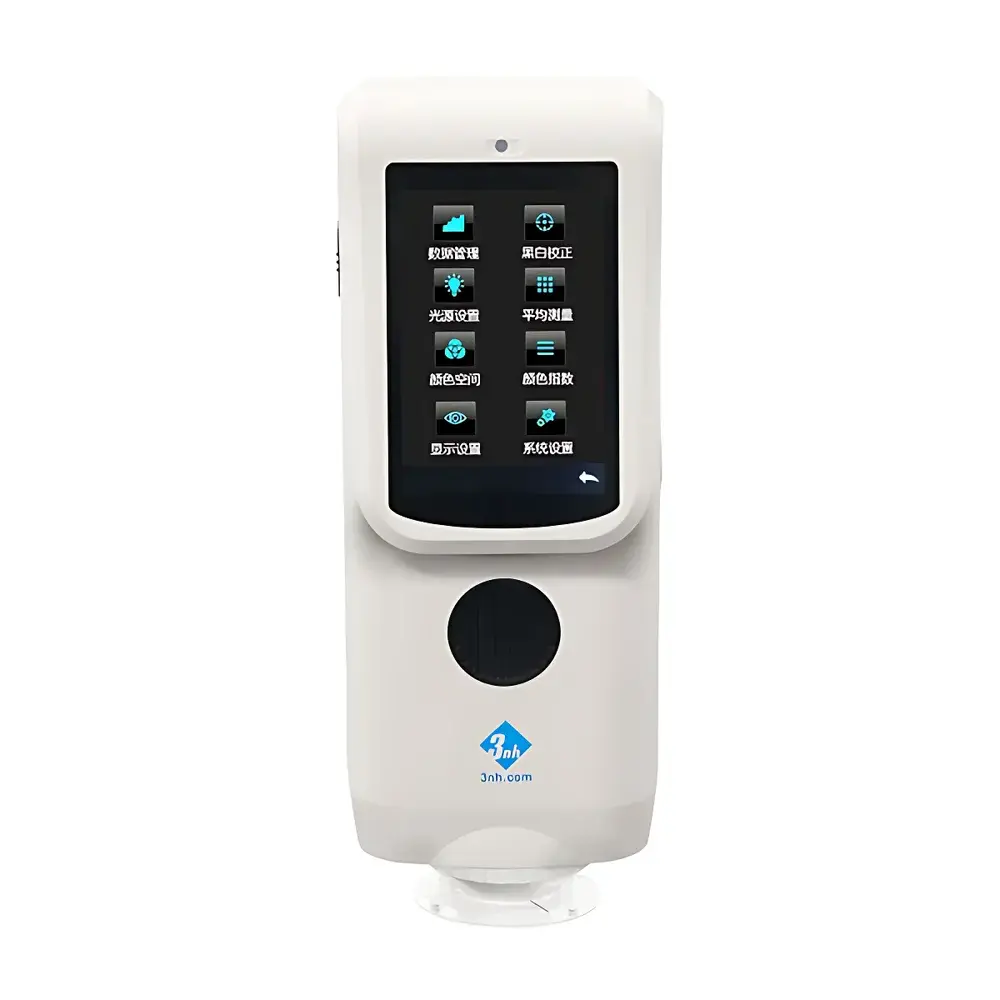
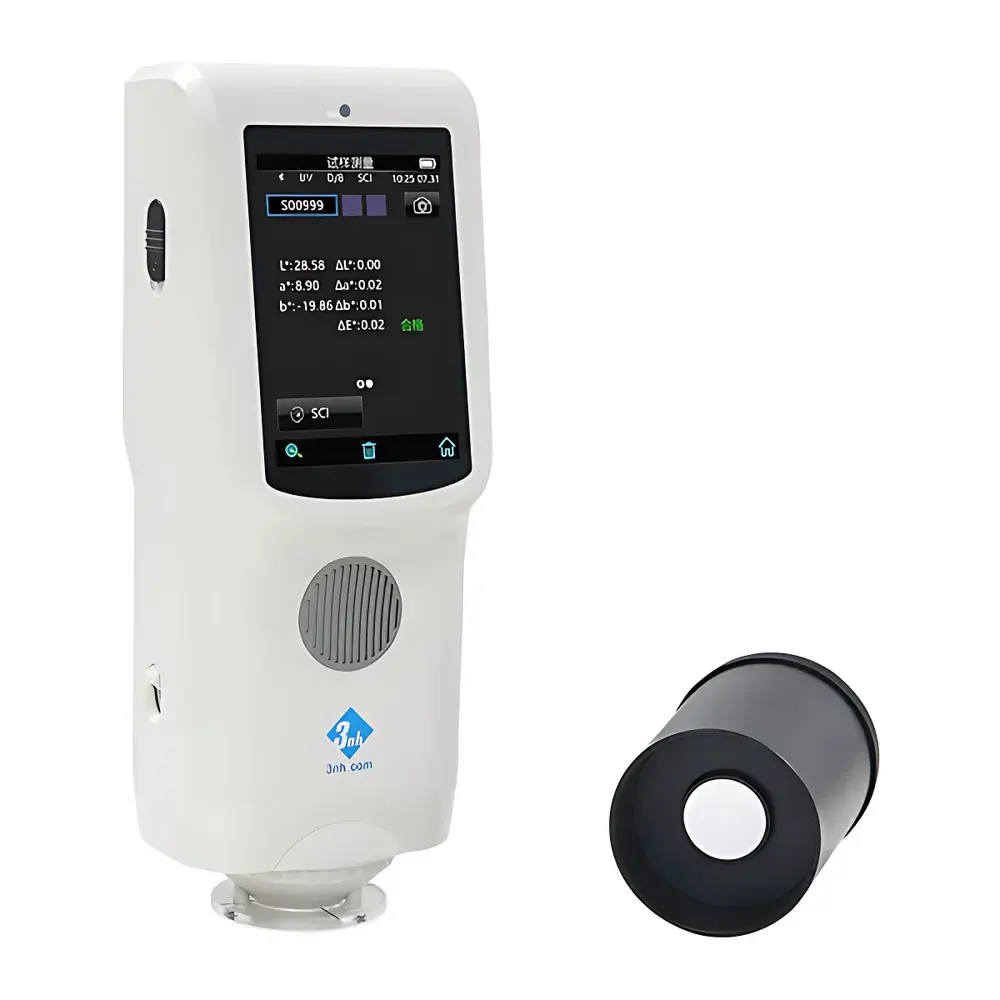
- Integrated 3.5-inch capacitive TFT touchscreen enables intuitive navigation, real-time spectral visualization, and on-device pass/fail evaluation against user-defined tolerances (ΔE*ab, ΔL*, Δa*, Δb*).
- Dedicated Φ8 mm measurement aperture is calibrated for flat, opaque, and uniformly textured surfaces—optimized for plastics, painted panels, printed substrates, ceramic glazes, and dyed fabrics.
- Onboard rechargeable Li-ion battery supports >6,000 measurements per full charge; smart low-voltage alert prevents deep discharge cycles that degrade long-term capacity.
Sample Compatibility & Compliance
The CR7 is validated for use with non-fluorescent, solid, matte-to-semi-gloss surfaces meeting ISO 2813 gloss requirements (<70 GU at 60°). Its SCI mode captures total reflectance—including diffuse and specular components—making it appropriate for textured, brushed, or lightly coated materials where surface finish variability must not bias color assessment. The instrument meets electromagnetic compatibility (EMC) requirements per IEC 61326-1 and safety standards per IEC 61010-1. Calibration traceability is maintained via NIST-traceable white and black calibration tiles supplied with each unit. While not certified for FDA 21 CFR Part 11 compliance out-of-the-box, audit-ready data export (CSV, XML) and timestamped measurement logs support GLP/GMP-aligned workflows when integrated into validated laboratory information management systems (LIMS).
Software & Data Management
The CR7 stores up to 500 standard references and 10,000 sample records internally. Measurement data—including full spectral curves, CIE coordinates, ΔE values, pass/fail status, and color simulation previews—can be exported via USB to Windows-compatible desktop software (3nh ColorExpert Suite, sold separately). The suite supports statistical process control (SPC) charting, tolerance mapping, batch reporting, and multi-instrument fleet calibration tracking. All exported files include embedded metadata: date/time stamp, operator ID (manually entered), illuminant/observer configuration, and instrument serial number—facilitating audit trails required under ISO 9001 and IATF 16949. Firmware updates are delivered via USB and preserve all stored calibration and sample data.
Applications
- Plastics & Electronics: Color matching of injection-molded housings, PCB solder masks, and elastomeric seals under D65 daylight simulation.
- Paints & Coatings: In-line verification of automotive OEM touch-up paints and architectural coatings against master standards.
- Textiles & Apparel: Shade consistency monitoring across dye lots using CIELAB ΔE*ab and CMC(2:1) tolerancing per AATCC Evaluation Procedure 1.
- Printing & Packaging: Spot color verification (Pantone, DIC, TOYO) on flexo- and offset-printed corrugated board and laminated films.
- Ceramics & Tiles: Glaze color stability assessment during kiln firing cycles, referencing CIE L* for brightness control and a*/b* for hue drift detection.
FAQ
What is the difference between SCI and SCE measurement modes?
SCI (Specular Component Included) measures total reflectance and is used for color formulation and appearance matching. SCE (Specular Component Excluded) excludes specular reflection and better correlates with visual perception of glossy surfaces. The CR7 operates exclusively in SCI mode.
Can the CR7 measure transparent or translucent materials?
No—the CR7 is designed for opaque, reflective solids only. Translucent films, liquids, or powders require accessories (e.g., powder test box) or alternative instrumentation (e.g., transmission spectrophotometer).
Is the CR7 compliant with ISO/IEC 17025 requirements?
The CR7 meets metrological performance criteria outlined in ISO/IEC 17025 Annex B for colorimeters; however, formal accreditation requires documented uncertainty budgets, environmental monitoring, and periodic third-party verification—activities performed by the end-user’s calibration laboratory.
How often should the instrument be recalibrated?
Daily zero and white calibration is recommended before first use and after significant ambient temperature shifts (>5°C). Annual factory recalibration is advised to maintain traceability to NIST standards.
Does the CR7 support custom color spaces or proprietary tolerancing?
Yes—via the ColorExpert desktop software, users can define custom delta-E equations, multi-axis tolerances, and application-specific color spaces (e.g., RAL, Munsell re-mapped to CIELAB).




