
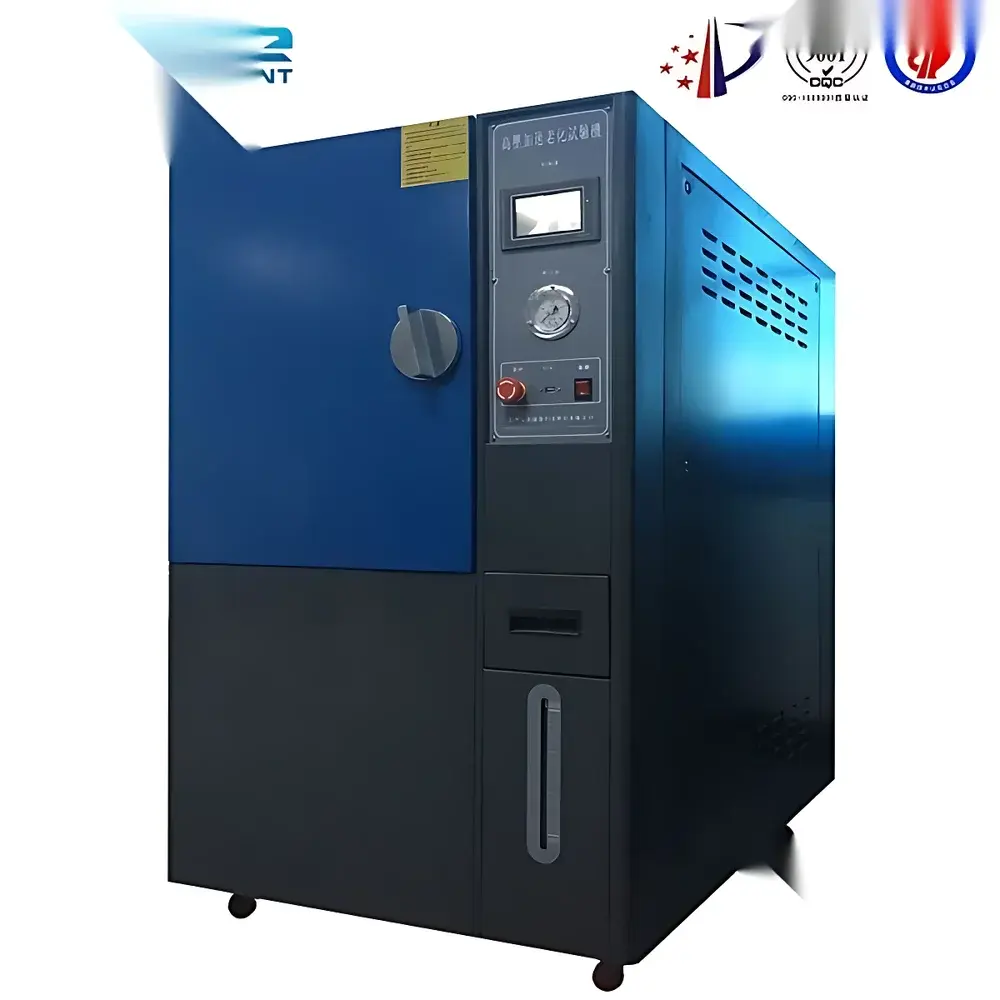
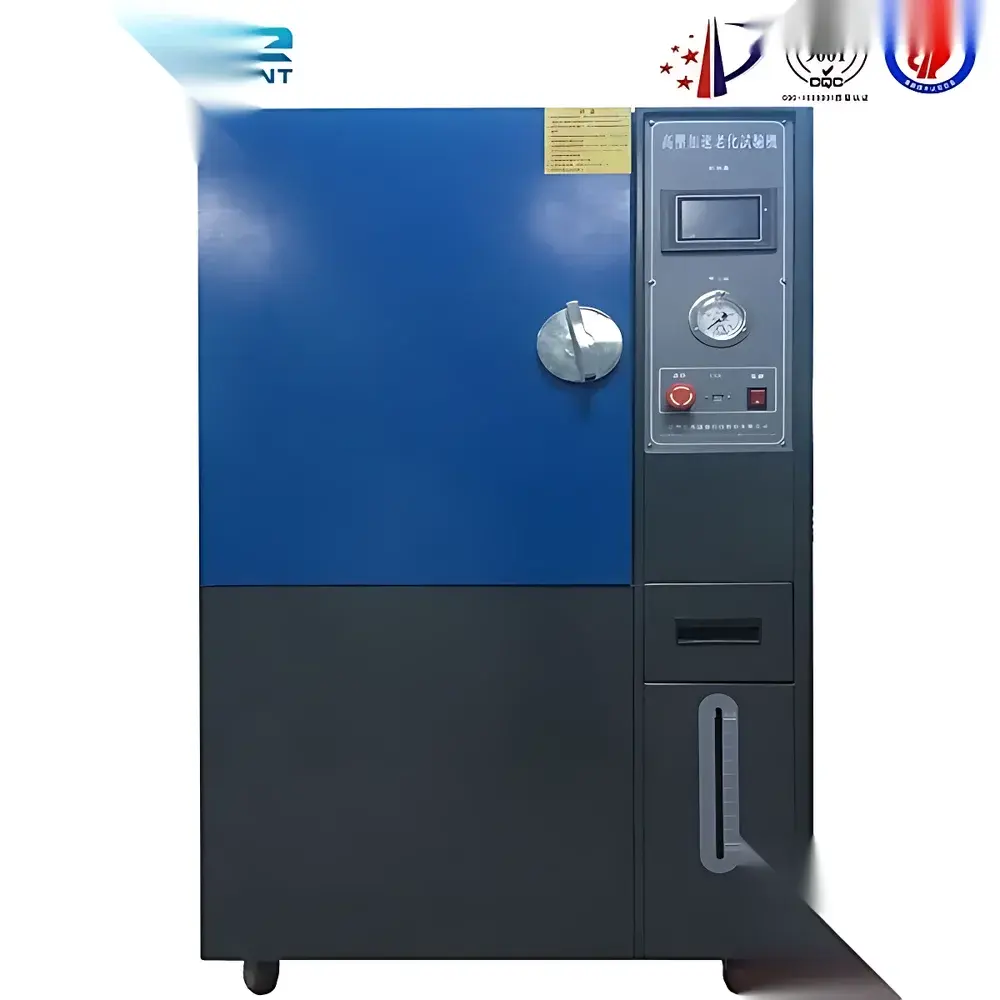
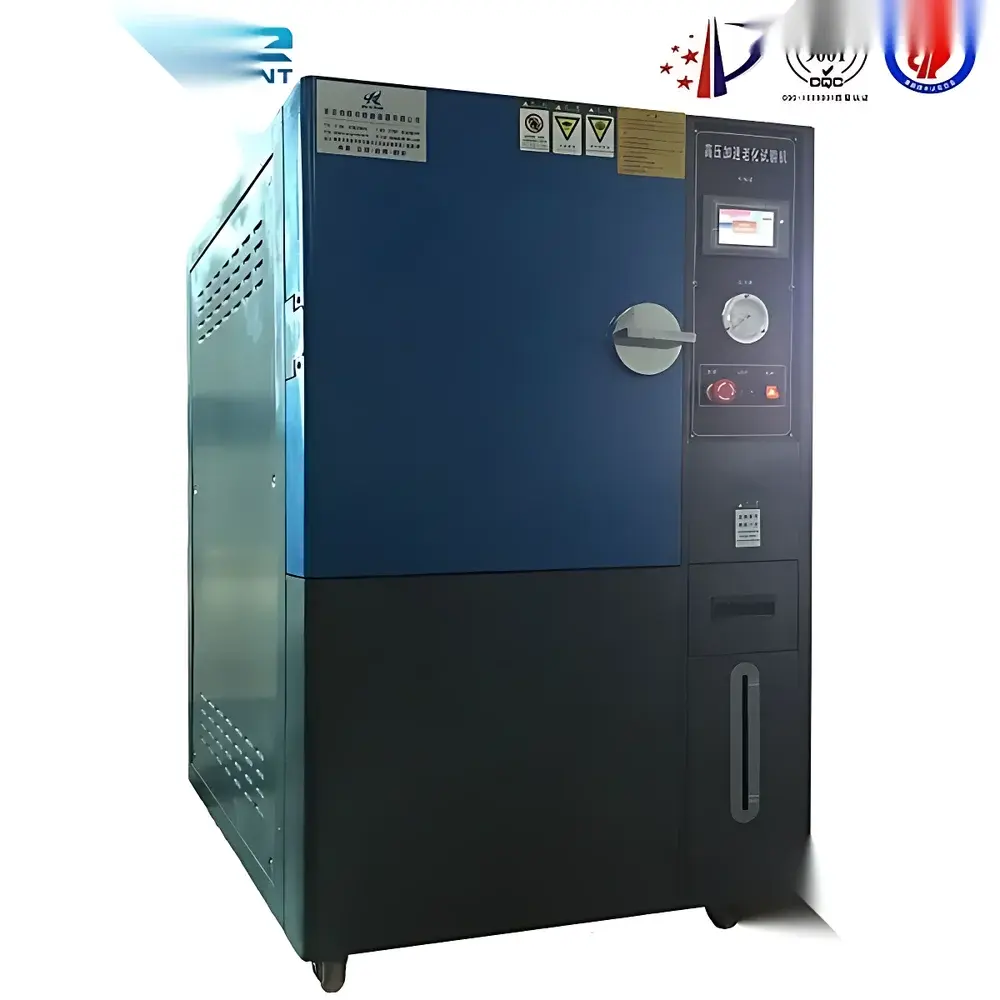
Wudangshan PCT Accelerated Aging Test Chamber
| Brand | Other Brands |
|---|---|
| Origin | Imported |
| Manufacturer Type | General Distributor |
| Price | USD 4,100 (approx.) |
| Temperature Control Accuracy | ±0.5 °C |
| Temperature Resolution | 0.1 °C |
| Pressure Control Accuracy | ±0.15 kg/cm² |
| Temperature Uniformity | ±2.0 % at 100 °C |
| Heating Time | RT to 121 °C in ≤35 min |
| Pressurization Time | 0.0 to 1.00 kg/cm² in ≤35 min |
| Test Duration Range | 0–1000 h |
| Vacuum Pre-treatment | Yes, with HEPA-filtered air intake (<1 µm particle retention) |
| Water Supply Mode | Manual + Automatic (up to 999 h continuous operation) |
| Safety Features | Dual-pressure interlocked door, patented self-sealing gasket, overpressure protection, LIMIT-based fault detection, auto-depressurization at test end, timed drying function |
| Compliance Standards | CNS, ISO 9001/17025 (applicable test methods), JIS C 0045, ASTM D3418, DIN EN 60068-2-66, IEC 60068-2-66, MIL-STD-810H, NACE TM0177, UL 746C, BS EN 60068-2-66 |
Overview
The Wudangshan PCT Accelerated Aging Test Chamber is a high-reliability, pressure-saturated steam aging system engineered for accelerated reliability validation of electronic components, encapsulated semiconductors, PCB assemblies, and moisture-sensitive packaging materials. It operates on the principle of Pressure Cooker Test (PCT), where samples are subjected to elevated temperature (up to 121 °C), saturated steam pressure (up to 1.00 kg/cm²), and high relative humidity (>100 % RH) simultaneously—accelerating moisture ingress and hydrolytic degradation mechanisms far beyond standard damp heat testing. Unlike conventional humidity chambers, this unit employs a sealed stainless-steel cylindrical inner chamber conforming to industrial pressure vessel design standards, minimizing condensate formation and ensuring uniform thermal-moisture stress distribution across test specimens.
Key Features
- Cylindrical Stainless-Steel Inner Chamber: Seamless, corrosion-resistant 304 stainless steel construction eliminates crevices and ensures structural integrity under repeated pressurization cycles; geometry suppresses localized condensation and drip formation during saturation phases.
- Patented Self-Sealing Gasket System: A pressure-responsive sealing mechanism—distinct from static compression gaskets—tightens dynamically as internal pressure increases, enhancing long-term seal reliability and extending gasket service life by up to 3× versus conventional designs.
- Interlocked Safety Door: Equipped with dual-sensor verification (temperature + pressure) prior to unlocking; mechanical overpressure lockout prevents accidental opening when internal pressure exceeds safe thresholds—fully compliant with IEC 61000-4-27 and EN 61000-4-27 safety directives.
- Vacuum Preconditioning Cycle: Integrated vacuum pump evacuates ambient air before steam introduction; filtered (HEPA-class, <1 µm retention) dry air is then reintroduced to establish baseline purity and eliminate oxygen-related oxidation artifacts during testing.
- Dual Water Supply Architecture: Supports uninterrupted operation via manual top-up (≥1 h runtime) or fully automatic replenishment (up to 999 h continuous cycle); integrated level sensors prevent dry-run damage to heating elements.
- Auto-Depressurization & Timed Drying: At test termination, the system executes controlled pressure release followed by programmable hot-air drying—maintaining sample integrity and enabling immediate post-test inspection without residual moisture interference.
Sample Compatibility & Compliance
This chamber accommodates a broad range of non-volatile, non-explosive test specimens—including IC packages (QFP, BGA, CSP), molded plastic housings, conformal-coated PCBs, automotive connectors, and medical-grade polymer assemblies. Its operational envelope aligns with internationally recognized reliability qualification protocols: JEDEC JESD22-A102F (PCT), IEC 60068-2-66 (damp heat, accelerated), ASTM D3418 (thermal transitions of polymers), MIL-STD-810H Method 507.6 (humidity), and NACE TM0177 (for corrosion-prone metallic interfaces). All control algorithms and data logging functions support GLP/GMP-aligned audit trails per FDA 21 CFR Part 11 requirements when paired with validated software modules.
Software & Data Management
Control is managed via an embedded microprocessor-based LED interface with PID + SSR-driven saturation temperature regulation and analog pressure indication. While the base configuration uses hardwired logic with real-time LED display (temperature, time, pressure), optional Ethernet-enabled data acquisition modules provide CSV-exportable time-series logs (sample rate: 1 Hz), remote monitoring via Modbus TCP, and configurable alarm triggers (e.g., deviation >±0.75 °C, pressure drift >±0.2 kg/cm²). Calibration records, operator ID stamps, and event timestamps are retained onboard for traceability—meeting ISO/IEC 17025 documentation rigor for accredited laboratories.
Applications
- Qualification of moisture sensitivity levels (MSL) per JEDEC J-STD-020
- Failure mode analysis of delamination, popcorning, and wire bond lift-off in plastic-encapsulated microcircuits
- Accelerated lifetime assessment of conformal coatings and potting compounds under combined thermal-hygric stress
- Validation of hermeticity and barrier performance in MEMS packaging and flexible electronics
- Corrosion acceleration testing of solder joints and tin-plated contacts under high-humidity pressurized environments
- Material compatibility screening for aerospace-grade adhesives and encapsulants per MIL-HDBK-344A
FAQ
What standards does this PCT chamber comply with?
It meets core test method requirements in IEC 60068-2-66, JEDEC JESD22-A102F, ASTM D3418, MIL-STD-810H Method 507.6, and NACE TM0177—supporting full qualification reporting for IPC, AEC-Q200, and automotive OEM audits.
Is vacuum preconditioning mandatory before each test cycle?
Yes—it is integral to eliminating residual air pockets and preventing non-uniform steam penetration; omission compromises test repeatability and may invalidate compliance claims.
Can the chamber operate unattended for extended durations?
With automatic water supply enabled and verified line voltage stability, it supports fully autonomous 999-hour runs; integrated LIMIT-based fault detection halts operation and logs error codes upon sensor deviation or power anomaly.
How is temperature uniformity verified and maintained?
Uniformity is ensured via natural convection of saturated steam within the cylindrical cavity and calibrated PT-100 (RTD) sensors placed at geometrically defined zones; routine verification follows ISO 17025 Annex A.2 procedures using NIST-traceable reference probes.
Does the system support calibration certificate issuance?
Yes—factory calibration includes as-found/as-left reports traceable to national metrology institutes; on-site recalibration services are available under ISO/IEC 17025-accredited procedures upon request.



