
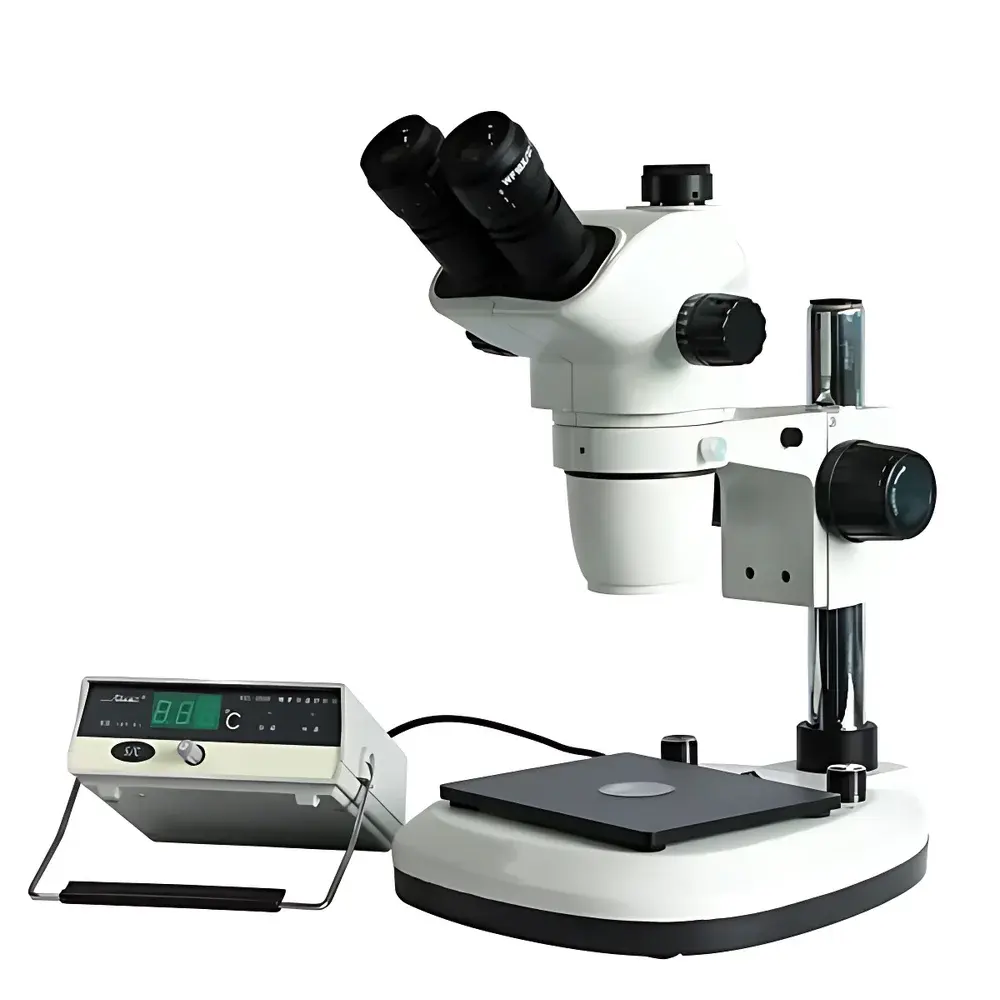
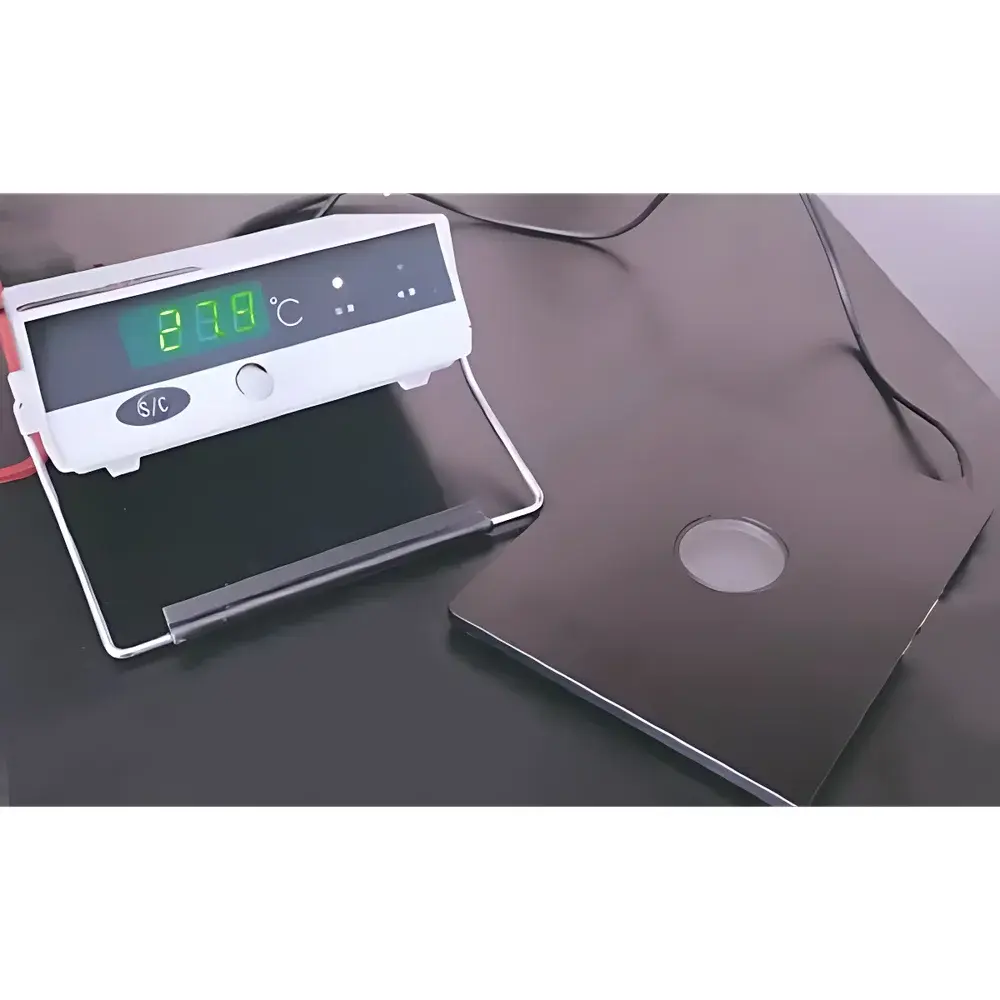
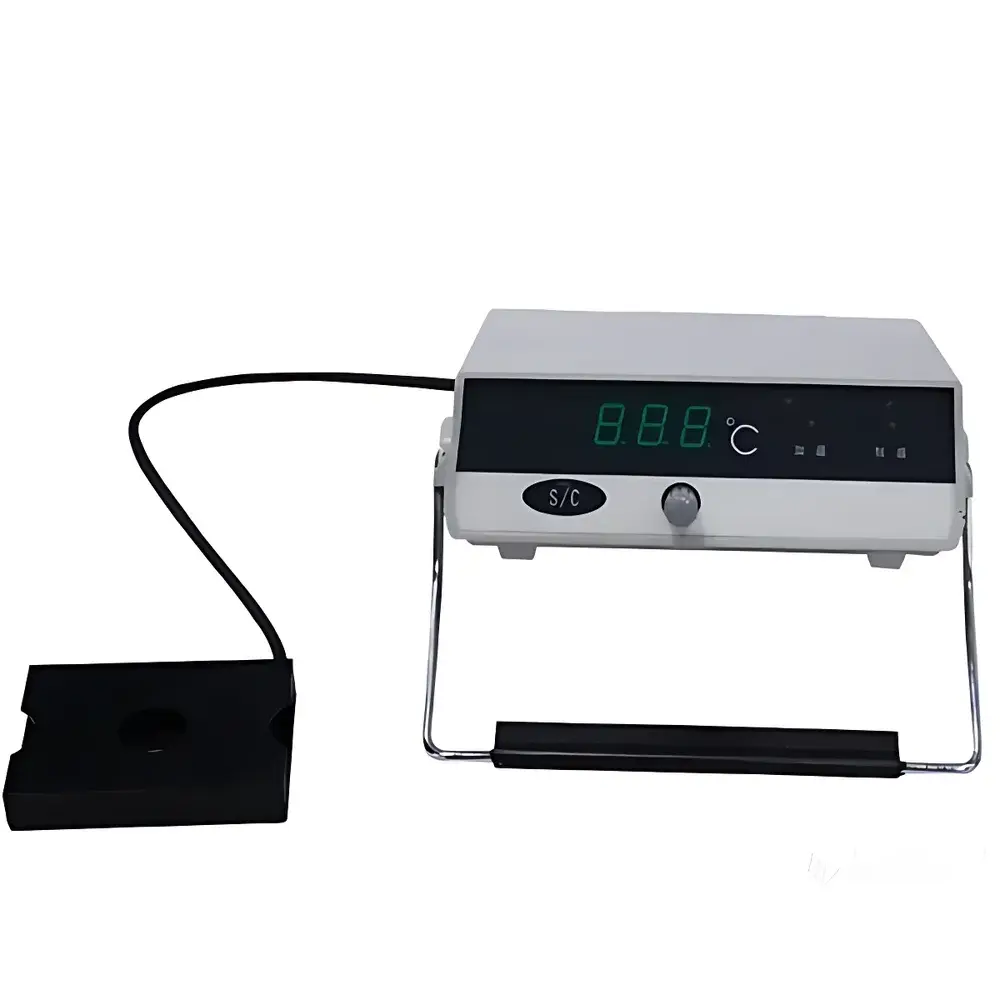
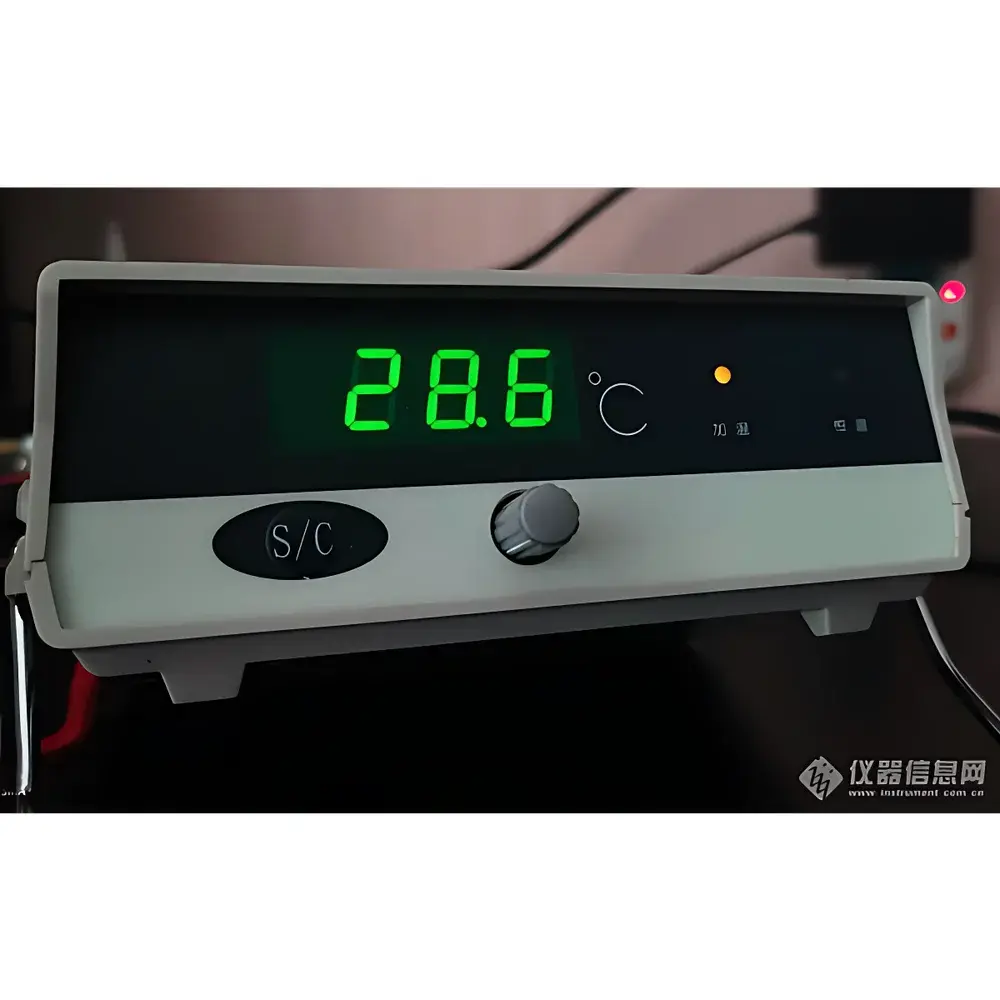
LEI-TECH LK-TSHWT-60 Stereomicroscope Heated Stage with Precision Temperature Control
| Brand | LEI-TECH |
|---|---|
| Origin | Tianjin, China |
| Manufacturer Type | OEM/ODM Producer |
| Model | LK-TSHWT-60 |
| Input Voltage | 220 V ±10%, 45–60 Hz |
| Output Voltage | 36 V DC |
| Max Power | 50 W |
| Temp Control Range | Ambient to 60 °C |
| Temp Accuracy | ≤ ±0.2 °C (full range) |
| Stage Dimensions | 165 × 130 × 8 mm |
| Central Aperture | Ø38 mm with Integrated Optical Glass Window |
| Control Method | Digital PID + Fuzzy Logic Algorithm |
| Heating Element | PTC Ceramic Thermal Module |
| Safety Compliance | SELV (Safety Extra-Low Voltage) Class III |
Overview
The LEI-TECH LK-TSHWT-60 Stereomicroscope Heated Stage is an engineered thermal platform designed for precise, stable, and non-invasive temperature control of biological specimens during real-time observation under stereomicroscopy. It operates on the principle of resistive heating via a PTC (Positive Temperature Coefficient) ceramic element, delivering uniform thermal distribution across the stage surface while maintaining electrical safety through SELV-compliant 36 V DC output. Unlike conventional resistive heaters, the PTC material exhibits self-regulating behavior—its resistance increases sharply near the target temperature, inherently limiting thermal runaway and ensuring long-term stability without active cooling components. The system integrates a microprocessor-based GWCK digital temperature controller featuring dual-mode regulation: conventional PID (Proportional-Integral-Derivative) tuning for rapid thermal response and fuzzy logic optimization for enhanced disturbance rejection—particularly critical when ambient fluctuations or sample thermal mass variations occur. This architecture enables reproducible setpoint attainment within ±0.2 °C across the full 0–60 °C operating range, making it suitable for time-sensitive live-cell assays, gamete viability assessment, and developmental biology workflows where thermal drift must be minimized.
Key Features
- SELV-certified 36 V DC low-voltage operation ensures operator and specimen safety—eliminating risk of electric shock during wet-sample handling or humidified incubation environments.
- PTC ceramic heating module provides inherent thermal stability, high power density (50 W), and extended service life with no moving parts or wear-prone contacts.
- Dual-algorithm digital controller (PID + fuzzy logic) delivers fast ramp rates, minimal overshoot, and adaptive compensation against environmental perturbations.
- Optically transparent central aperture (Ø38 mm) with fused silica glass insert maintains unobstructed light transmission for transmitted illumination and phase contrast compatibility.
- Compact aluminum alloy stage (165 × 130 × 8 mm) features precision-machined thermal mass distribution to minimize axial temperature gradients (<0.3 °C/mm radial deviation).
- Front-panel interface includes rotary temperature setpoint dial and “Set/Display” toggle—designed for glove-compatible operation in biosafety cabinets or laminar flow hoods.
Sample Compatibility & Compliance
The LK-TSHWT-60 is validated for use with standard Petri dishes (35–60 mm), multi-well plates (6–96-well), microscope slides, and custom chambered coverslips. Its low-profile design (8 mm height) ensures mechanical clearance beneath most commercial stereomicroscope objectives (≥45 mm working distance). The stage complies with IEC 61000-6-3 (EMC emission limits) and IEC 61010-1 (safety requirements for laboratory equipment). While not certified for ISO 13485 or FDA 21 CFR Part 11 out-of-box, its deterministic control architecture and audit-ready parameter logging (via optional RS-232 interface) support integration into GLP/GMP-aligned workflows where traceable thermal validation is required. All firmware operations are deterministic—no cloud connectivity or proprietary runtime dependencies.
Software & Data Management
The base unit operates as a standalone analog-digital hybrid controller with no embedded OS or network stack. Optional RS-232 serial output (TTL-level, 9600 baud) enables external data acquisition using third-party platforms such as LabVIEW, MATLAB, or Python-based DAQ scripts. Temperature setpoints, actual readings, and status flags (heating/holding/fault) are streamed in ASCII format with timestamping capability when paired with host-side time-synchronization. Firmware revision and calibration date are stored in non-volatile memory and retrievable via command query—supporting instrument qualification documentation per ASTM E2876-22 (Standard Guide for Thermal Validation of Microbiological Incubators and Heated Stages).
Applications
- In vitro fertilization (IVF) labs: Maintaining oocyte and embryo culture dishes at 37.0 ±0.1 °C during micromanipulation and time-lapse imaging.
- Andrology: Sperm motility analysis under controlled thermal stress (e.g., 32–37 °C gradients) per WHO Laboratory Manual for the Examination and Processing of Human Semen (6th ed.).
- Veterinary reproductive medicine: Artificial insemination protocol support, including semen thawing and thermal equilibration prior to insemination.
- Developmental biology: Real-time observation of zebrafish or Drosophila embryo development across defined thermal regimes (e.g., 25–28.5 °C).
- Plant tissue culture: Callus induction and meristem propagation requiring precise thermoperiodic control during stereoscopic dissection.
FAQ
Is the LK-TSHWT-60 compatible with inverted or compound microscopes?
No—it is mechanically and optically optimized for upright stereomicroscopes with top-down illumination; the 8 mm profile and central aperture assume ≥45 mm objective working distance.
Can the glass window be replaced with custom optical filters?
Yes—the Ø38 mm fused silica insert is removable and replaceable with user-supplied filters (e.g., GFP excitation, IR cutoff) provided thickness remains ≤1.1 mm to preserve focus plane alignment.
Does the unit include NIST-traceable calibration documentation?
Calibration certificates are available upon request at time of order; factory calibration uses PT100 reference sensors accredited to ISO/IEC 17025 standards.
What maintenance is required for long-term accuracy?
None beyond periodic verification using a calibrated contact thermometer; the PTC heater and sensor exhibit <0.05 %/year drift, well within ±0.2 °C specification over two years.
Is firmware upgradable in the field?
Firmware updates require authorized service center intervention using JTAG interface; no user-accessible bootloader or OTA functionality is implemented for regulatory compliance and stability assurance.






