
Hirschmann EM-Dispenser PP Bottle Top Dispenser
| Brand | Hirschmann (Germany) |
|---|---|
| Origin | Germany |
| Type | Manual Bottle Top Dispenser |
| Capacity Range | 2–60 mL |
| Minimum Increment | 0.25 mL (2–10 mL range), 1 mL (10–60 mL range) |
| Accuracy | ±0.6% |
| Precision (Repeatability) | ±0.1% |
| Sterilization | Autoclavable at 121 °C, 20 min |
| Materials in Contact | Chemically Resistant Composite (PP, PTFE, FFKM) |
| Compliance | ISO 8536-3, DIN EN ISO 9001, GLP/GMP-aligned, USP <1058> A-class verification support |
Overview
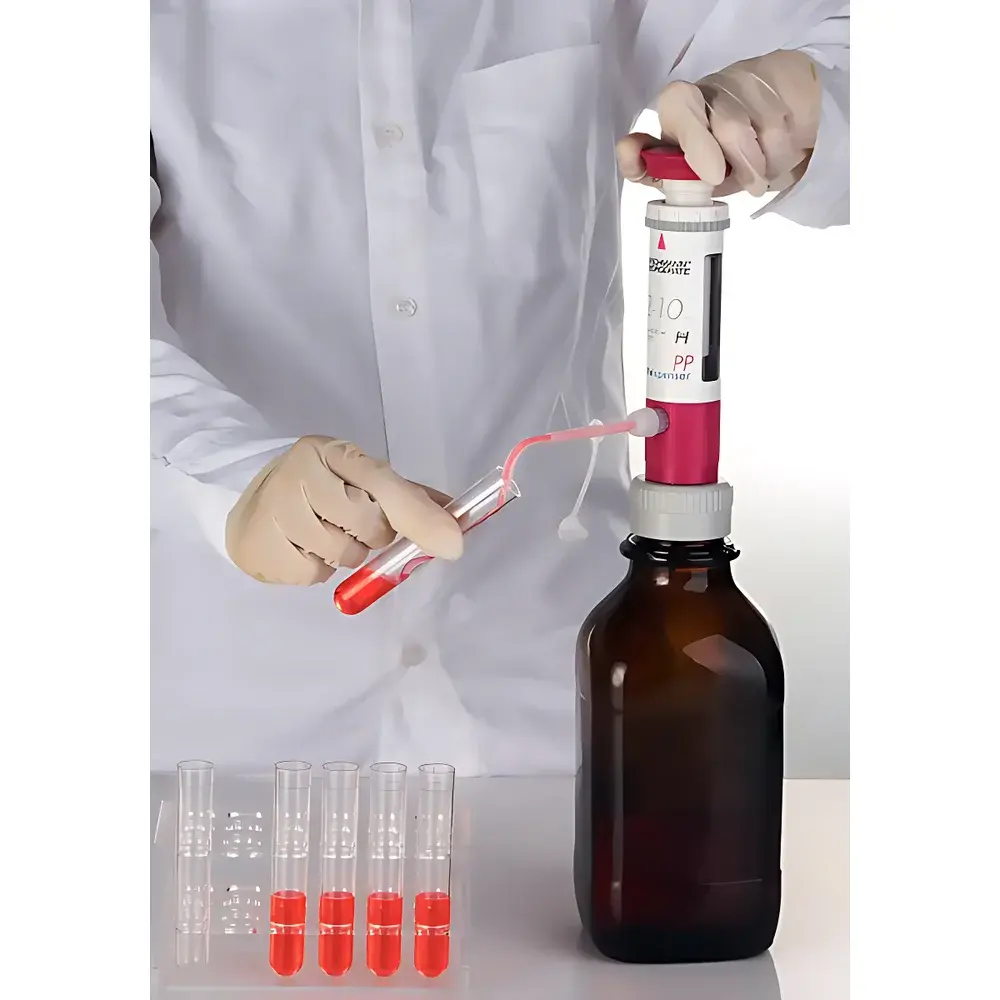
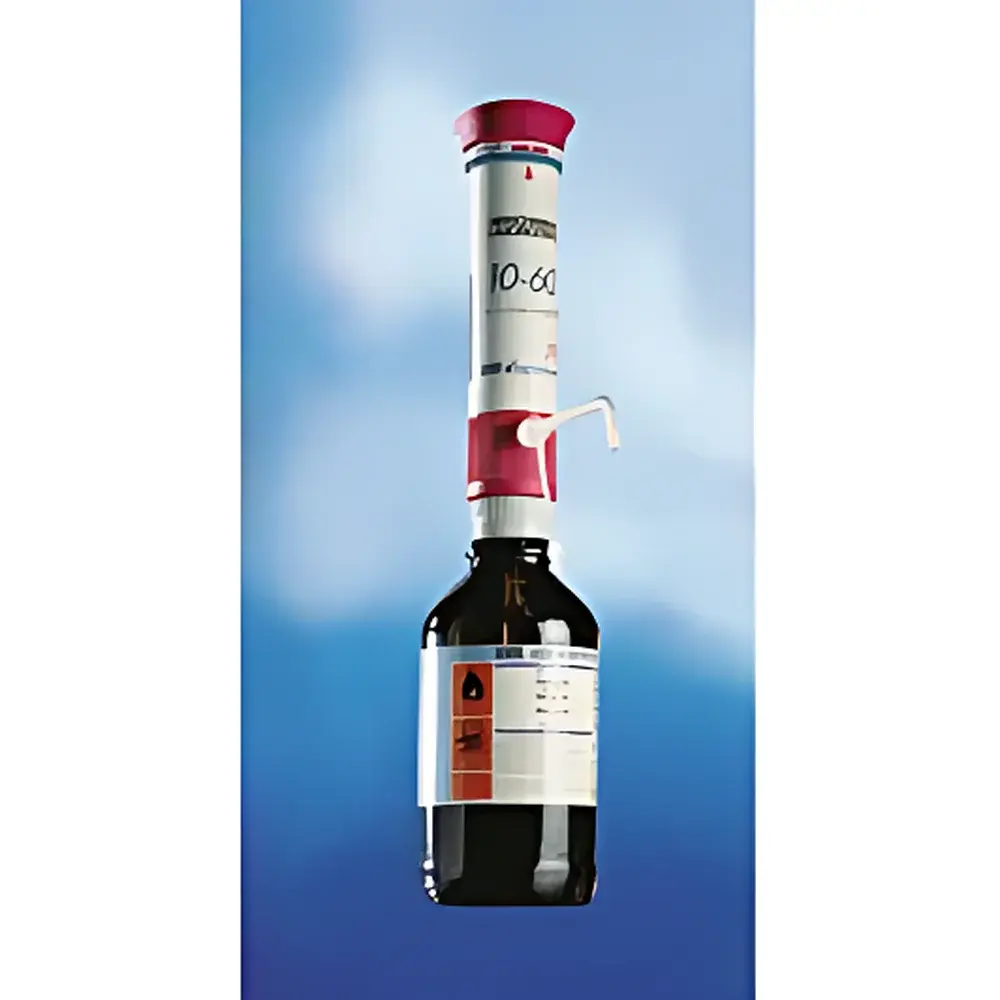
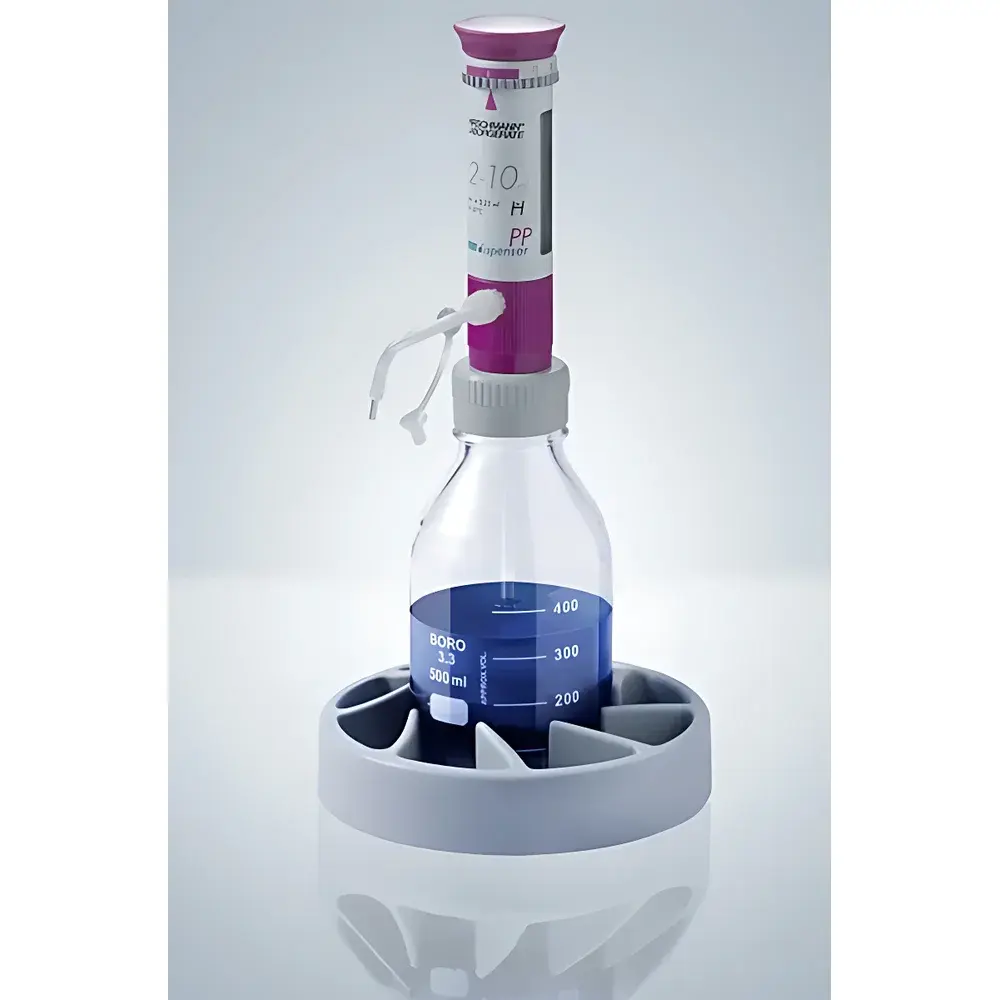
The Hirschmann EM-Dispenser PP is a precision-engineered manual bottle top dispenser designed for accurate, repeatable, and contamination-controlled liquid handling in regulated laboratory environments. Based on the proven Couette-flow displacement principle, it delivers volumetric dispensing without reliance on syringe-style pistons or air displacement—eliminating vapor lock, bubble formation, and cross-contamination risks common in positive-displacement alternatives. Its modular, all-PP body with chemically inert wetted components (PTFE seals, FFKM valve seats) ensures compatibility with aggressive organic solvents, concentrated acids (e.g., HNO₃, HCl), bases (e.g., NaOH), and high-purity chromatographic reagents—including acetonitrile, methanol, THF, and chloroform. Unlike adjustable-volume pipettes or graduated cylinders, the EM-Dispenser operates as a fixed-calibration volumetric delivery system: each unit undergoes individual gravimetric calibration per ISO 8655-7 and is certified with a unique serial-numbered test report traceable to national standards (DKD/DAkkS-accredited labs). This eliminates routine user calibration while maintaining metrological integrity across daily use.
Key Features
- Autoclavable Construction: Fully assembled unit withstands steam sterilization at 121 °C for 20 minutes (DIN EN 285), enabling seamless integration into aseptic workflows—ideal for cell culture media preparation, pharmaceutical buffer formulation, and diagnostic reagent manufacturing under GMP Annex 1 conditions.
- Chemical Resistance Architecture: Wetted path comprises polypropylene (body), PTFE (seals), and perfluoroelastomer (FFKM) valve seats—validated against >200 common laboratory solvents per DIN 51511 and ASTM D471, including halogenated organics and strong oxidizers.
- Step-Range Volume Selection: Dual-range configuration (2–10 mL and 10–60 mL) uses mechanically indexed cam gears to fix dispense volume—removing operator-dependent dial misalignment and ensuring consistent mechanical advantage across the full scale.
- No-Calibration Assurance: Factory-certified accuracy of ±0.6% (per ISO 8536-3 Annex B) and repeatability of ±0.1% (n = 10, gravimetric testing) are guaranteed for life; no field recalibration required unless physically damaged.
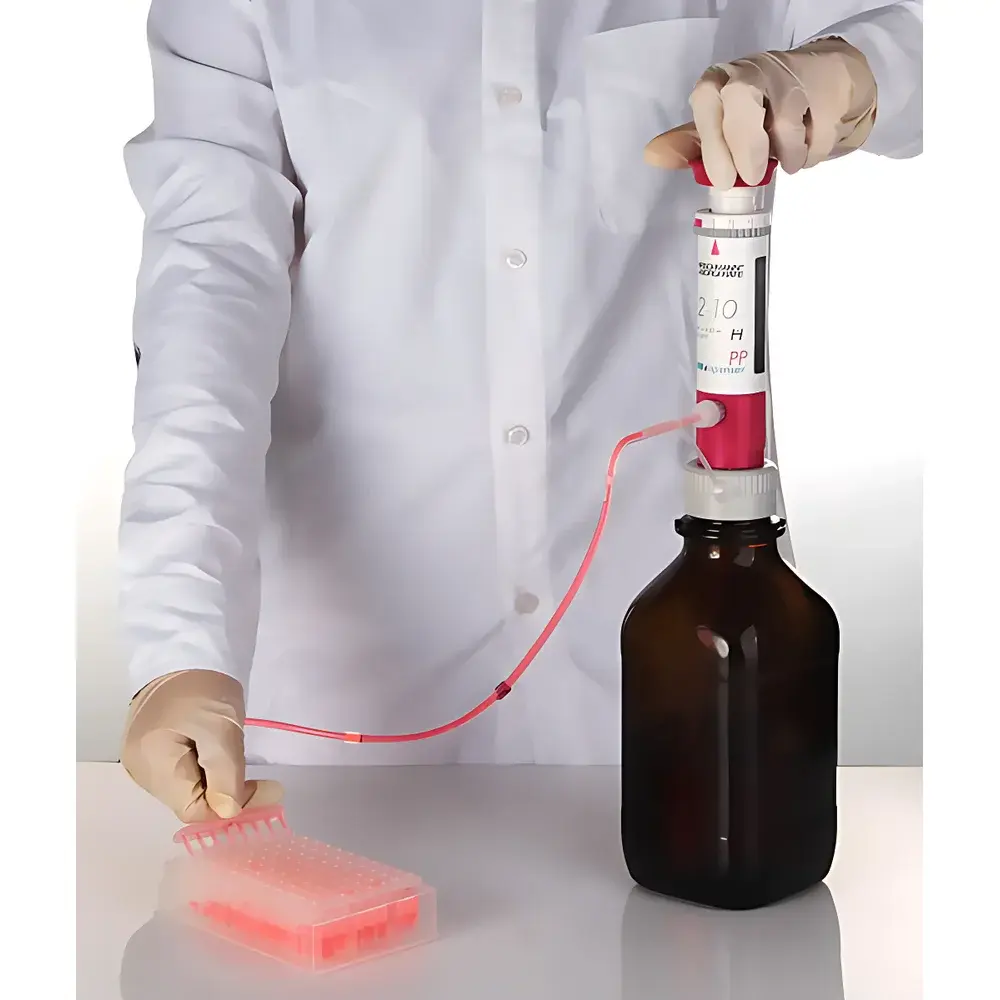
- Modular Accessory Ecosystem: Compatible with Hirschmann’s 96-well plate adapters (EM-PLATE), 384-well manifolds (EM-MULTI), and tube-rack dispensing arms (EM-RACK), supporting high-throughput applications without compromising volumetric fidelity.
Sample Compatibility & Compliance
The EM-Dispenser PP meets stringent regulatory expectations for analytical and production environments. Its design conforms to ISO 8536-3 (bottle top dispensers), supports GLP documentation requirements via serialized test reports (including temperature, humidity, and balance uncertainty data), and aligns with FDA 21 CFR Part 11 readiness when paired with Hirschmann’s optional digital logbook software. Each unit ships with a DIN EN ISO 9001-compliant certificate of conformance—directly embeddable into quality management systems during ISO 9001:2015 audits. It is routinely deployed in biosafety level 2 (BSL-2) and BSL-3 laboratories where solvent volatility, toxicity, and sterility control demand both chemical resilience and procedural reproducibility.
Software & Data Management
While the EM-Dispenser PP is a fully mechanical device requiring no power or firmware, its traceability framework integrates with laboratory information management systems (LIMS) and electronic lab notebooks (ELN). The unique serial number and accompanying calibration certificate (PDF + printed copy) enable direct linkage to instrument history records. Optional Hirschmann EM-Connect software (sold separately) allows users to digitally archive dispensing logs, associate batches with SOPs, and generate audit-ready reports compliant with ALCOA+ principles (Attributable, Legible, Contemporaneous, Original, Accurate).
Applications
- Preparation of standard solutions for HPLC, GC, and ICP-MS analysis
- Accurate dispensing of hazardous reagents (e.g., concentrated sulfuric acid, hydrofluoric acid dilutions) in fume hoods
- Aseptic transfer of sterile buffers and growth media in bioprocessing cleanrooms
- QC/QA sampling in pharmaceutical manufacturing (ICH Q7, Annex 15)
- High-reproducibility reagent addition in ELISA, PCR setup, and NGS library prep
- Calibration solution distribution in environmental testing labs (EPA Method 502.2, ISO 17025)
FAQ
Is the EM-Dispenser PP suitable for hydrofluoric acid (HF)?
Yes—when equipped with optional FFKM seals (standard on all EM-Dispenser PP units), it demonstrates >1000-hour resistance to 48% HF at room temperature per ASTM D471 immersion testing.
Can it be used with volatile solvents like diethyl ether or pentane?
Yes—the sealed valve architecture prevents vapor leakage and maintains consistent headspace pressure, eliminating volume drift during repeated dispensing cycles.
Does it require periodic recalibration?
No—each unit is individually calibrated and certified per ISO 8536-3; recalibration is only necessary after physical impact, seal replacement, or exposure beyond specified chemical/thermal limits.
How is traceability maintained for ISO 17025 accreditation?
Each dispenser includes a DKD-traceable certificate listing gravimetric test data, environmental conditions, reference standards used, and measurement uncertainty—fully compatible with ISO/IEC 17025:2017 clause 6.4.10.
What cleaning protocols are recommended between incompatible solvents?
Rinse three times with inert solvent (e.g., IPA), followed by air-drying; avoid ultrasonic baths or abrasive cleaners that may degrade PTFE surfaces.



