
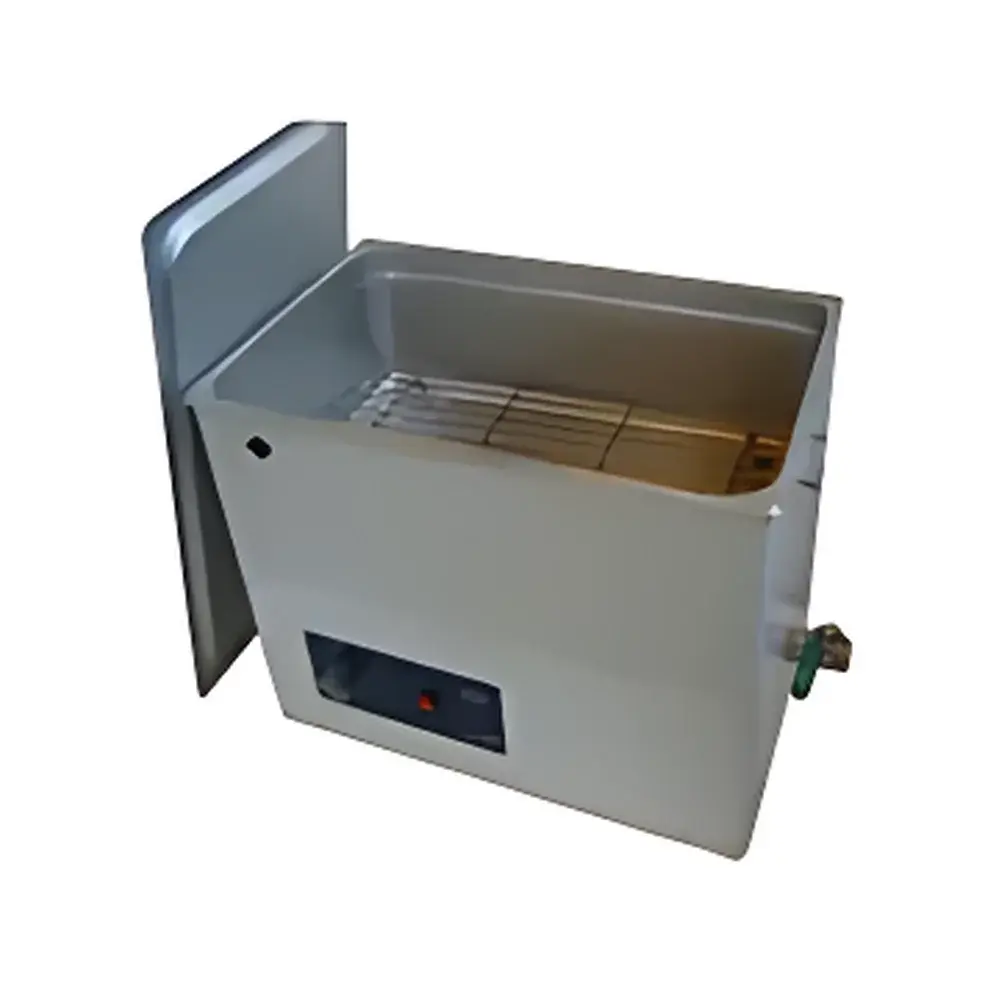
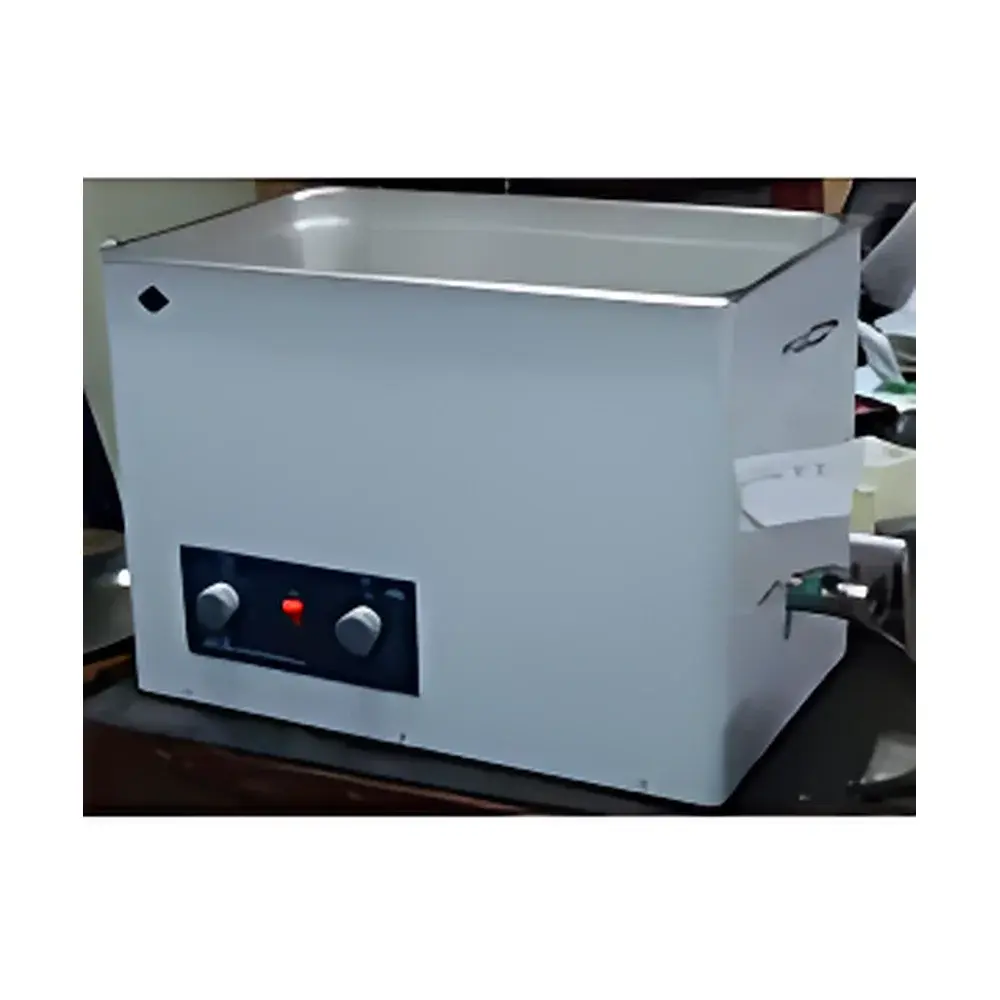
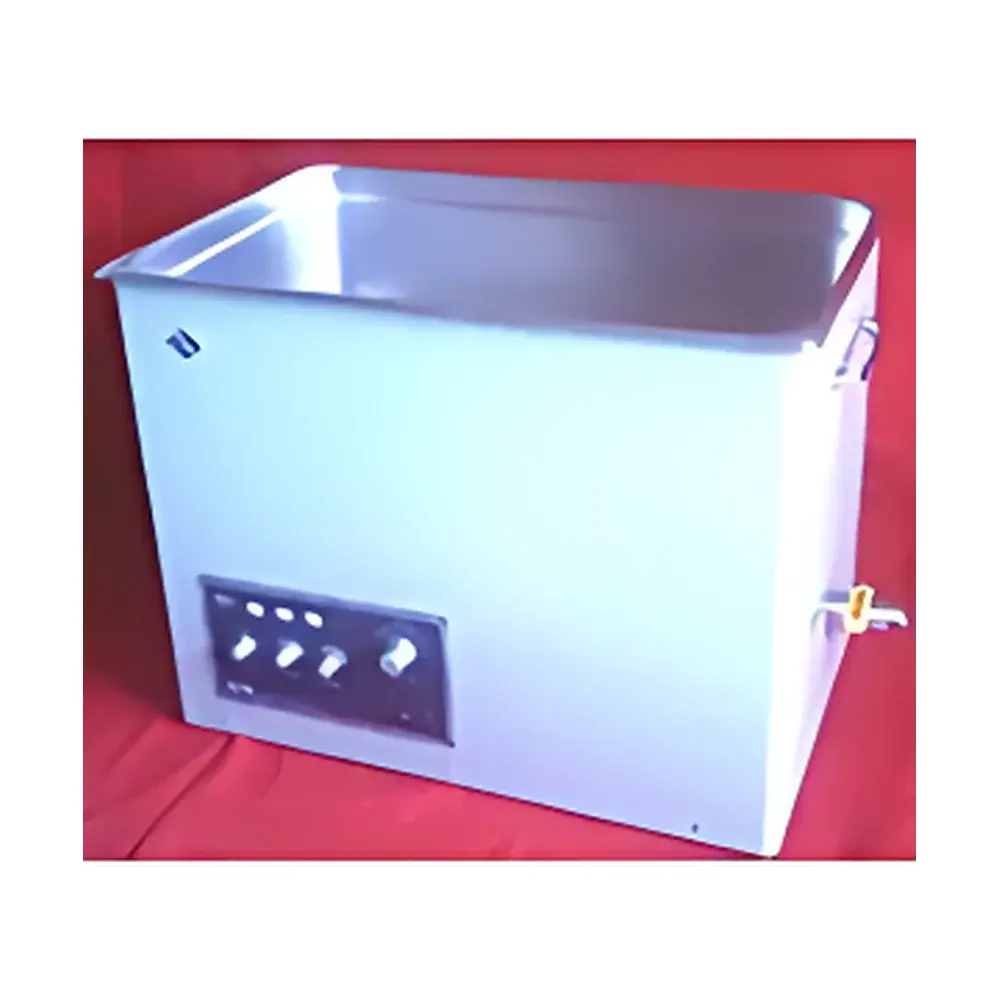
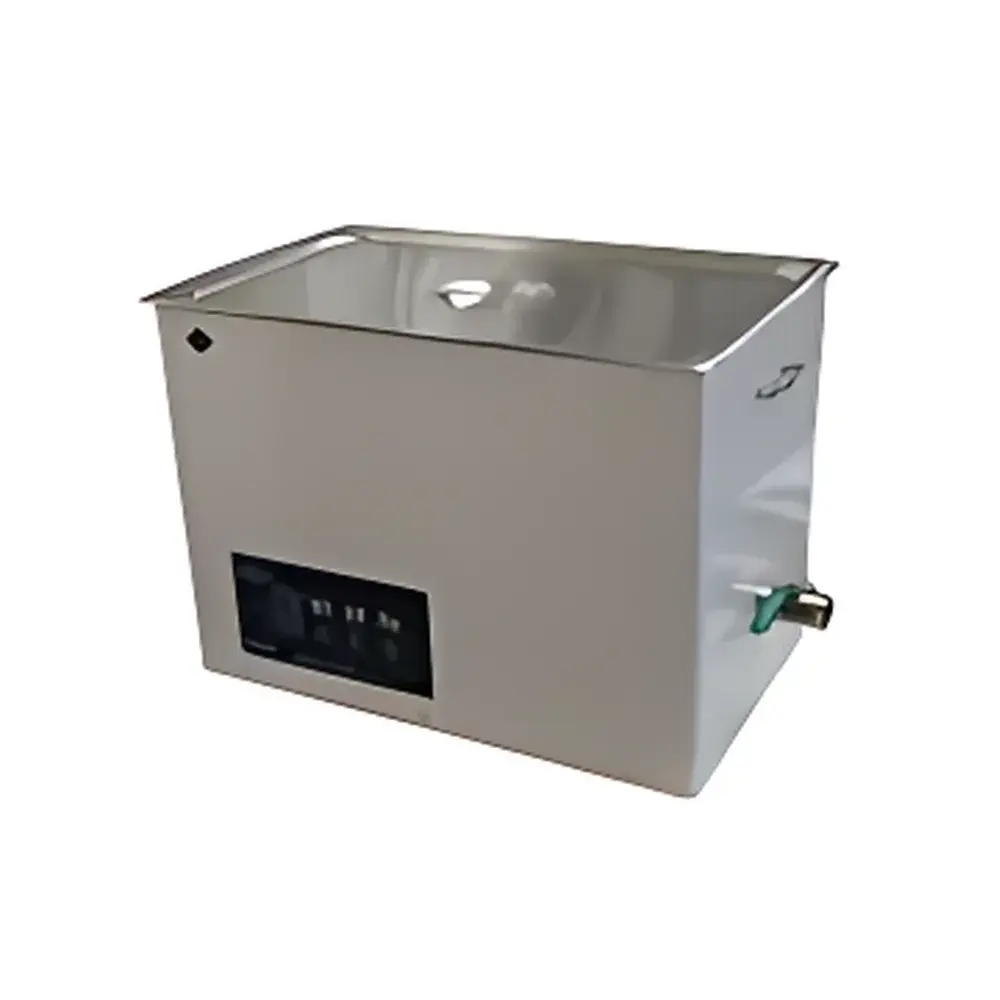
QT20500 Series 22.5L Benchtop Ultrasonic Cleaner with 40 kHz Transducer-Based Generator
| Origin | Tianjin, China |
|---|---|
| Manufacturer Type | Authorized Distributor |
| Origin Category | Domestic (PRC) |
| Model | QT20500 / QTR20500 / QT20500K / QTSXR20500 |
| Quotation | Available upon Request |
| Capacity | 22.5 L |
| Ultrasonic Frequency | 40 kHz |
| Tank Material | 304 Stainless Steel Deep-Drawn Chamber |
| External Housing | Anodized Aluminum with Anti-Corrosion Coating |
| Internal Dimensions | 500 × 300 × 150 mm (L×W×H) |
| Overall Dimensions | 610 × 350 × 380 mm (L×W×H) |
| Timer Range | 0–30 min (QT20500), 1–20 min (QTR20500), 1–99 min (QT20500K & QTSXR20500) |
| Ultrasonic Power Output | 600 W (fixed) |
| Power Adjustment | None (QT20500), 20–100% (QTR20500 & QTSXR20500), 40–99% (QT20500K) |
| Heating Power | None (QT20500), 800 W (QTR20500 & QTSXR20500) |
| Temperature Control Range | 0–80 °C (heating models only) |
| Display | None (QT20500), LED Digital Display (QTR20500, QT20500K, QTSXR20500) |
| Drain Fitting | Not included |
| Net Weight | 12.0 kg |
| Gross Weight | 14.0 kg |
| Standard Accessories | Stainless Steel Lid and Rack |
| Color | Bright White |
| Critical Components | Fairchild Semiconductor (USA) ICs and Driver Modules |
| Warranty | 3-Year Limited Warranty, Lifetime Technical Support |
Overview
The QT20500 Series 22.5L Benchtop Ultrasonic Cleaner is engineered for precision cleaning of delicate and complex components in laboratory, clinical, and industrial quality control environments. It operates on the principle of high-frequency acoustic cavitation—generating controlled micro-bubbles in liquid media at a nominal frequency of 40 kHz. When these bubbles collapse near solid surfaces, they produce localized shockwaves and micro-jets capable of dislodging particulate contaminants, organic residues, biofilms, and adsorbed oils without mechanical abrasion. Unlike ceramic-disk-based transducers commonly found in entry-level units, this system integrates industrial-grade piezoelectric transducers bonded directly to the stainless steel tank base—ensuring uniform energy distribution, thermal stability under continuous operation, and extended service life. The transducer architecture eliminates the risk of ceramic cracking due to thermal fatigue, enabling reliable duty cycles exceeding 8 hours per day in routine QC workflows.
Key Features
- Robust 304 stainless steel deep-drawn tank construction with seamless welds and passivated surface finish—resistant to corrosion from aqueous detergents, mild alkaline solutions, and ethanol-based rinses.
- Dual-stage power architecture utilizing Fairchild Semiconductor (USA) driver ICs and MOSFET modules—delivering stable 600 W ultrasonic output with low harmonic distortion and minimal electromagnetic interference.
- Low-noise transducer mounting design reduces operational sound pressure level (SPL) to ≤55 dB(A) at 1 m distance—suitable for shared lab spaces and ISO Class 7 cleanroom-adjacent areas.
- Optional heating function (800 W, 0–80 °C adjustable) supports temperature-assisted cleaning protocols aligned with ASTM D2299 and ISO 15528 standards for surface residue verification.
- Three programmable variants: basic timer-only (QT20500), heated + digital display (QTR20500), digitally controlled heating/de-gassing (QT20500K), and fully programmable multi-step cleaning (QTSXR20500).
- Included accessories: precision-machined stainless steel lid (acoustic damping), adjustable mesh basket, and load-support rack—optimized for consistent part immersion and cavitation field uniformity.
Sample Compatibility & Compliance
This cleaner accommodates a broad spectrum of sample geometries and material classes—including sintered metal filters, glass capillaries, surgical forceps, endoscopic channels, printed circuit boards (PCBs), optical lenses, dental prostheses, and microfluidic devices. Its 22.5 L capacity allows batch processing of up to 12 standard Petri dishes or 24 syringe barrels simultaneously while maintaining minimum fluid depth requirements (≥50 mm above transducer plane). All models comply with IEC 61000-6-3 (EMC emission limits) and IEC 61000-6-2 (immunity). Heating variants meet UL 61010-1 safety requirements for laboratory equipment. The system supports GLP/GMP documentation through optional time-stamped operation logs (QTSXR20500 model with RS-232/USB interface).
Software & Data Management
The QTSXR20500 model includes embedded firmware supporting up to 99 user-defined cleaning programs—each configurable with ultrasonic intensity (%), heating setpoint (°C), degassing duration (min), and dwell time (min). Real-time operational parameters are logged with timestamp and saved to internal flash memory (10,000-cycle retention). Optional PC software (Windows/macOS compatible) enables CSV export, audit trail generation, and integration with LIMS via ASCII protocol—fully compliant with FDA 21 CFR Part 11 requirements for electronic records and signatures when deployed with validated user authentication and audit logging.
Applications
- Pre-analytical sample preparation: removal of protein adhesion from HPLC vial inserts, autosampler needles, and LC-MS ion sources.
- Medical device reprocessing: validation-compliant cleaning of reusable laparoscopic instruments prior to sterilization per AAMI ST79 and ISO 17664.
- Electronics manufacturing: flux residue removal from SMT assemblies without damaging fine-pitch solder joints or conformal coatings.
- Research instrumentation maintenance: cleaning of quartz cuvettes, NMR tube holders, and TEM grid storage boxes to prevent spectral contamination.
- Dental laboratory workflows: decontamination of CAD/CAM milling burs, impression trays, and orthodontic appliances prior to disinfection.
FAQ
What is the difference between ceramic transducers and the piezoelectric transducers used in this unit?
Ceramic disk transducers rely on brittle PZT elements bonded to aluminum plates; prolonged operation causes thermal expansion mismatch, leading to delamination and cracking. This unit uses monolithic, stress-relieved piezoceramic stacks integrated into a rigid aluminum alloy housing—designed for continuous-duty thermal cycling and mechanical resonance stability.
Can tap water be used as the cleaning medium?
Yes—tap water is acceptable for preliminary rinsing of non-critical items (e.g., eyeglasses, jewelry). For analytical or medical applications, deionized water or validated detergent solutions (e.g., Alconox® Liquinox®) are recommended to avoid mineral deposition and ensure residue-free surfaces.
Is the unit suitable for cleaning heat-sensitive polymers?
Yes—non-heating models (QT20500) operate at ambient temperature. For thermally labile substrates (e.g., polycarbonate, PMMA), ultrasonic intensity should be limited to ≤40% and cycle time restricted to ≤5 minutes to minimize cavitation-induced surface erosion.
Does the system support validation documentation for regulated environments?
The QTSXR20500 model provides full traceability: timestamped run logs, parameter change history, and password-protected configuration access—enabling IQ/OQ documentation per GAMP5 guidelines and supporting FDA inspection readiness.
What maintenance is required for long-term reliability?
Routine tasks include weekly tank inspection for pitting or scale buildup, quarterly verification of transducer impedance (using LCR meter), and annual calibration of temperature sensors (if equipped). No scheduled replacement of transducers is required under normal operating conditions.
Related Products



