
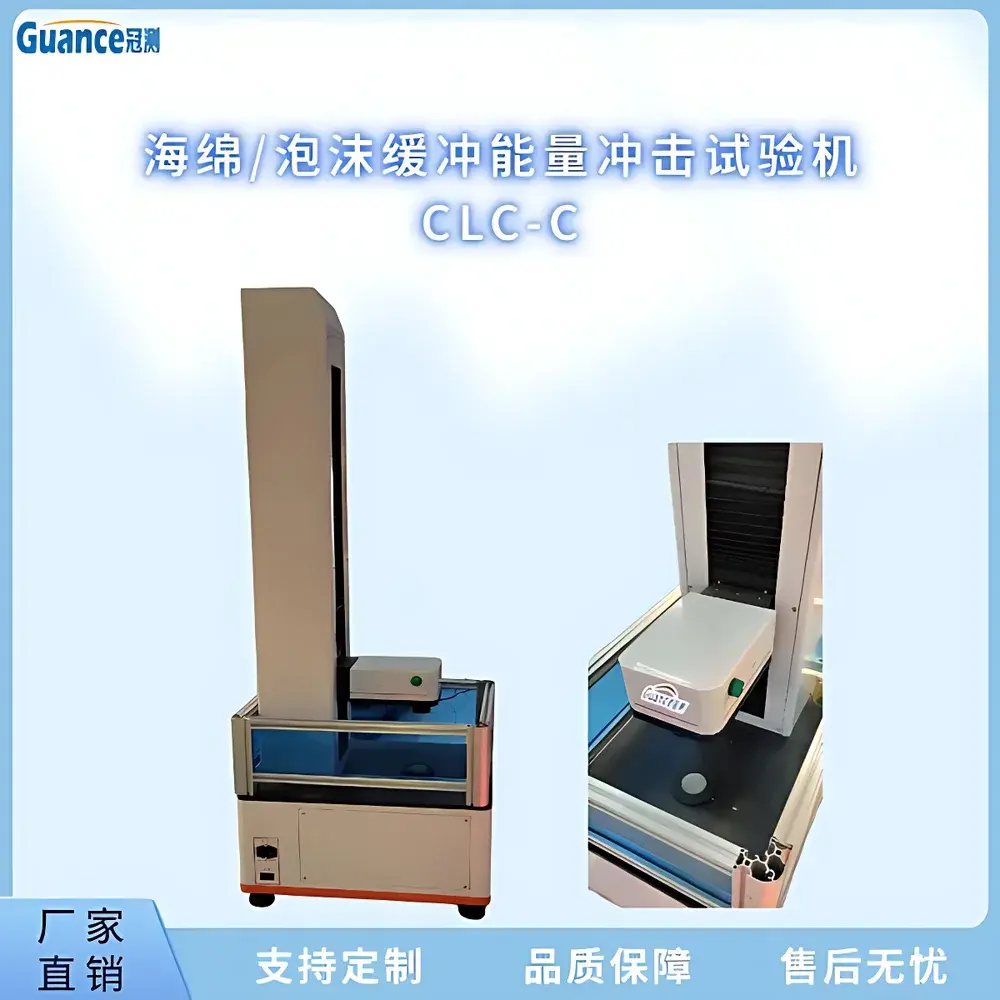
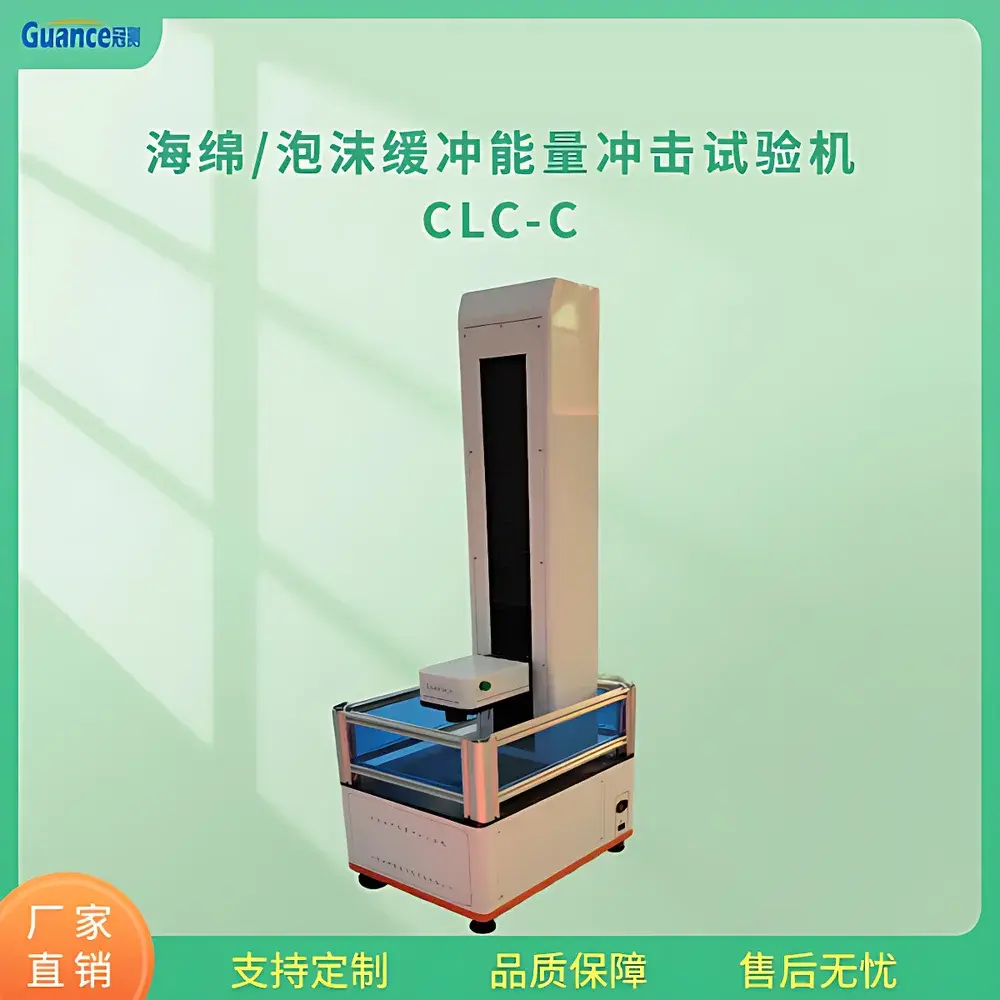
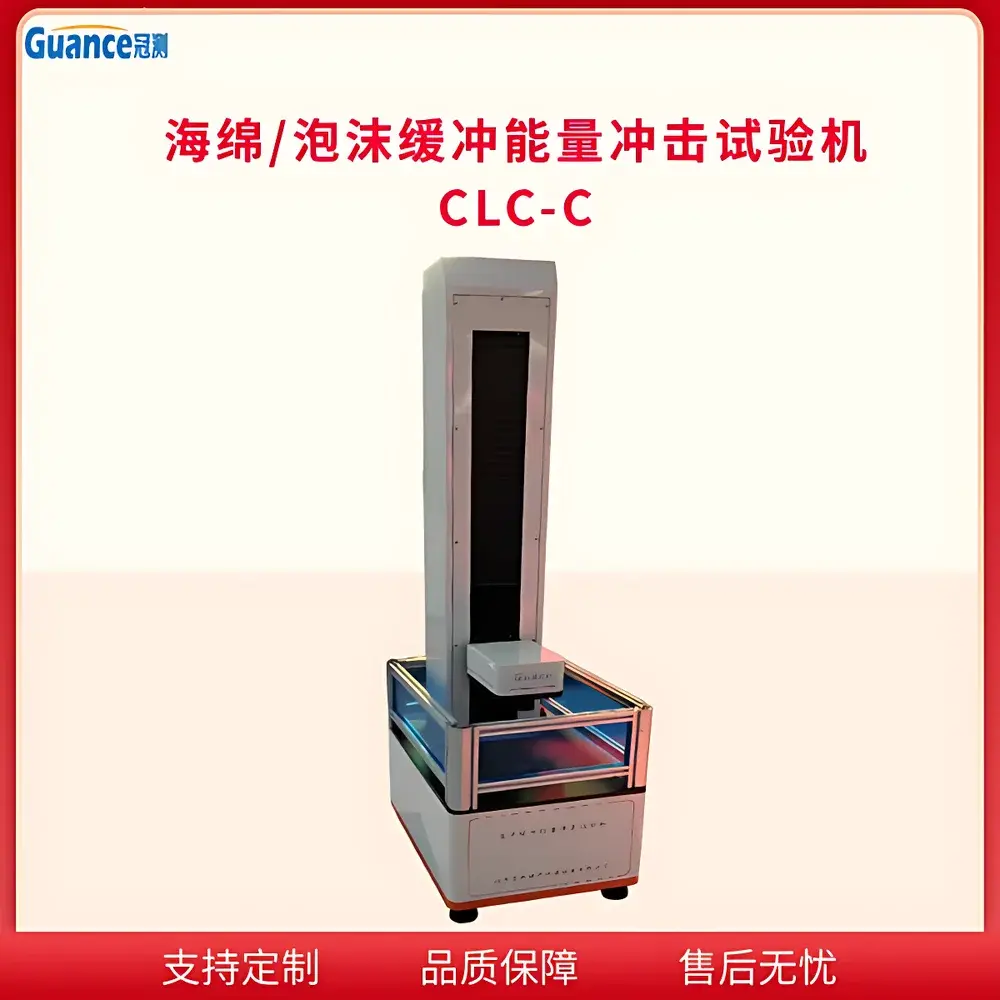
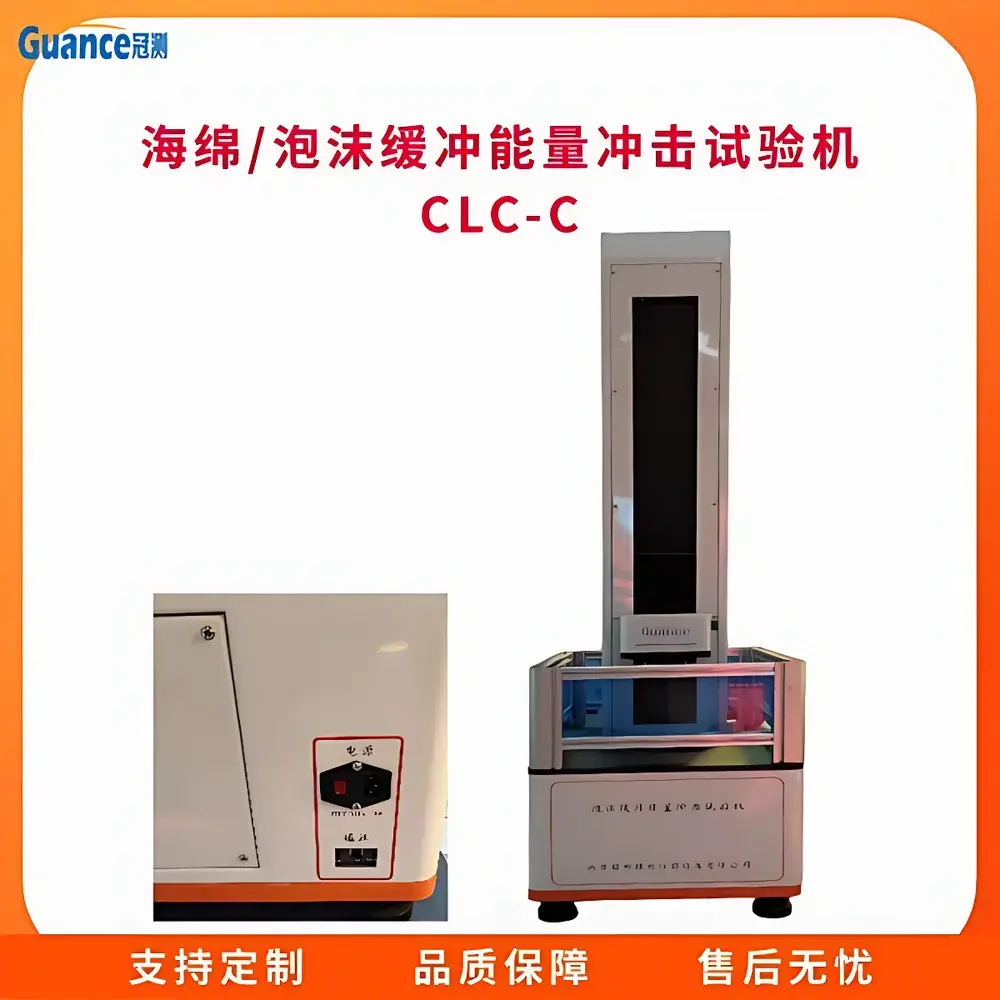
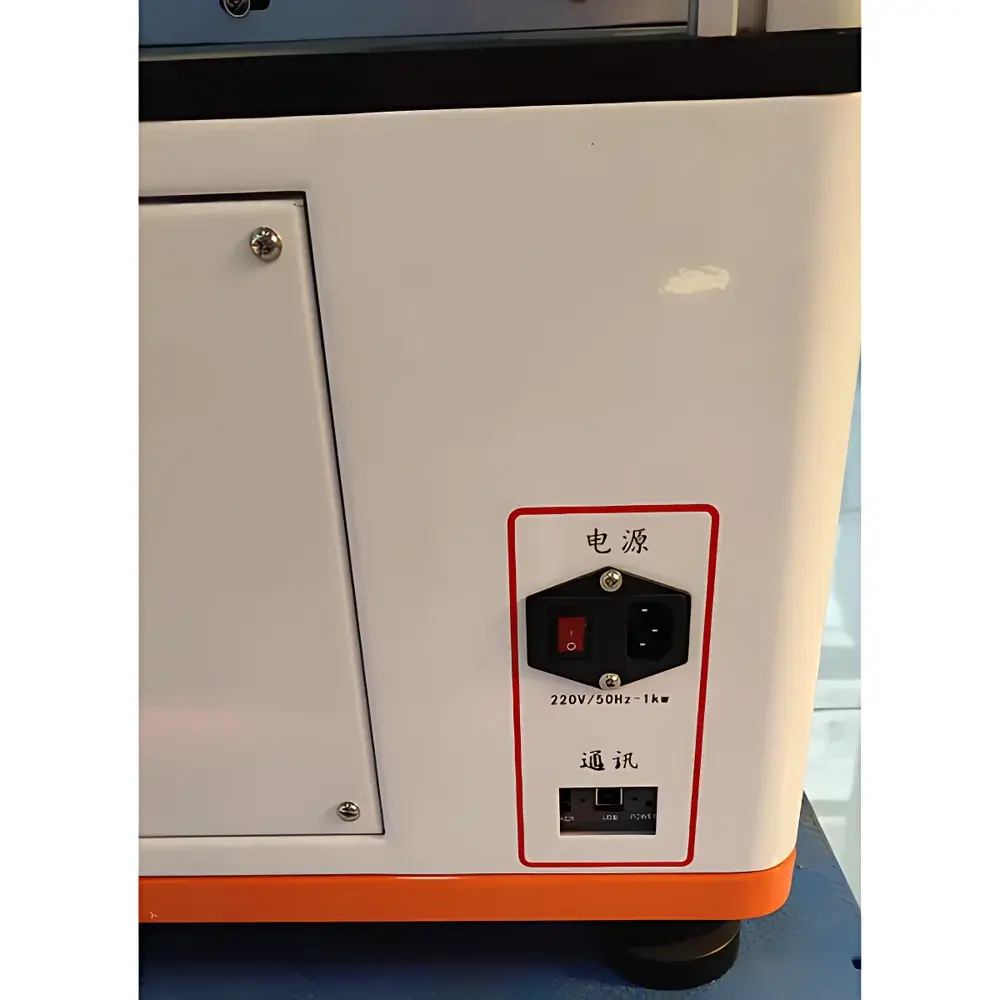
GuanCe Instruments GCCLC-C.5 Foam Cushioning Performance Impact Tester
| Brand | GuanCe Instruments |
|---|---|
| Origin | Beijing, China |
| Model | GCCLC-C.5 |
| Impact Height Range | 0–500 mm / 0–1000 mm (adjustable) |
| Impact Force Sensor Options | 2 kN / 5 kN / 10 kN |
| Maximum Lifting Height | 80 mm |
| Pendulum Moment (Impact Constant) | 60 N·m |
| Force Sensor Capacity | 50 kN |
| Data Acquisition Rate | 1 MHz |
| Release Mechanism | Motorized |
| Height Adjustment | Motorized Vertical Positioning |
| Test Mass | Standardized steel spheres (mass configurable per ASTM D3574, ISO 1856, or customer specification) |
Overview
The GuanCe Instruments GCCLC-C.5 Foam Cushioning Performance Impact Tester is a precision-engineered vertical drop impact system designed for quantitative evaluation of energy absorption, peak deceleration, and dynamic cushioning efficiency in low-density polymeric foams, elastomeric films, and thin resilient materials. It operates on the principle of controlled free-fall impact: a calibrated steel sphere is elevated to a defined height—within a programmable range of 0–500 mm or 0–1000 mm—and released under gravity onto a test specimen mounted on a high-fidelity load cell. The system captures transient force-time profiles at 1 MHz sampling rate, enabling accurate derivation of peak impact force (Fmax), impulse, absorbed energy (Eabs), and transmitted energy (Etrans). This methodology aligns with fundamental mechanical shock testing frameworks used in packaging engineering, consumer electronics protection validation, and material development labs where repeatable, traceable quantification of cushioning behavior is required.
Key Features
- Motorized height adjustment with positional repeatability ±0.1 mm across the full 0–1000 mm vertical stroke
- Programmable motorized release mechanism ensuring zero pre-load and consistent drop initiation timing
- Modular force sensor architecture supporting interchangeable 2 kN, 5 kN, or 10 kN piezoelectric load cells—each calibrated to ISO 376 Class 0.5 accuracy
- Integrated 50 kN capacity backup load cell for system verification and overload protection
- Real-time digital signal conditioning with 24-bit ADC resolution and anti-aliasing filtering
- Steel sphere set compliant with ASTM D3574 Annex A3 specifications (diameters: 16 mm, 32 mm, 50 mm; masses: 0.1 kg to 1.0 kg, traceable to NIST standards)
- Full-enclosure polycarbonate safety shield with interlocked door sensors meeting IEC 61508 SIL2 functional safety requirements
Sample Compatibility & Compliance
The GCCLC-C.5 accommodates specimens up to 200 mm × 200 mm × 50 mm (L×W×H), including open-cell polyurethane foams, ethylene-vinyl acetate (EVA) sheets, silicone gels, thermoplastic elastomer (TPE) films, and laminated cushioning composites. Specimen mounting utilizes a rigid aluminum anvil with vacuum-assisted fixation to eliminate lateral movement during impact. The system supports standardized test protocols per ASTM D3574 (Foam Cushioning), ISO 1856 (Flexible Cellular Polymeric Materials), and JIS K 6400-4 (Shock Absorption of Packaging Materials). All force and displacement data are timestamped and logged with hardware-enforced audit trails, facilitating compliance with GLP documentation requirements and internal QA procedures.
Software & Data Management
The proprietary GCCLC Control Suite (v3.2) runs on Windows-based laptop hardware included with the system. It provides full instrument control, real-time waveform visualization, and post-test analytical functions—including automatic zero-point compensation prior to each drop, dual-curve overlay (with/without cushioning layer), energy partitioning calculation (Eabs = Einput − Etrans), and statistical reporting across test series. Raw .bin files are stored in HDF5 format for long-term archival integrity. Export options include CSV, PDF reports with embedded metadata (operator ID, calibration date, environmental conditions), and XML output compatible with LIMS integration. Software design adheres to FDA 21 CFR Part 11 principles: electronic signatures, role-based access control, and immutable audit logs for all parameter changes and result modifications.
Applications
- Quantitative ranking of foam formulations for smartphone, tablet, and wearable device protective cases
- Validation of cushioning performance in medical device packaging per ISO 11607-1
- R&D support for sustainable biopolymer foams requiring impact resilience certification
- Quality conformance testing of incoming EVA die-cut pads in automotive interior assembly lines
- Comparative analysis of viscoelastic damping behavior under varying strain rates (achieved via height-controlled velocity modulation: 0–4.4 m/s)
- Correlation studies between quasi-static compression (ASTM D3574 Sec. B) and dynamic impact response
FAQ
What standards does the GCCLC-C.5 directly support?
It is configured to execute test sequences aligned with ASTM D3574 Method C (Drop-Weight Impact), ISO 1856 Clause 6.3 (Dynamic Compression), and JIS K 6400-4 Annex B.
Can the system be integrated into an automated production line?
Yes—the controller supports Modbus TCP and Ethernet/IP communication protocols for PLC synchronization and MES data handshaking.
Is calibration documentation provided with shipment?
Each unit ships with a factory calibration certificate traceable to CNAS-accredited metrology labs, covering force sensor, height encoder, and timing subsystems.
What maintenance intervals are recommended?
Biannual verification of drop height repeatability and annual recalibration of the primary force sensor are advised per ISO/IEC 17025 guidelines.
Does the software allow custom pass/fail criteria definition?
Yes—users can define multi-parameter acceptance thresholds (e.g., Fmax ≤ 8.2 kN AND Eabs ≥ 0.85 J) with automatic flagging of out-of-spec results.



