
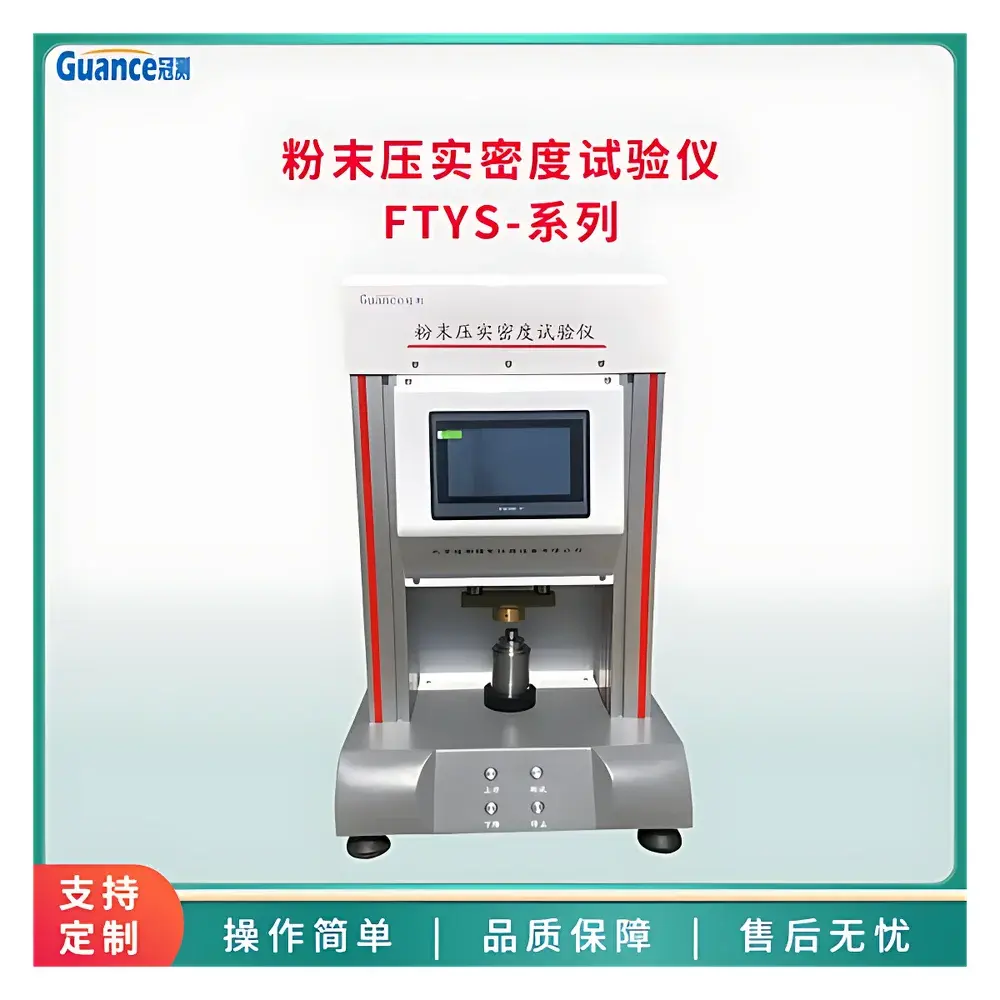
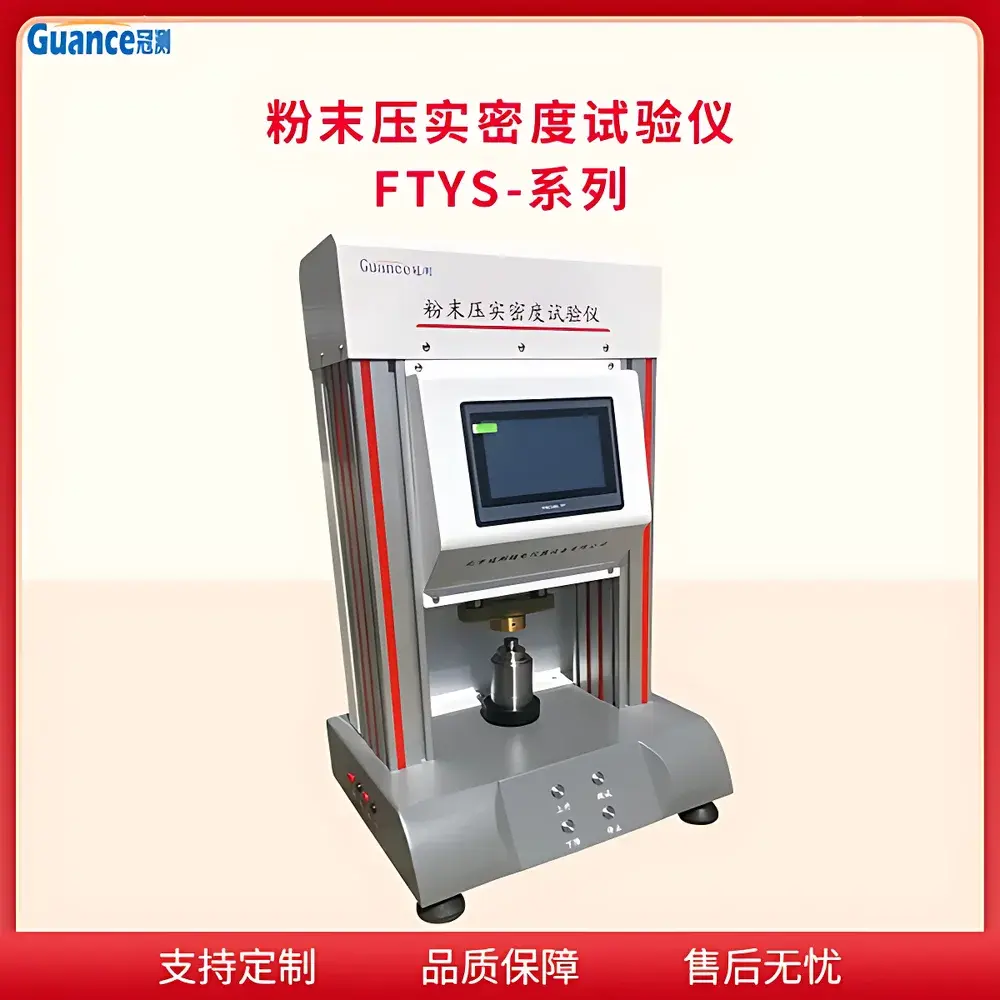
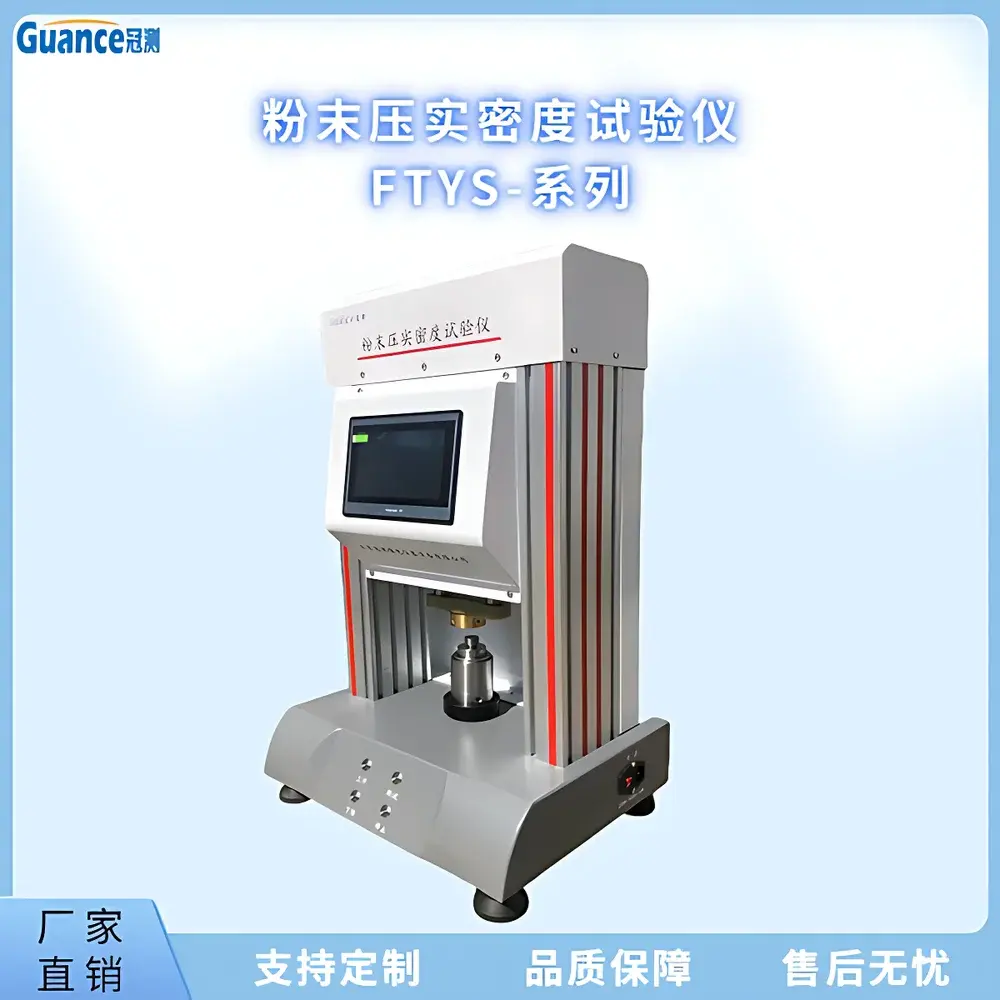
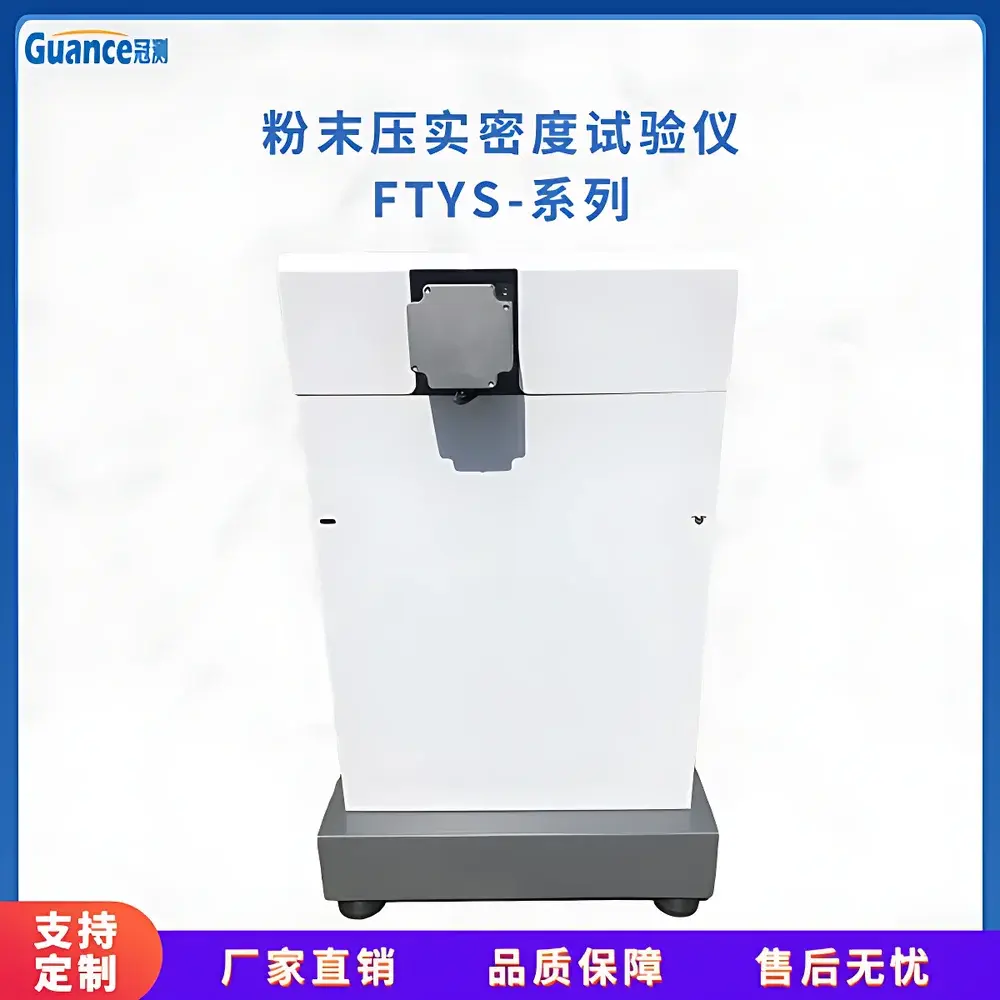
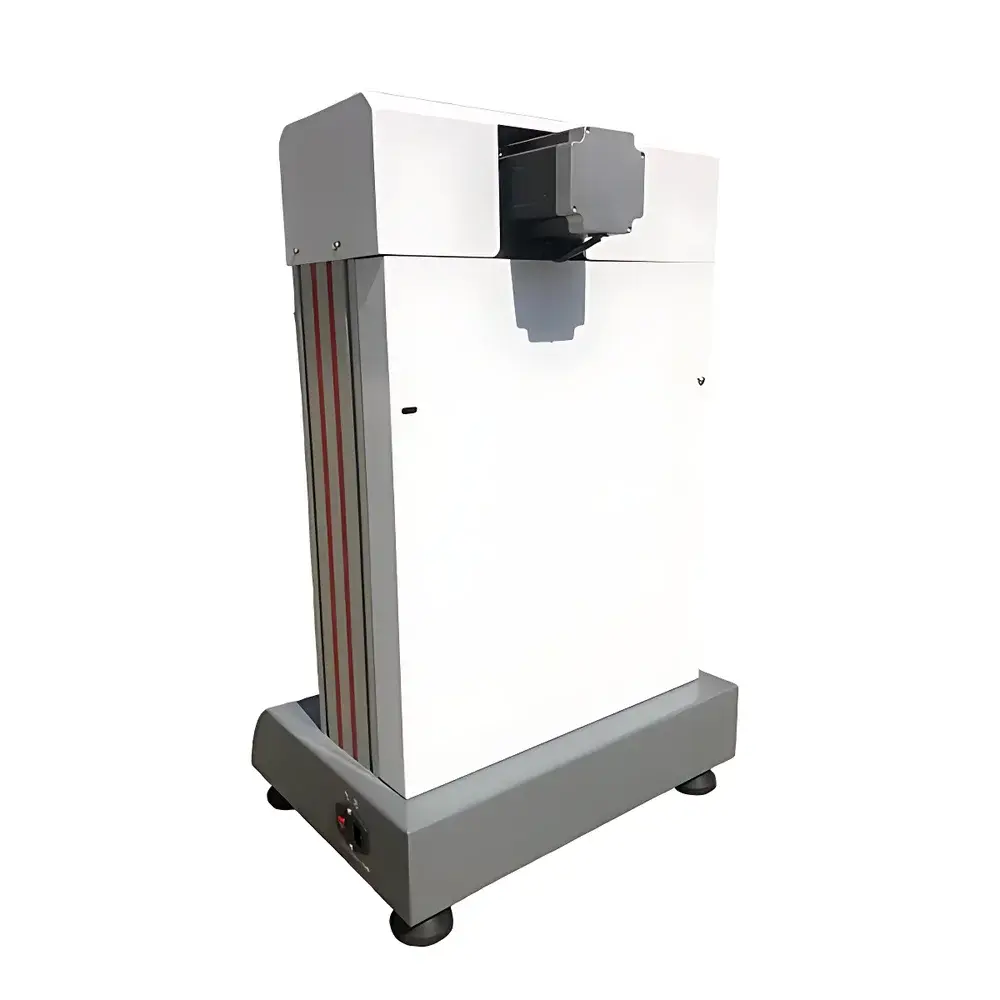
Guance Instruments FTYS-50KN Powder Compaction Density Tester for Anode & Cathode Materials
| Key | Brand: Guance Instruments |
|---|---|
| Model | FTYS-50KN |
| Origin | Beijing, China |
| Instrument Type | Laboratory Benchtop True Density Tester |
| Application | Solid–Liquid Dual-Mode Density Measurement |
| Density Range | 0–50 g/cm³ |
| Maximum Load Capacity | 50 kN |
| Density Resolution | 0.001 g/cm³ |
| Density Accuracy | ±0.01 g/cm³ |
| Repeatability | ±0.001 g/cm³ |
| Minimum Sample Mass | 0.1 g |
| Operating Temperature | 0–40 °C |
| Display | 10-inch Touchscreen HMI |
| Control System | Siemens PLC with Real-Time Data Acquisition |
| Test Modes | Constant Force, Constant Pressure, Gradient Force, Gradient Pressure, Compression Ratio |
| Compliance Standard | GB/T 24533–2009 (Lithium-Ion Battery Graphite Anode Materials – Determination of Powder Compaction Density) |
Overview
The Guance Instruments FTYS-50KN Powder Compaction Density Tester is a precision laboratory instrument engineered for the quantitative evaluation of compaction density in electrode active materials used in lithium-ion battery manufacturing. It operates on the fundamental principle of uniaxial cold compression under controlled mechanical loading, where powder samples are subjected to calibrated force or pressure within a standardized die cavity (13.0 mm diameter), resulting in dimensional reduction and interparticle densification. The resulting compacted density—expressed in g/cm³—is calculated as the ratio of areal mass (g/cm²) to the net thickness of the compressed pellet (excluding current collector contribution), in strict accordance with GB/T 24533–2009. This metric directly correlates with critical electrochemical performance parameters including volumetric capacity, ionic/electronic transport resistance, electrode porosity, and long-term cycling stability. Unlike generic bulk or apparent density testers, the FTYS-50KN delivers true compaction density values by integrating high-fidelity load control, sub-micrometer thickness displacement sensing, and synchronized real-time data acquisition—enabling rigorous process validation across R&D, QC, and production environments.
Key Features
- 10-inch industrial-grade touchscreen HMI with intuitive graphical interface, supporting over-the-air firmware updates and multilingual operation
- Siemens S7-1200 PLC-based control architecture ensuring deterministic timing, traceable command execution, and robust electromagnetic compatibility (EMC)
- Servo-motor-driven loading system delivering precise, noiseless, and continuous force application up to 50 kN with programmable ramp rates and dwell times
- Real-time concurrent monitoring of compressive force (kN), applied pressure (MPa), axial displacement (µm), and calculated compression ratio (%)
- Automated test sequence: zero calibration → sample loading → compression → hold → decompression → return-to-home → data summary
- Integrated thermal-stabilized load cell and linear variable differential transformer (LVDT) for simultaneous high-resolution force and thickness measurement
- Onboard micro-printer for immediate hardcopy output of test reports, including timestamp, operator ID, sample ID, and all primary metrics
- Multi-mode operation: constant-force, constant-pressure, stepwise gradient force/pressure, and target-compression-ratio protocols
Sample Compatibility & Compliance
The FTYS-50KN accommodates a broad spectrum of fine particulate materials relevant to battery electrode formulation—including graphite, silicon composites, NMC, LFP, LCO, and conductive carbon additives—with minimal sample volume requirements (≥0.1 g). Its standardized 13.0 mm die cavity conforms to GB/T 24533–2009 geometrical specifications and supports optional tooling for alternate diameters (e.g., 10 mm, 20 mm) under custom calibration. All mechanical and electronic subsystems comply with IEC 61000-6-2 (immunity) and IEC 61000-6-4 (emission) standards. The instrument’s data integrity framework aligns with GLP principles: audit trails record all parameter changes, user actions, and system events; raw sensor outputs are stored with ISO 8601 timestamps and immutable metadata. While not FDA 21 CFR Part 11-certified out-of-box, its data export functionality (CSV, Excel) enables integration into validated LIMS or ELN platforms meeting regulatory documentation requirements.
Software & Data Management
Data acquisition and analysis are managed through an embedded real-time operating system (RTOS) with deterministic sampling at ≥100 Hz per channel. Each test generates a structured dataset containing force–displacement curves, time-synchronized pressure–thickness trajectories, and derived metrics (e.g., density at each compression step, Δresistance between gradients). Results are exportable via USB or Ethernet to standard formats compatible with MATLAB, Python (Pandas), or statistical process control (SPC) software. The system supports batch-level reporting with statistical summaries (mean, SD, CV%) across multiple replicates. User-defined templates allow preconfiguration of test protocols—including target pressures, dwell durations, and pass/fail thresholds—for SOP-driven operation. All configuration files and historical records are encrypted and stored locally with automatic daily backup to external media.
Applications
- Optimization of calendering parameters during electrode manufacturing (e.g., roll pressure vs. density vs. conductivity trade-offs)
- Comparative evaluation of binder systems and conductive additive architectures under identical compaction conditions
- Quality control of incoming anode/cathode powders to ensure batch-to-batch consistency in densification behavior
- Correlation studies linking compaction density to electrochemical impedance spectroscopy (EIS), rate capability, and cycle life
- Supporting DOE (Design of Experiments) for next-generation high-energy-density electrodes incorporating Si-anodes or sulfur cathodes
- Academic research on particle rearrangement, plastic deformation, and interfacial bonding mechanisms during cold compaction
FAQ
What standards does the FTYS-50KN comply with?
It is fully aligned with GB/T 24533–2009 for graphite anode materials and supports method adaptation for other ISO/ASTM standards requiring controlled uniaxial compression density measurement.
Can the instrument measure both anode and cathode materials?
Yes—its wide dynamic range (0–50 g/cm³) and low minimum sample requirement (0.1 g) make it suitable for high-density cathode materials (e.g., NMC, ~3–4 g/cm³ uncompressed) and low-density anodes (e.g., graphite, ~1.5–2.2 g/cm³ uncompressed).
Is calibration traceable to national metrology institutes?
Load cell calibration is performed using NIST-traceable deadweight standards; thickness measurement is verified with certified gauge blocks. Certificate of Calibration is provided with each unit.
Does the system support network connectivity for centralized data management?
Yes—Ethernet port enables TCP/IP communication for remote monitoring, data pull, and integration into factory MES or QMS platforms.
How is repeatability ensured across operators and laboratories?
Through hardware-level synchronization of force and displacement sensors, automated positioning repeatability (<±1 µm), and elimination of manual intervention via closed-loop PLC control—reducing operator-induced variability to <0.001 g/cm³ (RSD <0.05%).
Related Products



