
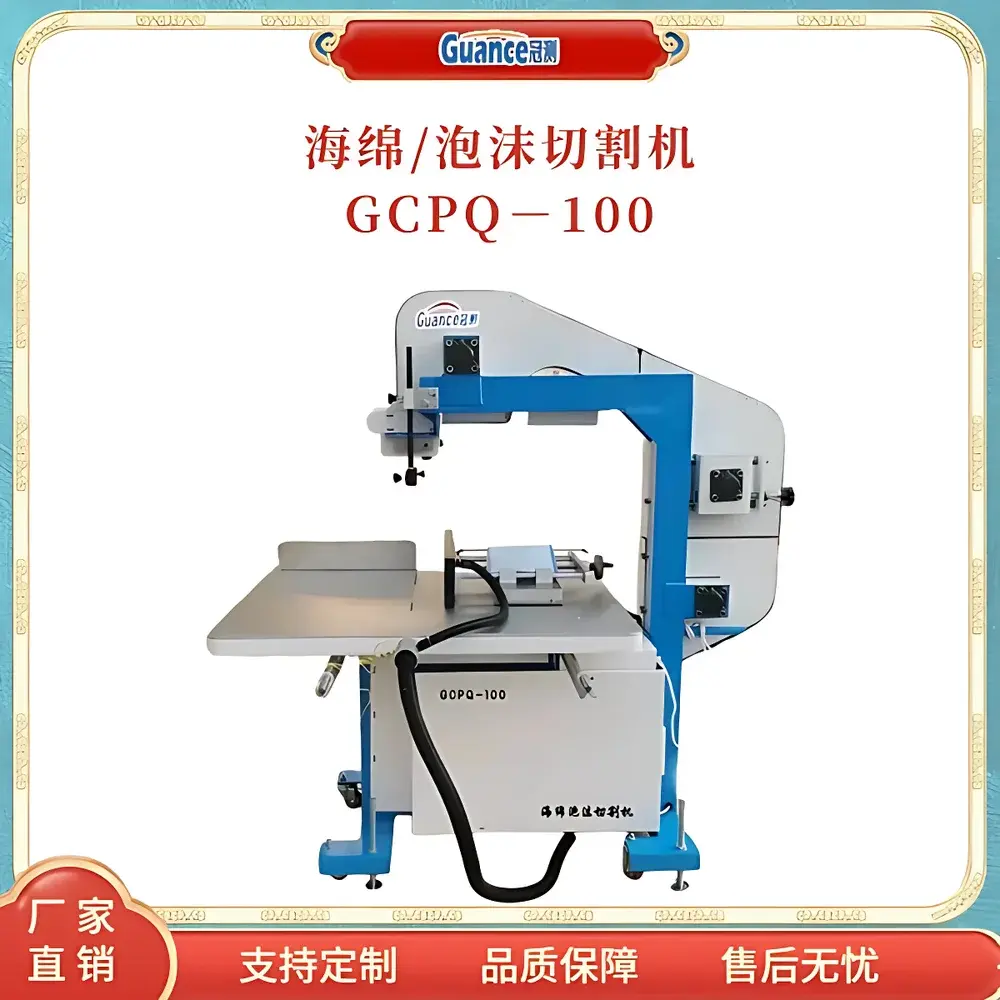
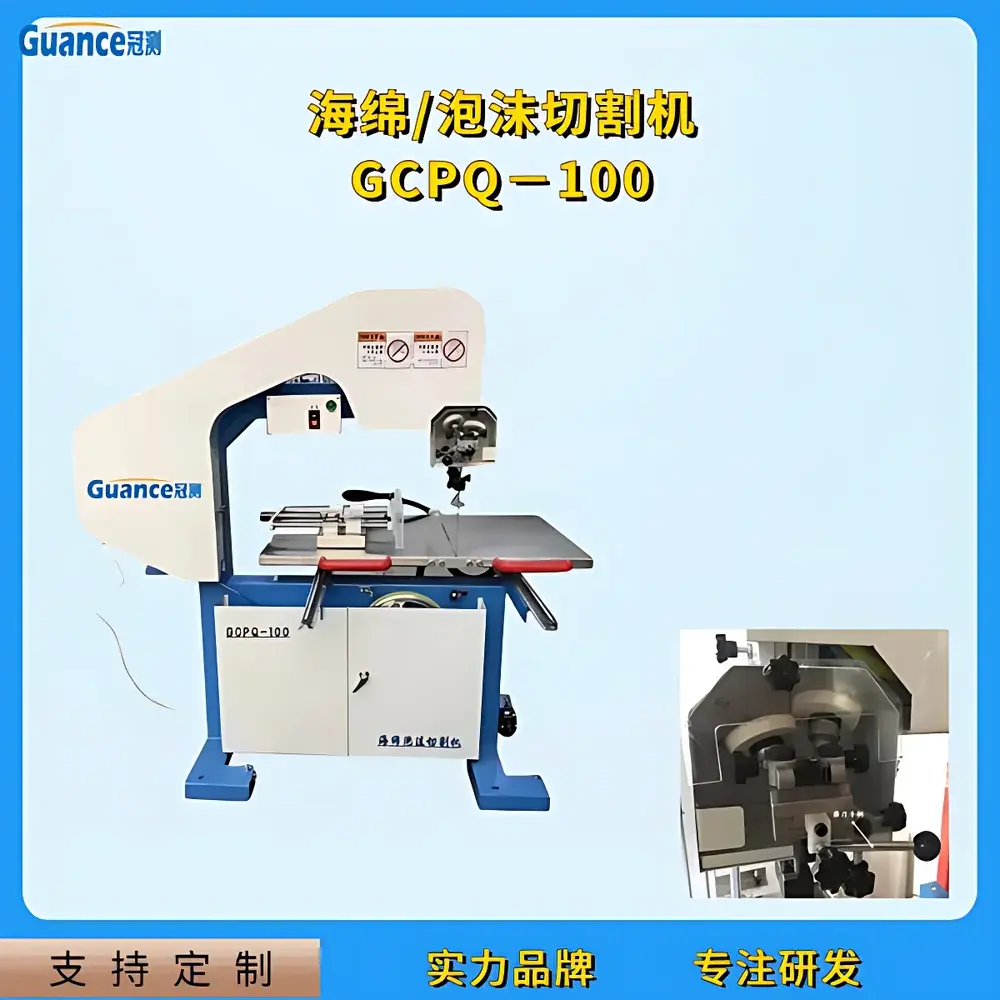
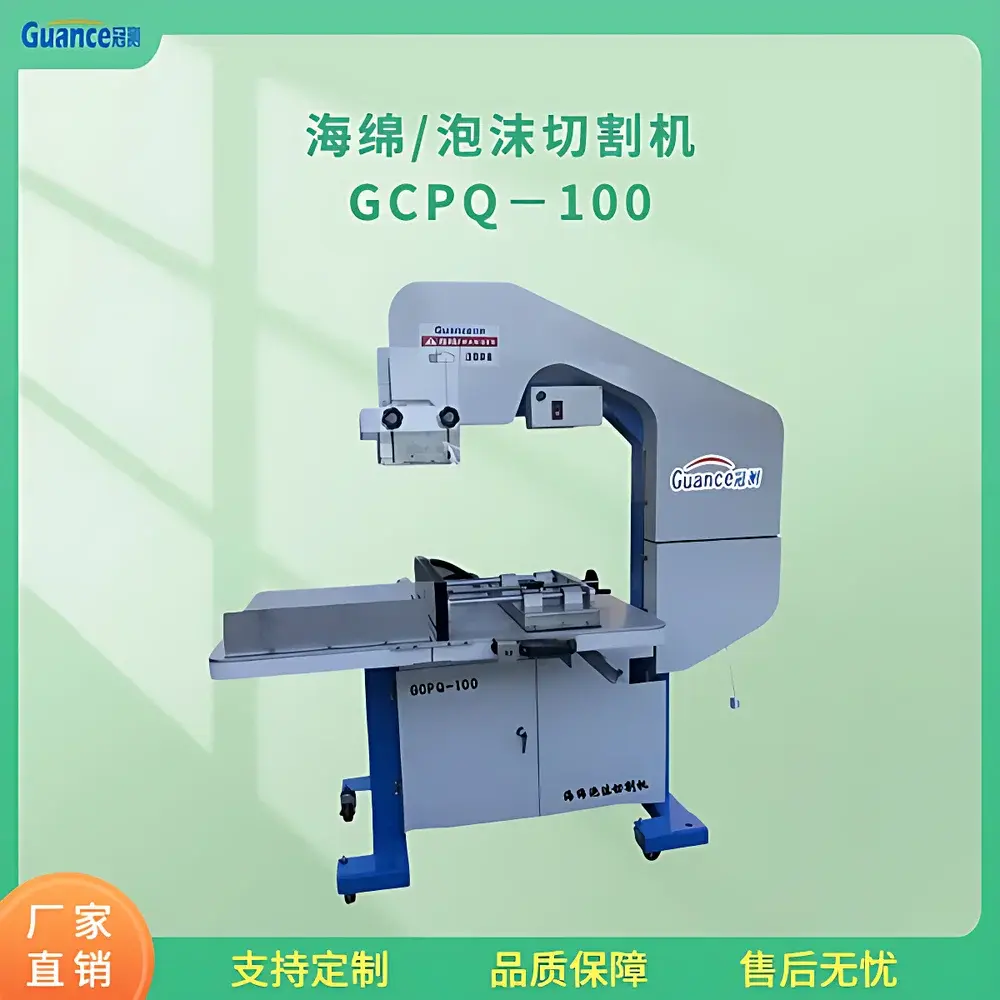
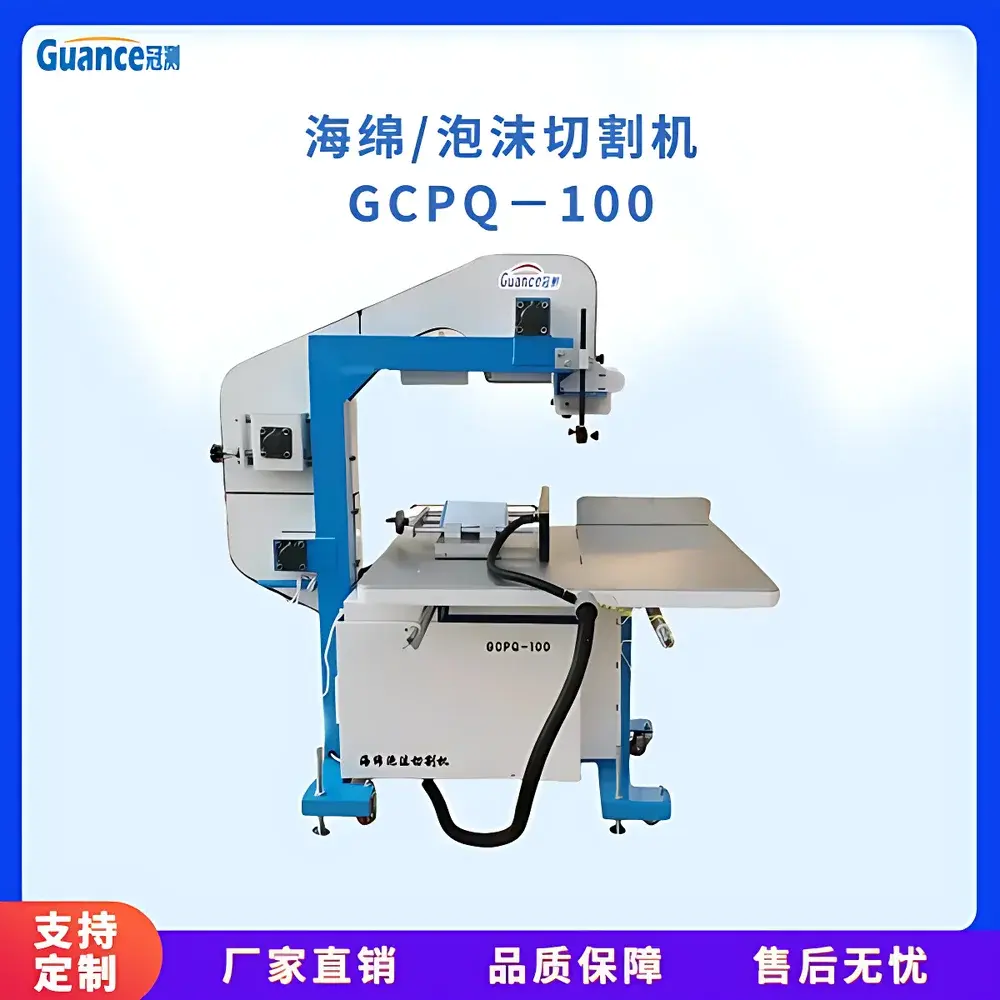
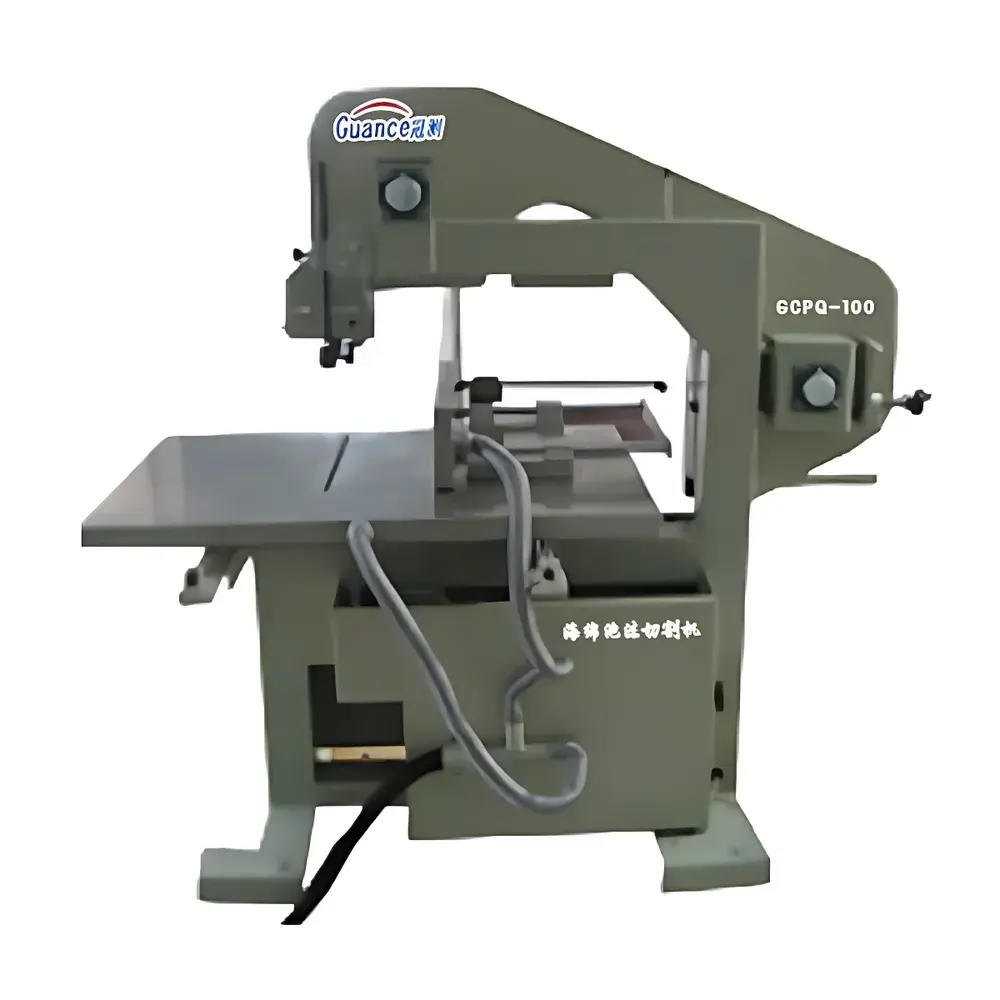
Guance Instruments GCPQ-100.3 Precision Foam Cutting Machine
| Brand | Guance Instruments |
|---|---|
| Origin | Beijing, China |
| Manufacturer Type | Authorized Distributor |
| Country of Origin | China |
| Model | GCPQ-100.3 |
| Instrument Type | Precision Cutting Machine |
| Digital Caliper Resolution | 0.01 mm |
| Cutting Dimensional Accuracy | ±1 mm (material-dependent) |
| Worktable Dimensions | 1000 × 700 mm (customizable) |
| Worktable Material | Anodized Aluminum |
| Guard Material | Acrylic |
| Effective Traverse Stroke | 500 mm |
| Maximum Cutting Cross-Section | 25 × 25 × 10 mm |
| Maximum Electric Cutting Thickness | 400 mm |
| Vacuum Dust Extraction Voltage | 220 V / 50 Hz |
| Rated Power | 1 kW |
| Blade Belt Circumference | 3920 mm |
Overview
The Guance Instruments GCPQ-100.3 Precision Foam Cutting Machine is an engineered solution for reproducible, dimensionally controlled sectioning of low-density polymeric foams and compliant elastomeric materials in laboratory and quality control environments. Designed around a robust cantilevered blade-belt architecture with linearly traversing vacuum-adhered worktable, the system implements continuous hot-wire or resistive-element cutting—optimized for minimal thermal distortion and edge deformation in soft cellular structures. Unlike abrasive or mechanical saw-based systems, this machine avoids compressive loading during cut initiation, preserving the intrinsic morphology of open- and closed-cell foams used in ASTM D3574, ISO 1856, and EN 1606 test specimen preparation. Its high-planarity aluminum platform (flatness ≤ 0.05 mm/m) ensures consistent kerf geometry across full-stroke operation, while integrated point-actuated start/stop controls enable precise manual intervention without inertia-induced overshoot.
Key Features
- Vacuum-assisted worktable (negative-pressure fixation) prevents lateral shift or compression of low-modulus foam specimens during cutting
- Digitally calibrated linear scale with 0.01 mm resolution enables traceable dimensional setting per ISO/IEC 17025-compliant calibration protocols
- Modular acrylic safety guards conform to IEC 61000-6-2 electromagnetic compatibility and EN 60204-1 machinery safety directives
- Integrated dust extraction interface compatible with standard 100–150 mm ducting (220 V / 50 Hz rated)
- On-machine blade sharpening mechanism eliminates disassembly—reducing downtime and maintaining consistent wire tension within ±2% tolerance
- Noise-dampened drive train utilizing polymer-coated idler pulleys and vibration-isolated motor mounts (operating noise < 68 dB(A) at 1 m)
- Adjustable stop-block assembly with micrometer-scale fine positioning allows repeatable batch cutting of standardized test coupons (e.g., 100 × 100 × 25 mm per ASTM C272)
Sample Compatibility & Compliance
The GCPQ-100.3 accommodates a broad spectrum of compliant polymeric substrates including polyurethane (PU), polystyrene (PS), polyethylene (PE), and melamine-formaldehyde foams—regardless of apparent density (10–120 kg/m³) or compression set behavior. It supports preparation of specimens for tensile (ISO 1798), compression (ISO 844), and thermal conductivity (ASTM C518) testing. All structural components comply with RoHS Directive 2011/65/EU; electrical subsystems meet CE marking requirements under the Low Voltage Directive 2014/35/EU and EMC Directive 2014/30/EU. Documentation includes factory calibration certificate (traceable to NIM Beijing), CE Declaration of Conformity, and material safety data sheets for consumables.
Software & Data Management
While the GCPQ-100.3 operates via analog/manual control for maximum operational simplicity and fail-safe reliability, it features RS-232 serial output for optional integration into LIMS or MES platforms. Digital caliper readings can be logged externally via TTL-level pulse output synchronized with cut initiation. Audit trails—including operator ID (via optional RFID badge reader), date/time stamp, and dimensional setpoint—are exportable as CSV for GLP/GMP-aligned record retention. Firmware supports user-defined parameter presets (e.g., “ASTM D3574 Block Cut”, “ISO 1856 Cylinder Slice”) with password-protected access levels for QA supervisors.
Applications
- Preparation of compression test specimens from flexible PU foam for automotive seating validation
- Cutting of acoustic insulation panels to exact thickness tolerances for ISO 354 sound absorption coefficient measurement
- Sectioning of buoyancy foams for marine composite qualification per MIL-STD-2032
- Production of standardized cores for sandwich panel flexural testing (ASTM C393)
- Routine QC slicing of packaging foams prior to peel adhesion or crush resistance evaluation (ISTA 3A)
FAQ
What foam densities can the GCPQ-100.3 cut reliably?
It handles foams with apparent densities ranging from 10 kg/m³ (ultra-soft acoustic grades) to 120 kg/m³ (semi-rigid structural grades), provided cell structure remains intact during handling.
Is vacuum pressure adjustable for different foam hardnesses?
Yes—the vacuum regulator allows stepless adjustment from 15 to 65 kPa, enabling secure fixation of both memory foam and rigid cross-linked PS without surface indentation.
Can the machine cut non-foam materials such as rubber or gel pads?
It is validated for thermoplastic and thermoset foams only; elastomeric solids with Shore A > 40 may cause excessive blade drag and inconsistent kerf width.
Does the system support automated multi-pass cutting sequences?
No—it is manually operated for maximum operator control; however, the digital scale and indexed stop blocks facilitate rapid repeatability in high-volume manual workflows.
What maintenance intervals are recommended for the blade belt and vacuum pump?
Blade belt replacement every 6 months under daily use; vacuum filter cleaning weekly; pump oil change every 1,000 operating hours per manufacturer service bulletin GCPQ-SV-2023-04.



