

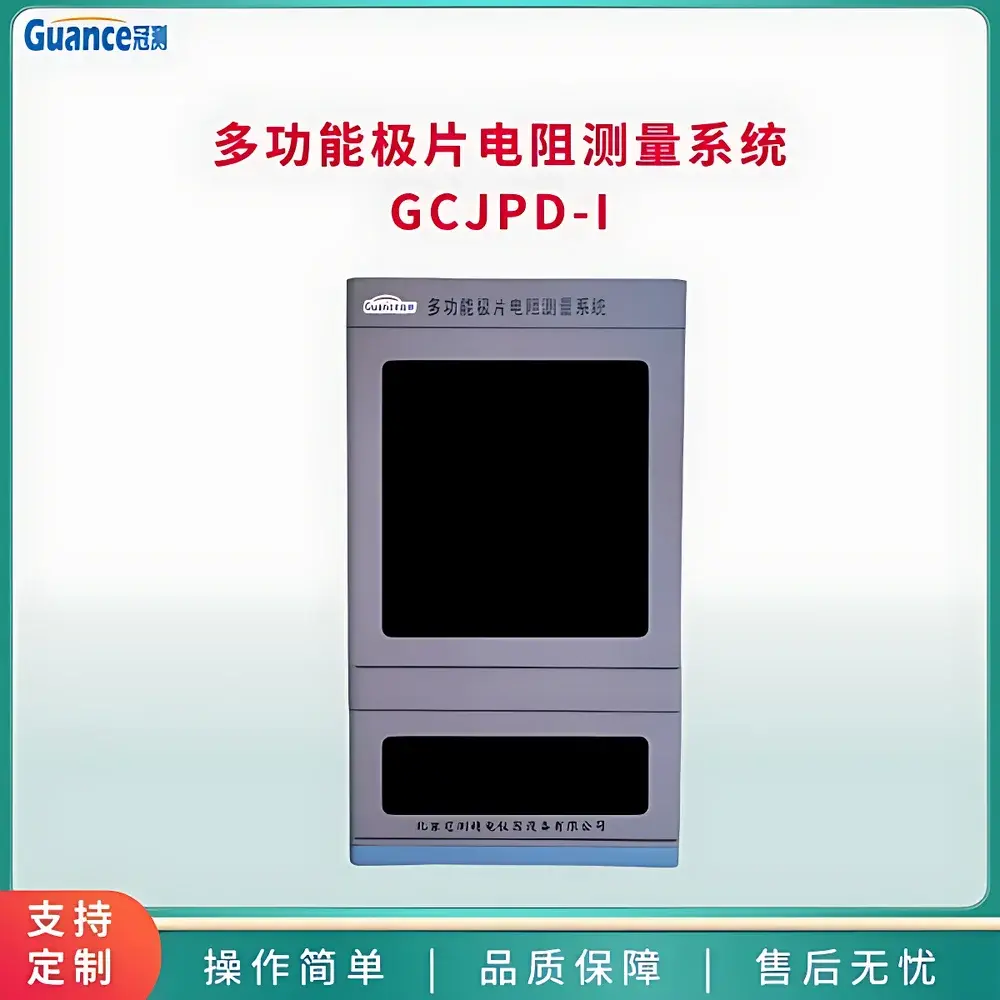
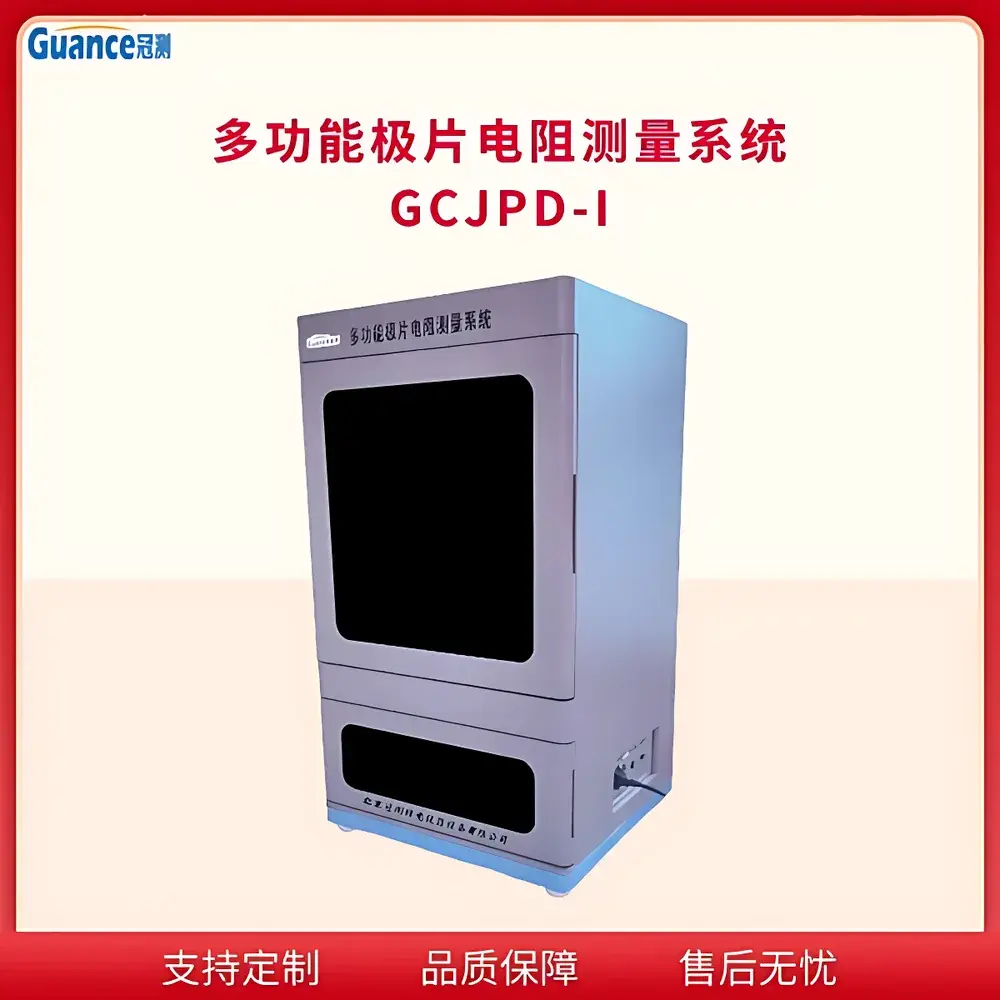
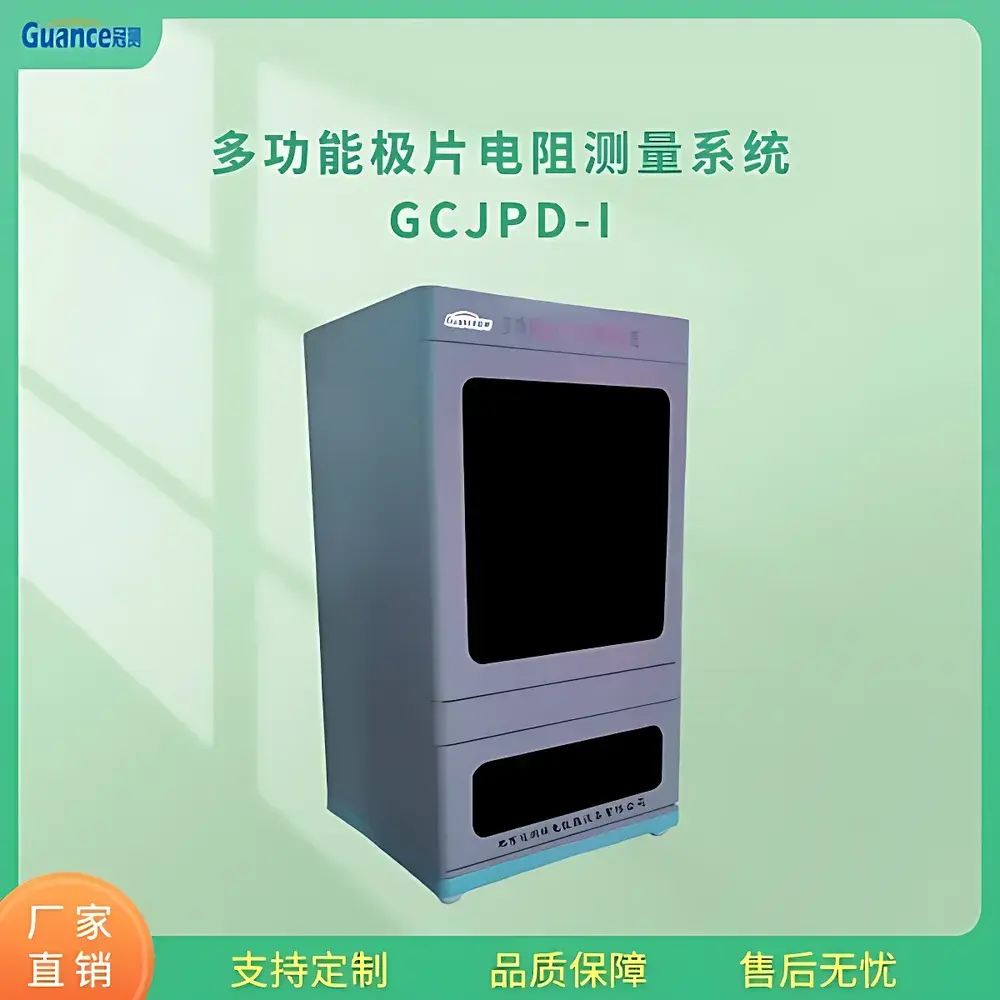
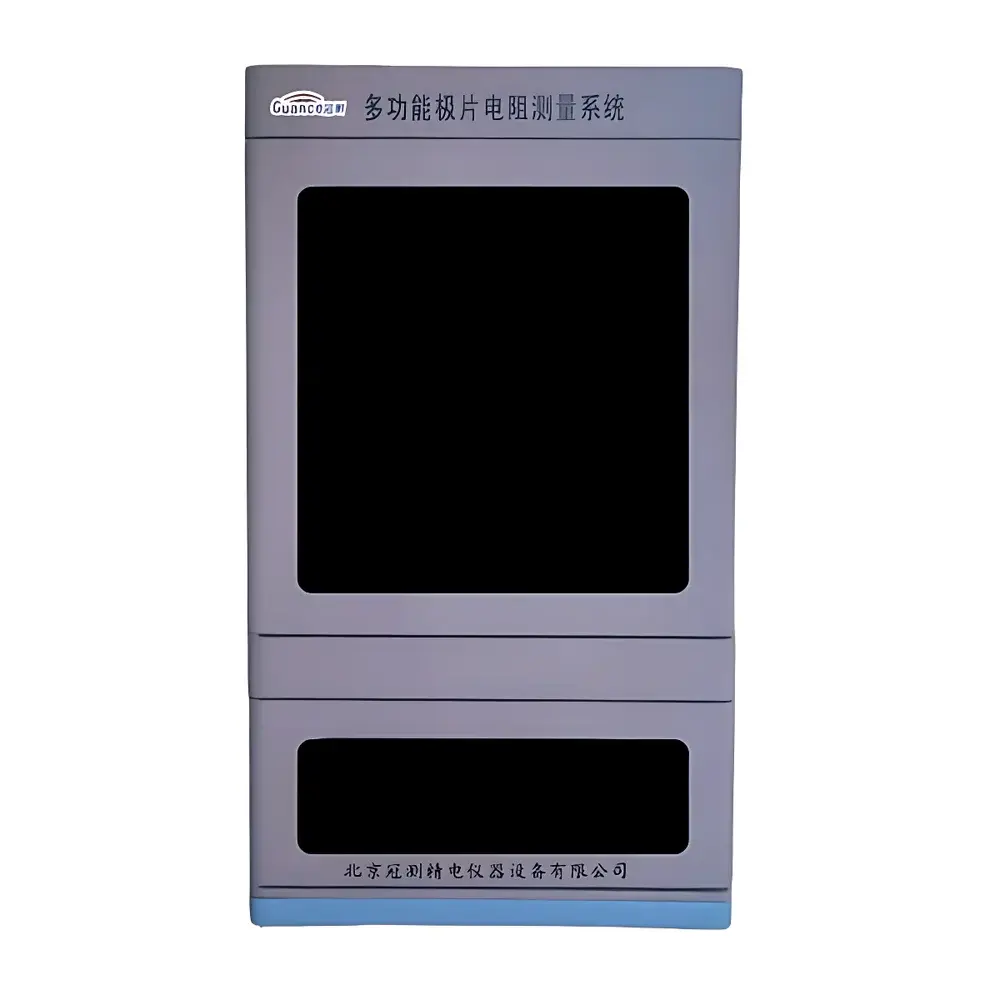
GuanCe Instruments GCJPD-I Multifunctional Electrode Sheet Resistivity Measurement System
| Brand | GuanCe Instruments |
|---|---|
| Origin | Beijing, China |
| Manufacturer Type | Authorized Distributor |
| Regional Category | Domestic (PRC) |
| Model | GCJPD-I |
| Price | USD 1,850 (excl. tax & shipping) |
Overview
The GuanCe Instruments GCJPD-I Multifunctional Electrode Sheet Resistivity Measurement System is an engineered solution for quantitative, pressure-controlled bulk resistivity characterization of lithium-ion battery electrode sheets. Unlike conventional two- or four-point probe methods—which measure only surface-layer resistance via point-contact voltage–current sampling—the GCJPD-I employs a through-thickness current injection geometry with dynamically adjustable mechanical compression. This architecture enables direct measurement of volumetric resistivity across the full electrode cross-section (coating + current collector interface), capturing the combined contributions of particle-to-particle contact resistance, coating–foil interfacial resistance, and bulk coating conductivity under controlled mechanical load. The system operates on the principle of Ohm’s law applied to a defined current path perpendicular to the electrode plane, where measured resistance (R) is correlated with geometric dimensions (thickness, area) and applied compressive stress (σ), yielding pressure-dependent resistivity (ρ = R × A / t). This approach aligns with fundamental electrochemical engineering requirements for electrode process development, particularly in calendering optimization, binder formulation evaluation, and interfacial adhesion assessment.
Key Features
- Pressure-controllable resistivity measurement: Adjustable compression force range from 0.1 MPa to 5.0 MPa (calibrated via integrated load cell, ±0.5% FS accuracy)
- Simultaneous real-time acquisition of three synchronized parameters: applied pressure, sheet resistance (Ω), and thickness deformation (µm) using high-resolution displacement transducer
- Through-thickness current injection: Dual rigid copper electrodes ensure uniform current distribution across the entire electrode surface area (max. sample size: 100 mm × 100 mm)
- Integrated digital micro-ohmmeter with 4-wire Kelvin sensing, resolution down to 10 µΩ, measurement range: 10 µΩ to 20 kΩ
- Modular mechanical frame with precision-ground stainless steel platens and anti-rotation guide columns for repeatable alignment
- Compliant with ISO 3915:2021 (Electrical resistance of conductive plastics) and ASTM D257-21 (Standard Test Methods for DC Resistance or Conductance of Insulating Materials) for resistivity methodology adaptation
Sample Compatibility & Compliance
The GCJPD-I accommodates standard electrode formats used in commercial and R&D battery manufacturing, including coated aluminum/copper foils (6–20 µm thickness), NMC, LFP, graphite, silicon-composite, and solid-state composite electrodes. It supports both dry and solvent-free pressed samples, with no requirement for conductive paste or vacuum contact enhancement. All mechanical and electrical components meet CE marking requirements for laboratory equipment (2014/30/EU EMC Directive and 2014/35/EU Low Voltage Directive). Data acquisition firmware supports audit-trail logging per GLP/GMP-aligned practices, with timestamped parameter records exportable in CSV and Excel-compatible formats. While not FDA 21 CFR Part 11 certified out-of-box, the system architecture permits integration with validated LIMS environments via RS-232 and USB-C serial interfaces.
Software & Data Management
The GCJPD-I is operated via GuanCe’s proprietary GC-Resist v2.3 software (Windows 10/11 compatible), which provides real-time graphical overlay of resistivity vs. pressure, thickness vs. pressure, and dR/dσ derivative plots. Users define multi-step pressure ramps (e.g., 0.5 → 3.0 MPa at 0.2 MPa/min), with automatic hold-and-measure cycles at each setpoint. All raw sensor data—including analog voltage, current, load cell mV output, and LVDT displacement—are stored with metadata (operator ID, sample ID, ambient temperature/humidity, calibration date). Export options include IEEE C37.118-compliant time-series files and tab-delimited datasets suitable for MATLAB, Python (pandas), or JMP statistical analysis. Software includes built-in uncertainty propagation calculation per GUM (JCGM 100:2008), incorporating instrument repeatability, geometric dimension tolerances, and thermal EMF compensation.
Applications
- Calendering process validation: Correlating roll-press pressure with post-calendering resistivity recovery and thickness rebound
- Binder–conductive additive interaction studies: Quantifying how polymer binder elasticity modulates interparticle contact under load
- Current collector interface quality screening: Detecting delamination onset via non-linear resistivity jumps during incremental compression
- Electrode homogeneity mapping: Paired with motorized XY stage (optional accessory), enabling spatially resolved resistivity profiling
- Accelerated aging simulation: Monitoring resistivity hysteresis after cyclic compression–relaxation to assess mechanical fatigue
- QC/QA release testing: Establishing specification limits for batch-to-batch resistivity-pressure slope (dρ/dσ) as a proxy for coating cohesion
FAQ
Does the GCJPD-I comply with international battery testing standards such as IEC 62660 or UL 1642?
The GCJPD-I implements measurement principles referenced in IEC 62660-1 Annex D (electrode resistivity evaluation) and supports test protocols aligned with UL 1642 Section 7.3 (electrode integrity verification), though it is not a certified test apparatus for final compliance reporting.
Can the system measure anisotropic resistivity (in-plane vs. through-plane)?
No—the GCJPD-I is specifically designed for through-plane (z-axis) resistivity. In-plane measurements require orthogonal probe configurations not supported by this platform.
Is calibration traceable to national metrology institutes?
Yes—load cell and ohmmeter modules are supplied with factory calibration certificates traceable to CNAS-accredited labs (equivalent to ISO/IEC 17025), with optional annual recalibration service available.
What sample preparation is required prior to testing?
Samples must be cut to flat, parallel-edged rectangles (min. 20 mm × 20 mm); no surface cleaning or coating is needed. Foil edges should be free of burrs to ensure uniform platen contact.
How is thermal drift compensated during long-duration compression holds?
The system performs automatic zero-offset correction every 30 seconds during static measurement phases, using guarded low-thermal-EMF cabling and cold-junction-compensated thermocouple monitoring of electrode temperature.



