
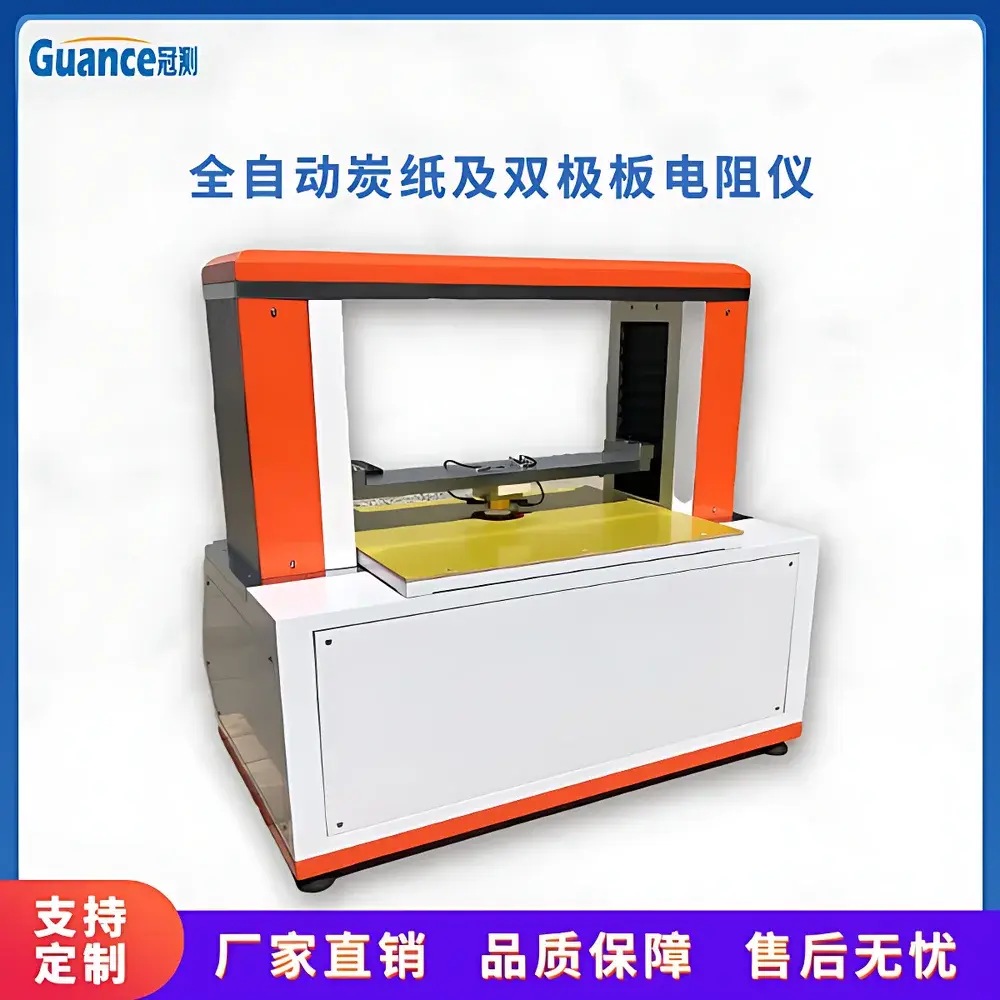
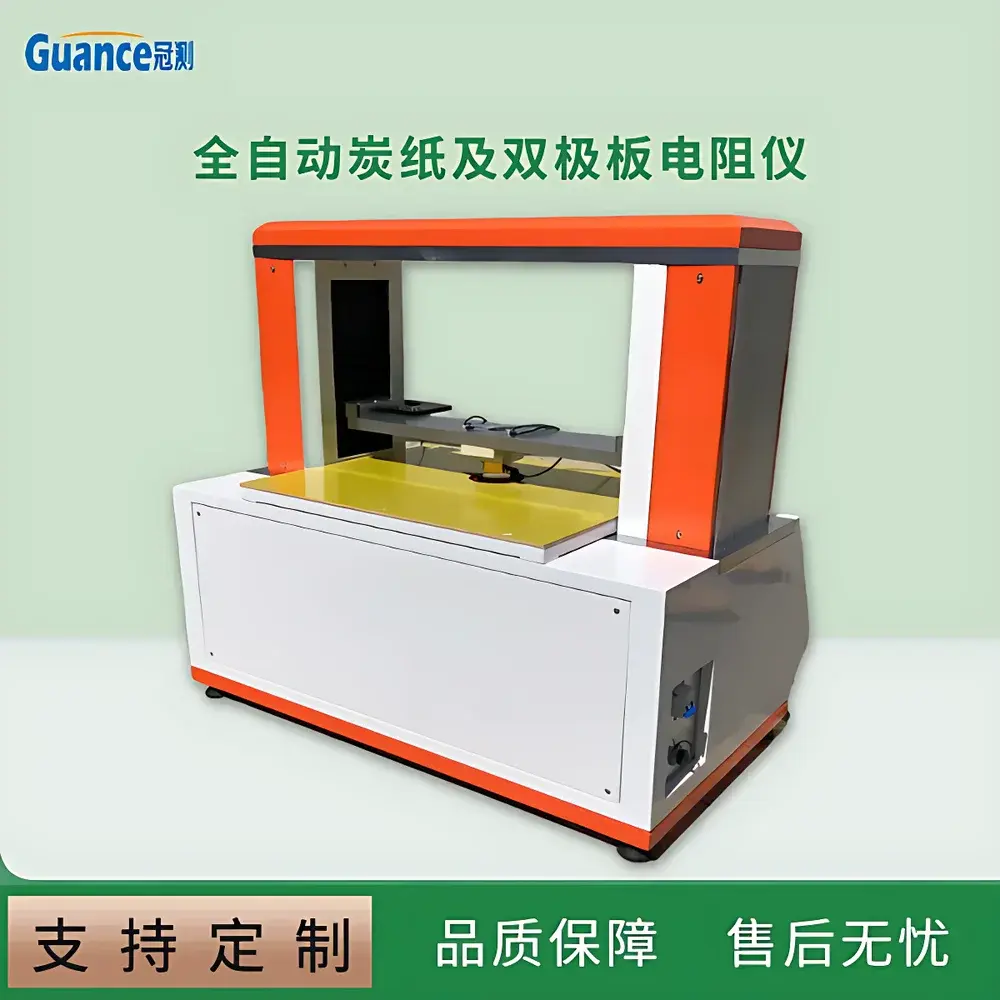
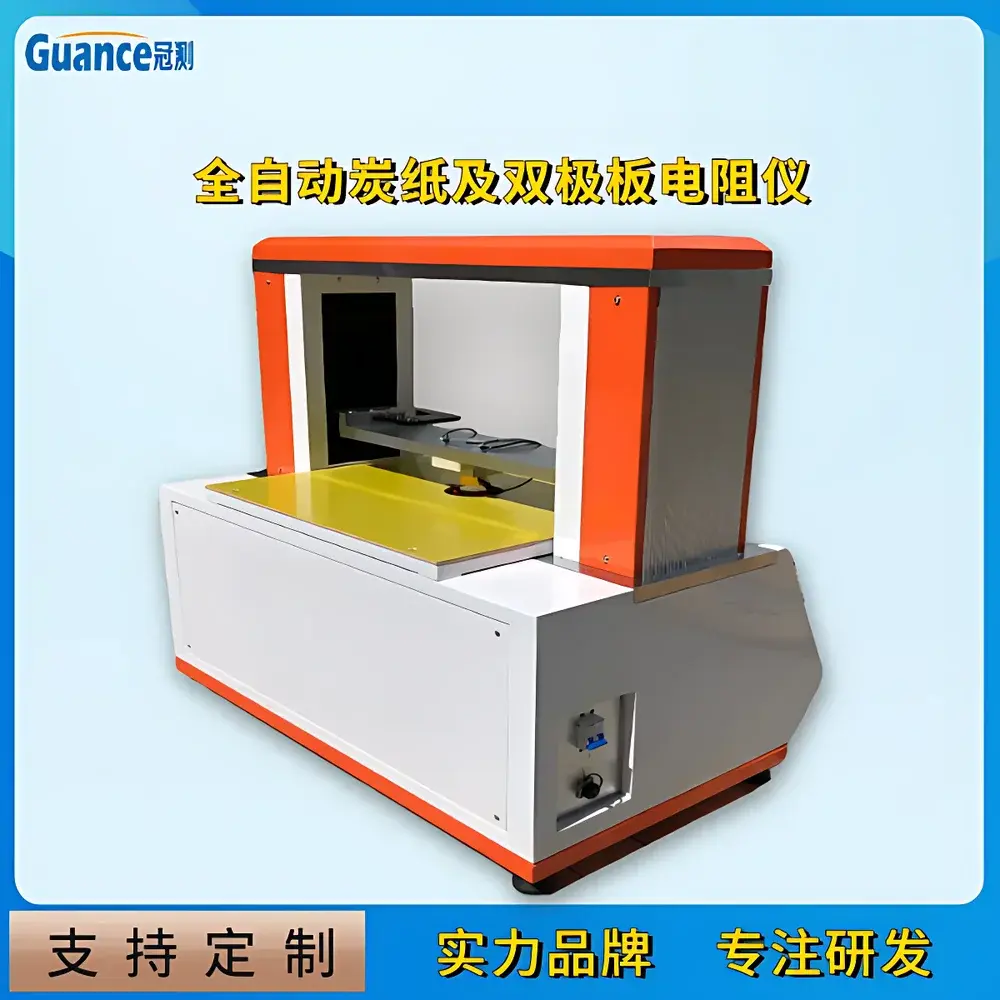
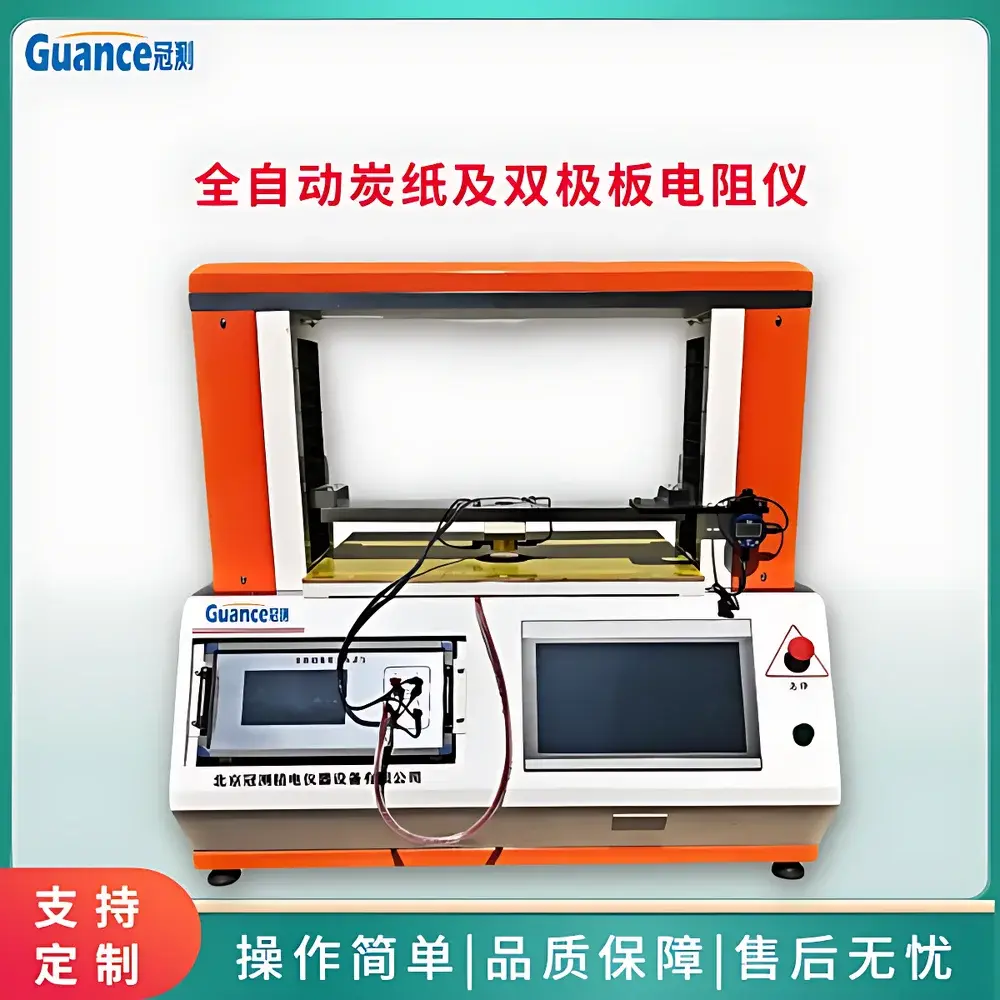
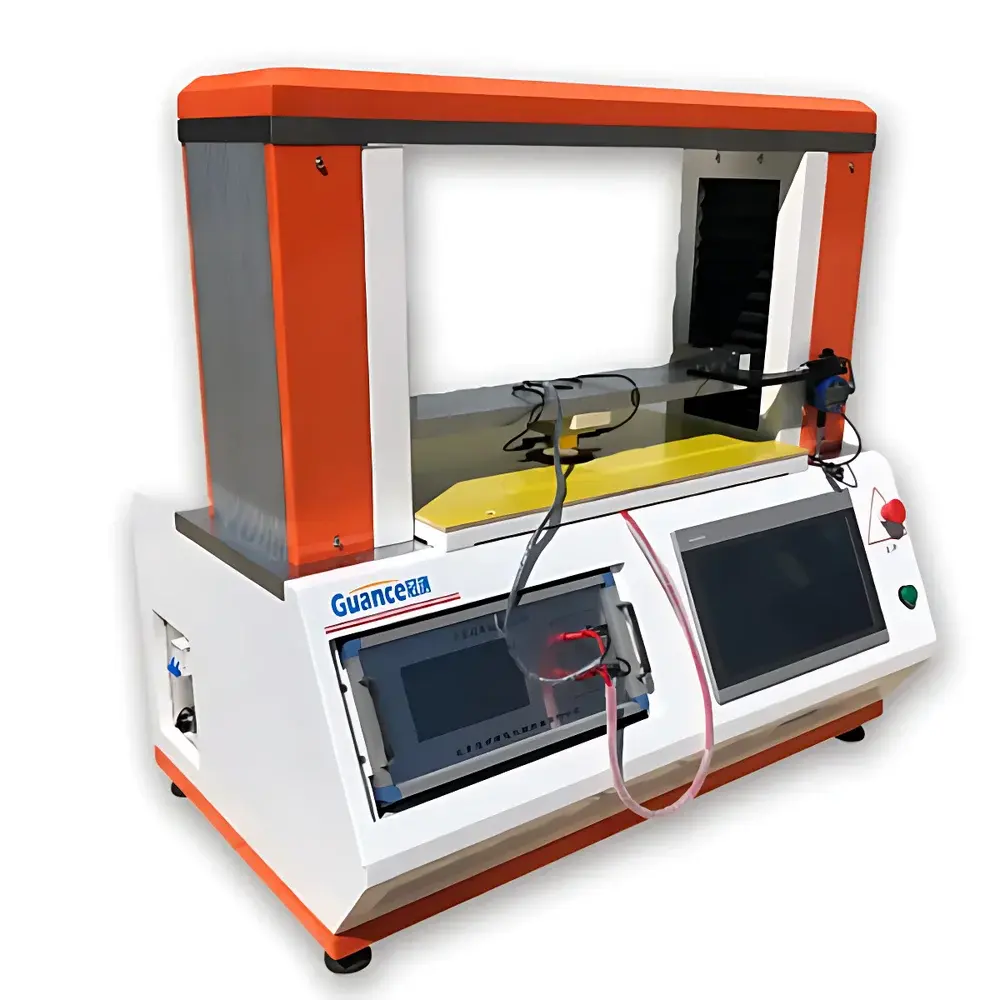
GuanCe GEST-20042 Dual-Mode Bipolar Plate Resistivity Tester with Four-Point Probe and Vertical/Horizontal Measurement Capability
| Brand | GuanCe Instruments |
|---|---|
| Origin | Beijing, China |
| Manufacturer Type | Authorized Distributor |
| Country of Origin | China |
| Model | GEST-20042 |
| Price | USD 1,560 (FOB Beijing) |
Overview
The GuanCe GEST-20042 is a dedicated physical property testing instrument engineered for high-precision resistivity characterization of proton exchange membrane fuel cell (PEMFC) components—specifically gas diffusion layers (GDLs, commonly referred to as carbon paper) and graphite or composite bipolar plates (BPPs). It operates on two complementary electrical measurement principles: the four-point probe method (ASTM F1529, ISO 10837) for in-plane (horizontal) surface resistivity and sheet resistance evaluation, and the two-point collinear compression method for through-plane (vertical) bulk resistivity under controlled mechanical load. This dual-mode architecture enables quantitative correlation between structural compression behavior (e.g., thickness reduction, contact pressure distribution) and electrical transport properties—critical parameters governed by GB/T 20042.6–2011 and GB/T 20042.7–2014 for PEMFC component qualification. The system integrates servo-controlled mechanical loading with sub-millisecond synchronized electrical acquisition, ensuring traceable, reproducible measurements across variable contact pressures (0–5 MPa range), compression ratios (up to 40%), and environmental conditions typical of stack assembly validation.
Key Features
- Dual-axis resistivity measurement: Simultaneous horizontal (four-probe) and vertical (two-probe compression) modes within a single platform
- Servo-driven loading system: Closed-loop force control with ±0.5% accuracy; programmable ramp rates and dwell times per test step
- Gold-plated 50 mm diameter electrodes: Low-contact-resistance interface with surface roughness <0.1 µm Ra, minimizing interfacial variability
- Integrated 10-inch industrial touchscreen HMI: Real-time visualization of pressure, compressive stress (MPa), specimen thickness (µm), strain (%), voltage (mV), current (mA), resistance (mΩ), resistivity (mΩ·cm), and conductivity (S/cm)
- Multi-mode test protocols: Constant-force, constant-stress, stepwise pressure gradients, incremental compression ratio sweeps, and custom-defined load profiles
- Automated statistical analysis: On-device calculation of resistivity delta between adjacent load steps, % change relative to baseline, and coefficient of variation (CV) across replicate tests
- Firmware-upgradable architecture: Remote OTA updates via Ethernet or USB; version-locked calibration logs compliant with internal QA procedures
Sample Compatibility & Compliance
The GEST-20042 accommodates standard PEMFC material specimens up to 100 × 100 mm, including hydrophobic carbon papers (Toray TGP-H series, SGL SIGRACET®), molded graphite BPPs, metal-coated stainless steel plates, and novel composite substrates. Its mechanical and electrical design conforms to the dimensional, loading, and measurement requirements specified in GB/T 20042.6–2011 (bipolar plate electrical resistance) and GB/T 20042.7–2014 (carbon paper through-plane and in-plane resistivity). While not certified to ISO/IEC 17025, the instrument supports GLP-compliant operation when paired with user-defined SOPs, audit-trail-enabled data export (CSV/Excel), and manual calibration certificate documentation. All electrical measurements adhere to IEC 60068-2-21 for contact resistance stability under mechanical stress.
Software & Data Management
Data acquisition and reporting are managed via embedded firmware with timestamped, non-editable test records stored locally on industrial-grade eMMC memory. Each test file includes metadata (operator ID, sample ID, ambient temperature/humidity, calibration date), raw sensor streams (load cell output, 4-wire ohmmeter readings), and derived parameters (resistivity vs. pressure curves, compression hysteresis loops). Export options include CSV (for MATLAB/Python post-processing) and PDF reports with embedded plots and pass/fail flags against user-set thresholds. Audit trail functionality logs all parameter modifications, test initiations, and system reboots—supporting basic FDA 21 CFR Part 11 readiness when deployed in regulated R&D environments. No cloud connectivity or third-party telemetry is enabled by default.
Applications
- Quantifying anisotropic conduction in carbon fiber-based GDLs under simulated clamping conditions
- Evaluating interfacial contact resistance (ICR) degradation in coated metallic BPPs after thermal cycling or corrosion exposure
- Correlating microstructural densification (via thickness monitoring) with resistivity shifts during cold-press validation
- Screening conductive filler dispersion homogeneity in polymer-composite bipolar plates
- Supporting DOE-funded PEMFC durability studies requiring ASTM-compliant in-plane resistivity mapping
- Quality assurance in pilot-scale manufacturing lines where batch-to-batch resistivity consistency must be verified at multiple compression states
FAQ
Does the GEST-20042 meet international standards such as ASTM D257 or IEC 60093?
It implements measurement principles aligned with ASTM F1529 (four-point probe) and ASTM D4496 (contact resistance under load), though formal certification to D257 or IEC 60093 is not claimed. Users may adapt test protocols to satisfy those standards’ procedural requirements.
Can the instrument measure resistivity of curved or non-planar bipolar plates?
No—it requires flat, parallel surfaces for uniform electrode contact. Curved or ribbed plates must be tested using representative flat coupons cut from the same batch.
Is calibration traceable to national metrology institutes?
Calibration is performed using NIST-traceable shunt resistors and dead-weight load cells; full calibration certificates are issued upon request with documented uncertainty budgets.
What is the minimum measurable resistivity in four-point mode?
The system achieves stable resolution down to 0.1 mΩ·cm for in-plane measurements on low-resistance carbon papers (typical range: 0.5–50 mΩ·cm).
Does the software support automated pass/fail decision logic based on user-defined limits?
Yes—thresholds can be set per parameter (e.g., “resistivity ≤ 15 mΩ·cm at 1.4 MPa”), triggering visual alerts and flagging results during export.



