
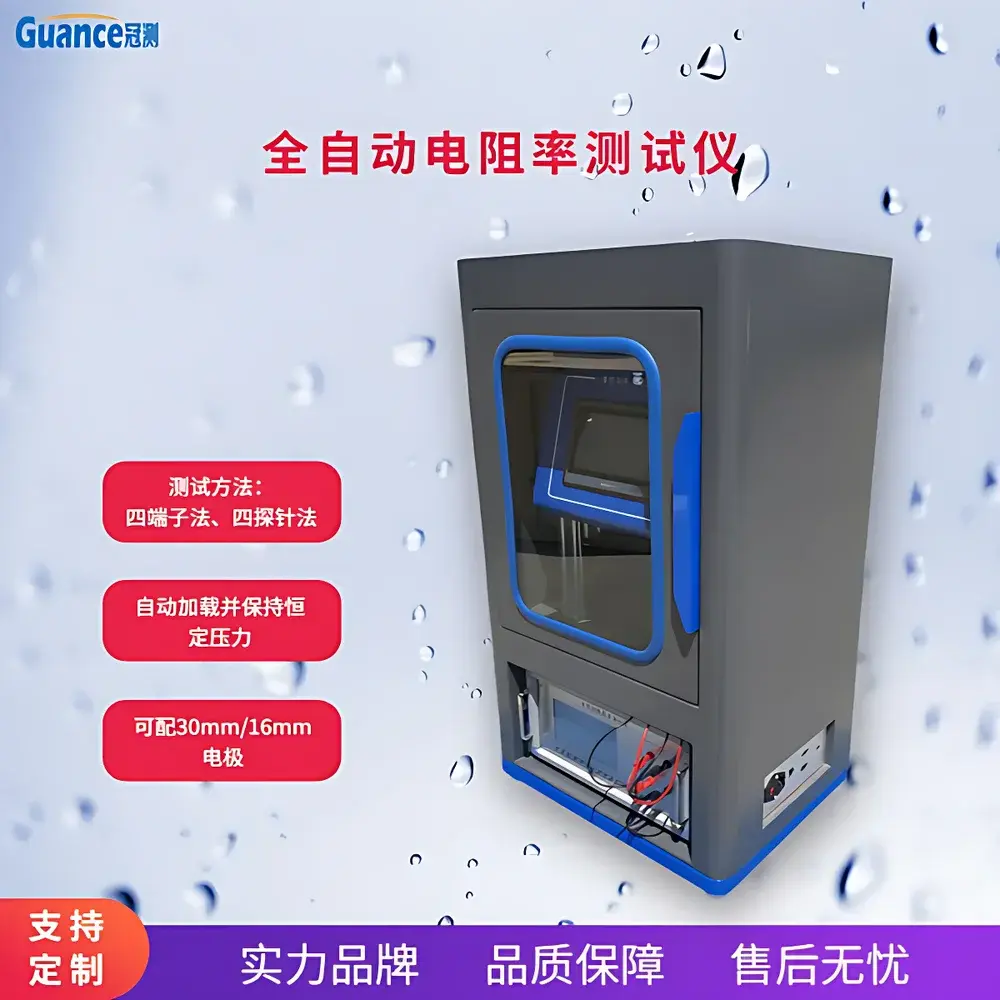
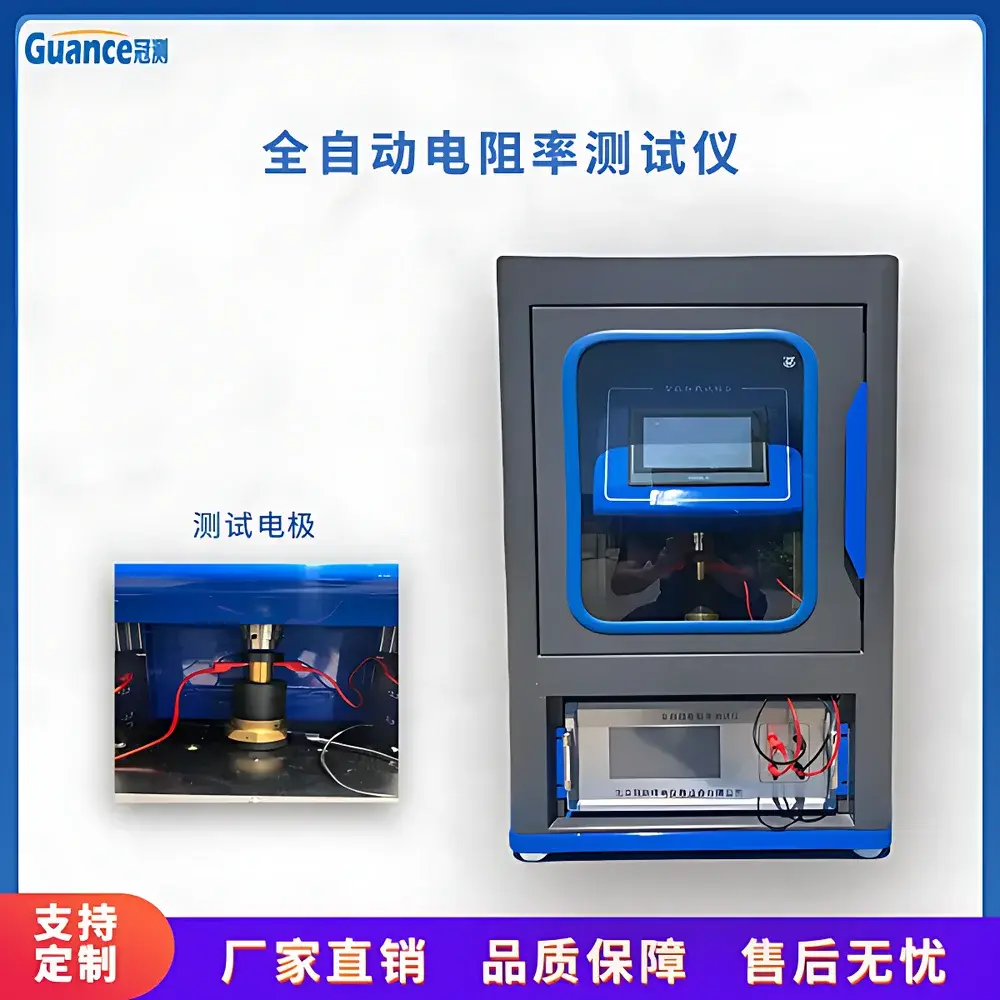
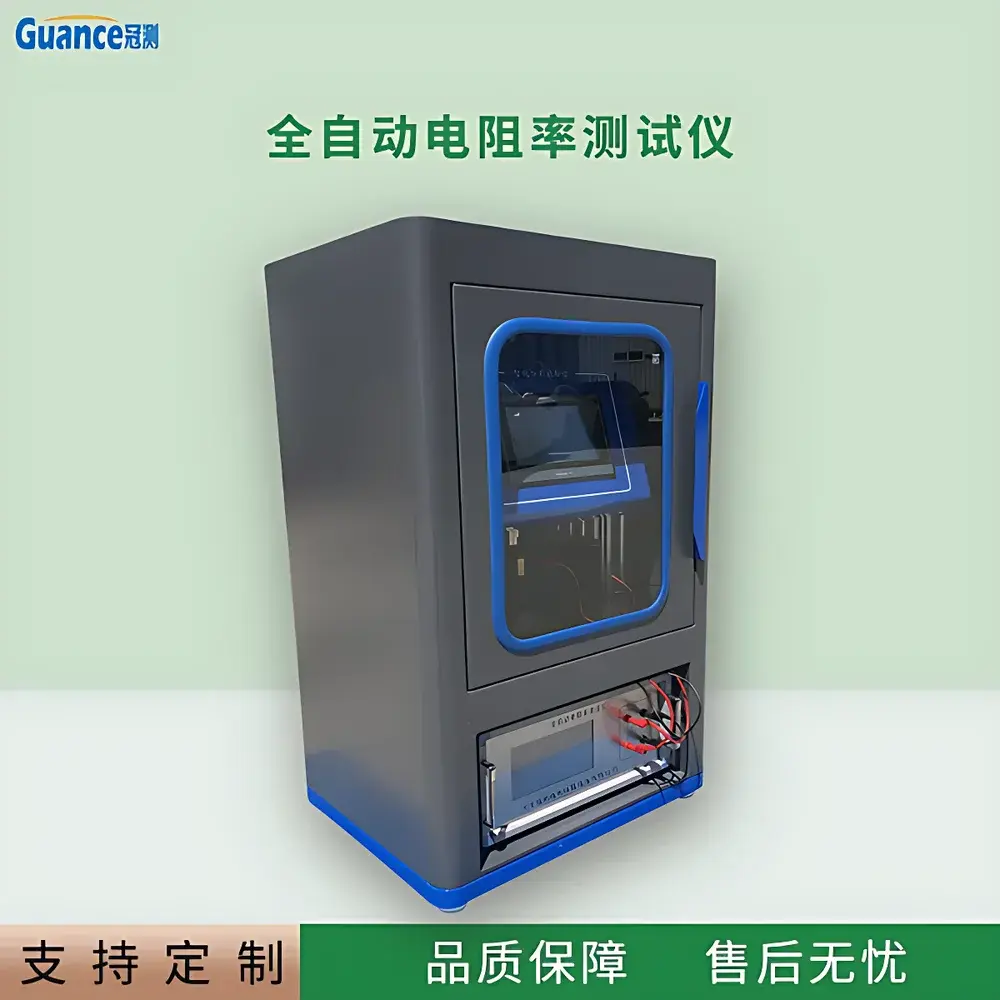
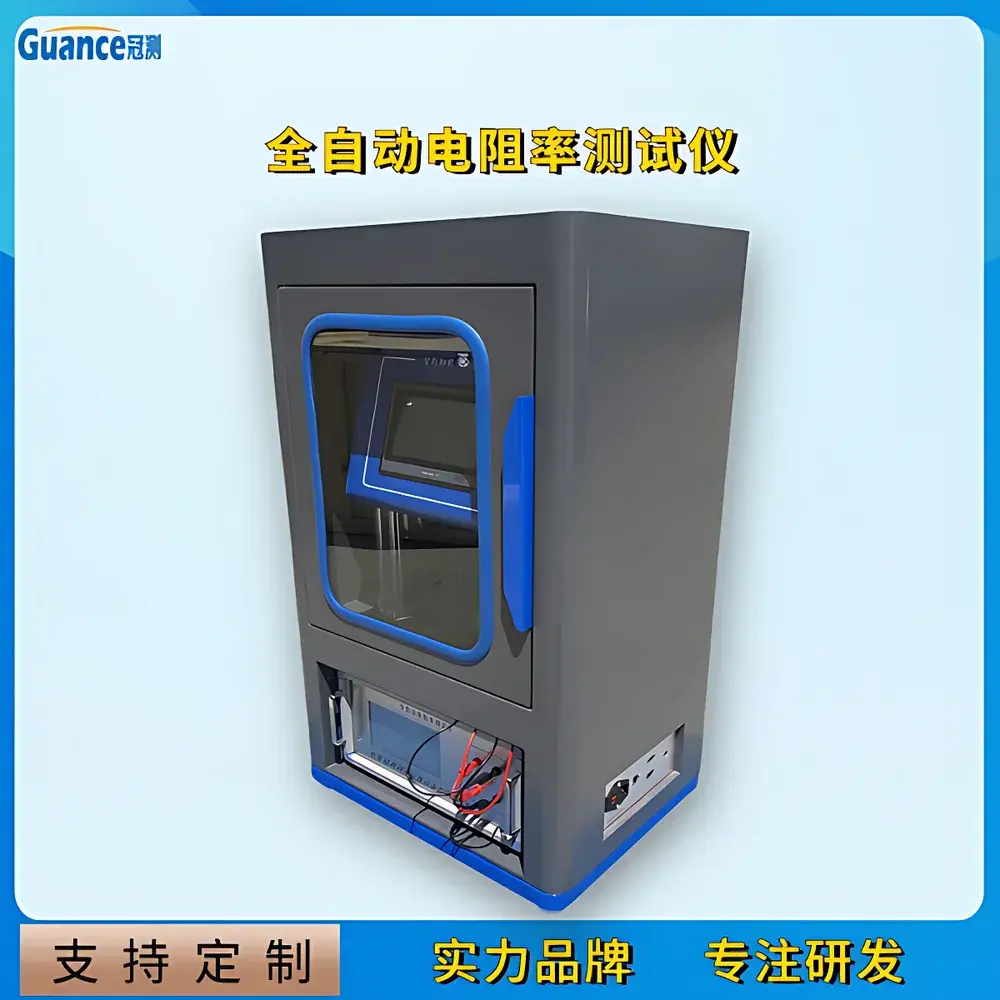
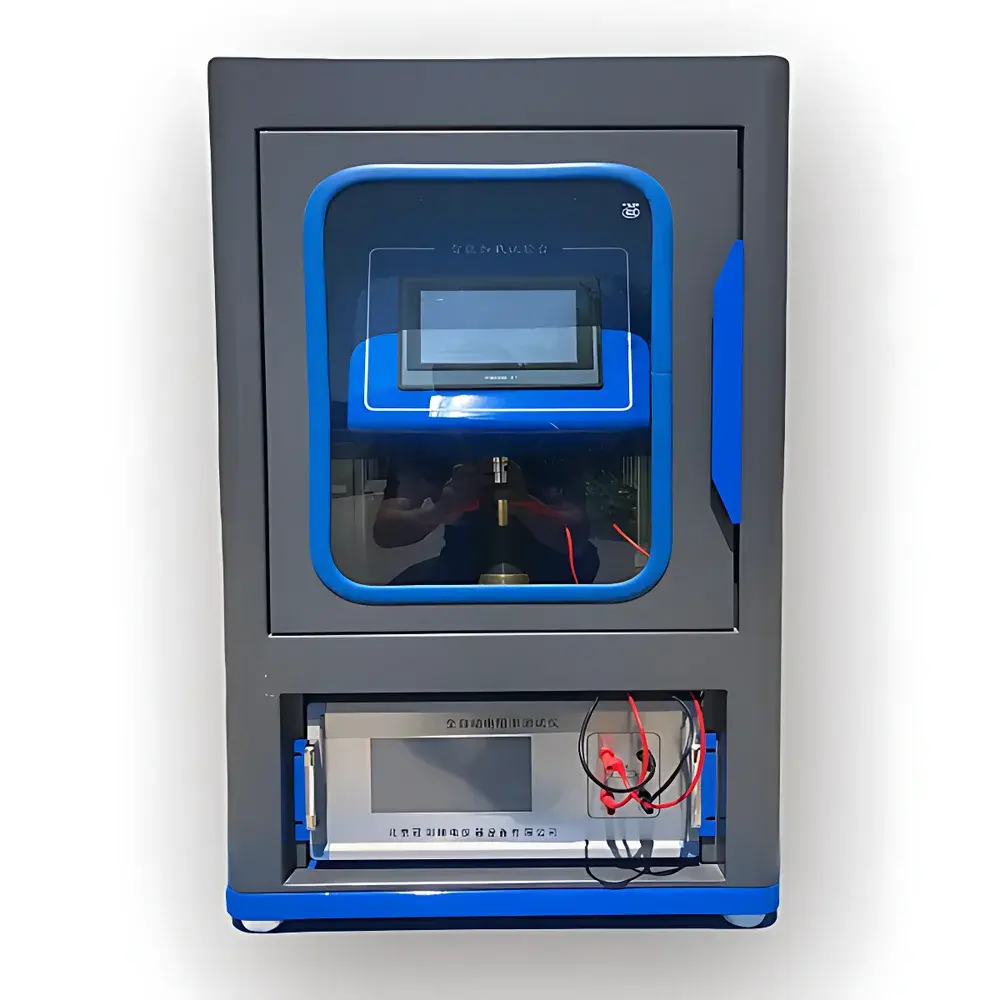
Guance GEST-126b Automatic Powder Resistivity Tester
| [Brand | Guance |
|---|---|
| Model | GEST-126b |
| Origin | Beijing, China |
| Compliance | YS/T 587.6–2006, GB/T 24525–2009, GB/T 24521–2009, GB/T 3782–2016 |
| Resistivity Range | 10⁻⁶–10⁵ Ω·cm |
| Voltage Range | 2 mV–2 V (4½-digit display) |
| Current Output | 10 μA–10 A (8 ranges) |
| Resolution | 10⁻⁸ Ω·cm |
| Measurement Accuracy | ±(0.5% reading + 2 digits) for current and voltage] |
Overview
The Guance GEST-126b Automatic Powder Resistivity Tester is an engineered solution for standardized, pressure-controlled resistivity measurement of granular and powdered conductive and semiconductive materials. It operates on the four-terminal (Kelvin) DC resistance principle—applying a precisely regulated constant current through a compacted powder column while simultaneously measuring the resulting voltage drop across a defined inter-electrode distance. This eliminates lead and contact resistance errors, ensuring traceable, reproducible results compliant with industrial standards for carbonaceous materials, metallurgical powders, battery electrode precursors, and conductive fillers. Unlike bulk solid or liquid measurements, powder resistivity is intrinsically density-dependent; therefore, the GEST-126b integrates programmable mechanical loading to apply and maintain standardized compaction pressures (per YS/T 587.6–2006 and GB/T 24525–2009), enabling comparative evaluation across batches, raw material grades, and process conditions.
Key Features
- Automated, repeatable powder compaction via integrated electromechanical loading system—supports user-defined pressure profiles and dwell times for ASTM/ISO-aligned test repeatability
- Four-wire DC measurement architecture with high-stability constant-current source (10 μA to 10 A, 8 discrete ranges) and low-noise 4½-digit digital voltmeter (2 mV to 2 V full scale)
- Touchscreen HMI with intuitive workflow navigation—preloaded test methods per YS/T 587.6, GB/T 24525, GB/T 24521, and GB/T 3782; supports custom parameter saving and recall
- Calibration-traceable architecture: voltage accuracy ±(0.5% reading + 2 digits); current accuracy ±(0.5% reading + 2 digits); resistivity resolution down to 10⁻⁸ Ω·cm
- Modular test fixture design accommodating standard cylindrical dies (e.g., 20 mm diameter × variable height), compatible with optional die temperature control modules for thermal resistivity studies
- Built-in thermal drift compensation and auto-zero functionality to maintain baseline stability during extended measurement sequences
Sample Compatibility & Compliance
The GEST-126b is validated for use with carbon-based powders (calcined petroleum coke, graphite, acetylene black), sintered metal powders (Cu, Ni, Fe alloys), ceramic conductors (doped ZnO, SnO₂), and composite electrode mixtures. Its mechanical loading system ensures uniform stress distribution across heterogeneous particle beds—critical for minimizing inter-particle contact variability. All operational protocols align with national and industry standards: YS/T 587.6–2006 specifies vibration-assisted densification prior to resistivity measurement for anode-grade coke; GB/T 24525–2009 defines electrode geometry, current density limits, and ambient humidity controls (≤60% RH) for carbon material certification; GB/T 24521–2009 mandates sample conditioning at 23 ± 2 °C for 2 hours pre-test. While not certified to IEC 61000-4 electromagnetic immunity or ISO/IEC 17025 calibration scope, the instrument’s metrological design supports internal lab validation under GLP-compliant documentation practices.
Software & Data Management
The embedded firmware enables real-time data logging of voltage, current, applied load, and calculated resistivity at user-selectable intervals (100 ms–10 s). Test reports—including raw readings, statistical summaries (mean, SD, CV%), pass/fail flags against preset limits, and timestamped operator ID—are exportable via USB to CSV or PDF. No proprietary desktop software is required; however, optional API-enabled firmware upgrade supports integration into LIMS environments via Modbus RTU over RS-485. Audit trails record all parameter changes, calibration events, and result exports—meeting foundational requirements for FDA 21 CFR Part 11–aligned electronic records when paired with institutional procedural controls (e.g., password-protected user roles, manual signature logs).
Applications
- Quality control of calcined petroleum coke in aluminum smelting anode production
- R&D screening of conductive additives (carbon black, graphene nanoplatelets) in lithium-ion battery slurry formulations
- Process validation of powder metallurgy green density uniformity prior to sintering
- Comparative analysis of oxidation-induced resistivity shifts in stored metal powders
- Teaching laboratories demonstrating percolation threshold behavior in polymer–carbon composites
FAQ
What compaction pressure range does the GEST-126b support?
The electromechanical loading system delivers adjustable axial forces from 0.5 kN to 20 kN, corresponding to typical pressure ranges of 1–100 MPa depending on die cross-sectional area. Default test methods implement 2.5 MPa (YS/T 587.6) and 3.5 MPa (GB/T 24525) as selectable presets.
Can the instrument measure anisotropic resistivity?
No—the standard configuration measures isotropic bulk resistivity of axially compressed columns. Anisotropy assessment requires orthogonal electrode placement or rotating die fixtures, which are not supported out-of-the-box but may be accommodated via custom mechanical interface design.
Is NIST-traceable calibration provided with the unit?
Factory calibration is performed using certified shunt resistors and precision voltage references; however, formal NIST-traceable certificates require third-party metrology lab engagement per ISO/IEC 17025. Documentation includes as-found/as-left calibration records and uncertainty budgets for all electrical channels.
Does the system comply with GLP or GMP requirements?
The hardware and firmware provide foundational capabilities—audit trail, user access control, electronic signatures—but full GLP/GMP compliance depends on site-specific SOPs, change control procedures, and periodic requalification—none of which are supplied by the manufacturer.
What maintenance is required for long-term accuracy?
Annual verification of force transducer linearity and voltage/current channel gain stability is recommended. Contact surfaces (electrodes, die walls) must be cleaned with isopropyl alcohol after each test series to prevent carbon buildup; tungsten-carbide electrodes are supplied for wear resistance.






