
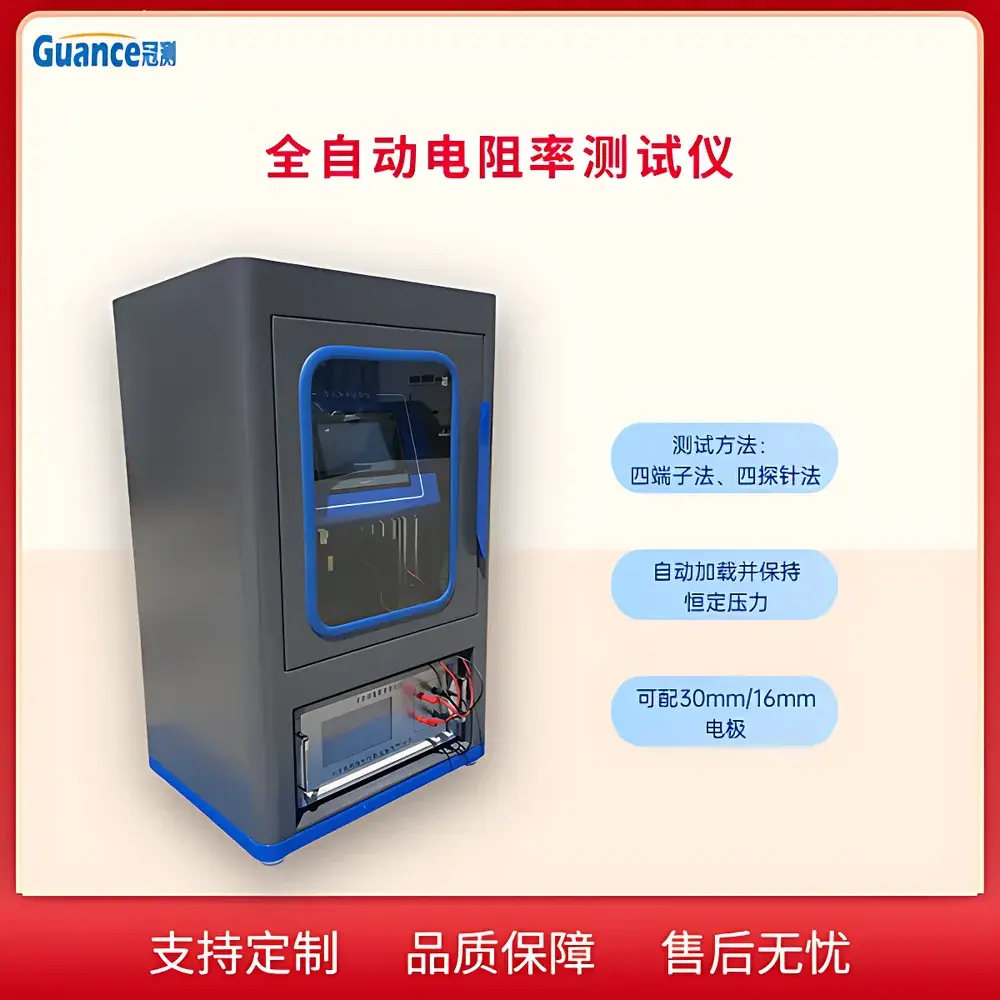
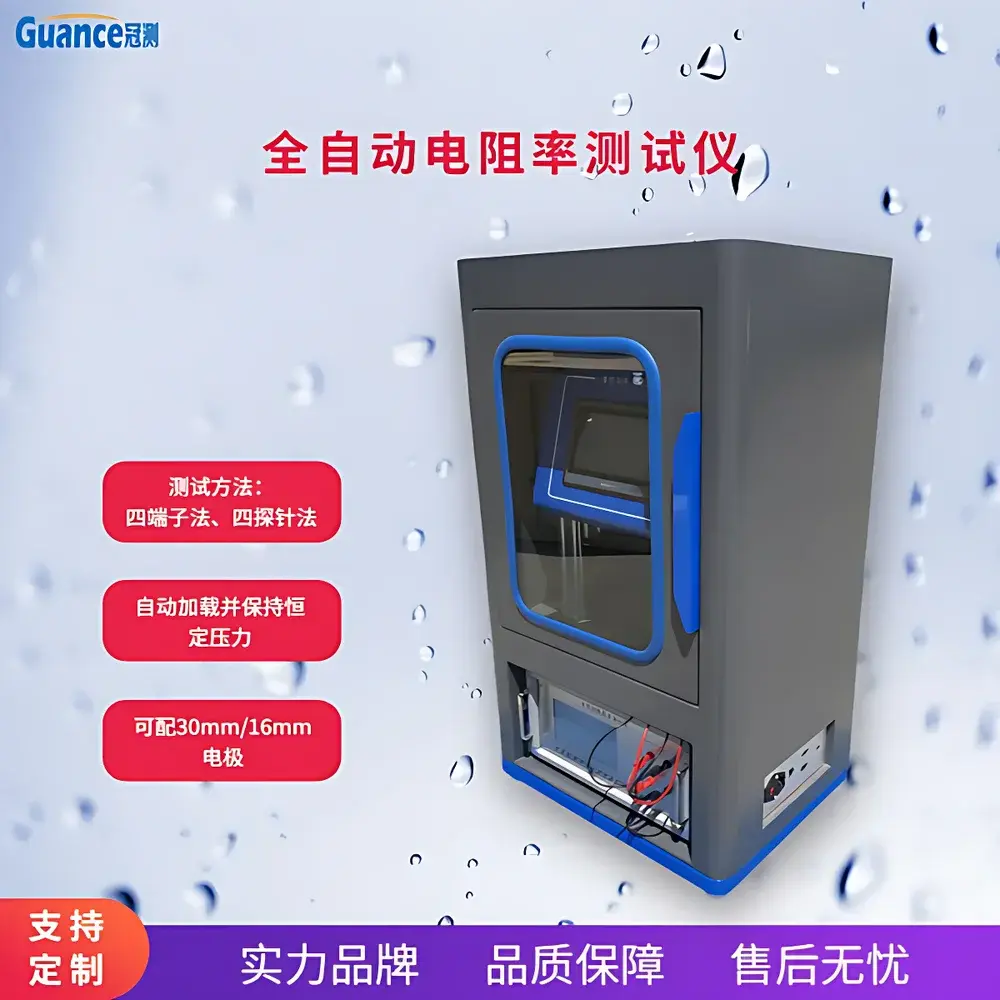
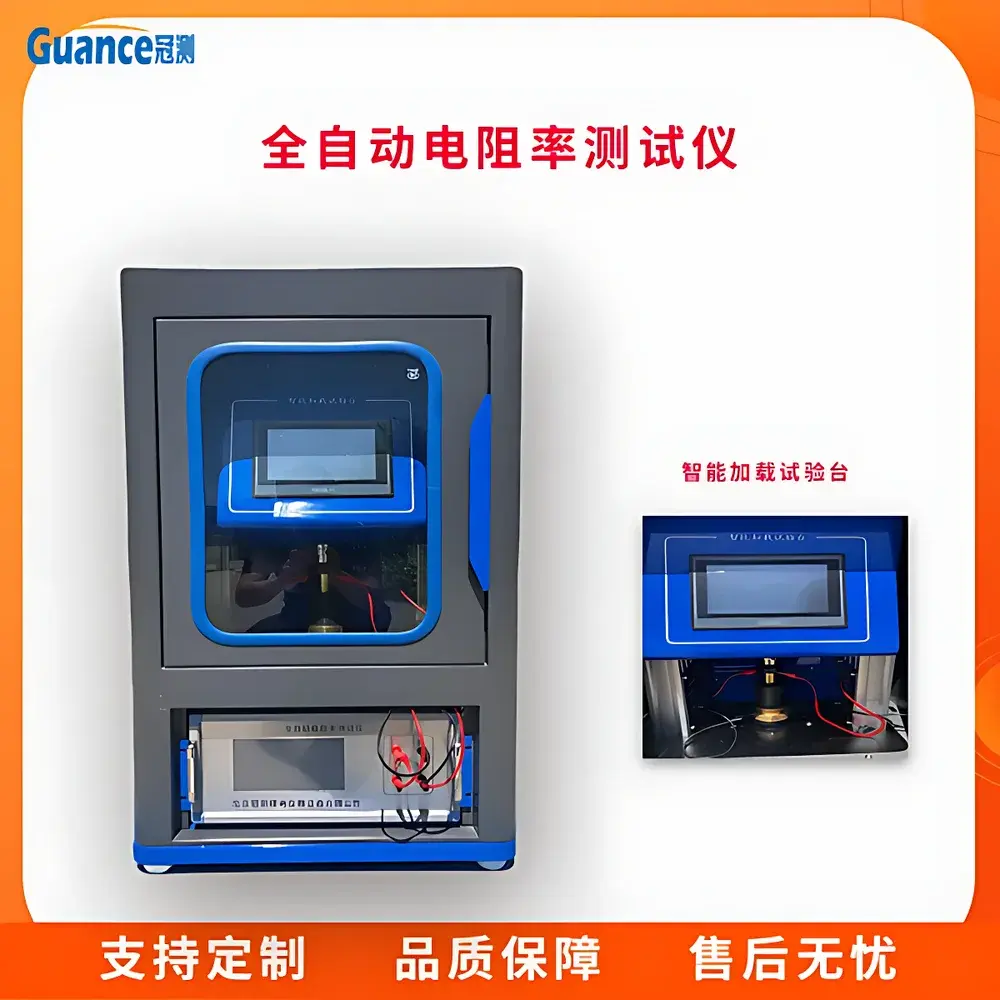
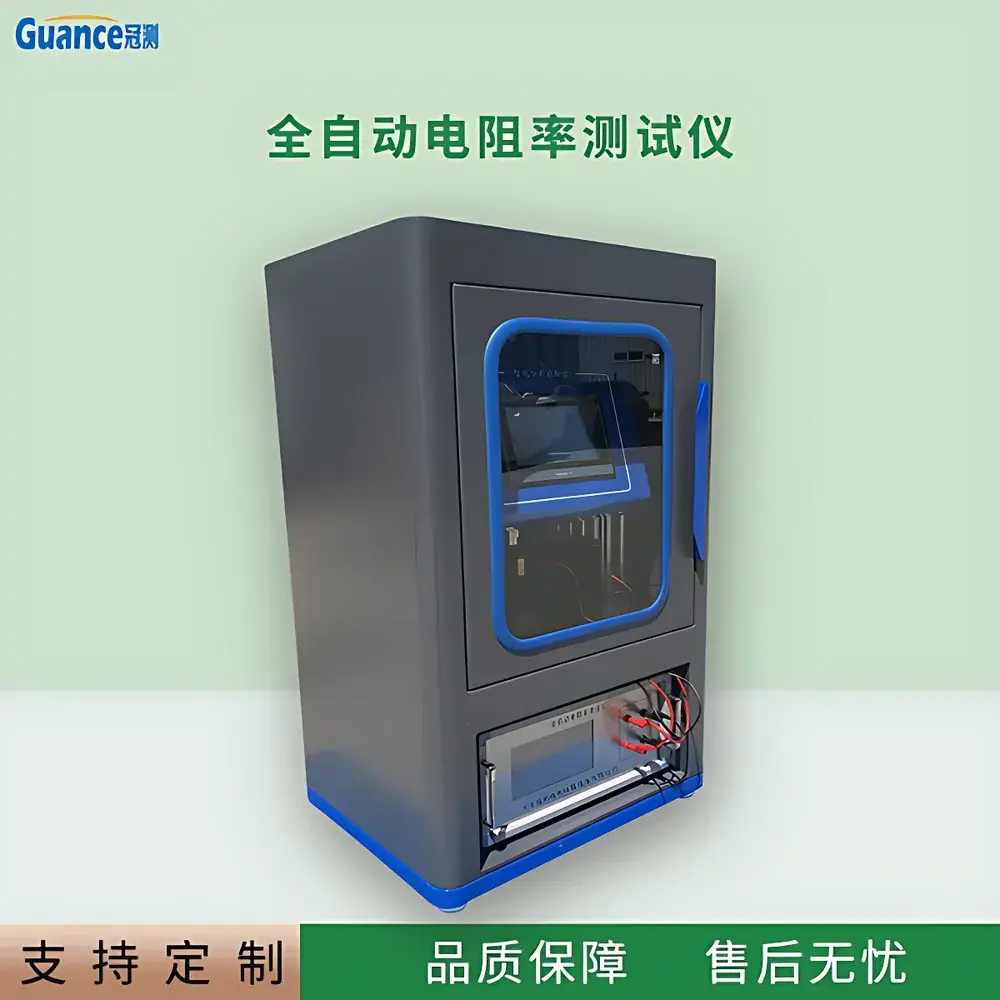
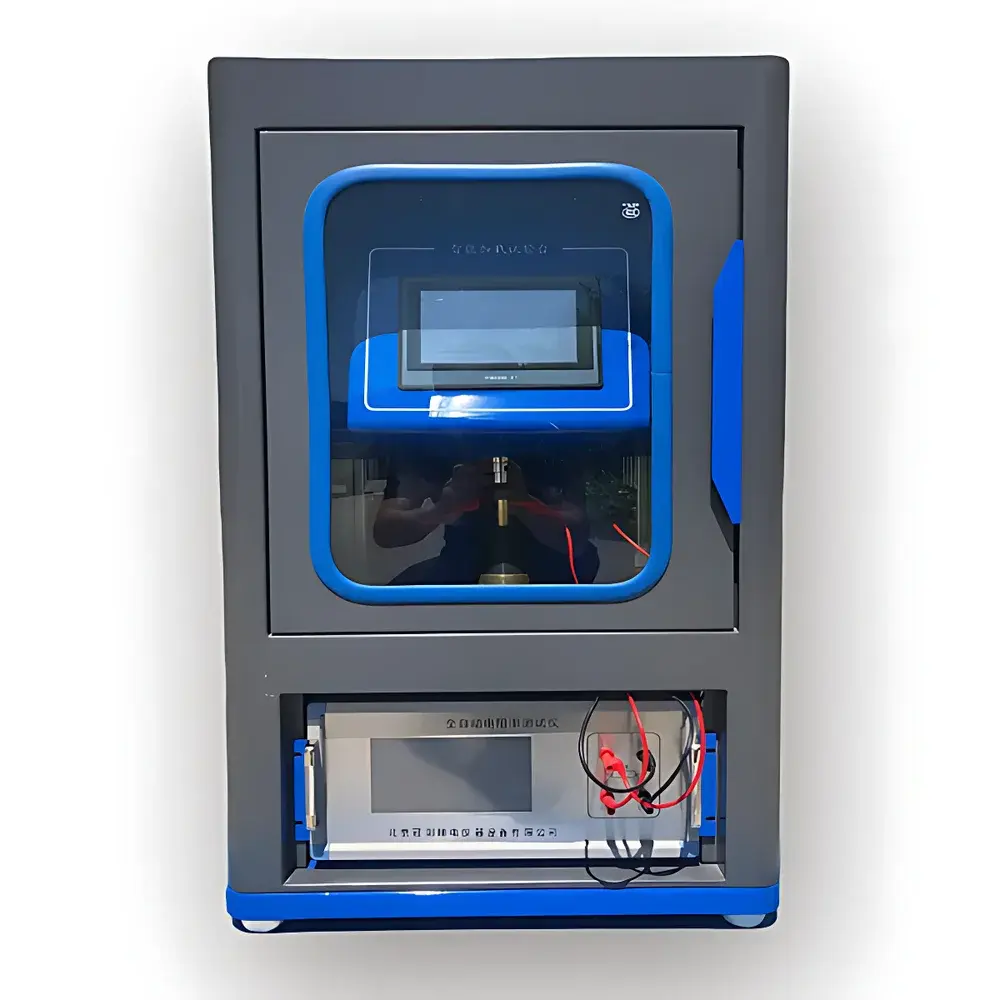
Guance GEST-126a Automatic Powder Resistivity Tester
| [Brand | Guance |
|---|---|
| Model | GEST-126a |
| Origin | Beijing, China |
| Measurement Range (Resistivity) | 10⁻⁶–10⁵ Ω·cm |
| Resolution | 10⁻⁸ Ω·cm |
| Voltage Ranges | 2 mV / 20 mV / 200 mV / 2 V |
| Current Output | 10 μA–10 A (8 ranges) |
| Compliance | YS/T 587.6–2006, GB/T 24525–2009, GB/T 24521–2009, GB/T 3782–2016 |
| Display | 4½-digit LCD with polarity & overload indication |
| Interface | Touchscreen control with built-in thermal printer] |
Overview
The Guance GEST-126a Automatic Powder Resistivity Tester is an engineered solution for precise, repeatable measurement of volume resistivity in granular and powdered materials under controlled compaction conditions. It operates on the four-probe (Kelvin) DC resistivity principle—applying a known constant current through outer electrodes while measuring the voltage drop across inner sensing electrodes—to eliminate contact resistance and lead wire effects. This method ensures traceable, standardized results essential for quality control and R&D in carbonaceous, conductive, and semiconductive powder systems. Unlike bulk solid or liquid measurements, powder resistivity is inherently density-dependent; therefore, the GEST-126a integrates a calibrated mechanical press system to apply standardized uniaxial pressure (per YS/T 587.6–2006 and GB/T 24525–2009), enabling direct comparison of resistivity values across batches, formulations, and processing conditions.
Key Features
- Four-terminal DC resistivity measurement architecture with automatic current range selection (10 μA to 10 A) and high-resolution voltage detection (up to 2 V full scale, 4½-digit resolution)
- Integrated programmable compaction module delivering reproducible axial pressure during sample loading—critical for eliminating density-related variability in resistivity data
- Touchscreen HMI with intuitive workflow navigation, real-time parameter feedback, and on-device thermal printing of test reports (including date/time, pressure setting, current/voltage readings, and calculated resistivity)
- High-stability constant-current source with ±(0.5% reading + 2 digits) accuracy and low-noise voltage sensing circuitry optimized for low-resistance (10⁴ Ω) powders
- Modular design: Separable mainframe and test fixture allow flexible integration into QC labs or production environments; test chamber accommodates standard cylindrical dies (e.g., 20 mm diameter per GB/T 24525)
- Fully compliant with international and Chinese national standards for carbon, coke, and acetylene black characterization—including YS/T 587.6–2006, GB/T 24525–2009, GB/T 24521–2009, and GB/T 3782–2016
Sample Compatibility & Compliance
The GEST-126a is validated for use with a broad spectrum of dry, free-flowing powders where electrical transport properties correlate with microstructure, particle morphology, and interparticle contact resistance. Primary application domains include calcined petroleum coke, graphite powders, synthetic carbon blacks, metallurgical coke fines, battery electrode precursors (e.g., LiFePO₄, graphite anode blends), and conductive polymer fillers. Sample preparation follows standardized procedures: powders are loaded into a non-conductive die cavity, compacted under defined load (typically 1–10 MPa, configurable via touchscreen), and measured without binder or sintering. All operational parameters—including applied pressure, current magnitude, and dwell time—are logged and exportable to support GLP/GMP documentation requirements. The instrument meets metrological traceability requirements outlined in ISO/IEC 17025 and supports audit-ready recordkeeping aligned with FDA 21 CFR Part 11 principles (when paired with optional secure data archiving software).
Software & Data Management
While the GEST-126a operates as a standalone instrument with embedded touchscreen interface, it supports RS-232 and USB-to-host connectivity for external data acquisition. Optional PC-based software enables automated test sequencing, multi-sample batch reporting, statistical process control (SPC) charting (X̄–R, Cp/Cpk), and export to CSV, Excel, or PDF formats. All measurement records include timestamp, operator ID (if configured), pressure setting, selected current range, raw V/I values, calculated resistivity (Ω·cm), and pass/fail status relative to user-defined specification limits. Audit trails capture parameter changes and calibration events, fulfilling documentation needs for ISO 9001-certified laboratories and regulated manufacturing environments.
Applications
- Quality assurance of anode-grade calcined coke in aluminum smelting supply chains
- Development and validation of conductive additives in lithium-ion battery slurry formulations
- Process monitoring of thermal treatment (graphitization) efficiency in carbon material synthesis
- Comparative evaluation of particle size distribution and surface oxidation effects on bulk conductivity
- Research into percolation thresholds in composite powder systems (e.g., polymer–carbon nanotube blends)
- Compliance testing for ASTM D257 (though adapted for powder-specific geometry and compaction)
FAQ
What standards does the GEST-126a comply with for powder resistivity testing?
It is fully aligned with YS/T 587.6–2006 (calcined coke), GB/T 24525–2009 (carbon materials), GB/T 24521–2009 (coke), and GB/T 3782–2016 (acetylene black), all specifying four-probe DC methodology under controlled compaction.
Does the instrument require sample pelletization or binder addition?
No. It measures loose or mechanically compacted powders in situ—no sintering, cold pressing with binders, or pellet formation is needed.
How is measurement repeatability ensured across different operators?
Standardized die geometry, auto-calibrated pressure actuation, fixed probe spacing, and guided touchscreen workflows minimize operator-induced variability—typical RSD is ≤2.5% for homogeneous powders under identical compaction.
Can the GEST-126a measure anisotropic resistivity (e.g., layered powders)?
Not natively. Its fixed vertical four-probe configuration assumes isotropic conduction; directional analysis requires custom fixtures or complementary techniques such as Hall effect mapping.
Is calibration traceable to national metrology institutes?
Yes. The voltage and current measurement circuits are factory-calibrated using NIST-traceable standards; certificate of calibration (with uncertainty budget) is provided with each unit.



