
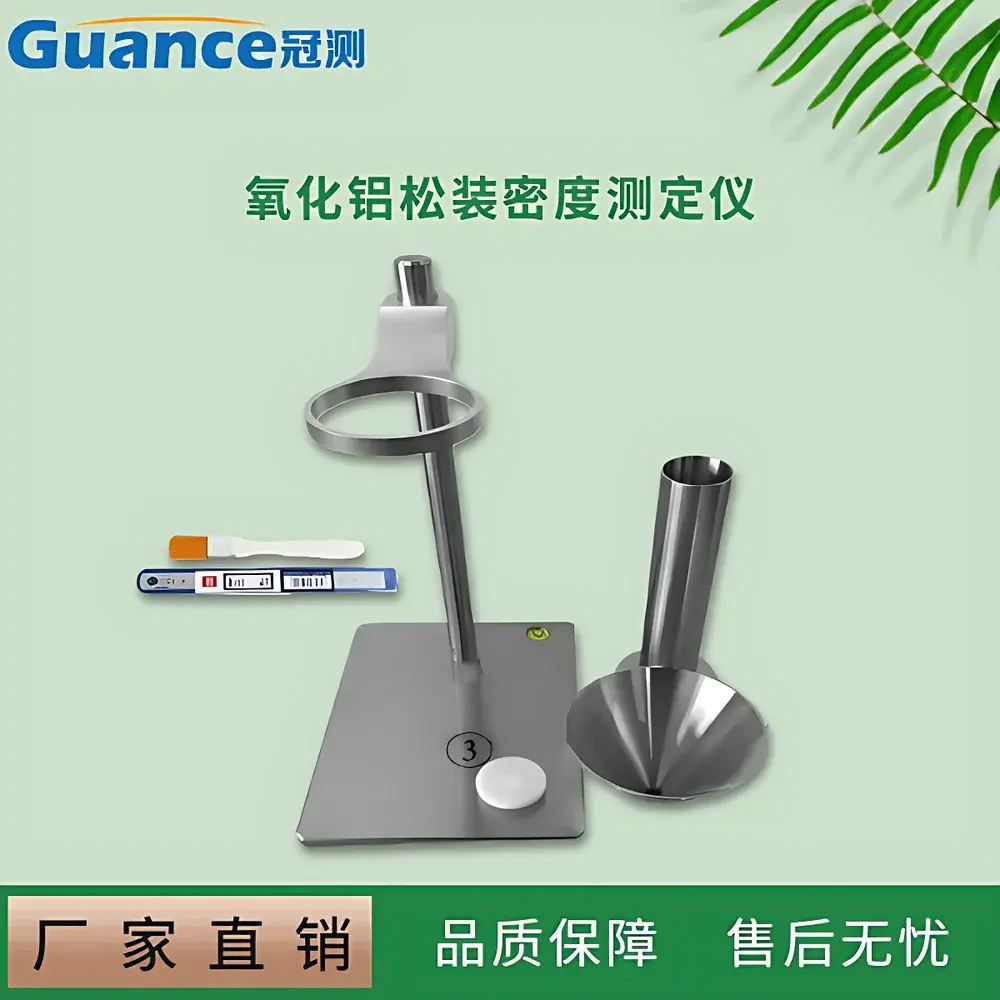
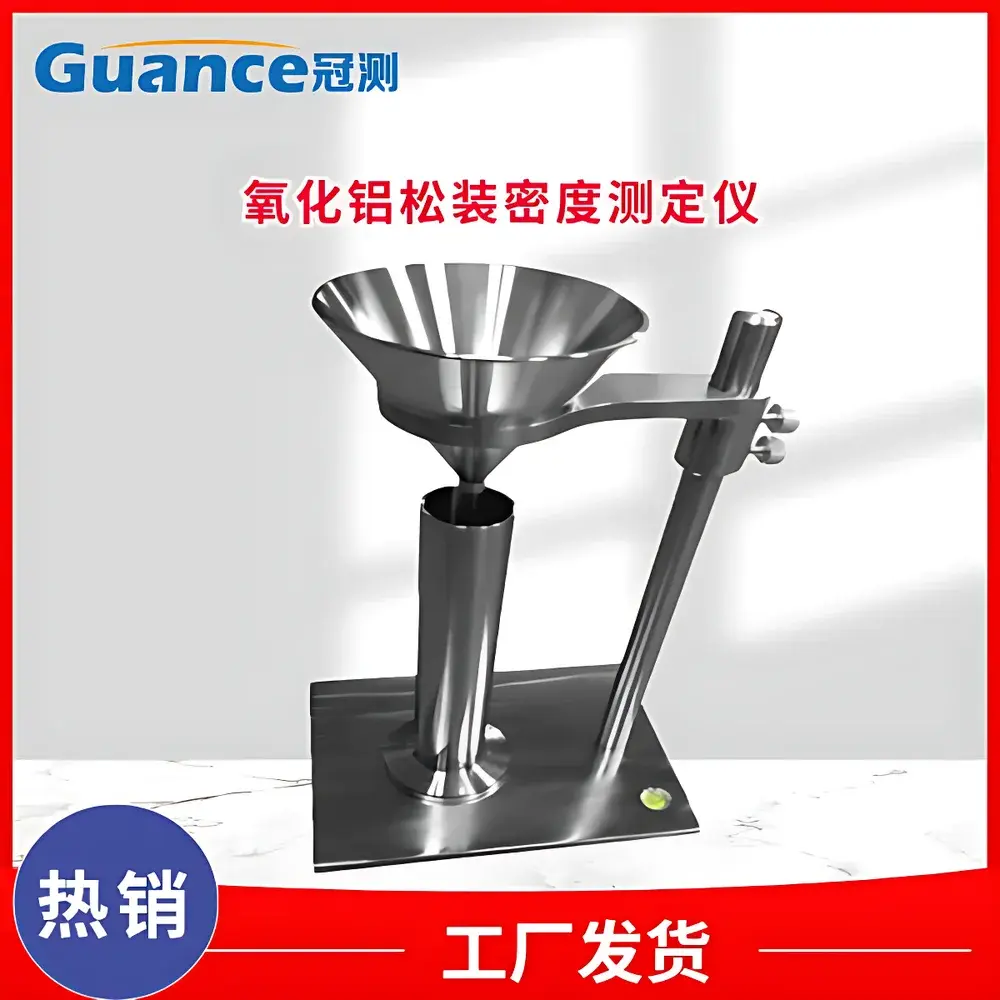
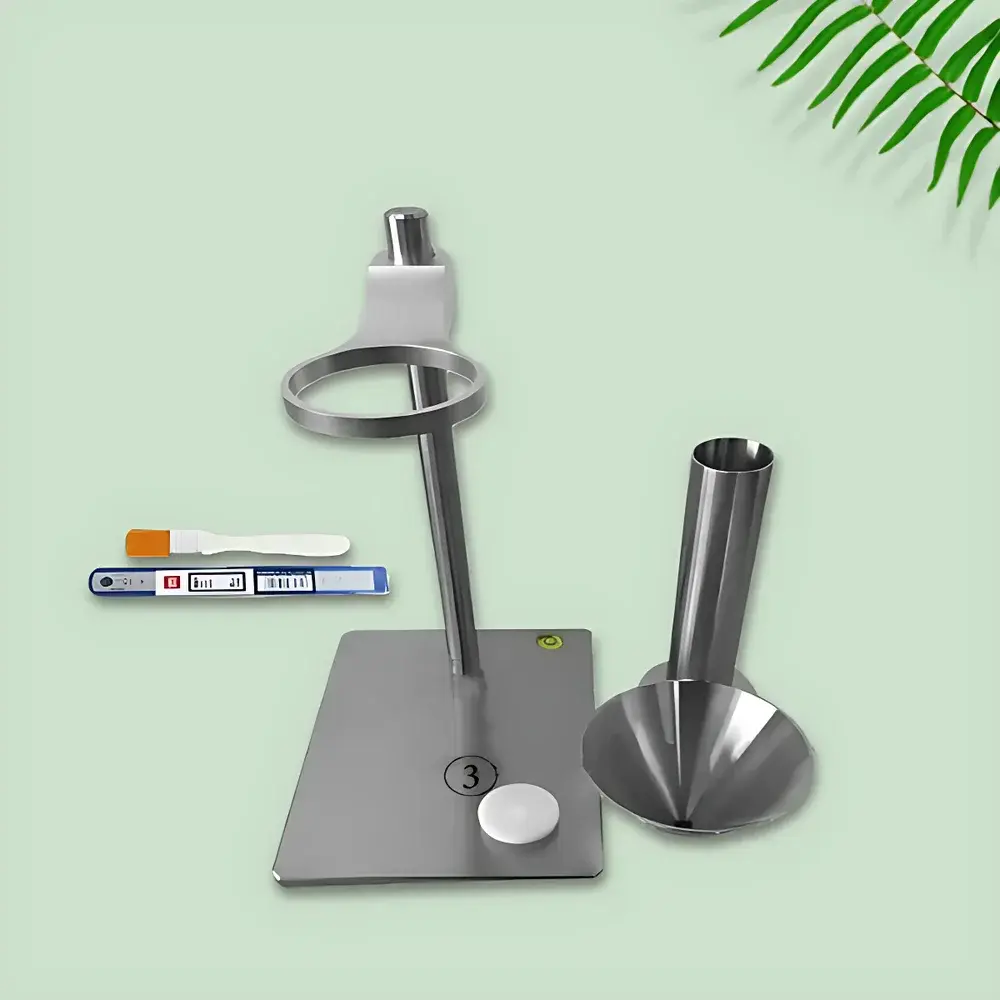
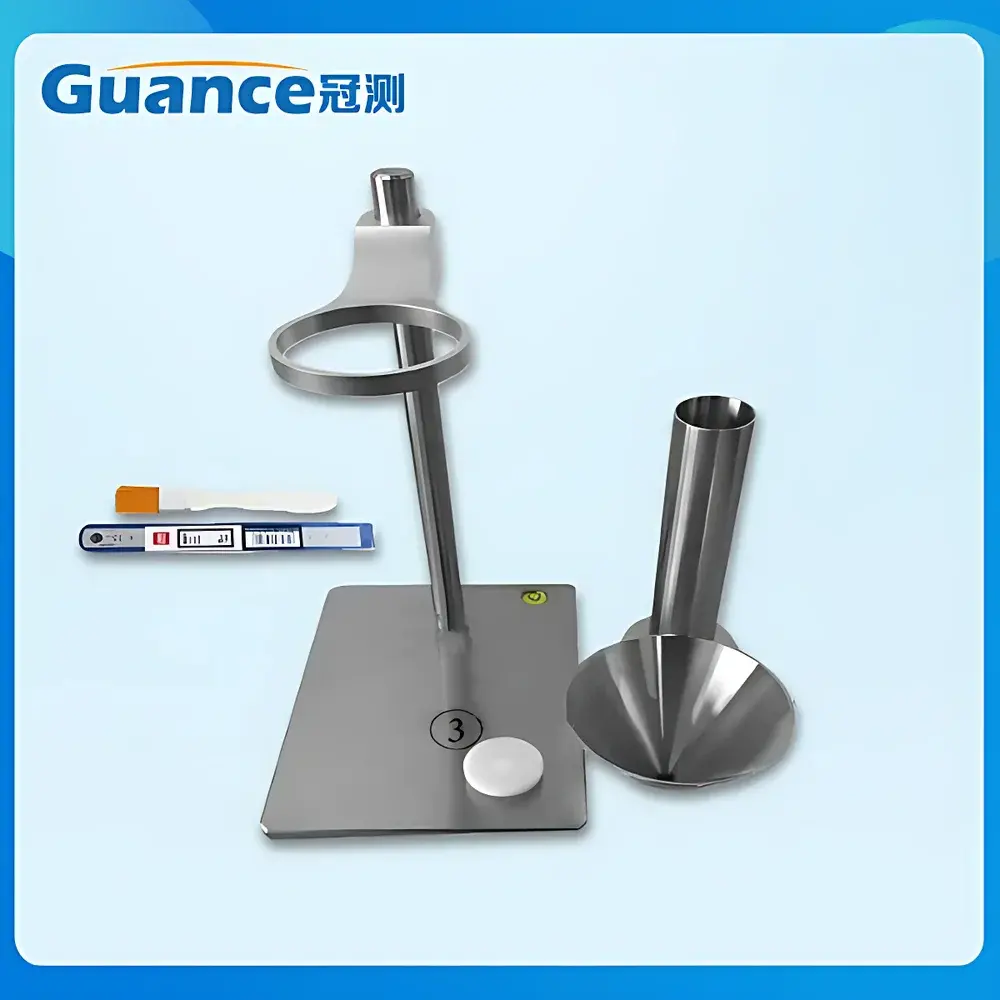
Carbon Fiber Powder Bulk Density Tester ZKMD-6609b
| Brand | Guance Instruments |
|---|---|
| Origin | Beijing, China |
| Model | ZKMD-6609b |
| Instrument Type | Bulk Density Tester (for Powders) |
| Application | Bulk density measurement of free-flowing and cohesive particulate solids (e.g., carbon fiber powders, metal powders, pharmaceutical granules) |
| Construction | Stainless steel |
| Portability | Benchtop (non-portable, fixed-position design) |
| Compliance Basis | ASTM D1895–23, ISO 697–2022, USP <616>, GB/T 1479.1–2011 |
| Sample Form | Dry, free-flowing or slightly cohesive solid powders only |
| Liquid Measurement Capability | None |
| Density Range | 0.1–5.0 g/cm³ (typical for powder bulk density applications) |
| Repeatability | ±0.01 g/cm³ (under controlled environmental conditions per ISO 29553) |
Overview
The ZKMD-6609b Bulk Density Tester is a precision-engineered benchtop instrument designed specifically for the standardized determination of bulk density of dry, free-flowing or moderately cohesive particulate materials—including carbon fiber powders with nominal particle size of 37 µm. It operates on the principle of gravitational flow and volumetric displacement: a defined mass of powder is allowed to flow freely through a calibrated conical funnel into a standardized cylindrical receiving cup under gravity, after which the mass-to-volume ratio is calculated as bulk density (g/cm³). This method aligns with internationally recognized test protocols for powder characterization in R&D, quality control, and production environments—particularly where flow behavior, packing efficiency, and processability of advanced composite feedstocks must be quantified reproducibly.
Key Features
- Stainless steel construction throughout—including funnel, cylinder, and support frame—ensuring corrosion resistance, mechanical stability, and long-term dimensional integrity.
- Calibrated funnel geometry: 100 mm top diameter, 60° taper angle, 8 mm neck length, and precisely machined 6 mm internal outlet diameter—optimized to minimize wall adhesion and promote consistent powder discharge.
- Standardized cylindrical receiver: ~200 cm³ capacity, with an internal diameter-to-height ratio of 1:6, ensuring minimal wall effects during volume measurement and compliance with ASTM D1895 Annex A1 requirements.
- Adjustable ring-type funnel mount mounted on a rigid vertical pillar: enables precise vertical alignment and repeatable positioning of the funnel’s outlet relative to the top surface of the cylinder (typically 25 mm clearance), critical for inter-laboratory reproducibility.
- Flat-bottomed, non-tapered base plate (70 mm outer diameter) provides stable, level placement on laboratory benches—eliminating tilt-induced volumetric error.
Sample Compatibility & Compliance
The ZKMD-6609b is validated for use with dry, non-agglomerated or lightly agglomerated powders exhibiting particle sizes between 10 µm and 500 µm. It is routinely applied to carbon fiber powders (e.g., 37 µm median size), metal powders (e.g., Ti-6Al-4V, Inconel), ceramic precursors, polymer microspheres, and pharmaceutical excipients. The instrument does not support liquid-phase or slurry measurements; it is not a true density analyzer (e.g., gas pycnometer) nor a tapped density tester. Its methodology conforms to ASTM D1895–23 (Standard Test Methods for Apparent Density of Plastic Materials), ISO 697:2022 (Powders — Determination of apparent density), and Chinese national standard GB/T 1479.1–2011. Data generated supports GLP-compliant reporting when integrated with documented SOPs and operator training records.
Software & Data Management
The ZKMD-6609b is a manual, operator-driven instrument requiring no embedded electronics or software. All measurements are performed using calibrated analytical balances (not included) and recorded manually or via external LIMS integration. Users are expected to document sample identification, ambient temperature/humidity, pre-test conditioning (e.g., 24 h desiccator equilibration), funnel height, number of trials (minimum three per batch), and raw mass/volume data. For regulated environments (e.g., ISO 13485, FDA 21 CFR Part 11), laboratories implement paper-based or electronic audit trails—traceable to analyst ID, timestamp, and balance calibration certificate—to satisfy data integrity requirements.
Applications
- Quality assurance of carbon fiber powder batches prior to compounding or additive manufacturing feedstock preparation.
- Comparative evaluation of surface treatment efficacy (e.g., silane vs. plasma coating) on powder flow and packing density.
- Process development support for powder handling systems—including hopper design, screw feeder calibration, and pneumatic conveying line sizing.
- Raw material release testing in aerospace composites manufacturing per AS9100-referenced internal specifications.
- Educational demonstration of powder rheology fundamentals in materials science curricula.
FAQ
Is the ZKMD-6609b suitable for measuring tapped density?
No. This instrument measures only freely settled (untapped) bulk density. Tapped density requires a separate apparatus compliant with ASTM D5964 or USP Method II.
Can it be used for nanoscale carbon black or fumed silica?
Not without modification. Highly cohesive, low-density nano-powders often fail to flow consistently through the 6 mm orifice; such materials require fluidized bed or vibration-assisted methods.
Does it meet FDA 21 CFR Part 11 requirements?
The device itself has no digital data capture or electronic signature capability. Compliance depends entirely on the user’s procedural controls, documentation practices, and associated balance/LIMS validation.
What calibration standards are recommended?
NIST-traceable certified reference materials (CRMs) with known bulk density—such as glass bead standards (e.g., NIST SRM 1921b)—are advised for periodic performance verification.
Is assembly required upon delivery?
Yes. The unit ships disassembled: funnel, cylinder, ring mount, pillar, and base must be assembled per the provided mechanical alignment instructions to ensure geometric fidelity.



