
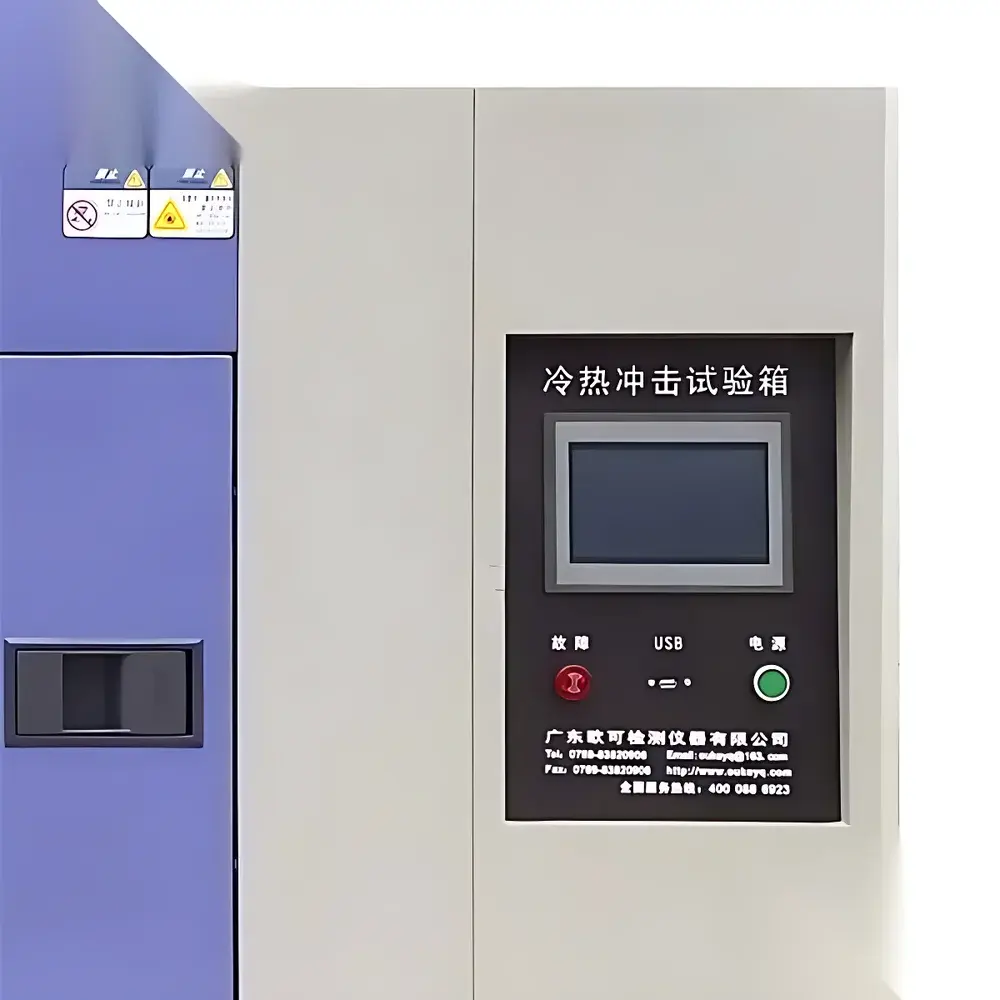
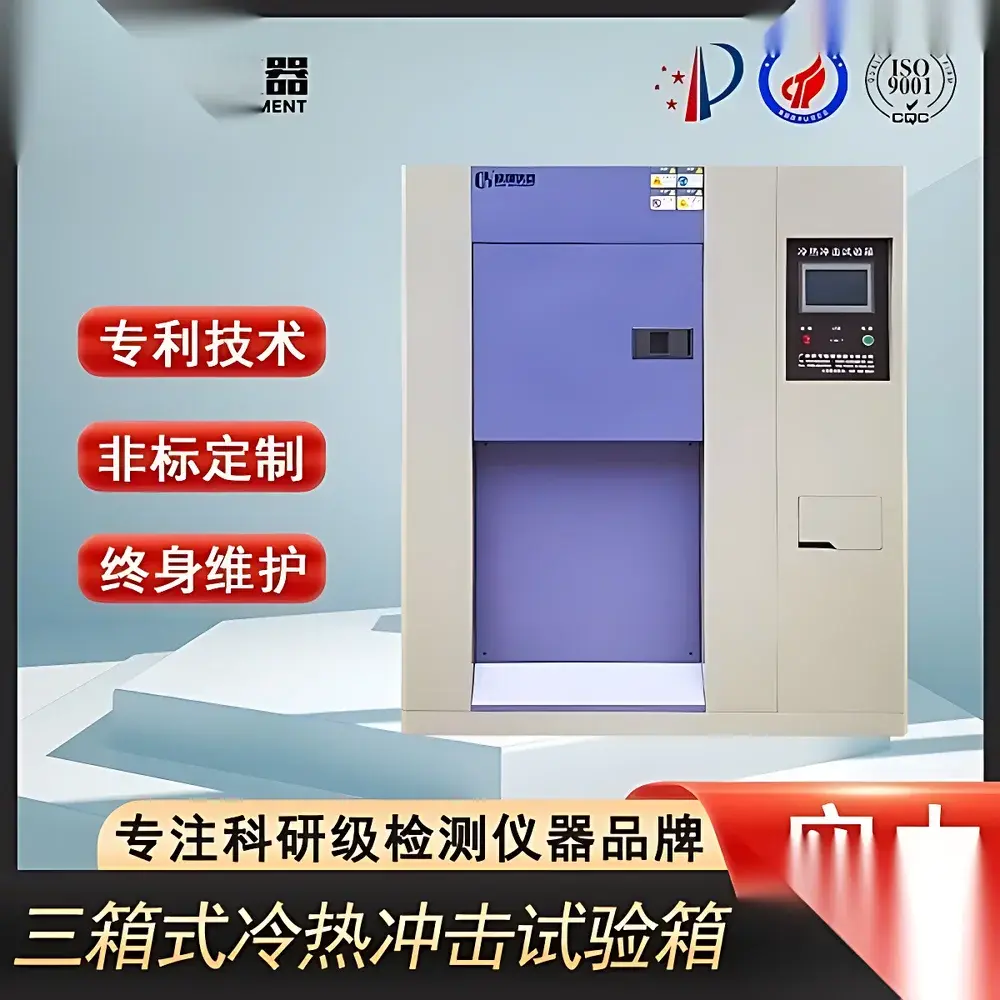
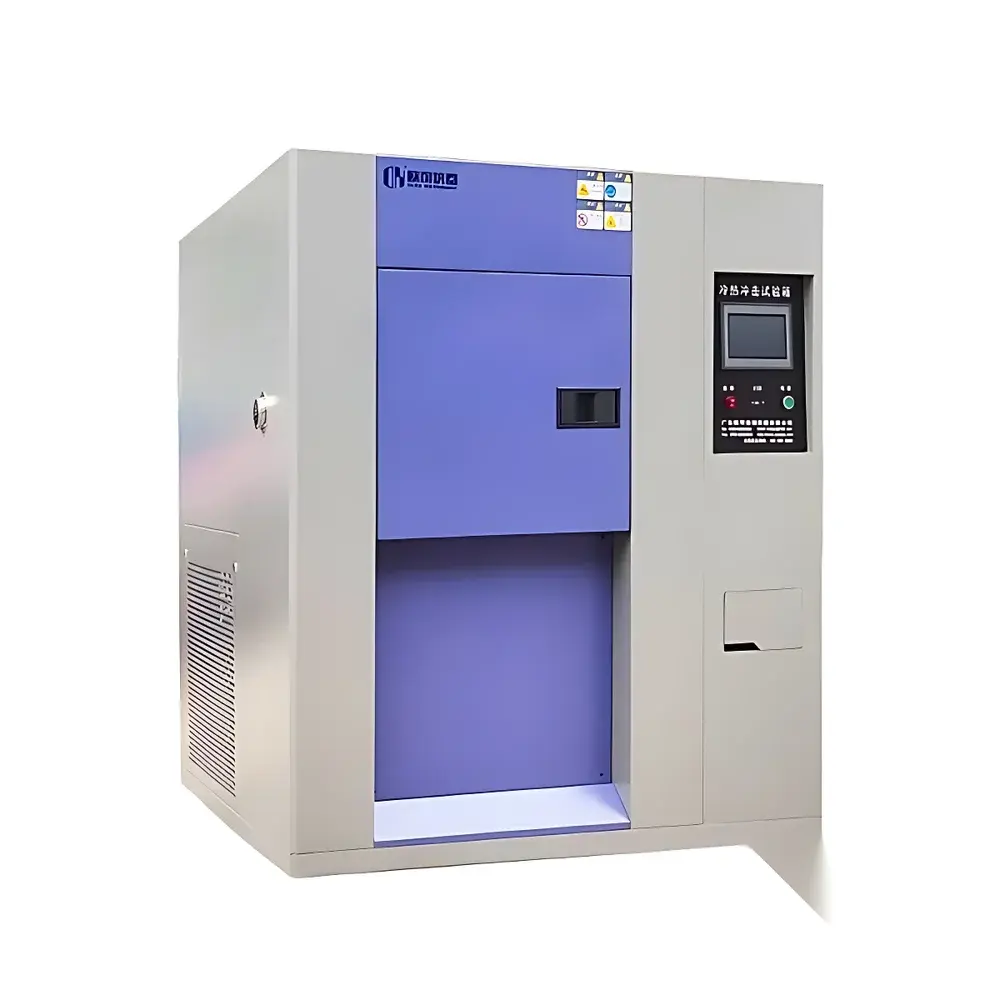
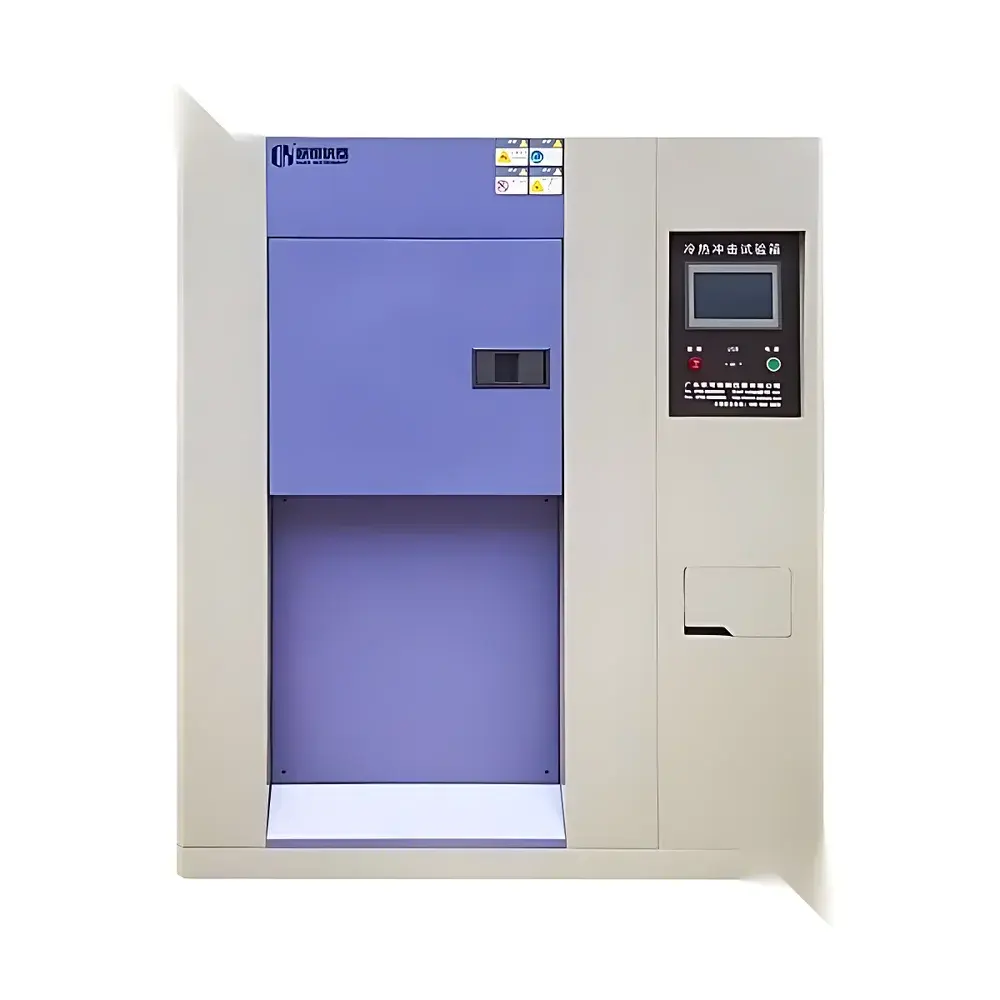
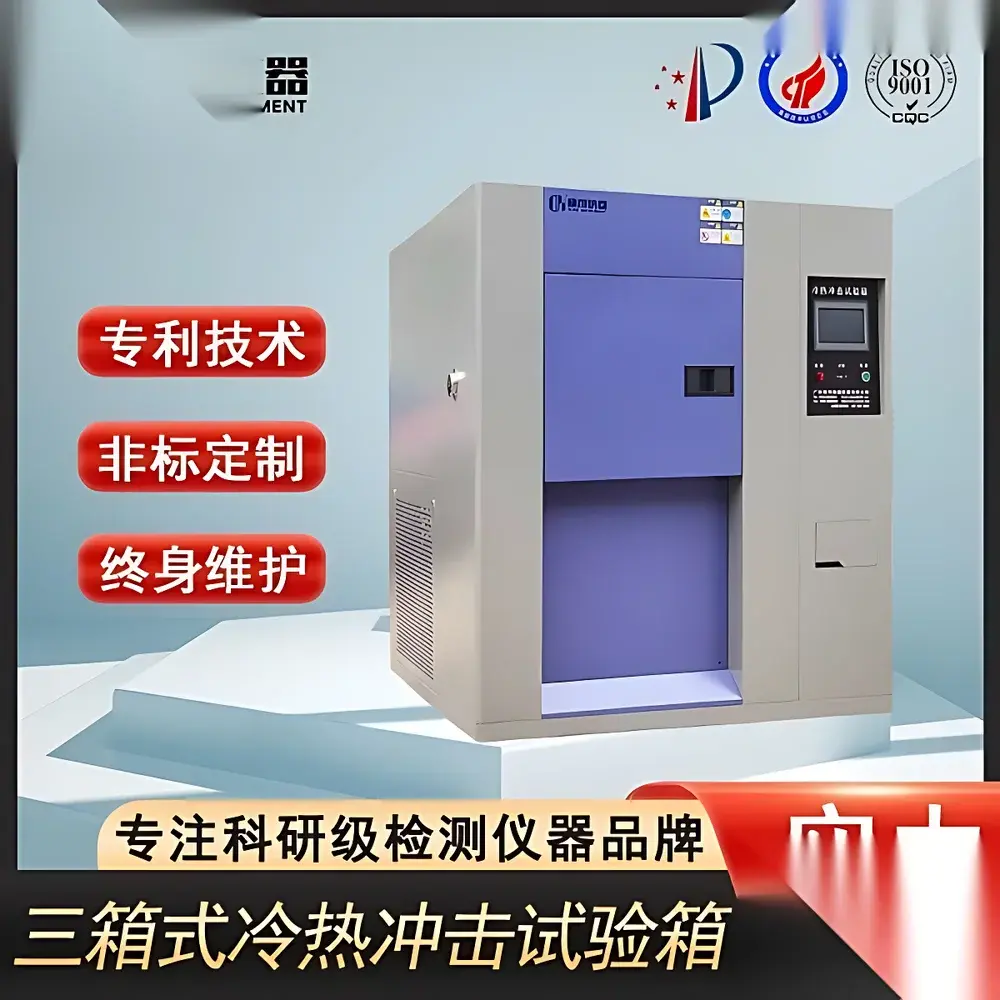
Custom-Built Thermal Shock Test Chamber
| Brand | OEM / Custom Manufacturer |
|---|---|
| Origin | Imported |
| Manufacturer Type | Authorized Distributor |
| Price | USD 11,200 (FOB) |
| High/Low Temperature Range Options | A / B / C Configurations |
| Temperature Uniformity | ±2.0 °C |
| Transfer Time | ≤8 s |
| Recovery Time | ≤5 min |
| Inner Chamber Material | SUS304 Mirror-Finish Stainless Steel |
| Outer Chamber Material | SUS304 Brushed Stainless Steel |
| Insulation | Rigid Polyurethane Foam + High-Density Glass Fiber |
| Refrigeration System | French Tecumseh Compressor + Japanese/Italian Critical Components |
| Refrigerants | R404A & R23 (EPA SNAP-Approved, Non-Ozone-Depleting) |
| Safety Protections | Compressor High-Pressure / Overheat / Overcurrent |
Overview
The Custom-Built Thermal Shock Test Chamber is an engineered environmental stress screening (ESS) system designed to evaluate the reliability and structural integrity of electronic components, aerospace assemblies, automotive ECUs, PCBs, and advanced packaging materials under rapid, repetitive transitions between extreme high- and low-temperature environments. Operating on the principle of two-zone static specimen testing, this chamber maintains independent high-temperature (60–200 °C) and low-temperature (–75 to –10 °C, model-dependent) zones, enabling precise thermal shock profiles per MIL-STD-810H Method 503.7, IEC 60068-2-14, and JESD22-A104D. Unlike single-chamber ramp systems, its dual-bucket architecture eliminates thermal inertia delays, ensuring sub-8-second transfer times and ≤5-minute temperature stabilization—critical for detecting latent defects such as solder joint fatigue, delamination, or sealant cracking induced by coefficient-of-thermal-expansion (CTE) mismatch.
Key Features
- Three configurable temperature range tiers (Option A: –30 °C to 200 °C; Option B: –55 °C to 200 °C; Option C: –75 °C to 200 °C), each supporting programmable dwell times, cycle counts, and transition sequences via ISO/IEC 17025-compliant test protocols.
- Dual independent refrigeration circuits with Tecumseh hermetic compressors (France-sourced), paired with high-efficiency plate heat exchangers and imported expansion valves (Japan/Italy), ensuring stable operation across 10,000+ thermal cycles without performance drift.
- SUS304 stainless steel construction: mirror-finish interior (electropolished for non-particulating surfaces) and brushed exterior, combined with 150 mm thick composite insulation (polyurethane foam core + glass fiber reinforcement) achieving thermal leakage <0.8 W/m²·K at ambient 25 °C.
- Fail-safe mechanical interlock system with pneumatically actuated isolation valves (leak rate <1×10⁻⁶ mbar·L/s He), integrated thermal cutoffs, and real-time compressor diagnostics—fully compliant with EN 61000-6-2/6-4 EMC requirements.
- Microprocessor-based controller with Ethernet interface (TCP/IP), supporting remote monitoring, firmware updates, and synchronized data logging at 1 Hz resolution—including timestamped alarm events, setpoint deviations, and chamber status flags.
Sample Compatibility & Compliance
This chamber accommodates standard test specimens up to 600 mm × 600 mm × 600 mm (W×D×H), with optional custom internal fixtures for DUT mounting (e.g., PCB carriers, connector trays, or vacuum-compatible holders). All configurations meet ISO 17025 calibration traceability requirements when used with NIST-traceable reference sensors. The system supports full audit trails for GLP/GMP-regulated environments, including user authentication, change history, and electronic signature capability aligned with FDA 21 CFR Part 11 Annex 11 principles. It is certified to UL 61010-1, CE (EMC & LVD), and RoHS 3 directives; refrigerants conform to EPA SNAP Program criteria and EU F-Gas Regulation (EU) No 517/2014.
Software & Data Management
Bundled with WinTest Pro v4.2 software (Windows 10/11 compatible), the chamber enables full test sequence definition—including multi-step shock profiles, conditional branching based on sensor feedback, and automated report generation in PDF/XLSX formats. Data streams are stored locally (SSD-protected) and optionally mirrored to secure cloud repositories via TLS 1.2 encryption. All logged parameters (chamber air temperature, DUT surface thermocouple readings, valve position status, compressor discharge pressure) are time-aligned to UTC with microsecond precision. Audit logs record every operator action, parameter modification, and system fault—retained for ≥36 months per internal retention policy.
Applications
- Qualification testing of avionics modules per RTCA DO-160G Section 4.5 (Temperature Shock).
- Failure analysis of MEMS sensors and wafer-level chip-scale packages (WLCSP) subjected to JEDEC J-STD-020 moisture sensitivity level (MSL) preconditioning followed by thermal shock.
- Validation of conformal coating adhesion and thermal cycling endurance for automotive ADAS control units (ISO 16750-4).
- Accelerated life testing of lithium-ion battery cells and module housings under aggressive thermal transients (UN 38.3 T5 compliance support).
- Material compatibility assessment of optical adhesives, elastomeric gaskets, and ceramic substrates in defense-grade electronics enclosures.
FAQ
What standards does this chamber comply with for thermal shock validation?
It meets IEC 60068-2-14 (Change of temperature), MIL-STD-810H Method 503.7, JESD22-A104D, and GB/T 2423.22–2012—verified through third-party certification reports available upon request.
Can the chamber be integrated into an existing factory MES or LabVantage LIMS?
Yes. Native OPC UA server support enables seamless bidirectional communication with major manufacturing execution and laboratory information management systems without middleware.
Is remote calibration verification possible without onsite technician deployment?
The system supports self-diagnostic routines using built-in reference junctions and scheduled auto-calibration against embedded PT100 sensors, with results exportable as ISO/IEC 17025-compliant certificates.
What is the expected mean time between failures (MTBF) for the refrigeration subsystem?
Based on field data from 120+ deployed units, MTBF exceeds 18,000 operating hours under continuous 24/7 duty cycle conditions, with preventive maintenance intervals defined per Tecumseh OEM guidelines.
Does the controller support custom alarm escalation protocols (e.g., SMS/email alerts on critical faults)?
Yes. SMTP and SNMPv3 integration allows configuration of tiered notifications—including role-based alert routing, retry logic, and acknowledgment tracking—with audit trail synchronization to the main event log.



