
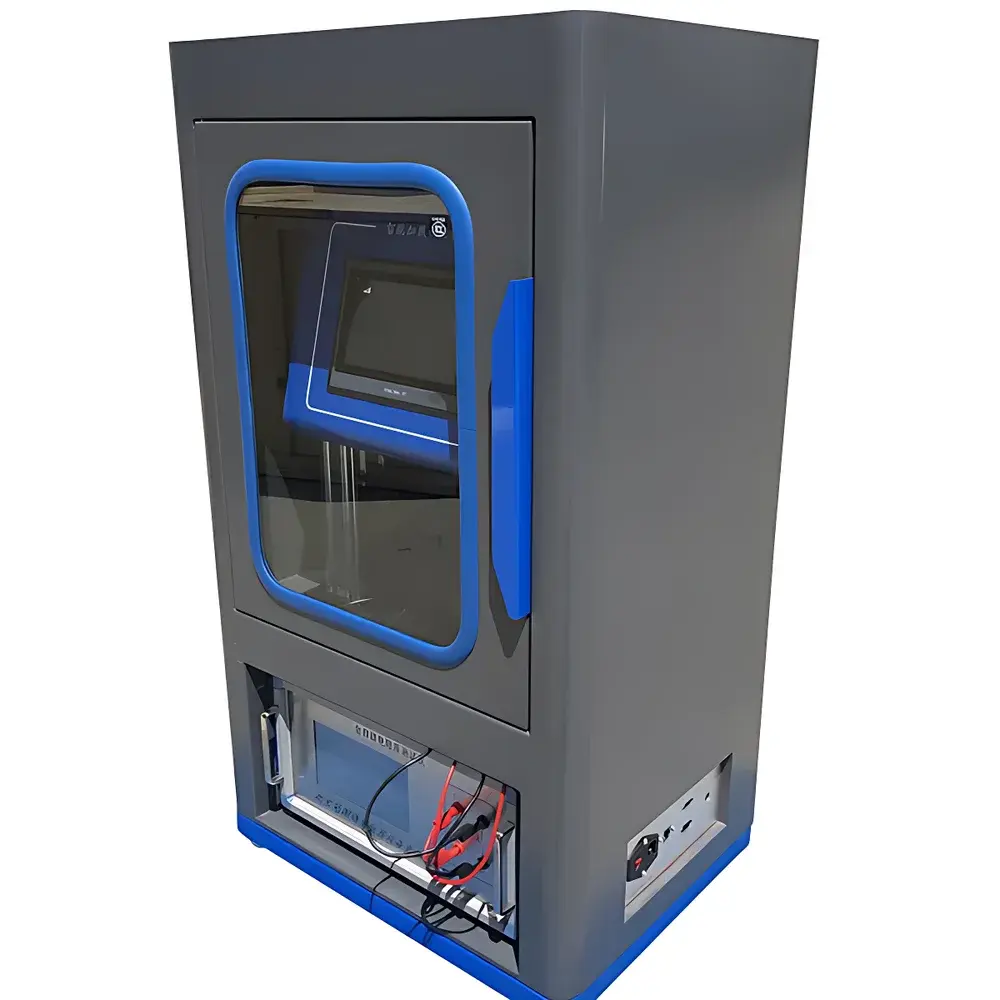
GuanCe FTDZS-I Powder Resistivity Tester (Four-Point Probe Method)
| Brand | GuanCe Instruments |
|---|---|
| Origin | Beijing, China |
| Manufacturer Type | Authorized Distributor |
| Country of Origin | China |
| Model | FTDZS-I |
| Price | USD 2,150 (FOB Beijing) |
Overview
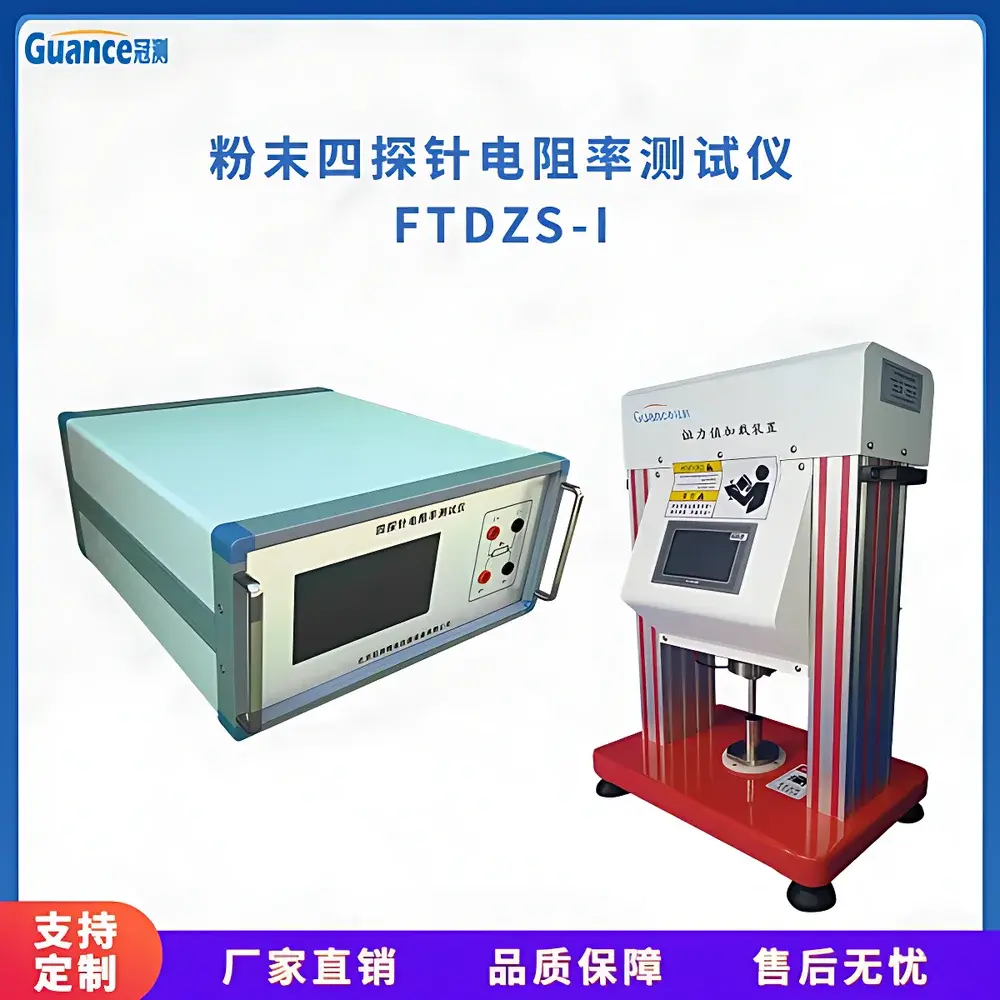
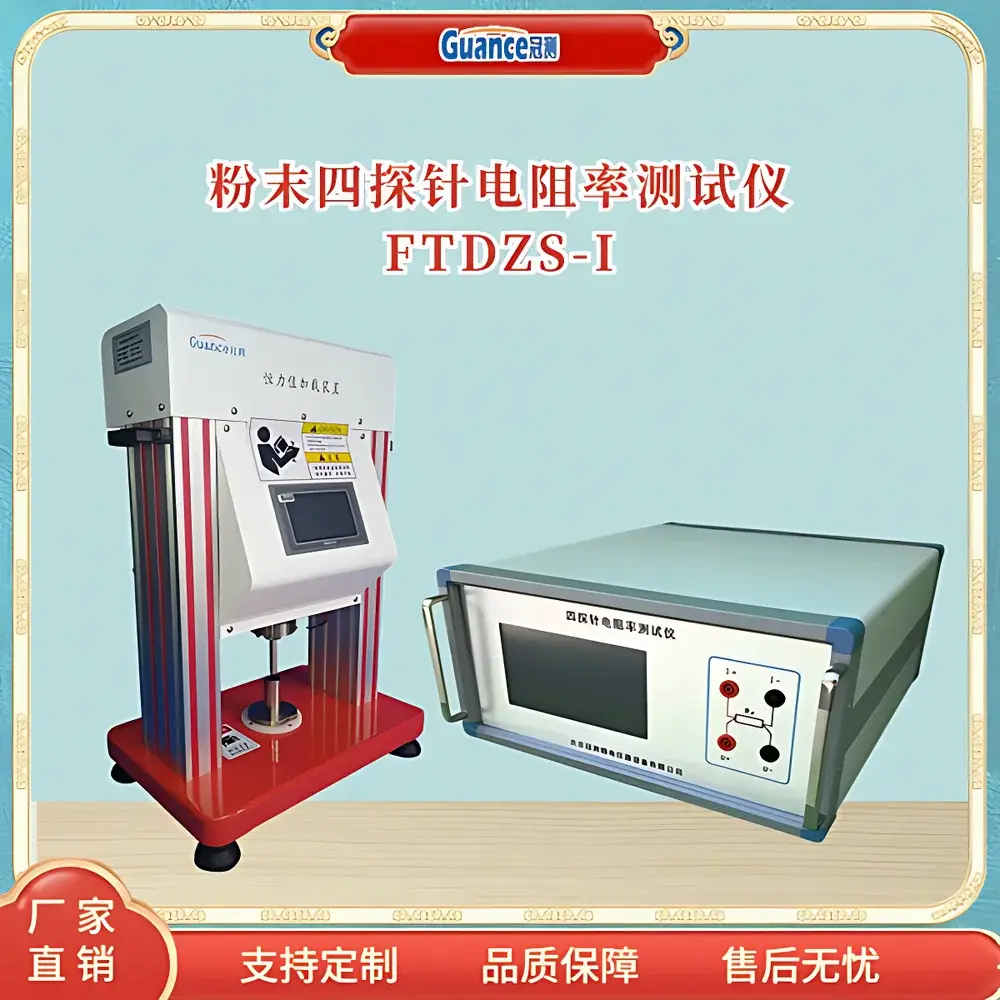
The GuanCe FTDZS-I Powder Resistivity Tester is a precision benchtop instrument engineered for the standardized measurement of electrical resistivity in granular and powdered materials using the four-point probe (4PP) method. Unlike bulk or thin-film measurements, powder resistivity characterization requires controlled compaction to eliminate inter-particle voids and ensure reproducible contact geometry—critical for obtaining comparable, traceable data across laboratories. This system applies a defined uniaxial pressure (via calibrated mechanical loading) to compact powder samples within a cylindrical die cavity prior to resistivity evaluation. The underlying principle follows Ohm’s law in conjunction with geometric correction factors derived from ASTM D3764 and IEC 62631-3-1, enabling accurate calculation of volume resistivity (ρ, in Ω·cm) from measured voltage drop and applied current. Designed for routine QC/QA and R&D environments, the FTDZS-I delivers stable DC excitation and high-resolution voltage sensing under programmable test conditions, supporting both loose-fill and tapped-density configurations per ISO 3953 and USP .
Key Features
- Four-point probe configuration with guarded current source and floating potential sensing—eliminates lead resistance and contact voltage errors inherent in two-point methods
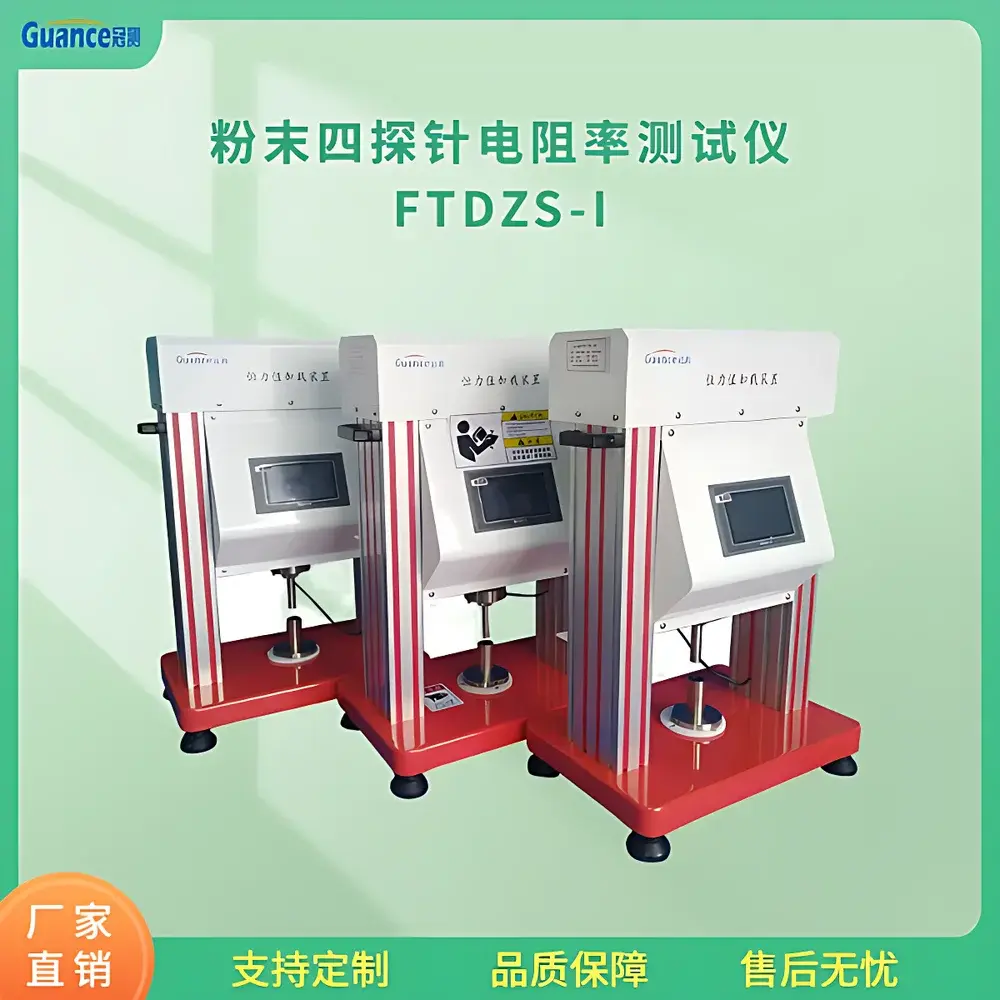
- Integrated electromechanical compaction stage with digital load calibration (range: 0–10 kN, resolution: ±0.1% FS), compliant with ASTM D7841 for powder densification control
- High-stability DC constant-current source (10 µA–100 mA, adjustable in 10-step logarithmic increments) and 6½-digit nanovolt-resolution digital voltmeter (0.1 µV sensitivity)
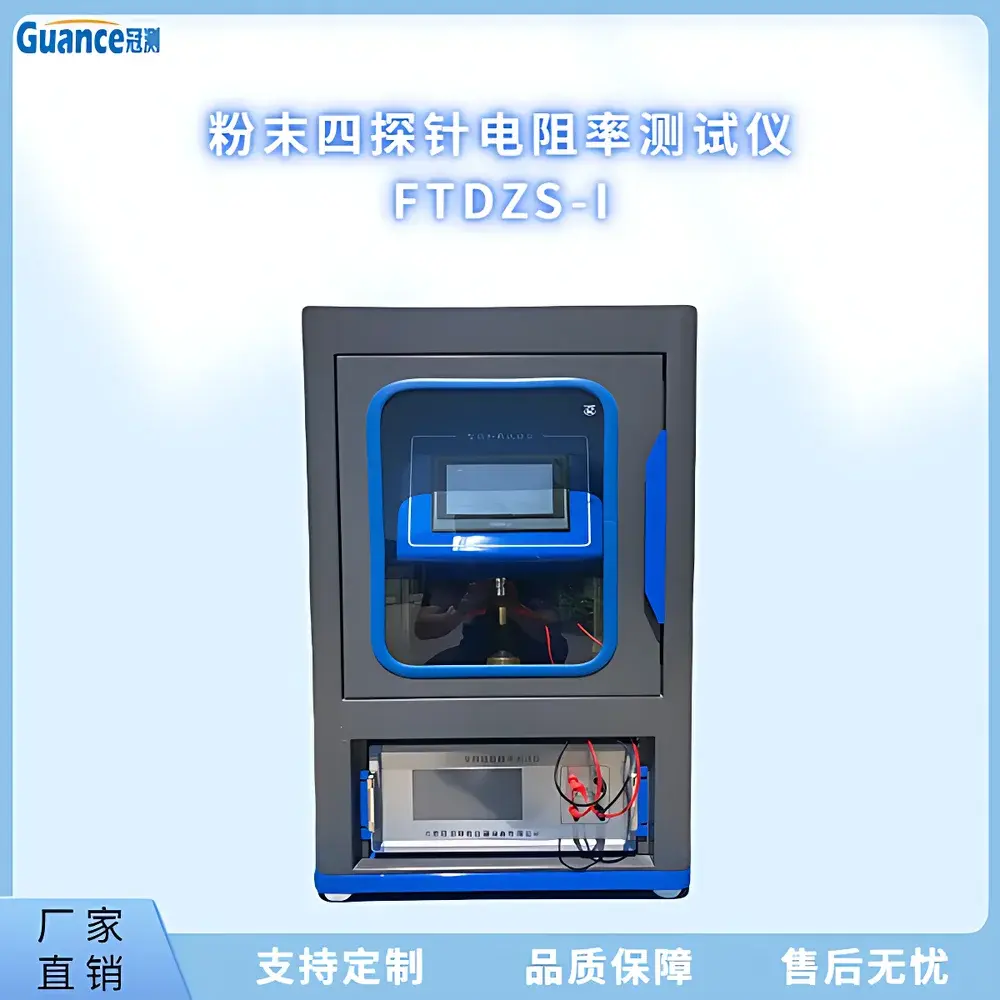
- Capacitive-touch HMI interface with preloaded test protocols—including automatic pressure ramping, dwell timing, and multi-cycle averaging
- Modular test fixture architecture: interchangeable dies (diameters: 13 mm, 25 mm, 32 mm) with hardened stainless-steel electrodes and gold-plated contacts for low-noise signal integrity
- Thermal drift compensation algorithm active during extended measurements; ambient temperature monitoring (±0.5 °C) logged with each result
Sample Compatibility & Compliance
The FTDZS-I accommodates dry, non-hygroscopic powders with particle sizes ranging from 1 µm to 2 mm, including metallic alloys (e.g., Ni, Co, Cu powders), conductive carbons (graphite, acetylene black), metal oxides (LiCoO₂, NMC cathode precursors), and ceramic fillers (Al₂O₃, SiC). Samples must be free of surface moisture and electrostatic charge prior to loading. The system complies with core metrological requirements of ISO/IEC 17025:2017 for testing laboratories and supports audit-ready documentation per GLP and GMP frameworks. All firmware and calibration records adhere to FDA 21 CFR Part 11 principles—electronic signatures, user access levels, and immutable audit trails are embedded in the operating system.
Software & Data Management
Data acquisition and reporting are managed via GuanCe’s proprietary PC-based software (v3.2, Windows 10/11 compatible), which connects via USB 2.0 or Ethernet. The software enables full parameter scripting (current, pressure, dwell time, number of repeats), real-time graphing of V–I linearity, and automatic ρ calculation with geometric correction (including die height and electrode spacing inputs). Export formats include CSV, PDF (with lab header, operator ID, timestamp, and uncertainty estimation), and XML for LIMS integration. Calibration certificates (traceable to NIM, China) are stored digitally with version-controlled firmware updates. Raw voltage and current logs retain 16-bit resolution for post-acquisition reprocessing.
Applications
- Quality control of battery electrode powders (anode graphite, cathode NMC/LFP) prior to slurry mixing
- Resistivity mapping of sintered metal powder compacts during P/M process development
- Comparative analysis of carbon black dispersion efficiency in polymer composites
- Validation of anti-static additive performance in pharmaceutical excipients
- Research on percolation thresholds in conductive polymer blends and nanocomposites
FAQ
What standards does the FTDZS-I support for powder resistivity testing?
ASTM D3764 (Standard Test Method for Electrical Resistivity of Compacted Carbon Powder), IEC 62631-3-1 (Dielectric and resistive properties of solid insulating materials), and GB/T 3048.3–2007 (Chinese national standard for electrical resistivity of powders).
Can the instrument measure anisotropic resistivity in layered powder compacts?
No—the FTDZS-I measures isotropic volume resistivity under uniaxial compression. Anisotropy assessment requires orthogonal probe orientation or custom fixtures not included in the base configuration.
Is calibration required before each test series?
A daily system verification using certified reference resistors (included) is recommended; full NIST-traceable calibration is required annually or after any mechanical impact to the probe assembly.
Does the software support automated report generation for ISO 17025 accreditation?
Yes—reports include measurement uncertainty budgets (Type A and Type B components), equipment IDs, environmental conditions, and electronic signatures meeting ILAC-P14 requirements.
What maintenance is needed for long-term stability?
Quarterly cleaning of electrode surfaces with isopropyl alcohol; annual torque verification of die assembly fasteners; biannual verification of pressure transducer linearity using dead-weight standards.



