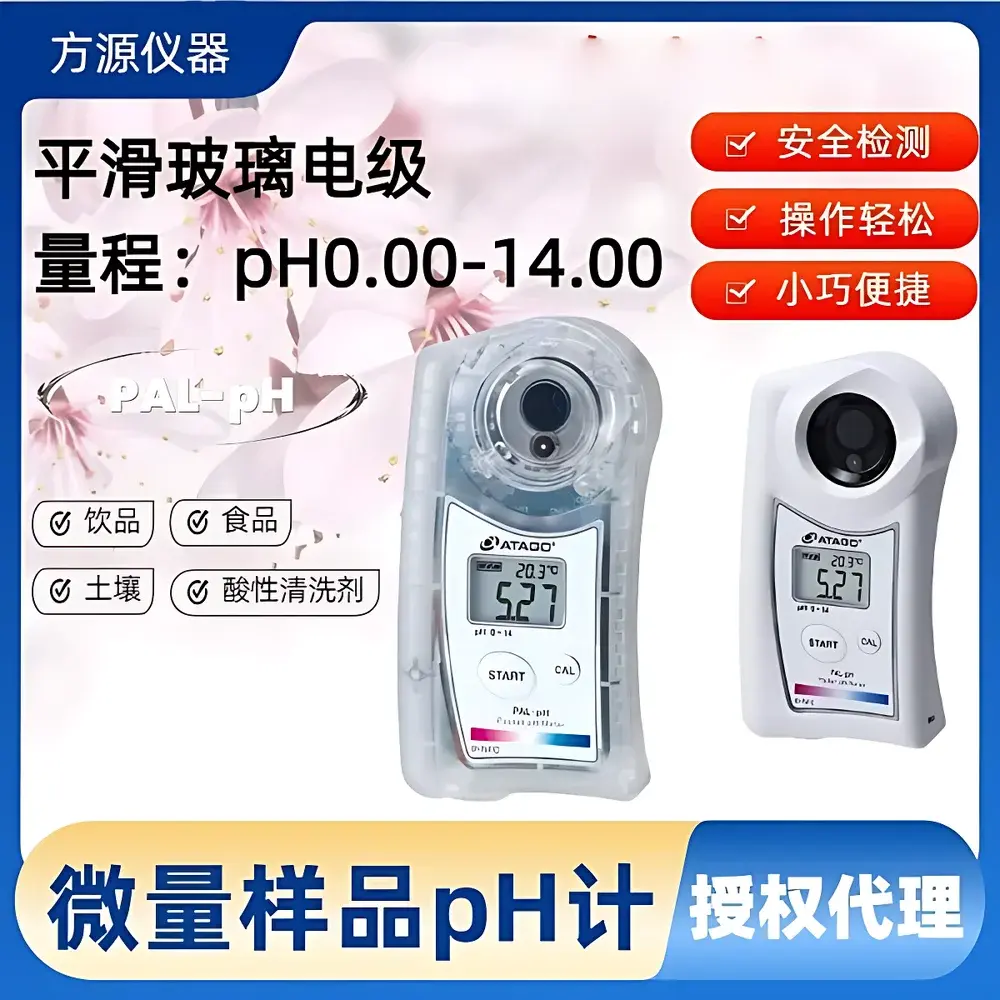
ATAGO PAL-PH Micro-Sample pH Meter with Smooth Glass Electrode and High-Quality Chip Sensor
| Brand | ATAGO |
|---|---|
| Origin | Japan |
| Model | PAL-PH Micro-Sample pH Meter with Smooth Glass Electrode and High-Quality Chip Sensor |
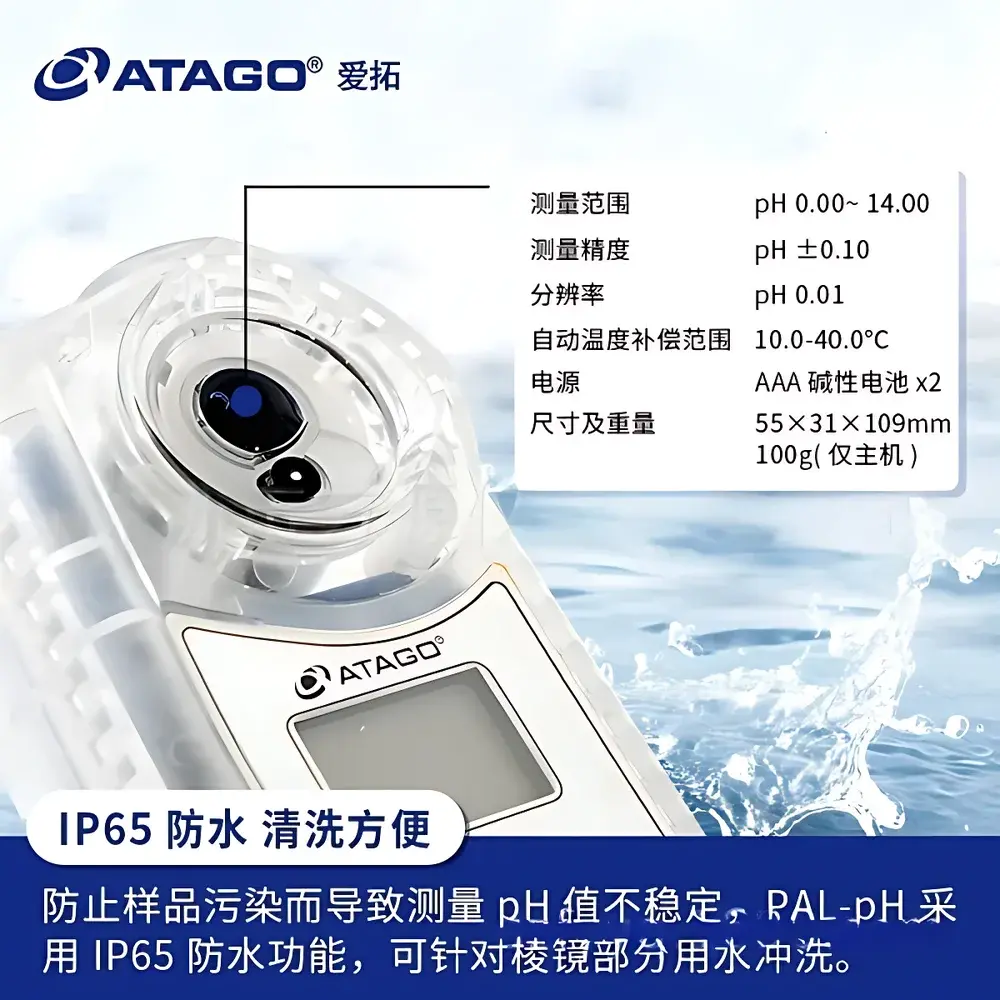
| Measurement Range | pH 0.00–14.00 |
| Resolution | ±0.10 pH, ±1 °C |
| Accuracy | ±0.1 pH |
| Connectivity | NFC (NDEF-compliant data exchange) |
Overview
The ATAGO PAL-PH Micro-Sample pH Meter is a compact, handheld analytical instrument engineered for rapid, reliable pH measurement of minimal-volume liquid samples—typically 0.3 mL or less—without dilution or sample preparation. It operates on the potentiometric principle, utilizing a smooth-surface glass pH electrode coupled with an integrated temperature sensor to deliver automatic temperature compensation (ATC) across the full operational range. Designed specifically for quality control laboratories, food & beverage R&D, pharmaceutical process validation, and academic research settings where sample conservation and workflow efficiency are critical, the PAL-PH eliminates the need for bulky benchtop meters or flow-through cells. Its chip-based sensor architecture ensures stable electrode potential response, low drift, and extended calibration interval stability—key attributes for GLP-compliant routine analysis.
Key Features
- Micro-sample capability: Accurate pH measurement from as little as 0.3 mL of sample—ideal for precious, viscous, or limited-availability materials including syrups, gels, emulsions, and biological fluids.
- Smooth-surface glass electrode: Minimizes surface adhesion and residue retention, enabling rapid rinsing and consistent inter-sample reproducibility; resistant to clogging in particulate-laden or high-sugar matrices.
- Integrated high-fidelity chip sensor: Digitally stabilized signal processing reduces noise susceptibility and improves long-term baseline stability versus analog-only designs.
- NFC-enabled data transfer: Compliant with ISO/IEC 18092 and NDEF (NFC Data Exchange Format) standards; supports one-touch wireless transmission of timestamped pH and temperature readings directly to Android or iOS smartphones without pairing or dedicated apps.
- Real-time environmental logging: Each NDEF record includes UTC timestamp, measured pH value, temperature (°C), and device-specific metadata—structured for traceability and audit-ready export.
- Robust industrial-grade housing: IP65-rated enclosure resists dust ingress and incidental water exposure, suitable for cleanroom-adjacent or production-floor deployment.
Sample Compatibility & Compliance
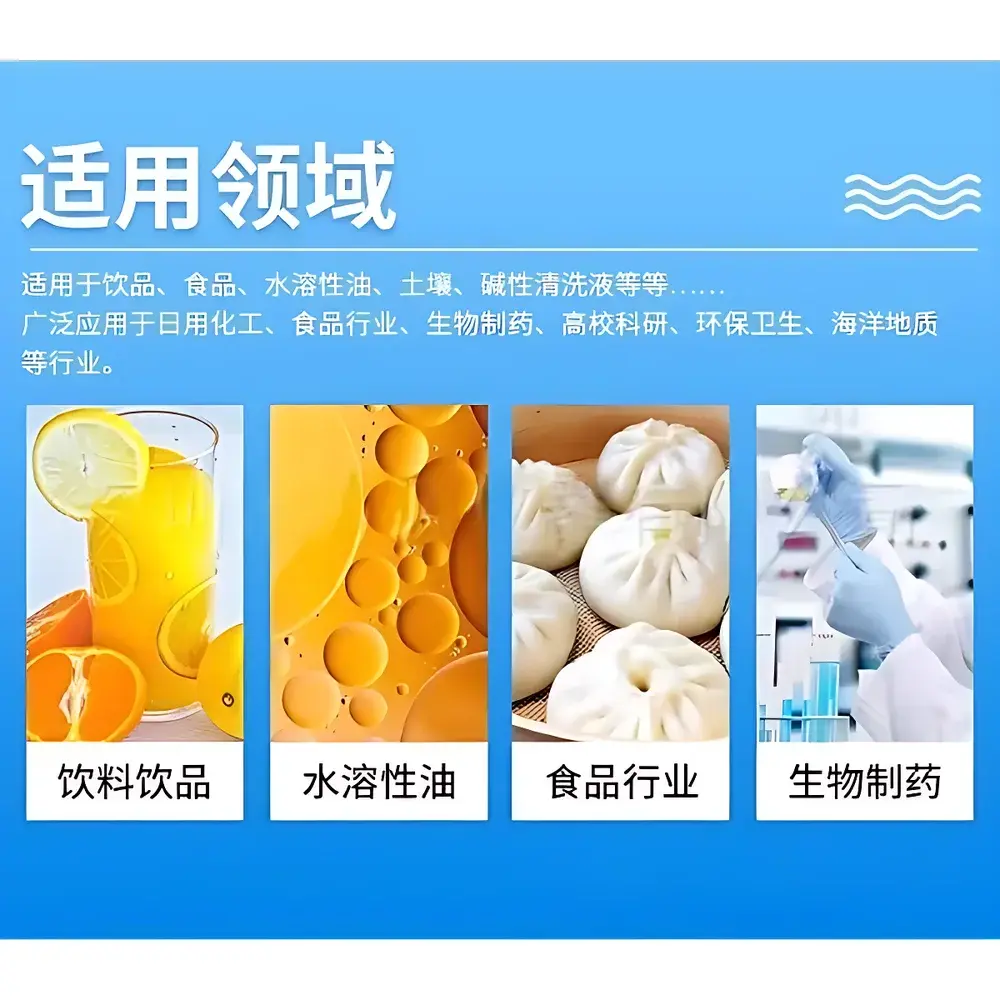
The PAL-PH demonstrates broad compatibility with aqueous and semi-aqueous systems, including acidic fruit juices (pH 2.5–4.2), dairy products (pH 4.5–6.8), buffer solutions (pH 4.01, 7.00, 10.01), and alkaline cleaning agents (pH 11.5–13.5). It is not recommended for non-aqueous solvents, highly viscous polymer melts (>10,000 mPa·s), or strongly oxidizing media (e.g., >5% hypochlorite). The instrument conforms to IEC 61010-1:2010 for electrical safety and meets essential requirements under the EU EMC Directive 2014/30/EU. While not certified for hazardous area use (ATEX/IECEx), its design supports alignment with ISO/IEC 17025 documentation practices and FDA 21 CFR Part 11–compatible data integrity workflows when paired with validated NFC reader software.
Software & Data Management
Data captured via NFC adheres to standardized NDEF message formatting, allowing seamless ingestion into LIMS, ELN, or custom QA databases via generic NFC reader APIs (e.g., Android’s android.nfc.tech.Ndef). Each transmitted packet contains structured fields: DateTime (UTC, YYYY/MM/DD HH:MM format), pH_Value, Temperature_Celsius, and Device_ID. No proprietary cloud platform is required; raw NDEF payloads are human-readable in hexadecimal or UTF-8 plaintext. For regulated environments, users may implement cryptographic signing at the application layer or enforce audit-trail logging through middleware that records NFC read events—including reader ID, timestamp, and payload hash—for full ALCOA+ compliance (Attributable, Legible, Contemporaneous, Original, Accurate).
Applications
- Food & Beverage QC: Rapid pH verification of sauces, dressings, fermented beverages, and infant formula prior to packaging—reducing turnaround time by >70% vs. traditional electrode immersion methods.
- Pharmaceutical Manufacturing: In-process monitoring of buffer pH during chromatography column equilibration or lyophilization cycle qualification, supporting Annex 1 and USP environmental control protocols.
- Academic Research: High-throughput screening of enzyme reaction kinetics where micro-volume sampling preserves substrate stoichiometry and minimizes experimental error propagation.
- Cosmetic Formulation: Stability testing of emulsions and hydrogels under accelerated aging conditions, leveraging minimal sample consumption to enable triplicate parallel measurements per timepoint.
- Water Treatment Support: Spot-checking of coagulant dosing efficacy in pilot-scale systems using sub-mL grab samples from inline samplers.
FAQ
What is the minimum sample volume required for accurate measurement?
The PAL-PH achieves reliable electrochemical equilibrium with as little as 0.3 mL of homogeneous aqueous or low-viscosity sample. For heterogeneous or high-sugar samples, gentle agitation during measurement is recommended.
Does the instrument support calibration verification traceable to NIST standards?
Yes—calibration is performed using certified reference buffers (e.g., NIST-traceable pH 4.01, 7.00, and 10.01 solutions); certificate of conformance is provided with each buffer kit sold separately.
Can NFC data be imported directly into Excel or LabArchives?
Yes—NDEF payloads are parseable via open-source Python libraries (e.g., nfcpy) or commercial NFC middleware; CSV export templates are available from ATAGO’s technical support portal.
Is the smooth-glass electrode replaceable, and what is its typical service life?
The electrode is field-replaceable (part number PAL-PH-EL); under normal usage (≤20 measurements/day, proper storage in 3 M KCl), expected functional lifespan exceeds 18 months.
How does the PAL-PH handle temperature compensation?
It employs a built-in Pt1000 RTD sensor with ±0.5 °C accuracy; ATC follows the standard Nernst equation implementation per ISO 7027 and ASTM D1293, with user-selectable slope modes (fixed 59.16 mV/pH or auto-slope).
Related Products