
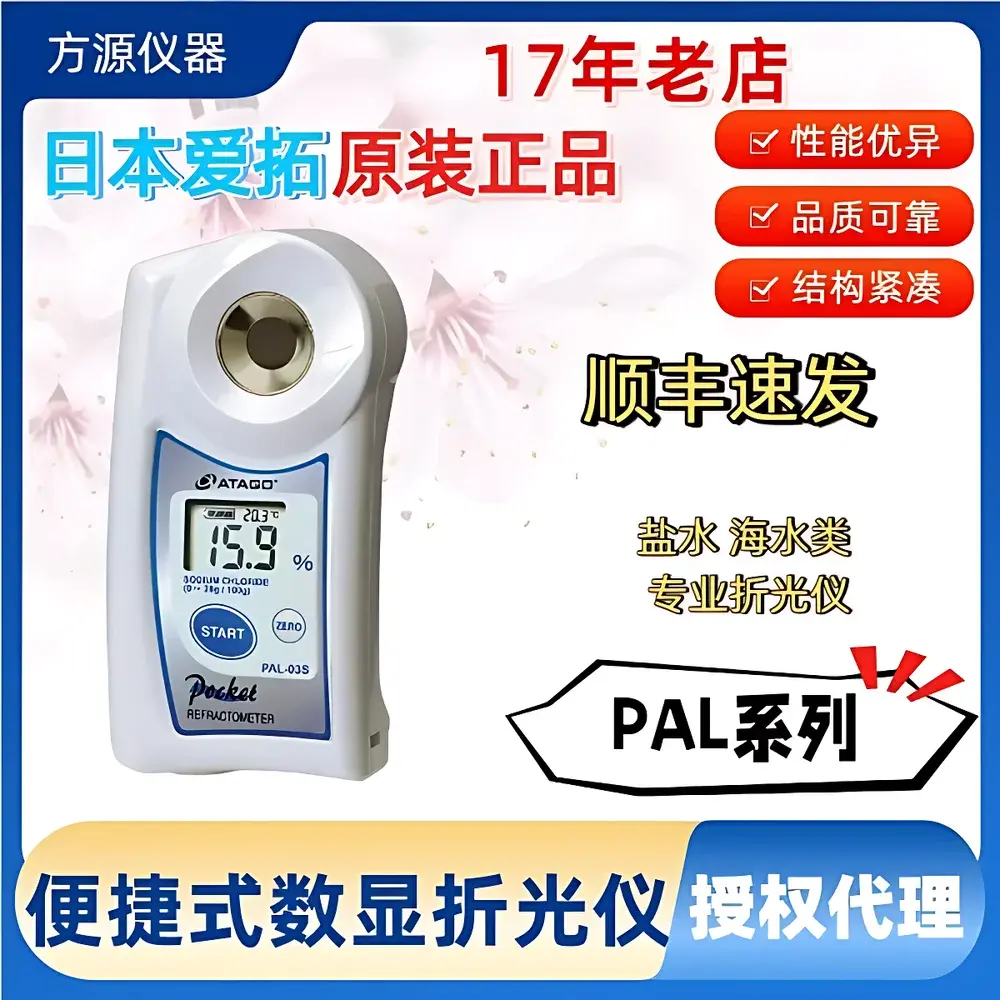
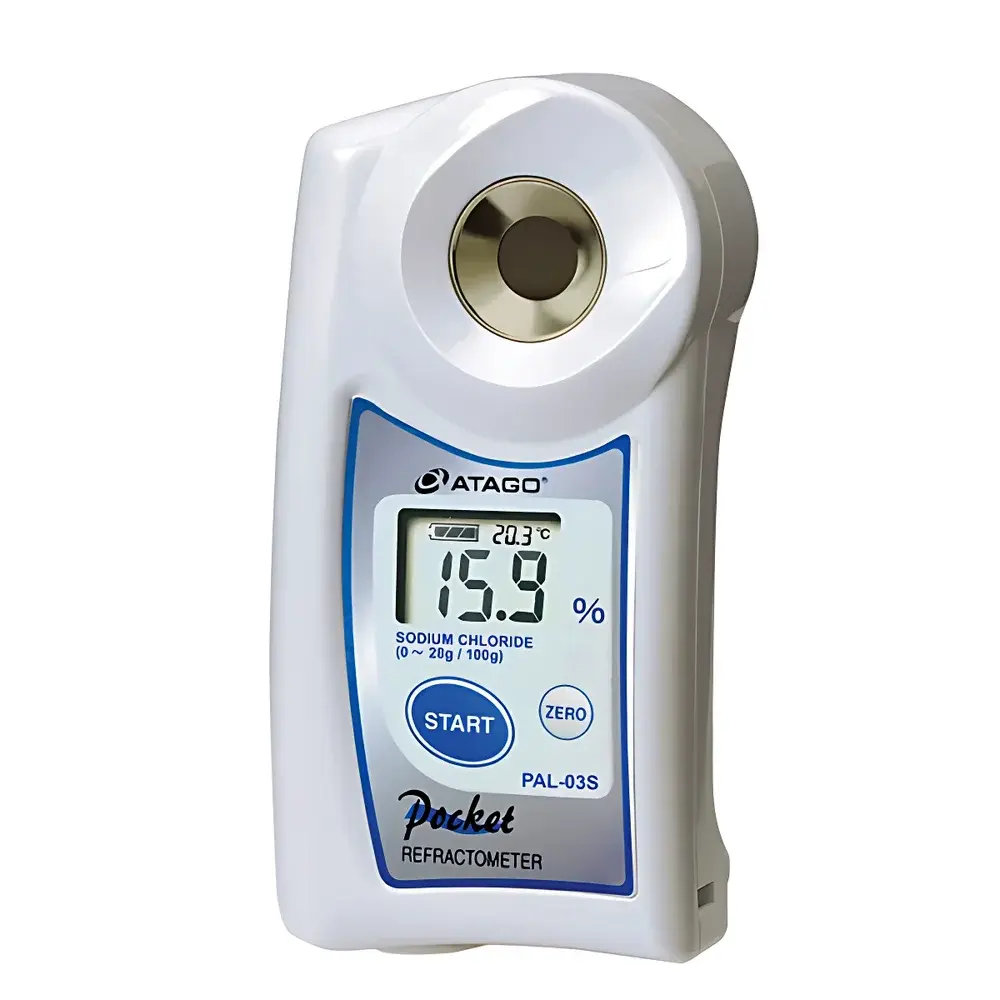
ATAGO PAL-4406 Digital Portable Refractometer for Saltwater and Seawater
| Brand | ATAGO |
|---|---|
| Origin | Japan |
| Model | PAL-4406 |
| Product Type | Handheld Refractometer |
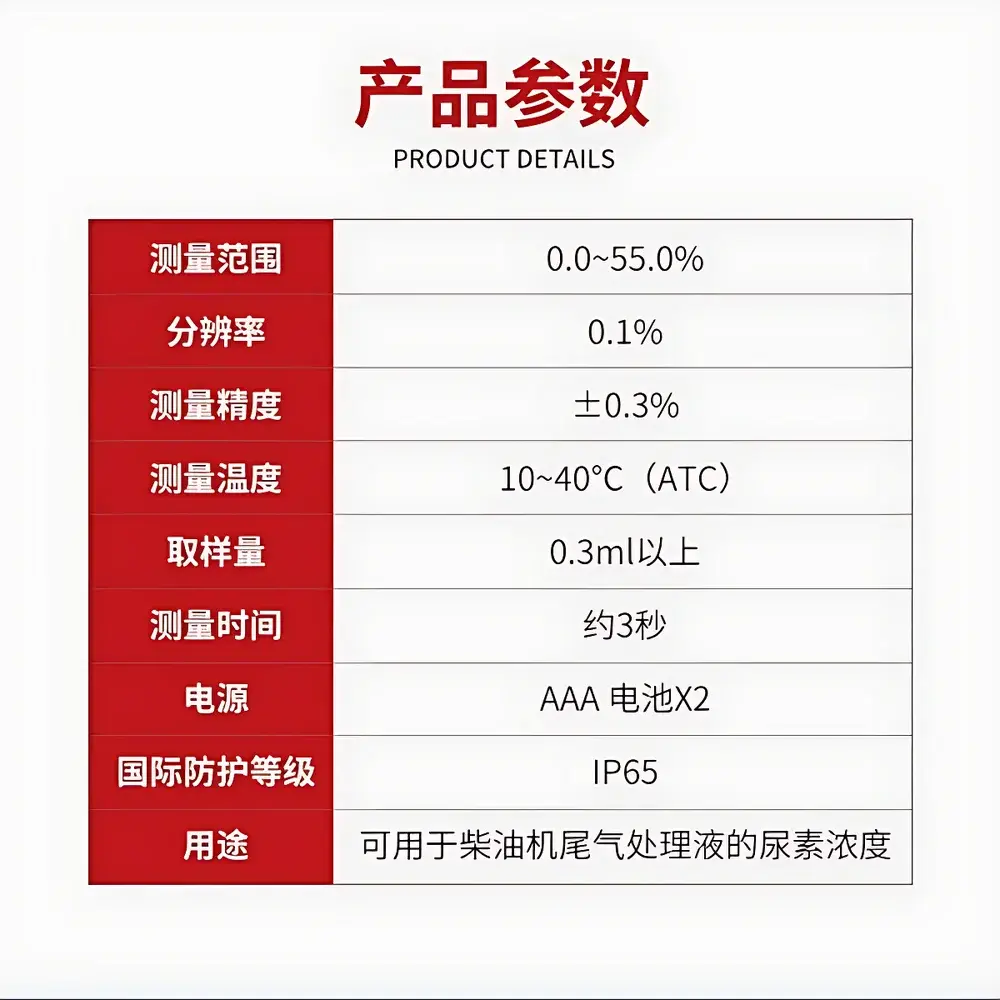
| Measurement Range | 0.0–45.0% NaCl (w/w) |
| Accuracy | ±0.4% |
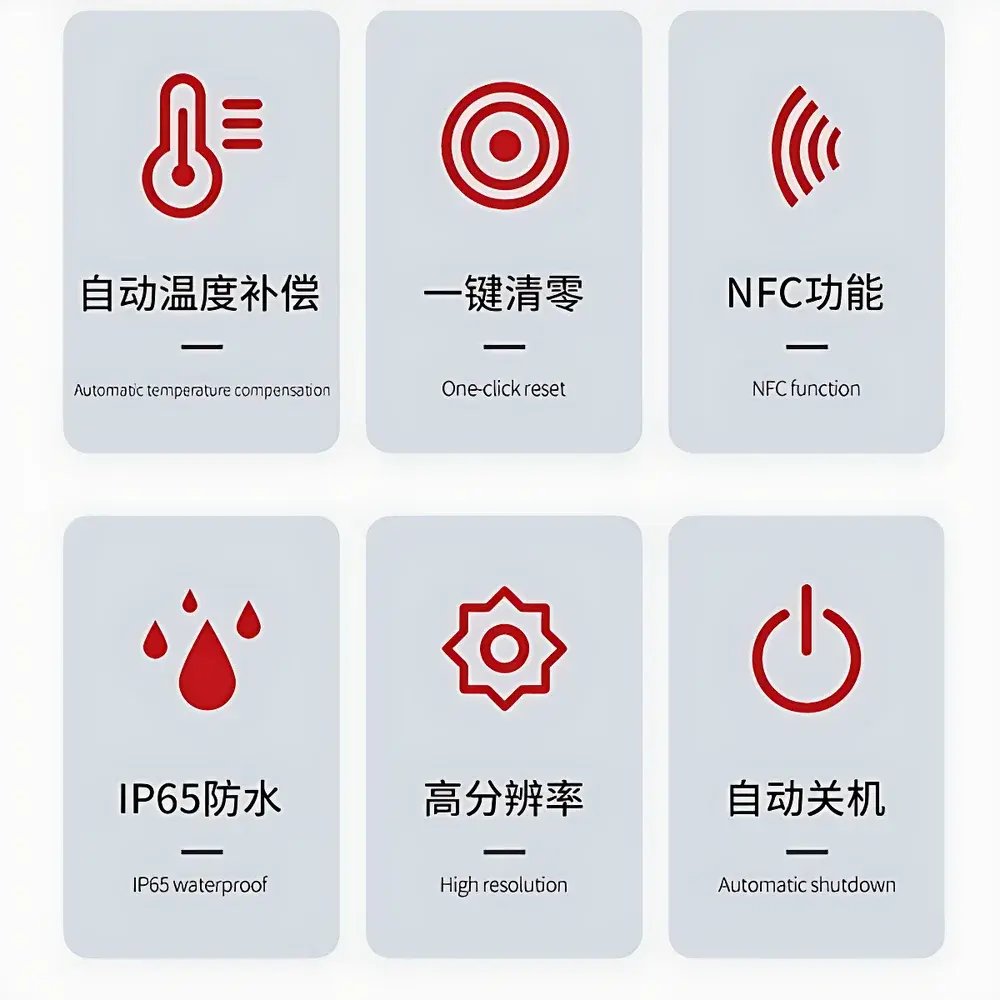
| Temperature Compensation | Automatic (ATC, 10–40°C) |
| IP Rating | IP65 |
| Weight | 100 g |
| Prism Material | Stainless Steel (SUS) |
| Data Storage | Up to 100 measurements |
| Connectivity | NFC (Android only), Bluetooth (optional firmware-enabled models) |
| Display | Backlit LCD with ELI indicator |
| Cleaning | Rinseable with distilled water |
| Compliance | CE-marked, RoHS-compliant, designed per ISO 2173:2003 (fruit juice refractometry) and JIS K 0063 (general refractometer specifications) |
Overview
The ATAGO PAL-4406 is a precision-engineered handheld digital refractometer specifically optimized for rapid, field-deployable measurement of sodium chloride concentration in saltwater, brine solutions, and seawater samples. Based on the fundamental principle of total internal reflection at the prism–sample interface, the instrument determines refractive index (nD) and converts it in real time to % NaCl (w/w) using a calibrated polynomial algorithm traceable to NIST-standard reference solutions. Its optical path incorporates a high-stability Abbe-type prism assembly with stainless steel (SUS) sample contact surfaces, ensuring corrosion resistance and long-term calibration stability in aggressive saline environments. Unlike benchtop or analog units, the PAL-4406 integrates automatic temperature compensation (ATC) across 10–40°C—critical for marine fieldwork where ambient thermal drift significantly affects refractive index readings. The device complies with international refractometric standards including ISO 2173:2003 (for aqueous solution density correlation) and JIS K 0063, and its construction meets IP65 ingress protection requirements for dust and low-pressure water jet resistance.
Key Features
- Stainless steel (SUS) sample prism and trough—resistant to pitting, chloride-induced stress corrosion, and biofouling common in marine applications
- Exclusive External Light Interference (ELI) detection system: alerts users via on-screen “mm” indicator when ambient light compromises optical signal integrity; measurement resumes after manual shielding and re-initiation
- True zero-point calibration with deionized water—no proprietary calibration fluids required for routine baseline verification
- Backlit LCD display with adjustable contrast—enables legible readings under deck lighting, direct sunlight, or low-visibility conditions
- NFC-enabled data transfer (Android-compatible): stores up to 100 measurement records locally; timestamps and %NaCl values are wirelessly extractable via compatible smartphones without manual transcription
- Float-capable housing design: unit remains buoyant if accidentally dropped into seawater—minimizing loss risk during vessel-based operations
- Ergonomic one-handed operation: START button placement and 100 g mass support extended use during repetitive sampling without operator fatigue
Sample Compatibility & Compliance
The PAL-4406 is validated for homogeneous aqueous NaCl solutions ranging from freshwater (0.0%) to saturated brine (45.0%). It is not intended for viscous, turbid, or volatile samples (e.g., ethanol–water mixtures or crude oil emulsions) without accessory modification. Sample volume requirement is ≤0.3 mL per measurement—compatible with micro-sampling protocols. All materials contacting samples comply with FDA 21 CFR §177.2400 (food-contact plastics) and EU Regulation (EC) No. 1935/2004. While not certified for GLP/GMP audit trails out-of-the-box, the device supports traceability through NFC-exported CSV logs containing date/time stamps and measurement IDs—enabling integration into LIMS workflows when paired with third-party validation documentation.
Software & Data Management
No dedicated PC software is bundled; however, NFC-read data exports as plain-text CSV files readable in Excel, LabArchives, or custom SQL databases. Each record includes: measurement ID, UTC timestamp, %NaCl value, and ATC-compensated temperature (°C). Bluetooth capability is hardware-present but requires firmware update (v3.2+) and pairing with ATAGO’s optional mobile app (available on Google Play). Raw refractive index values (nD) are not exposed in standard UI mode but may be accessed via service menu for metrological verification. Calibration history is not stored—users must log recalibrations manually per ISO/IEC 17025 clause 7.7.
Applications
- Marine environmental monitoring: salinity profiling in estuaries, coral reef surveys, and ballast water compliance testing (IMO D-2 standard)
- Aquaculture management: real-time adjustment of hatchery brine concentrations for larval development stages
- Desalination plant QA/QC: feedwater and permeate salinity spot-checking pre- and post-reverse osmosis membranes
- Food processing: brine strength verification for seafood curing, pickling, and fermented product consistency control
- Academic field labs: undergraduate oceanography labs requiring rugged, student-safe instrumentation with minimal training overhead
FAQ
Does the PAL-4406 require factory recalibration annually?
No—ATAGO recommends user-performed zero-point verification with deionized water before each sampling session. Full recalibration using certified NaCl standards (e.g., 10.00 ± 0.02% w/w) is advised every 6 months or after 500 measurements, per JIS K 0063 section 6.2.
Can the ELI function be disabled?
No—ELI is a hardwired optical safety feature and cannot be toggled off; it ensures measurement validity under variable ambient lighting, a known source of error in field refractometry.
Is the stainless steel prism compatible with hydrochloric acid cleaning?
No—SUS316 resists NaCl corrosion but is not resistant to HCl. Only distilled or deionized water should be used for prism cleaning; abrasive cloths or organic solvents are prohibited.
What is the maximum operating temperature of the sample prism?
The prism surface tolerates transient contact with liquids up to 100°C, but ATC compensation is only active between 10–40°C; measurements outside this range display raw nD without compensation and trigger a warning icon.
Does NFC data export include measurement uncertainty estimates?
No—NFC output contains only nominal %NaCl and timestamp. Total measurement uncertainty (±0.4% at 20°C, k=2) must be applied externally per ISO/IEC Guide 98-3 (GUM).






