
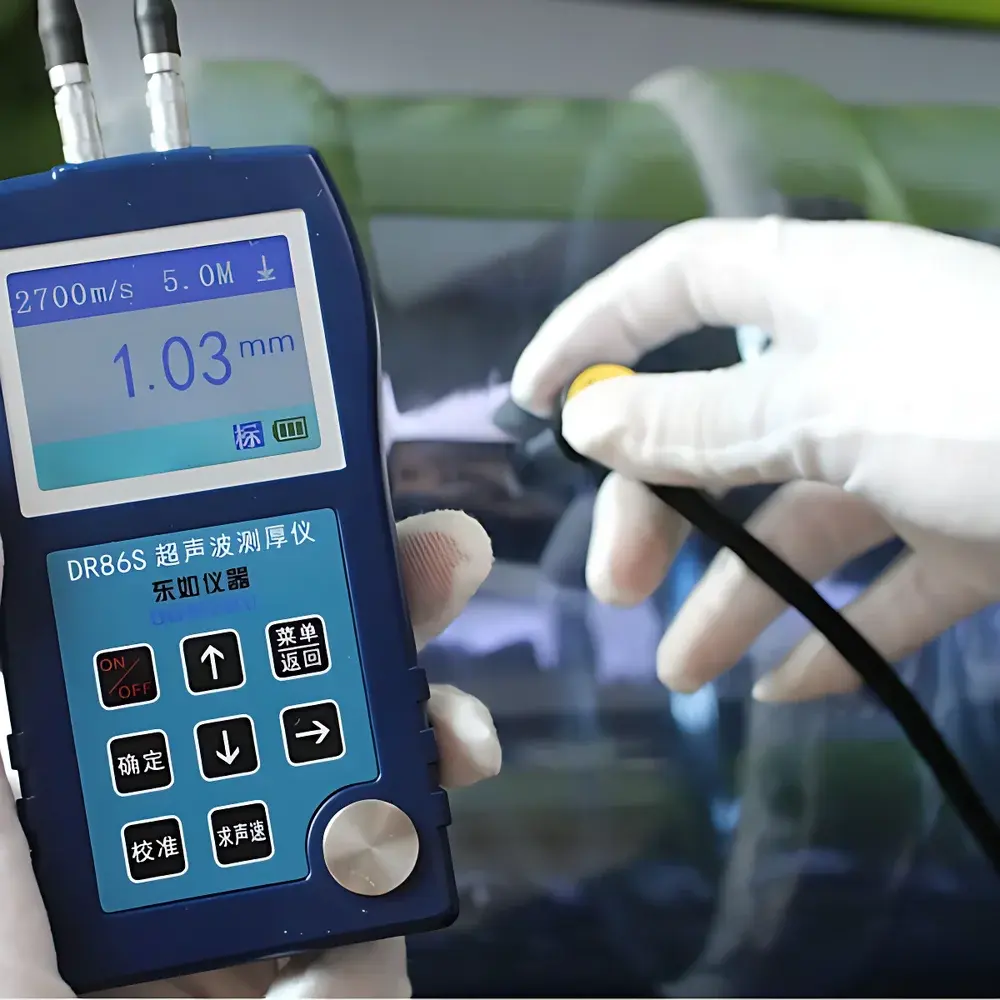
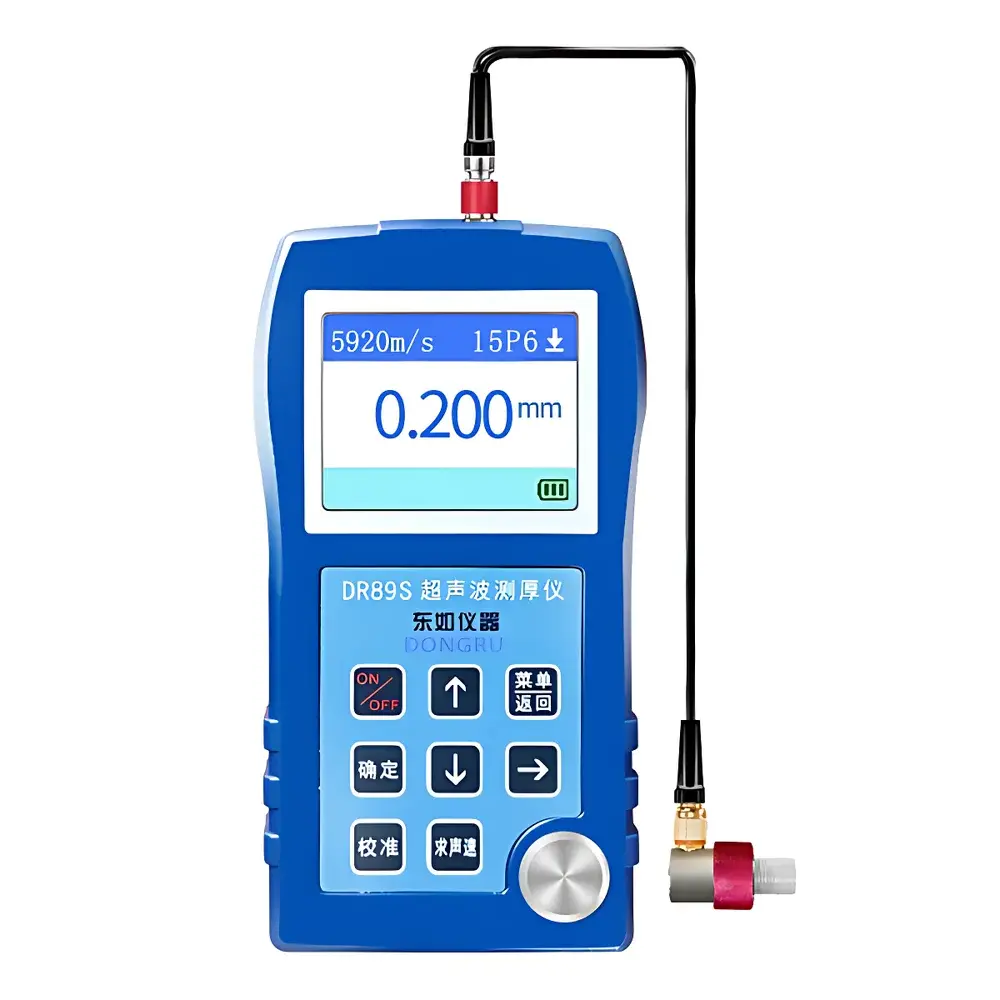
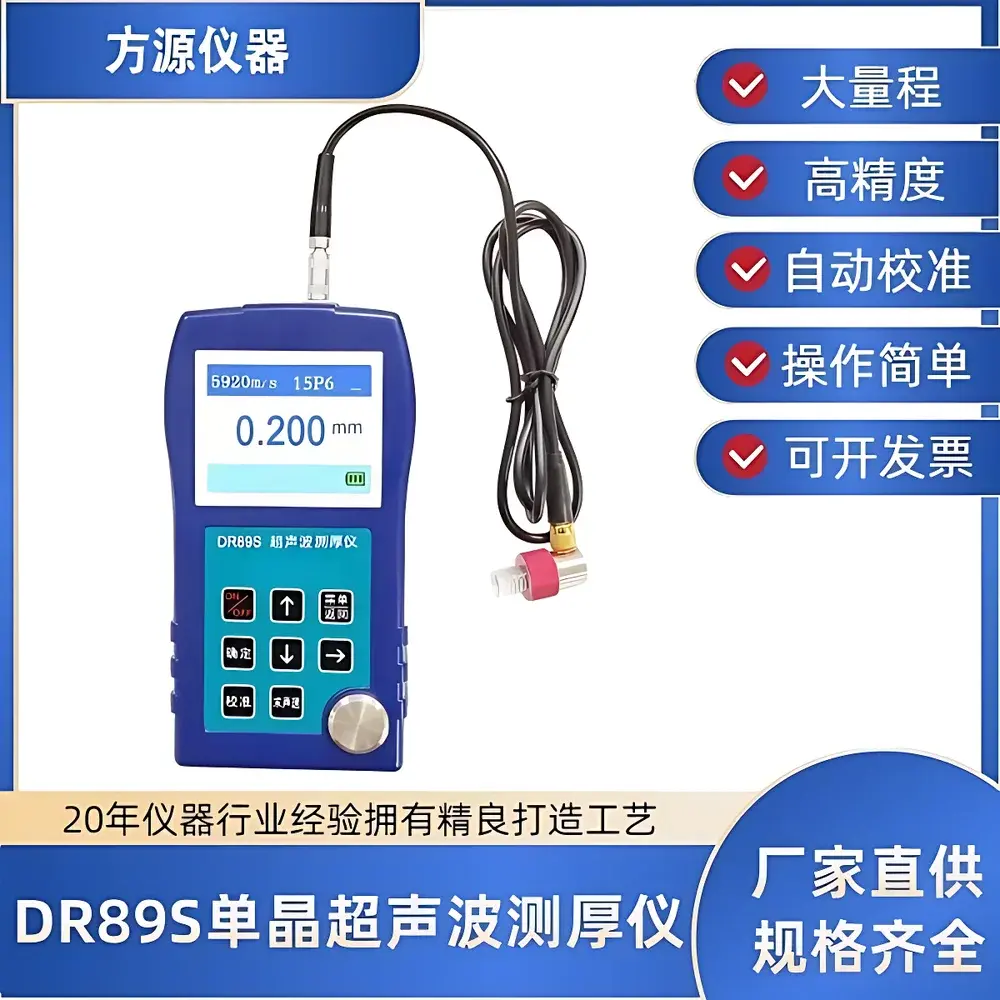
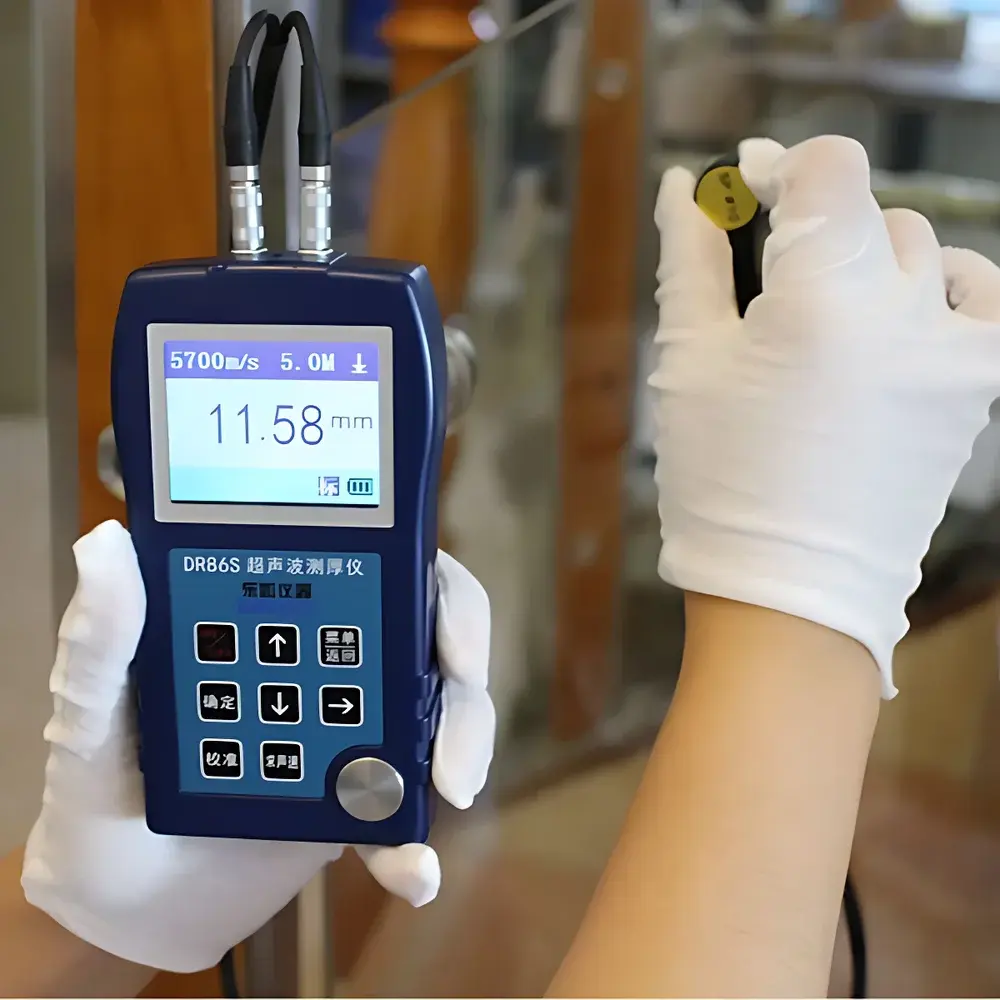
Fangyuan Instruments DR89S Single-Crystal High-Precision Ultrasonic Thickness Gauge for Steel Through Paint Coatings
| Brand | Fangyuan Instruments |
|---|---|
| Origin | Guangdong, China |
| Manufacturer Type | Authorized Distributor |
| Country of Origin | China |
| Model | DR89S |
| Measurement Principle | Pulse-Echo Ultrasonic (Single-Crystal Transducer) |
| Thickness Range | 0.15–300 mm |
| Display Resolution | 0.001 mm |
| Measurement Accuracy | ±(0.01 + 0.3% H) mm |
| Probe Frequency | 5 MHz (standard single-crystal contact transducer) |
| Material Compatibility | Carbon steel, stainless steel, aluminum, copper, and other homogeneous metallic substrates |
| Coating Compensation | Yes — supports paint, enamel, plastic, and epoxy layer compensation without surface preparation |
| Operating Temperature | 0–50 °C |
| Data Storage | Internal memory for ≥1,000 readings |
| Output Interface | USB 2.0 for PC data transfer |
| Compliance | Meets ISO 2400:2019 (Ultrasonic thickness measurement — Calibration and verification procedures), ASTM E797-23 (Standard Practice for Measuring Thickness by Manual Ultrasonic Pulse-Echo Contact Method) |
Overview
The Fangyuan Instruments DR89S Single-Crystal High-Precision Ultrasonic Thickness Gauge is engineered for non-destructive, high-resolution thickness evaluation of metallic structures—particularly carbon and stainless steel—through intact protective coatings such as paint, enamel, or polymer layers. Unlike dual-element or delay-line probes used in general-purpose gauges, the DR89S employs a precision-matched, high-frequency (5 MHz) single-crystal contact transducer with optimized damping and pulse recovery characteristics. This architecture enables superior near-surface resolution and minimal dead zone (<0.15 mm), making it uniquely suited for applications where thin-wall integrity, corrosion monitoring under insulation (CUI), or post-coating QA/QC inspection is critical. The instrument operates on the pulse-echo principle: an ultrasonic wave is generated at the transducer face, travels through the coating and substrate, reflects from the back wall, and returns to the same transducer. Advanced digital signal processing (DSP) algorithms isolate the first back-wall echo while dynamically compensating for coating velocity and acoustic impedance mismatch—eliminating the need for coating removal or couplant adjustment during routine field use.
Key Features
- Sub-micron display resolution (0.001 mm) with traceable linearity across full 0.15–300 mm range
- Coating-compensated mode calibrated for common industrial coatings (paint, epoxy, polyurethane) using built-in velocity libraries and user-defined calibration routines
- Single-crystal transducer design ensures high signal-to-noise ratio and repeatable echo timing—critical for thin-section measurements and layered material analysis
- Real-time temperature compensation via integrated sensor; maintains accuracy across 0–50 °C operating envelope
- Auto-zero function with probe coupling detection minimizes operator-induced error during rapid inspections
- IP65-rated enclosure with rubberized grip and drop-tested mechanical housing for industrial field environments
- On-device statistical analysis (min/max/avg/SD) and pass/fail threshold alerts configurable per job profile
Sample Compatibility & Compliance
The DR89S is validated for use on flat or curved (≥Φ30 mm radius) surfaces of homogeneous metals including low-carbon steel, austenitic stainless steels (e.g., 304, 316), aluminum alloys (e.g., 6061, 7075), and copper. It is not intended for cast iron, fiber-reinforced composites, or highly attenuative materials. Coating thickness up to 3 mm may be compensated without degradation in base-metal measurement fidelity, provided coating adhesion is intact and acoustic coupling is uniform. The gauge conforms to ISO 2400:2019 requirements for calibration traceability and verification methodology. Its measurement uncertainty budget aligns with ASTM E797-23 Annex A2 for manual pulse-echo systems. For regulated industries (e.g., oil & gas, power generation), raw data export supports GLP-compliant audit trails when paired with optional PC software.
Software & Data Management
Fangyuan’s proprietary ThicknessLink™ PC software (v3.2+) enables bidirectional communication via USB 2.0. Users can download stored readings—including timestamp, location tag (via optional Bluetooth GPS module), transducer ID, coating type selection, and waveform snapshots—for report generation in CSV, PDF, or XML formats. Software supports multi-curve overlay for trend analysis, automated compliance flagging against ASME B31.4/B31.8 wall-thinning thresholds, and integration with CMMS platforms via API. All data files include embedded metadata required for FDA 21 CFR Part 11–aligned environments (electronic signatures, audit trail logging, and user access controls available in Enterprise License tier).
Applications
- In-service corrosion mapping of aboveground storage tank (AST) shells and piping without coating removal
- Pre-commissioning QA of clad plates and weld overlays in petrochemical fabrication
- Verification of minimum remaining wall thickness in fireproofed structural steel members
- Quality control of galvanized or painted sheet metal components in automotive and appliance manufacturing
- Periodic thickness surveillance of boiler tubes and heat exchanger shells under thermal cycling conditions
- Research-grade validation of coating-substrate interface integrity in accelerated aging studies
FAQ
Does the DR89S require couplant when measuring through paint?
Yes—a water-based or glycerin couplant must be applied between the transducer and the painted surface to ensure acoustic continuity. The instrument’s coating-compensation algorithm does not eliminate the physical need for coupling.
Can the DR89S measure thickness on rusty or pitted surfaces?
Surface pitting or heavy oxidation degrades echo amplitude and timing stability. For reliable results, the surface should be free of loose scale; light mill scale may be tolerated if acoustically bonded.
Is calibration traceable to national standards?
Each unit ships with a NIST-traceable calibration certificate (accredited to ISO/IEC 17025:2017), verified using certified step wedges and reference blocks per ASTM E797-23 Section 7.
What is the minimum detectable thickness with the standard 5 MHz probe?
The specified lower limit is 0.15 mm under optimal coupling and surface conditions; this represents the practical near-field resolution limit—not theoretical transducer bandwidth.
How frequently should the instrument be recalibrated?
Annual recalibration is recommended for routine industrial use; more frequent verification (e.g., daily zero-check with known thickness standard) is required in high-accuracy or regulated workflows.



