
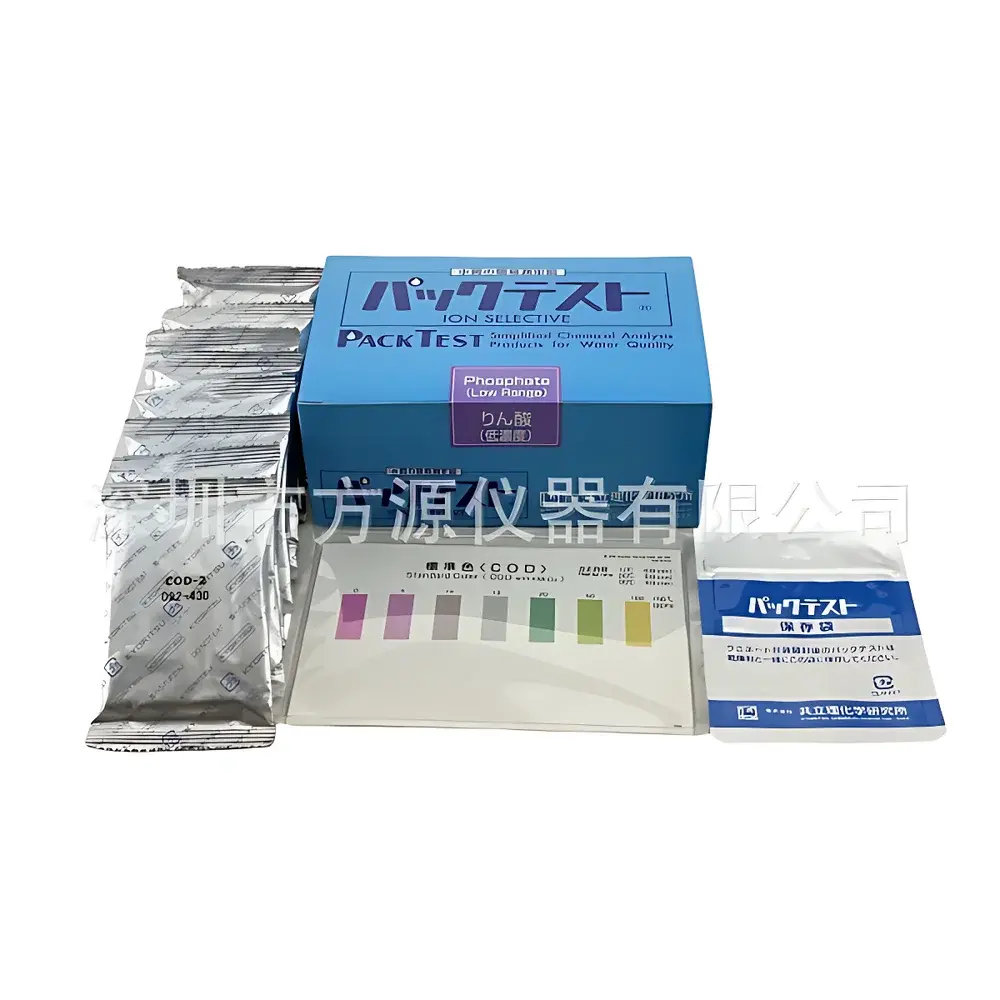
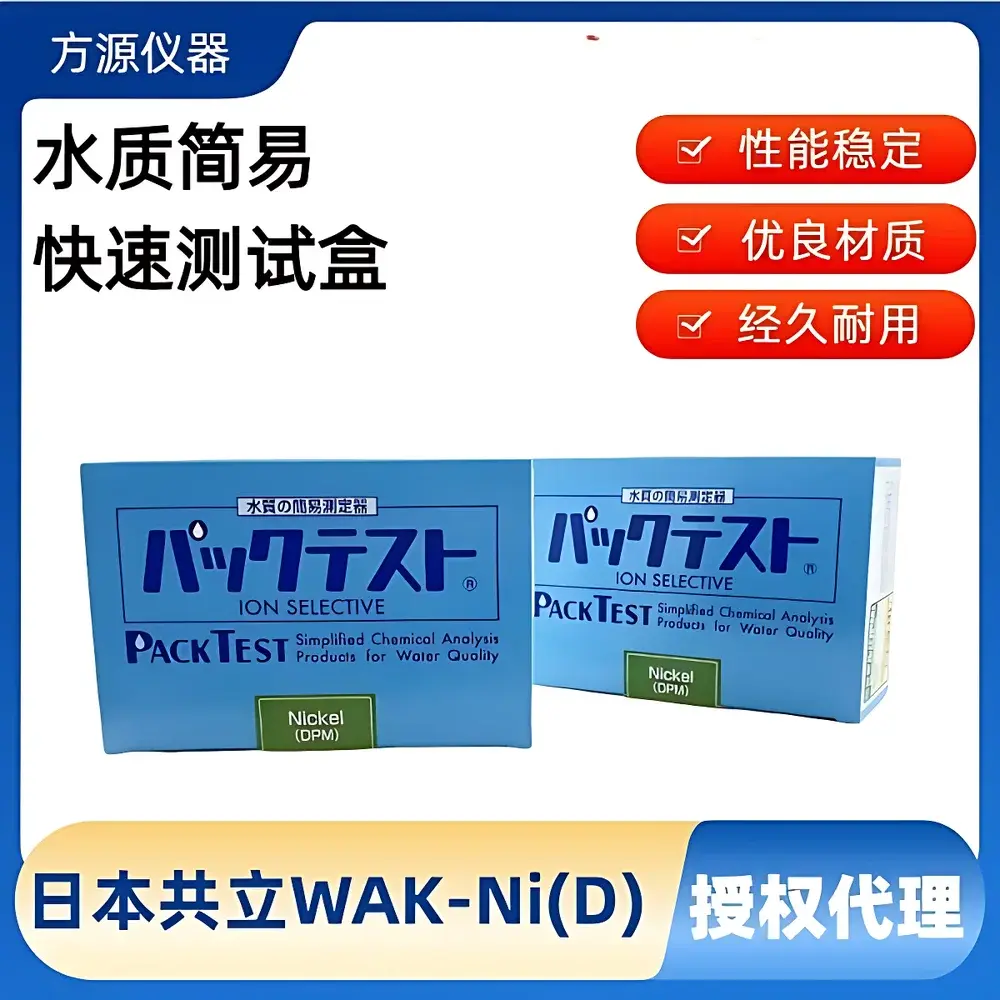
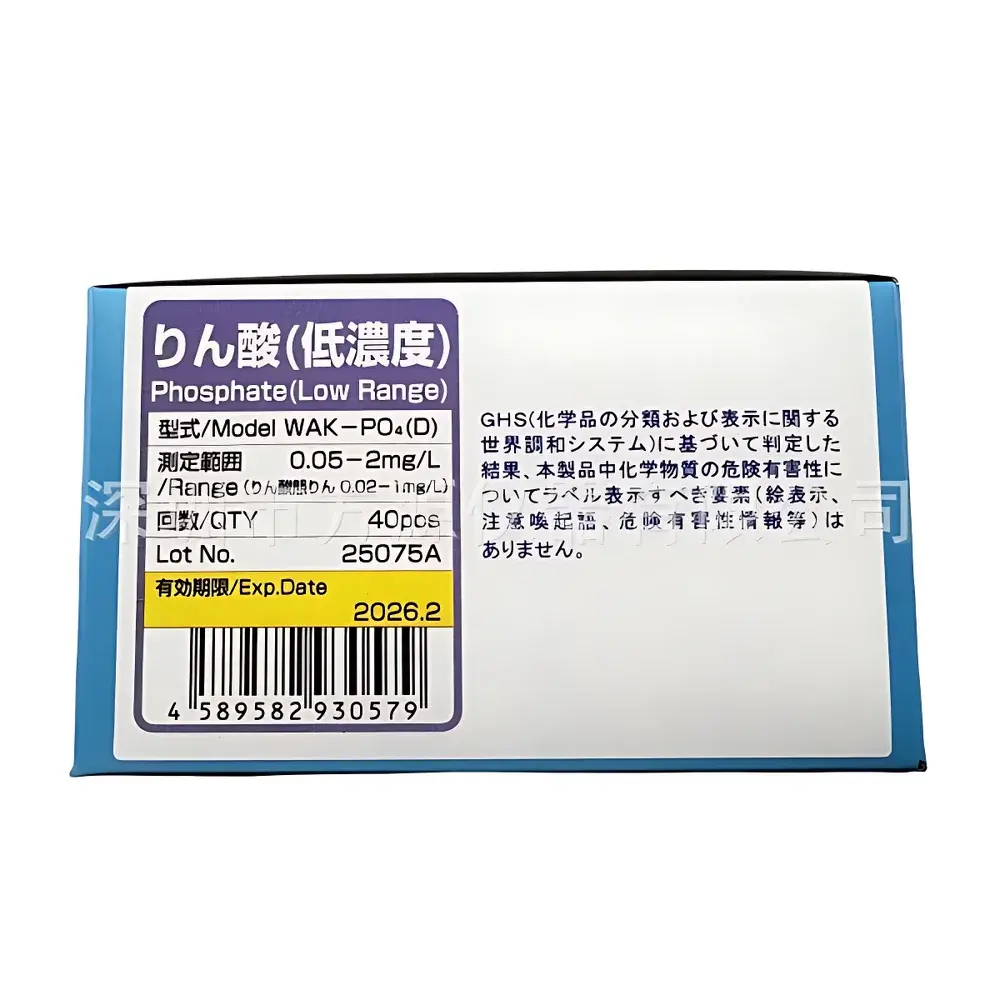
Kyoto Kyoritsu WAK-Ni(D) Nickel Test Kit for Water Quality Analysis
| Brand | Kyoritsu |
|---|---|
| Origin | Japan |
| Product Type | Imported Reagent-Based Colorimetric Test Kit |
| Model | WAK-Ni(D) |
| Detection Range | 0.3, 0.5, 1, 2, 5, 10 mg/L Ni²⁺ |
| Reaction Time | 2 minutes |
| Tests per Kit | 50 |
| Compliance | Designed for field and lab use in accordance with ISO 8573-1 (water quality — determination of nickel — spectrophotometric method after complexation with dimethylglyoxime) principles |
| Measurement Principle | Visual or spectrophotometric colorimetry based on nickel–dimethylglyoxime (DMG) chelation |
Overview
The Kyoto Kyoritsu WAK-Ni(D) Nickel Test Kit is a precision-engineered, reagent-based colorimetric system designed for rapid, on-site or laboratory quantification of dissolved nickel (Ni²⁺) in water samples. It operates on the well-established principle of nickel–dimethylglyoxime (DMG) complex formation under controlled alkaline conditions, yielding a stable, bright red precipitate whose intensity correlates directly with nickel concentration. This method is widely recognized in environmental monitoring protocols and aligns conceptually with the foundational chemistry described in ISO 8573-1 Annex B and ASTM D1688–22 (Standard Test Methods for Copper, Iron, Manganese, Nickel, and Zinc in Water). The WAK-Ni(D) variant is optimized for mid-range detection (0.3–10 mg/L), making it suitable for industrial effluent screening, wastewater treatment plant process control, and regulatory compliance checks where moderate sensitivity suffices without requiring instrumental analysis.
Key Features
- Pre-measured, stabilized reagents in sealed pouches ensure consistent reaction kinetics and eliminate weighing errors.
- Two-minute development time enables high-throughput sampling in field deployments or routine QC workflows.
- Calibrated visual color chart included for immediate semi-quantitative assessment; compatible with standard portable spectrophotometers (e.g., at 530 nm) for quantitative trace analysis.
- No external power source or calibration standards required—ideal for remote locations or emergency response scenarios.
- Each kit provides 50 determinations with full lot traceability and documented shelf-life stability under ambient storage (15–30°C, dry, protected from light).
- Reagent formulation minimizes interferences from common ions including Fe³⁺, Cu²⁺, and Co²⁺ when used within specified pH and masking agent guidelines.
Sample Compatibility & Compliance
The WAK-Ni(D) kit is validated for use with potable water, surface water, groundwater, treated and untreated wastewater, and industrial cooling water. Samples must be filtered (0.45 µm membrane) prior to analysis to remove suspended solids that may adsorb nickel or interfere with color development. Turbid or highly colored matrices require dilution or pretreatment with hydrogen peroxide digestion (per ISO 11929 guidance) to ensure complete nickel liberation. While not a certified reference material (CRM)-based method, the kit supports GLP-aligned documentation practices: batch-specific certificate of analysis (CoA), expiration date labeling, and adherence to ISO/IEC 17025–compliant internal validation protocols when integrated into accredited labs. It meets typical requirements for preliminary screening under national discharge permits (e.g., US EPA NPDES, EU Urban Wastewater Treatment Directive Annex I).
Software & Data Management
As a manual colorimetric test kit, WAK-Ni(D) does not incorporate embedded firmware or digital connectivity. However, its standardized format integrates seamlessly into LIMS environments via barcode-scannable kit labels (optional upon request) and structured data entry templates aligned with ASTM E1447–21 (Standard Practice for Laboratory Information Management Systems). Users may log results using Kyoritsu’s optional Excel-based QA/QC tracker (freely downloadable), which supports audit trail generation, limit flagging (e.g., WHO guideline value of 0.02 mg/L for drinking water), and trend reporting across multiple analytes—including cross-referenced tests such as WAK-Cr6+, WAK-Fe(D), and WAK-Cu. All documentation complies with FDA 21 CFR Part 11 principles when electronic records are maintained with appropriate user authentication and version control.
Applications
- Monitoring nickel discharge from electroplating, alloy manufacturing, and battery recycling facilities.
- Routine verification of nickel removal efficiency in ion exchange or reverse osmosis systems.
- Field-based assessment of leaching from stainless steel piping or nickel-containing catalysts in process water loops.
- Educational use in environmental science laboratories for teaching metal speciation and chelation chemistry.
- Emergency response screening following accidental spills involving nickel sulfate or nickel carbonyl precursors.
- Supporting ISO 14001 environmental management system (EMS) objectives through documented, repeatable field testing.
FAQ
What is the shelf life of the WAK-Ni(D) kit?
Unopened kits retain performance for 24 months from manufacture date when stored at 15–30°C in low-humidity, light-protected conditions.
Can this kit detect nickel in seawater?
Direct application is not recommended due to chloride interference; sample dilution with deionized water and addition of masking agents (e.g., citrate buffer) are required per Kyoritsu Technical Bulletin TB-WAK-07.
Is the DMG reagent hazardous?
Dimethylglyoxime is classified as Harmful if swallowed (H302) and may cause skin sensitization (H317); full SDS is provided with each shipment and complies with GHS Rev.10 and CLP Regulation (EC) No 1272/2008.
How does WAK-Ni(D) differ from WAK-Ni(C)?
WAK-Ni(D) targets higher concentrations (0.3–10 mg/L) with faster reaction kinetics; WAK-Ni(C) offers lower detection capability (0.05–1 mg/L) but requires longer development (10 min) and additional pH adjustment steps.
Does Kyoritsu provide method validation reports?
Yes—certified validation summaries (including spike recovery, LOD/LOQ, and inter-laboratory reproducibility data) are available upon request for ISO/IEC 17025-accredited users.
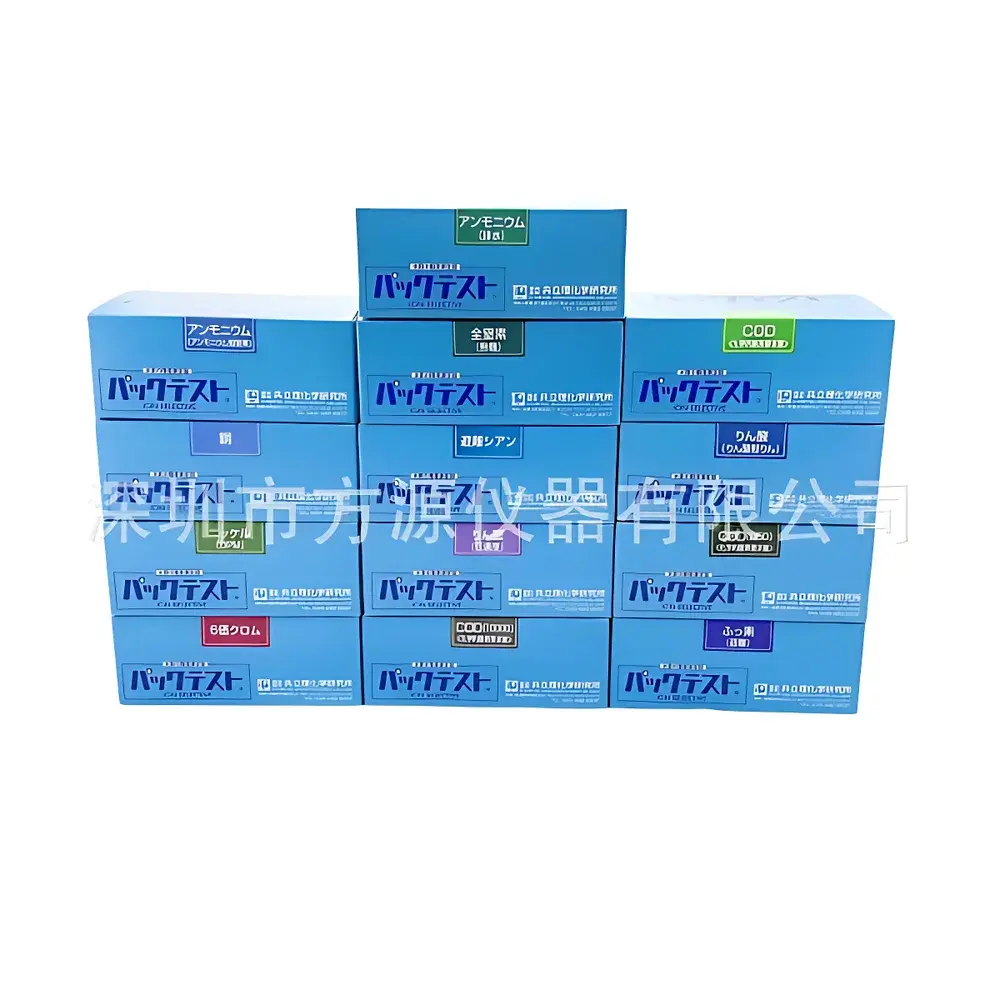
Related Products







