
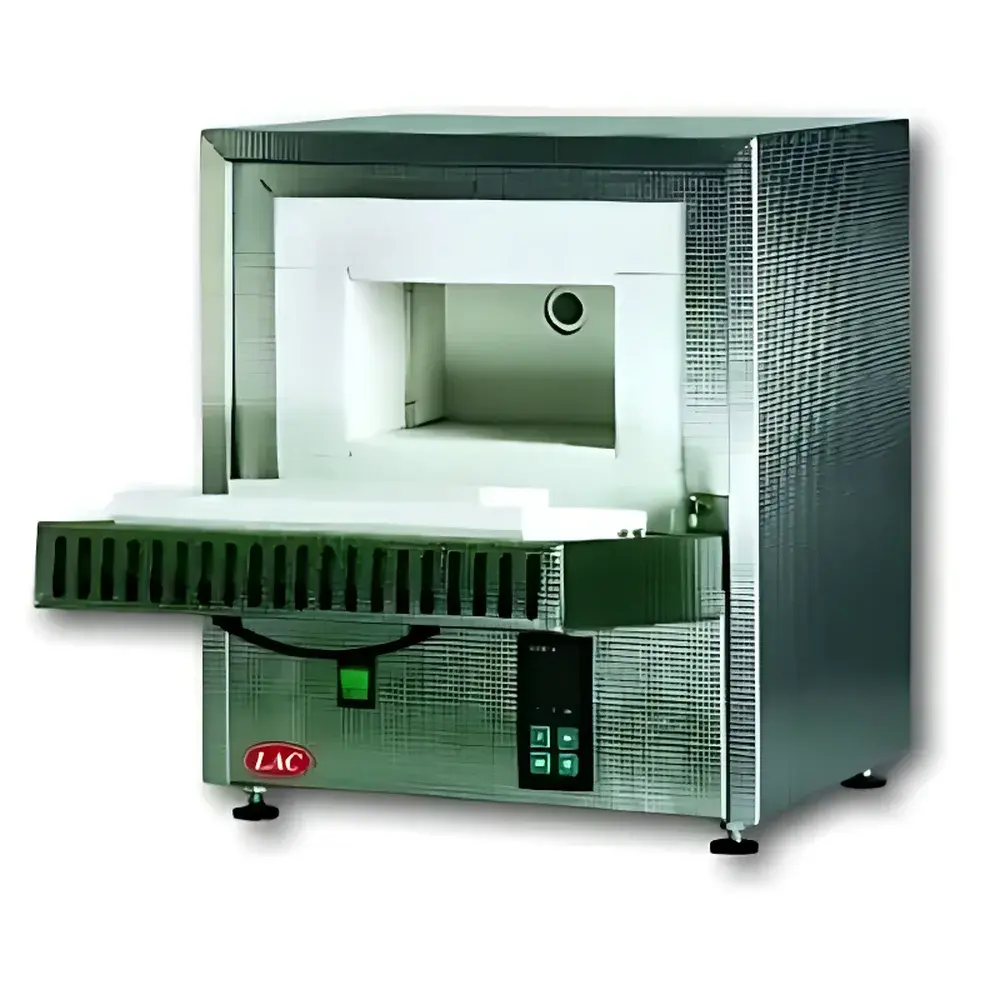
LAC L Series Box-Type Muffle Furnace
| Brand | LAC |
|---|---|
| Origin | Czech Republic |
| Type | Box-Type Muffle Furnace |
| Maximum Temperature | 1200 °C |
| Temperature Control Accuracy | ±1 °C |
| Rated Power | 3 kW |
| Heating Time to Max Temperature | 80 min |
| Heating Method | Resistance Wire (NiCr) |
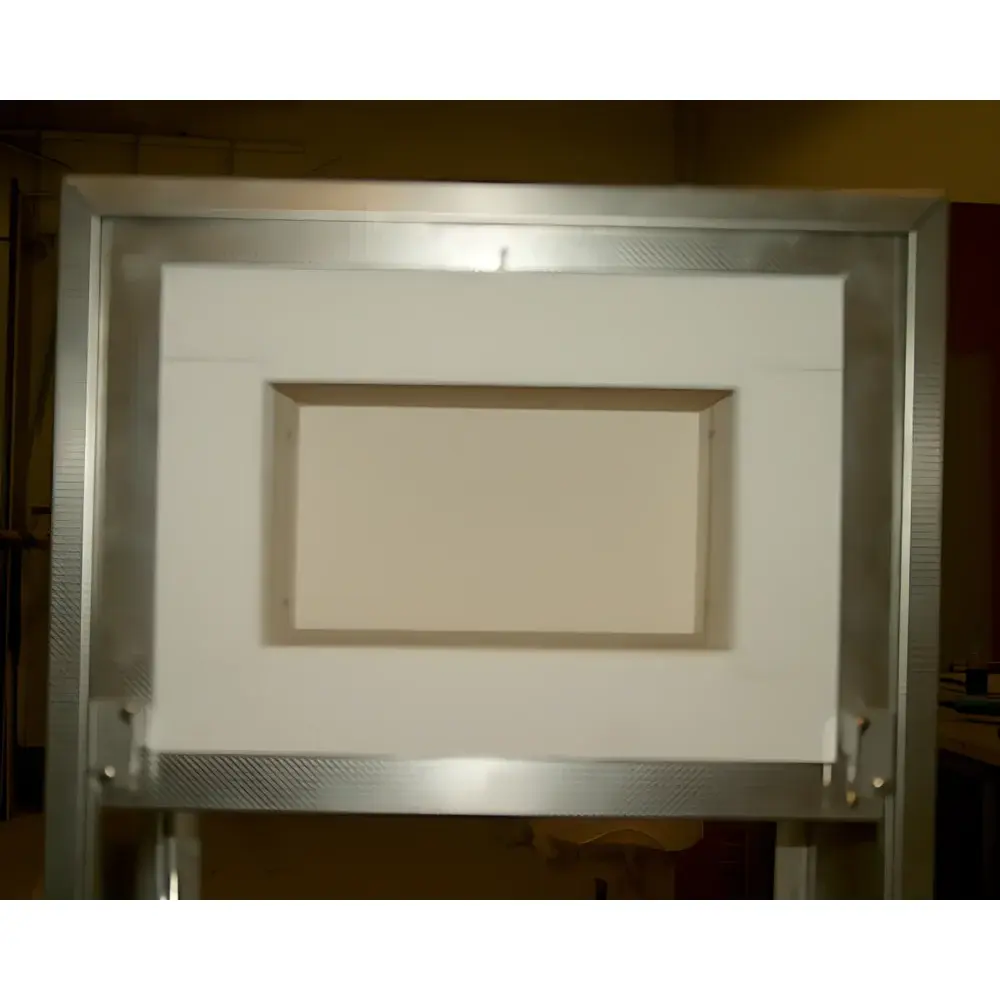
| Internal Dimensions (W×H×D) | 230×170×240 mm |
| External Construction | Stainless Steel (No-Rust Finish) |
| Standard Controller | HT40AL Programmable Temperature Controller (2 Ramp / 2 Soak Segments) |
| Thermocouple Type | Type S (Platinum/Rhodium) |
| Safety Features | Door-Mounted Safety Limit Switch, Low-Jacket Surface Temperature, DIN 17052-1 Compliant Temperature Uniformity |
| Insulation | High-Density Alumina Fiber Modules (Top & Side Insulation) |
Overview
The LAC L Series Box-Type Muffle Furnace is a precision-engineered laboratory furnace designed for reproducible high-temperature thermal processing in research, quality control, and routine analytical workflows. Built to DIN 17052-1 standards for temperature uniformity, it employs a dual-zone resistive heating architecture—featuring NiCr resistance wire embedded in top and bottom heating modules—to ensure symmetrical heat distribution across the entire chamber volume. The muffle chamber is fully isolated from combustion gases and external atmosphere, making it suitable for oxidation-sensitive, ashing, calcination, sintering, and enamel firing applications where contamination-free thermal treatment is critical. Its frameless stainless steel housing, combined with high-density alumina fiber insulation, delivers exceptional thermal efficiency and low external surface temperatures (<60 °C at ambient), minimizing lab energy overhead and operator exposure risk.
Key Features
- Frameless stainless steel enclosure with corrosion-resistant finish—guarantees long-term structural integrity and eliminates rust-related maintenance
- Dual-plane heating system: NiCr resistance wires mounted in top and bottom modular heating elements for balanced thermal flux and rapid stabilization
- Door-mounted safety limit switch automatically de-energizes heating circuits upon door opening—compliant with EN 61000-6-2/6-4 electromagnetic compatibility and IEC 61010-1 safety requirements
- Low-jacket design achieves <60 °C external surface temperature at 1200 °C operating point—verified per DIN VDE 0700-1
- High-purity alumina fiber insulation (density ≥128 kg/m³) minimizes thermal mass and enables 80-minute ramp to 1200 °C with stable power draw ≤3 kW
- Standard HT40AL controller supports two independent ramp-and-soak segments with programmable rate limits (0.1–30 °C/min), real-time deviation monitoring, and auto-tuning PID logic
- Type S thermocouple (Pt10Rh–Pt) integrated into muffle wall for direct, drift-compensated temperature feedback—calibration traceable to NIST standards
- Non-contact solid-state relay (SSR) ensures silent, wear-free switching with >10⁶ cycle lifetime and zero mechanical vibration transmission
Sample Compatibility & Compliance
The LAC L furnace accommodates crucibles, ceramic boats, quartz holders, and metal sample trays up to 230 mm (W) × 170 mm (H) × 240 mm (D). Its sealed muffle design prevents cross-contamination during ashing of biological tissues (ASTM D3174), residue analysis (USP ), or dental porcelain firing (ISO 6872). Optional inert gas inlet (single- or multi-gas configuration) supports controlled-atmosphere annealing per ISO 8501-1 and ASTM F1921. All electrical and thermal subsystems comply with CE marking directives (2014/35/EU Low Voltage Directive, 2014/30/EU EMC Directive), and firmware-controlled operation meets GLP audit-trail requirements when paired with INDUSTRY controller + R485 interface.
Software & Data Management
While the HT40AL offers local programming and data logging (100-cycle memory), the optional INDUSTRY controller adds RS232/RS485 serial communication, enabling bidirectional integration with LabVIEW, MATLAB, or LIMS platforms. It supports FDA 21 CFR Part 11-compliant electronic signatures, time-stamped event logs (door open/close, setpoint change, alarm trigger), and CSV export of full temperature profiles—including ramp rate, dwell duration, and thermocouple deviation history. Optional monitoring software provides real-time graphical overlay of up to four channels (e.g., main TC, reference TC, SSR status, fan speed) with configurable alarm thresholds and email/SNMP alerting.
Applications
- Residue determination and loss-on-ignition (LOI) testing per ASTM E1755 and ISO 1171
- Calcination of catalyst precursors and metal oxides in materials science labs
- Firing of dental ceramics, glazes, and enamel coatings under repeatable thermal schedules
- Thermal gravimetric analysis (TGA) sample preparation and pre-conditioning
- Ash content quantification in food, feed, and pharmaceutical raw materials (AOAC 942.05)
- Heat treatment of calibration standards and reference materials requiring traceable thermal history
FAQ
What is the maximum recommended continuous operating temperature?
The LAC L furnace is rated for continuous operation at 1200 °C; short-term excursions to 1220 °C are permissible but reduce heating element service life.
Can the furnace be used under inert or reducing atmospheres?
Yes—optional gas inlet ports support N₂, Ar, H₂/N₂ mixtures, or forming gas; INDUSTRY controller required for automated gas flow synchronization with thermal cycles.
Is the HT40AL controller compliant with FDA 21 CFR Part 11?
No—the HT40AL lacks electronic signature and audit-trail functionality; INDUSTRY controller with password-protected user roles and encrypted log storage is required for regulated environments.
How often does the Type S thermocouple require recalibration?
Annual verification against a certified reference thermometer is recommended; drift should not exceed ±1.5 °C at 1000 °C per ISO/IEC 17025 guidelines.
What maintenance is required for the alumina fiber insulation?
No scheduled replacement is needed; visual inspection every 500 operating hours is advised to detect physical damage or dust accumulation at chimney interfaces.



