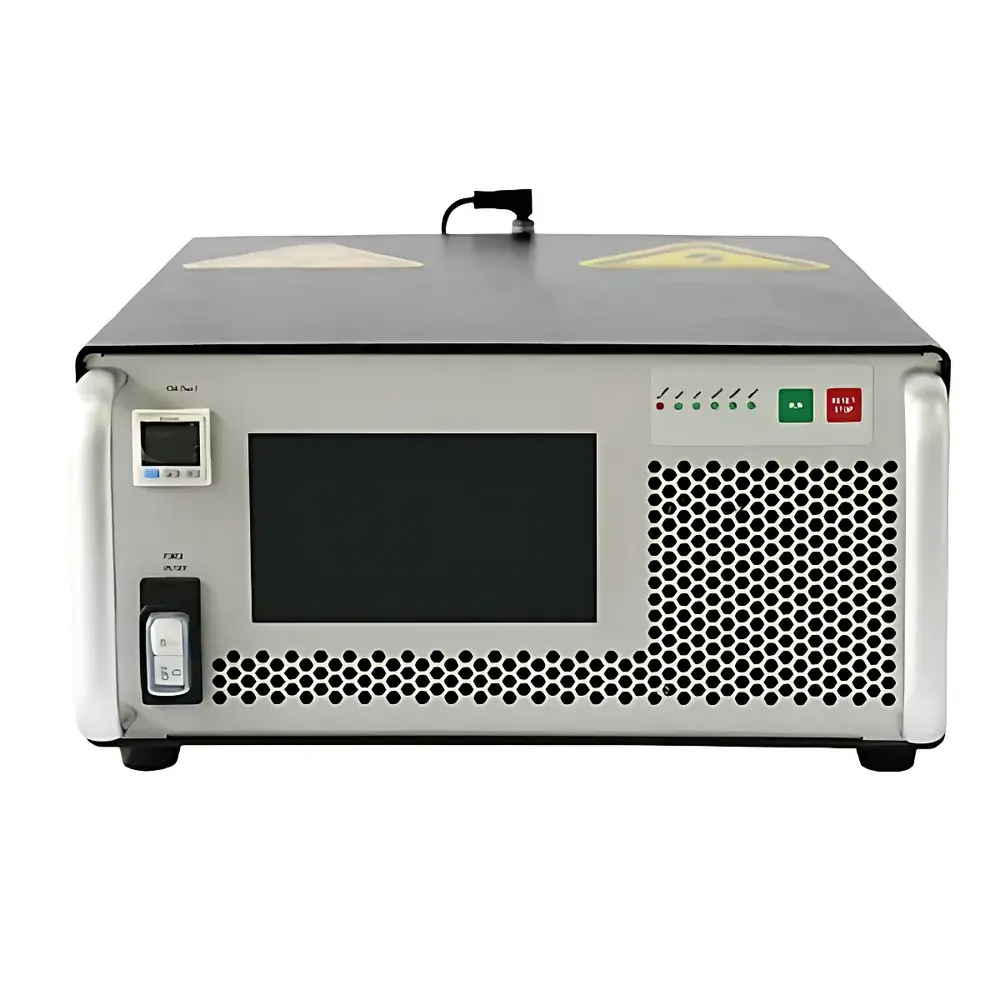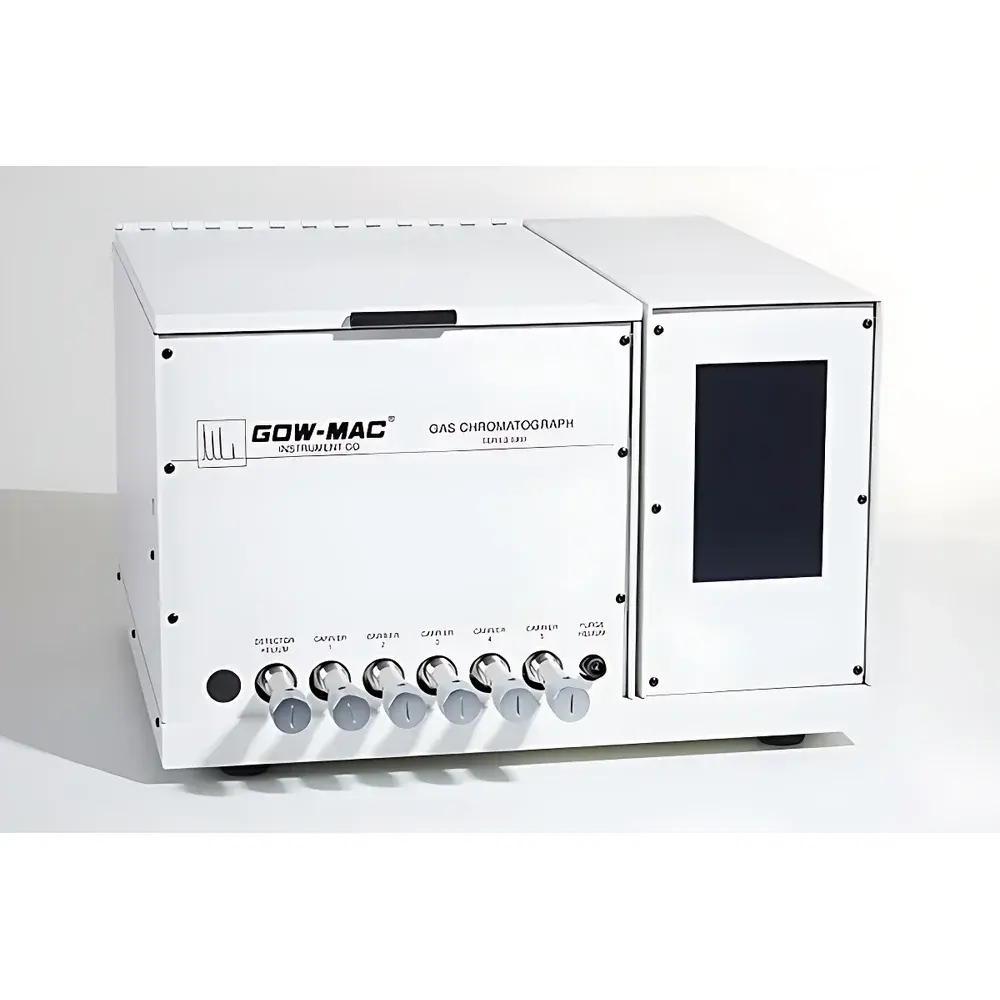
GOW-MAC 5900 DID Online Gas Chromatograph
| Brand | GOW-MAC |
|---|---|
| Origin | USA |
| Model | GOW-MAC 5900 DID |
| Detector Type | Discharge Ionization Detector (DID) |
| Detection Range | 1 ppb to <0.5% (v/v) |
| Carrier Gas | Helium |
| Construction | Stainless Steel or Corrosion-Resistant System |
| Compliance | Designed for Industrial Process Monitoring and Trace Impurity Analysis |
Overview
The GOW-MAC 5900 DID Online Gas Chromatograph is an industrial-grade, continuous-duty gas chromatographic system engineered for real-time, high-sensitivity trace impurity analysis in demanding process environments. Based on classical gas chromatography separation principles—where gaseous samples are introduced into a temperature-controlled column and separated according to volatility and polarity—the instrument integrates a proprietary Discharge Ionization Detector (DID) to achieve exceptional detection performance without radioactive sources. Unlike traditional electron capture or argon ionization detectors, the DID employs a stable helium plasma discharge to generate high-energy UV photons and metastable helium atoms, enabling universal, non-destructive ionization of all analytes except helium itself. This makes the GOW-MAC 5900 uniquely suited for ultra-trace analysis of contaminants—including oxygen, nitrogen, methane, carbon monoxide, carbon dioxide, water vapor, and hydrocarbons—in high-purity electronic gases (e.g., NF₃, SiH₄, BCl₃), specialty gases (e.g., SF₆, Ar, Ne), and bulk industrial gases (e.g., H₂, O₂, N₂, CO₂). Its design reflects over eight decades of GOW-MAC’s engineering heritage in analytical gas instrumentation, dating back to its founding in 1935.
Key Features
- Discharge Ionization Detector (DID): Non-radioactive, universal, concentration-sensitive detector with linear dynamic range from 1 ppb to <0.5% (v/v); eliminates regulatory burdens associated with radioactive source licensing and disposal.
- Robust Process-Ready Architecture: Constructed with electropolished stainless steel or fully corrosion-resistant wetted-path materials to withstand aggressive process streams and extended unattended operation.
- Modular Column Oven Design: Precision temperature-controlled oven with rapid thermal stabilization (<±0.1°C) and programmable ramp profiles to optimize separation of complex multi-component gas mixtures.
- Integrated Sample Conditioning: Built-in pressure regulation, flow control, and optional heated sample lines to preserve volatile analyte integrity and prevent condensation in low-concentration applications.
- Industrial Communication Interfaces: Standard support for 4–20 mA analog outputs, Modbus RTU/TCP, and optional Profibus DP or Ethernet/IP for seamless integration into DCS, SCADA, and MES platforms.
- Self-Diagnostic Capabilities: Real-time monitoring of detector status, column temperature, carrier gas pressure, and system leak integrity with configurable alarm thresholds and event logging.
Sample Compatibility & Compliance
The GOW-MAC 5900 is validated for routine analysis of permanent gases and light hydrocarbons across diverse industrial sectors—including semiconductor manufacturing, photovoltaic production, pharmaceutical inerting, cryogenic air separation, and chemical synthesis. It complies with key methodological standards including ASTM D1945 (Analysis of Natural Gas), ASTM D1946 (Analysis of Reformed Gas), and ISO 8573-5 (Purity Classes for Compressed Air). While not pre-certified for FDA 21 CFR Part 11, the system supports audit-trail-enabled data acquisition when paired with compliant third-party software; it is routinely deployed in GLP and GMP-aligned facilities where raw chromatographic data, method parameters, and instrument logs are retained per internal validation protocols.
Software & Data Management
The GOW-MAC 5900 operates with embedded firmware that manages sequence control, peak integration, calibration curve generation, and report formatting. Raw chromatograms and quantitative results are exported via USB, RS-232, or Ethernet to external PCs running vendor-supplied or user-defined data handling software. All calibration events, maintenance logs, and method changes are timestamped and stored locally with write-protected memory. Optional software packages provide advanced features including automatic baseline correction, retention time locking, multi-point standard addition, and compliance-ready PDF report generation with digital signature fields.
Applications
- Monitoring ppb-level moisture and oxygen in ultra-high-purity electronic-grade nitrogen used in chip fabrication cleanrooms.
- Quantifying trace hydrocarbon impurities in hydrogen feed gas for PEM fuel cell systems.
- Verifying purity specifications of sulfur hexafluoride (SF₆) in high-voltage switchgear according to IEC 60480.
- Tracking degradation byproducts (e.g., HF, SO₂) in recycled fluorinated gases during semiconductor chamber cleaning cycles.
- Continuous verification of argon blanketing gas purity in stainless steel annealing furnaces to prevent surface oxidation.
- On-line quality assurance of medical oxygen (USP Grade) for compliance with pharmacopeial limits on CO₂, CO, and total hydrocarbons.
FAQ
What gases can the GOW-MAC 5900 DID detect at sub-ppb levels?
It detects all non-helium compounds—including permanent gases (O₂, N₂, CO, CO₂, CH₄), halogenated species (NF₃, CF₄, C₂F₆), and light hydrocarbons—with demonstrated sensitivity down to 1 ppb under optimized conditions.
Is helium the only required carrier gas for the DID?
Yes—the DID requires high-purity helium (>99.999%) as both carrier and discharge medium; alternative carrier gases are incompatible with the detector’s ionization mechanism.
Can the system operate unattended for extended periods?
Yes—designed for 24/7 industrial deployment, it includes auto-zero functionality, scheduled calibration routines, and remote diagnostic access via standard industrial protocols.
Does the GOW-MAC 5900 support regulatory-compliant data archiving?
While the base firmware does not include electronic signature or audit-trail modules, its structured data export architecture enables integration with validated LIMS or ELN systems meeting 21 CFR Part 11 requirements.
What maintenance intervals are recommended for routine operation?
Detector electrode cleaning every 6–12 months (depending on sample matrix), column reconditioning every 3–6 months, and annual full-system calibration using certified gas standards are typical best practices.
Related Products