
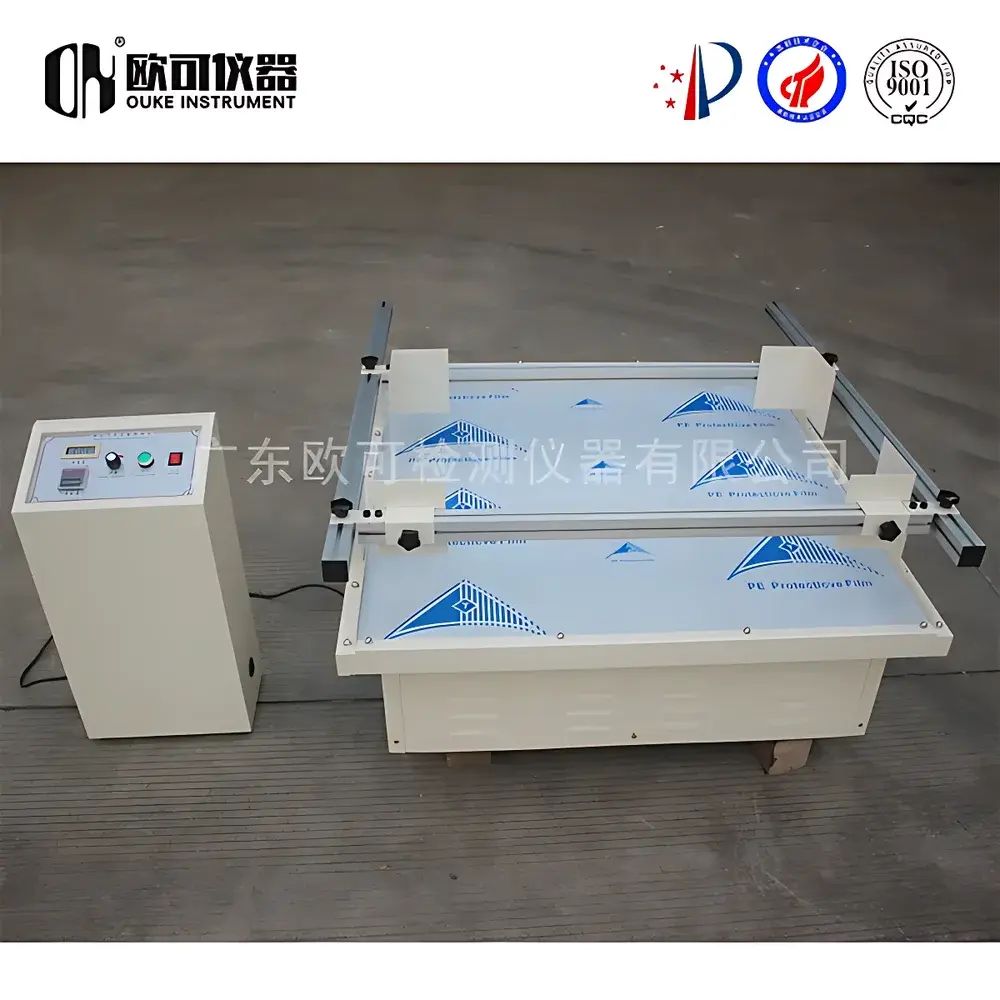
OK-100.000 Electromagnetic Road-Simulation Vibration Shaker System
| Brand | OK Instruments |
|---|---|
| Origin | Guangdong, China |
| Manufacturer Type | OEM/ODM Manufacturer |
| Product Category | Domestic |
| Model | OK-100.000 |
| Instrument Type | Automotive Transport Simulation Vibration Tester |
| Rated Thrust | 1.98 kN |
| Rated Frequency Range | 5–5000 Hz |
| Maximum Test Load | 70 kg |
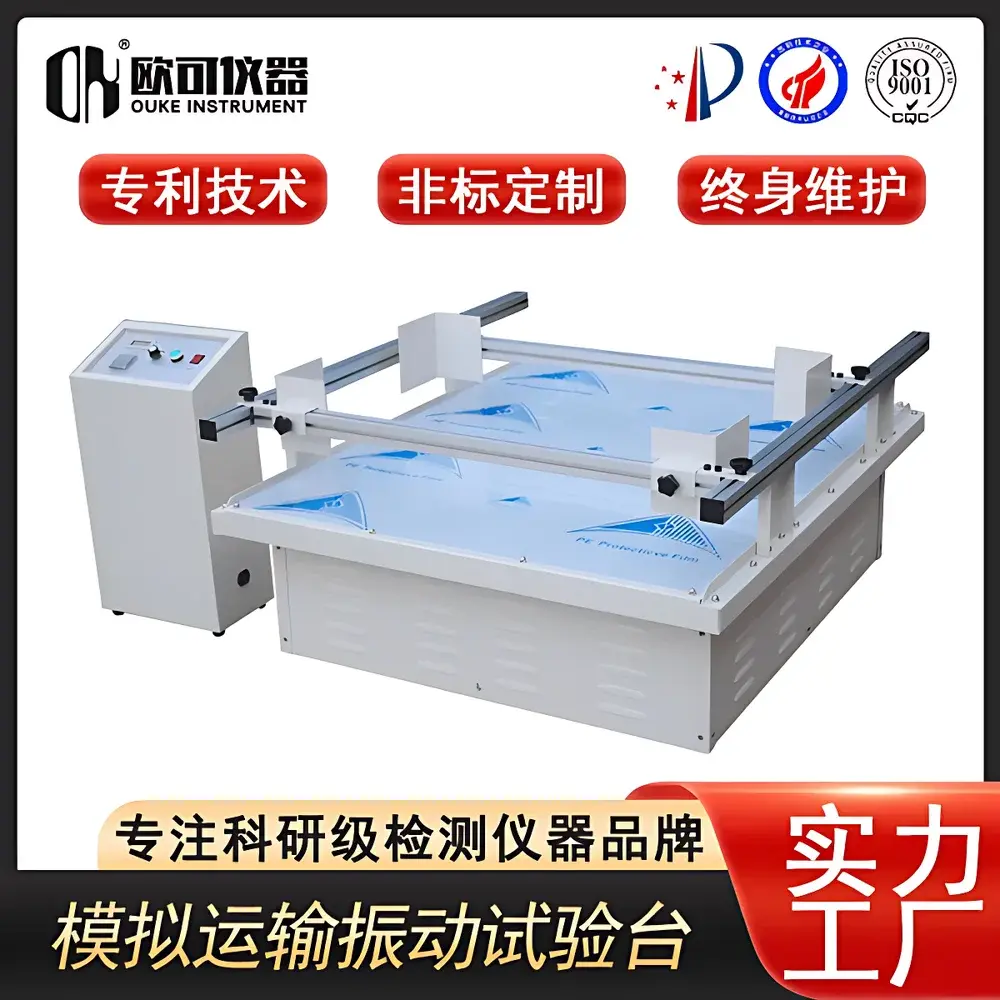
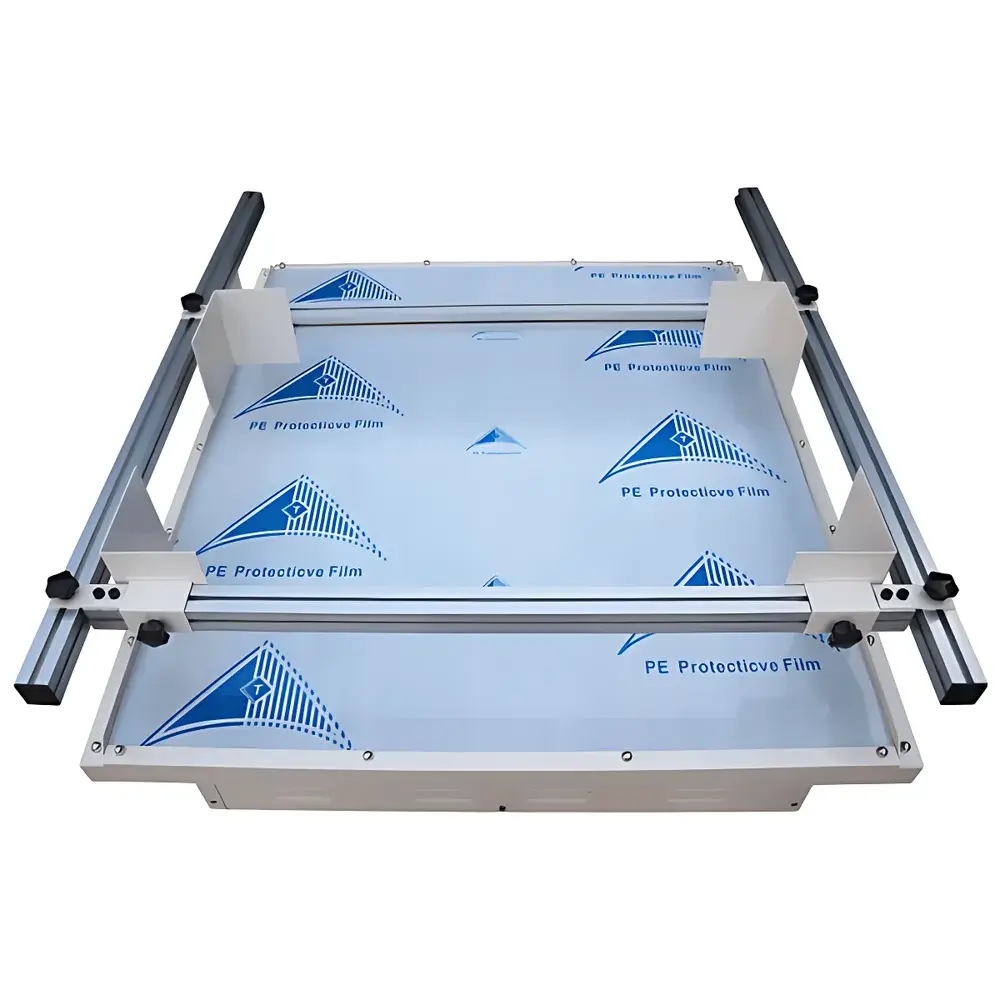
| Tabletop Dimensions | 1200 × 1000 mm |
| Maximum Acceleration | 10 g |
Overview
The OK-100.000 Electromagnetic Road-Simulation Vibration Shaker System is a high-fidelity electrodynamic vibration test platform engineered for laboratory-based replication of real-world transportation-induced mechanical stress. It operates on the principle of Lorentz force actuation: a moving coil suspended within a high-intensity magnetic field generates controlled inertial forces when driven by programmable current waveforms. This enables precise, broadband excitation (5–5000 Hz) across sinusoidal, random, and transient shock profiles—critical for evaluating structural integrity, packaging efficacy, and component-level robustness under dynamic loading conditions. Unlike mechanical cam-driven shakers limited to fixed low-frequency fatigue simulation, the OK-100.000 delivers metrologically traceable acceleration control, closed-loop feedback via integrated piezoelectric accelerometers, and compatibility with standardized road-spectrum data (e.g., ISO 8608, SAE J2452, MIL-STD-810H Method 514.8). Its design targets compliance-driven validation workflows in R&D, quality assurance, and regulatory pre-certification stages.
Key Features
- Electrodynamic actuation architecture delivering linear force output up to 1.98 kN peak thrust, optimized for reproducible acceleration control at 10 gpk across full frequency range
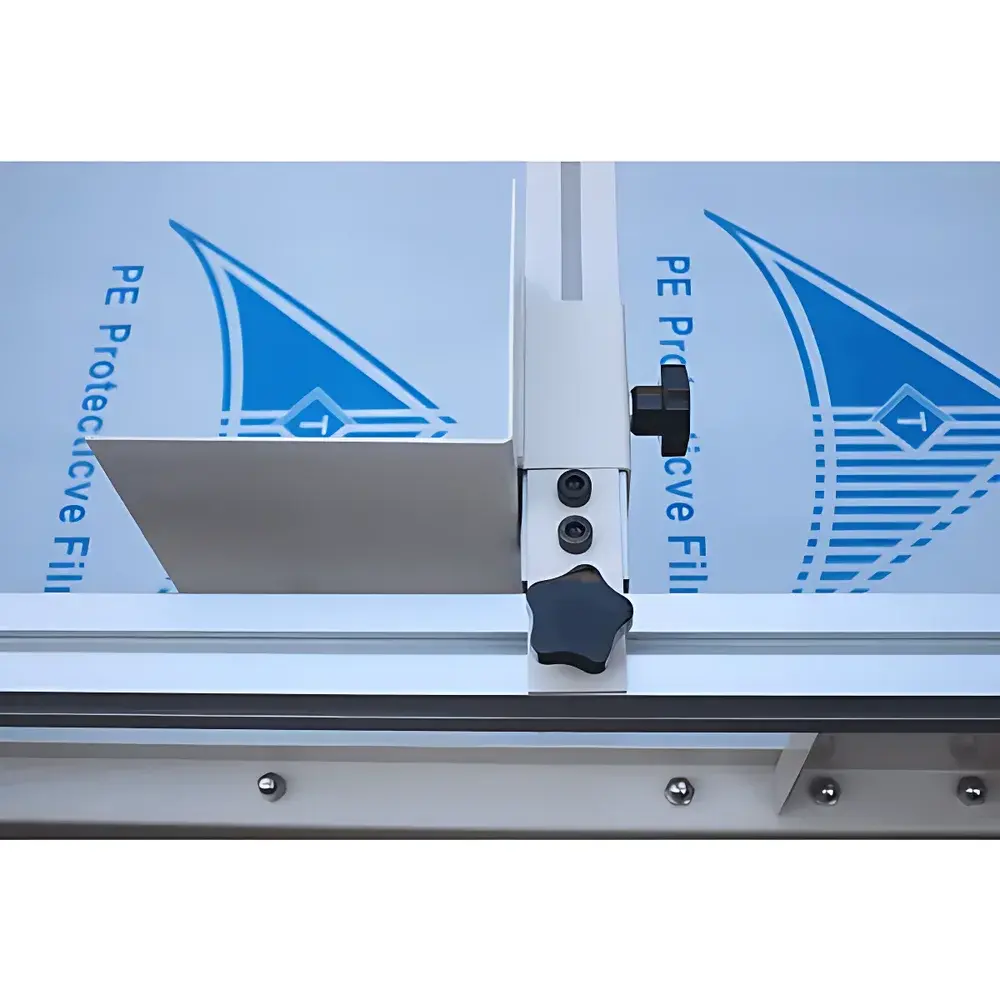
- Large-format horizontal tabletop (1200 × 1000 mm) supporting heterogeneous test configurations—including multi-unit palletized loads and fixture-mounted assemblies
- Wide operational bandwidth (5–5000 Hz) enabling resonance scanning, random PSD synthesis, and time-domain shock waveform reproduction (half-sine, trapezoidal, sawtooth)
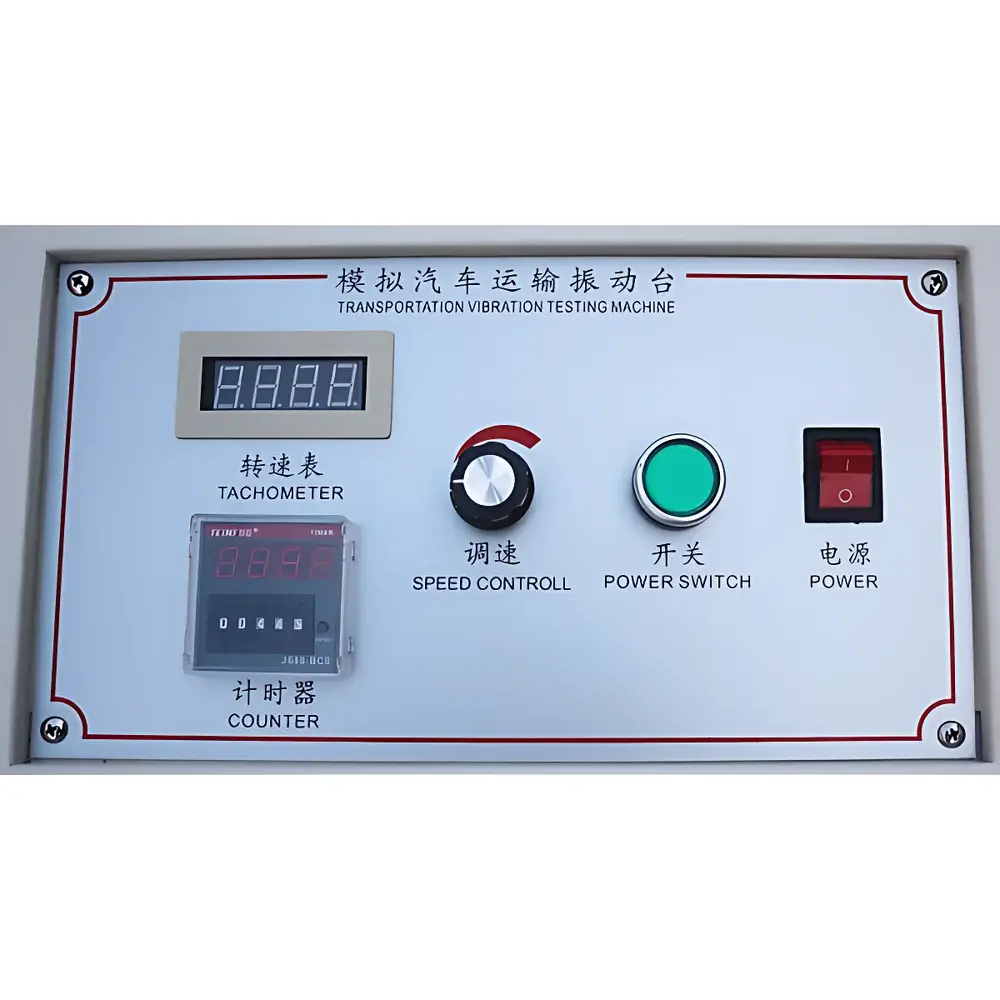
- Integrated digital controller with real-time FFT analysis, auto-tuning algorithms, and hardware synchronization for multi-axis or multi-shaker coordination
- Dual-stage cooling system (forced-air + optional liquid-assisted) maintaining thermal stability during extended duty cycles (e.g., 8-hour ISTA 3E protocols)
- Modular amplifier architecture supporting scalable power delivery and electromagnetic compatibility (EMC) shielding per IEC 61000-6-4
Sample Compatibility & Compliance
The OK-100.000 accommodates test specimens ranging from handheld consumer electronics (≤2 kg) to industrial appliances and automotive subassemblies (up to 70 kg net mass), provided center-of-gravity alignment remains within ±15 mm of tabletop geometric center. Fixture design must comply with ISO 10816-3 guidelines for mounting rigidity and modal decoupling. The system supports full implementation of internationally recognized transport simulation standards, including ISTA Series 2 and 3 (2A, 2B, 3A, 3E), ASTM D999, ASTM D4728, GB/T 4857.7 (Chinese national standard equivalent to ISO 2247), and EU Directive 2014/68/EU Annex I requirements for mechanical stress validation. All test execution logs include timestamped metadata, sensor calibration traceability (NIST-traceable accelerometers), and audit-ready records compliant with GLP and FDA 21 CFR Part 11 electronic signature provisions.
Software & Data Management
Control and analysis are executed via OK-VibraSuite™ v4.2—a Windows-based application certified for deterministic real-time operation (≤100 µs loop latency). The software provides native import of PSD templates (e.g., ISO 5344 road profiles), user-defined time-history waveforms, and live spectral editing tools. Data acquisition supports simultaneous sampling from up to four channels (tabletop reference + three specimen-mounted sensors) at 102.4 kHz per channel with 24-bit resolution. Export formats include universal HDF5, MATLAB .mat, and CSV; raw datasets embed embedded XML headers containing test parameters, calibration certificates, and operator credentials. Audit trails record all parameter modifications, start/stop events, and system health diagnostics—enabling full forensic reconstruction of any test sequence per ISO/IEC 17025 Clause 7.8.
Applications
- Package performance validation: Quantifying compression creep, corner crush resistance, and internal product displacement under simulated truck-trailer vertical/horizontal excitations
- Electromechanical reliability screening: Detecting solder joint fatigue, connector fretting corrosion, display delamination, and MEMS sensor drift induced by resonant amplification
- Automotive Tier-1 supplier qualification: Verifying ECU housing integrity, LED headlamp optical alignment retention, and ADAS camera mount stiffness under combined sine-random dwell profiles
- Medical device certification: Confirming battery contact stability, touchscreen responsiveness, and sterilization-seal integrity after simulated air cargo turbulence exposure
- Industrial IoT node validation: Assessing LoRaWAN antenna detuning, enclosure gasket compression set, and PCB microcrack propagation under stochastic broadband input
FAQ
What distinguishes “road-simulation” vibration testing from generic shaker applications?
Road-simulation testing employs empirically derived power spectral density (PSD) profiles that replicate statistical distributions of acceleration energy observed during actual over-the-road transport—unlike single-frequency sine sweeps or arbitrary waveform generation.
Can the OK-100.000 perform multi-axis vibration testing?
The base configuration supports uniaxial vertical excitation. Multi-axis capability requires integration with orthogonal auxiliary shakers and synchronized master-slave control firmware—available as an OEM option under OK-MultiSync™ add-on module.
Is third-party calibration support available for this system?
Yes—OK Instruments maintains ISO/IEC 17025-accredited calibration laboratories in Shenzhen and Shanghai, offering annual traceable verification against NIST SRM 1917a reference accelerometers and UKAS-certified force transducers.
How is thermal management handled during prolonged random vibration tests?
The dual-stage cooling system combines forced convection airflow over voice coils with optional glycol-circulated cold plates mounted beneath the armature assembly—ensuring continuous operation at 10 grms for ≥4 hours without derating.
Does the system meet electromagnetic compatibility (EMC) requirements for installation in shared lab environments?
All OK-100.000 units ship with CE-marked enclosures, Class B conducted/radiated emission suppression, and integrated line filters conforming to EN 61000-6-3 and EN 61000-6-4 specifications.



