
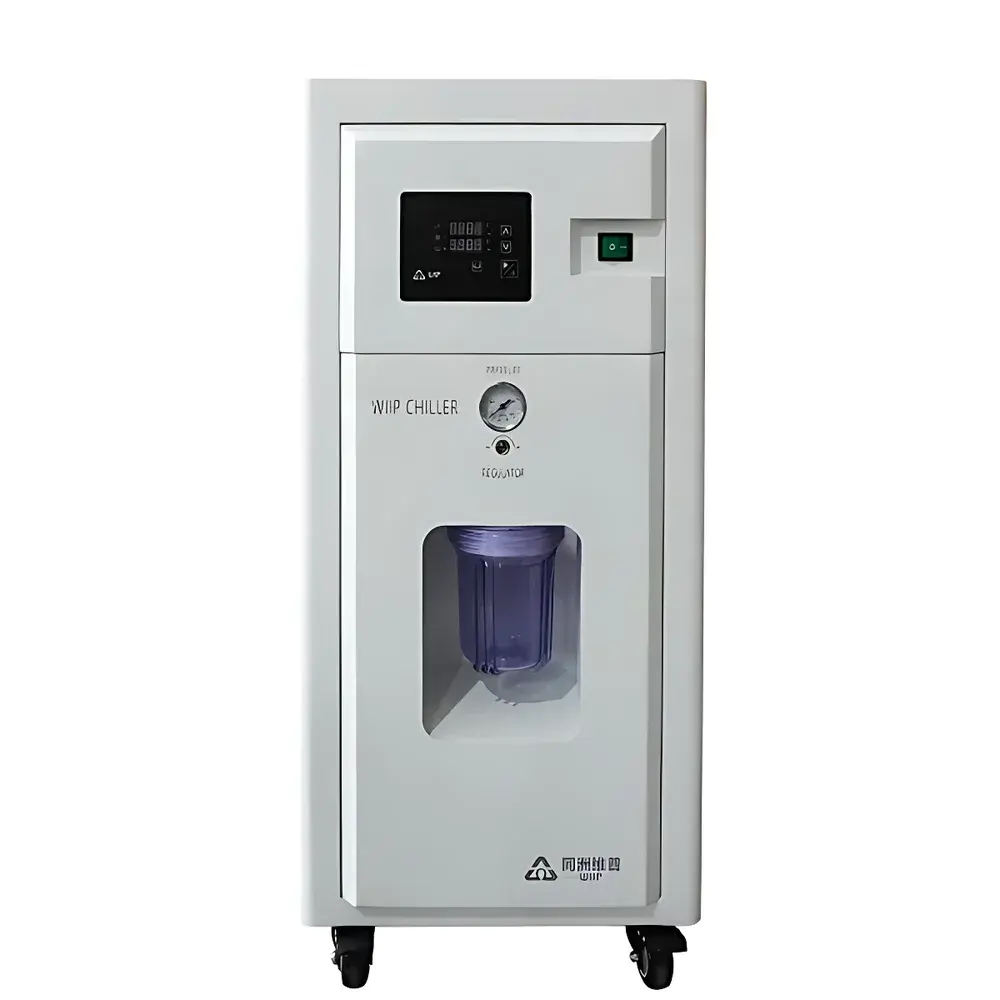
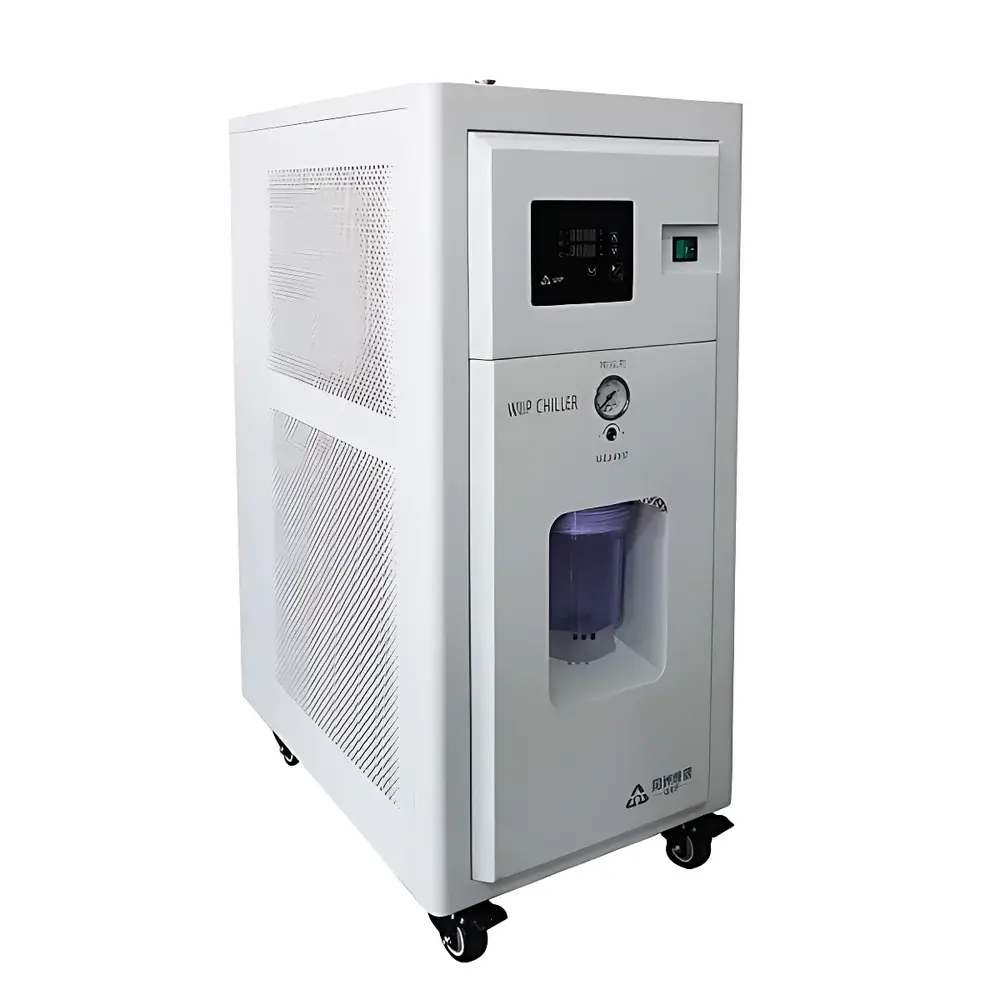
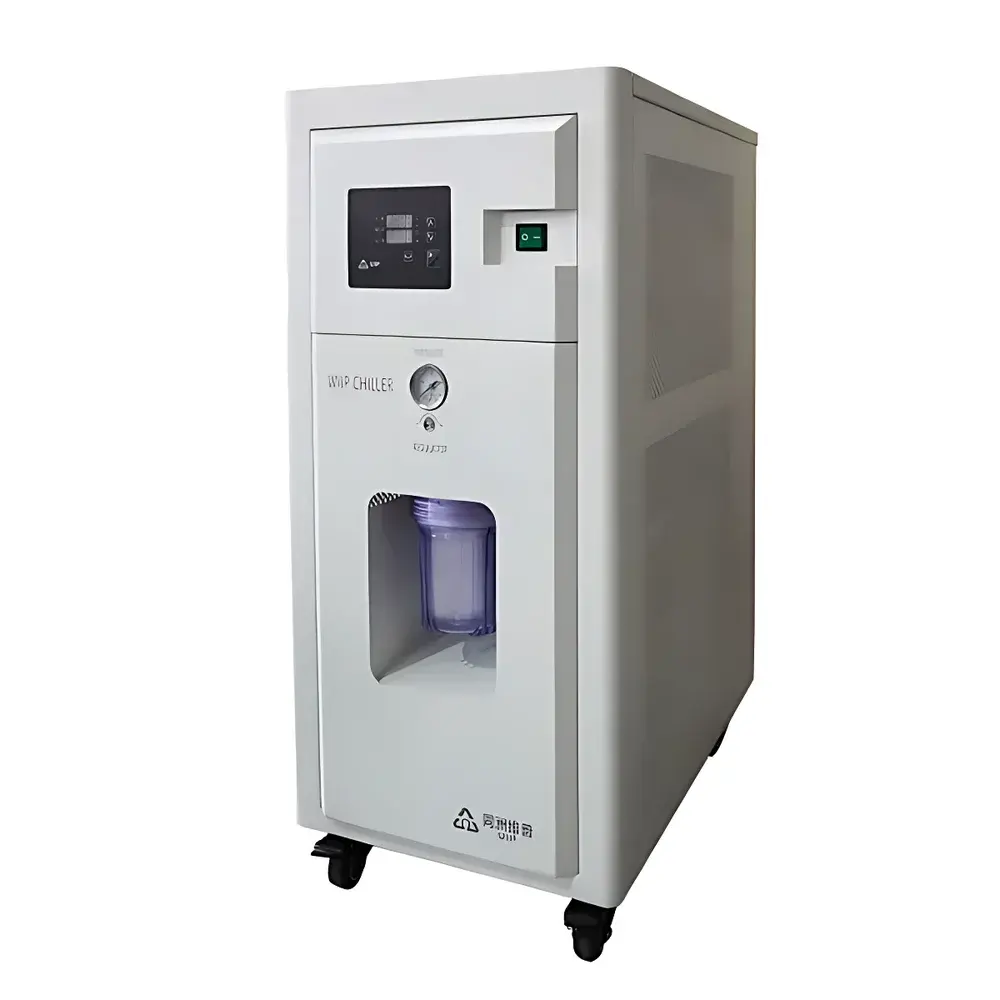
Tongzhou Weipu H2 Integrated Circulating Chiller for IRE Reactive Ion Etching Systems
| Brand | Tongzhou Weipu |
|---|---|
| Origin | Beijing, China |
| Manufacturer Type | Direct Manufacturer |
| Product Type | Integrated Circulating Chiller |
| Cooling Method | Water-Cooled |
| Temperature Control Range | −40 °C to 95 °C |
| Cooling Capacity | 900 W to 6400 W |
| Temperature Stability | ±0.1 °C to ±0.3 °C |
| Certification | CE compliant |
| Refrigerant | Environmentally Compliant (R-404A or R-507 equivalent) |
| Power Input | Universal Voltage Design (100–240 V AC, 50/60 Hz) |
Overview
The Tongzhou Weipu H2 Integrated Circulating Chiller is an engineered thermal management solution specifically designed to support high-precision vacuum-based semiconductor processing equipment—particularly reactive ion etching (RIE) systems requiring stable, low-noise, and tightly regulated coolant delivery. Operating on a closed-loop vapor-compression refrigeration cycle with dual-stage cascade capability, the H2 chiller maintains precise temperature setpoints across its full operational range (−40 °C to 95 °C), enabling consistent thermal control of RF generators, electrostatic chucks (ESCs), and chamber cooling jackets during plasma-driven etch processes. Its integrated architecture eliminates external pump skids and secondary heat exchangers, reducing system footprint and fluid path complexity—critical for cleanroom-constrained IRE tool integration. The unit employs a microprocessor-controlled PID algorithm with real-time feedback from platinum resistance thermometers (PT100) embedded in both inlet and outlet manifolds, ensuring dynamic response to transient thermal loads typical of pulsed RF power modulation.
Key Features
- Integrated design with built-in circulation pump, expansion tank, and filtration—no external components required for standard IRE system interfacing.
- Low-noise vertical configuration: large-diameter, low-RPM axial fan combined with acoustic insulation achieves ≤58 dB(A) at 1 m—compatible with noise-sensitive metrology labs and shared cleanroom environments.
- Dual-range temperature control: optimized for sub-zero cryogenic stabilization (e.g., ESC pre-cooling) and high-temperature process conditioning (e.g., post-etch chamber bake-out).
- Standard 5-micron particulate filter plus optional activated carbon + ion-exchange cartridge for deionized water/glycol mixtures—prevents nozzle clogging and corrosion in sensitive RIE cold plates.
- Comprehensive safety monitoring: real-time detection of flow rate, pressure differential, coolant level, high/low temperature deviation, compressor discharge temperature, and refrigerant saturation anomalies—with configurable relay outputs for interlocked shutdown of connected IRE tools.
- CE-certified electromagnetic compatibility (EMC) and low-voltage directive (LVD) compliance; universal input voltage auto-sensing ensures seamless deployment in North America, EU, APAC, and EMEA laboratories.
Sample Compatibility & Compliance
The H2 chiller is validated for continuous operation with industrial-grade deionized water, 30/70 water/ethylene glycol, or specialized low-conductivity coolants (≤1 µS/cm) used in RIE systems from major OEMs including Oxford Instruments, Plasma-Therm, SAMCO, and Sentech. It meets ISO 14644-1 Class 5 cleanroom compatibility requirements when installed with HEPA-filtered air intakes and sealed fluid reservoirs. All electrical interfaces conform to IEC 61000-6-2/6-4 for immunity and emissions. For regulated environments, the chiller supports optional audit-trail logging (via RS485 Modbus RTU or Ethernet TCP/IP) aligned with FDA 21 CFR Part 11 data integrity expectations when paired with validated SCADA or LIMS platforms.
Software & Data Management
Local control is executed via a 4.3-inch capacitive touchscreen HMI with multilingual UI (English, German, Japanese, Chinese). The interface provides real-time plots of inlet/outlet ΔT, flow rate, compressor run-time, and alarm history with timestamped event logging (10,000-entry buffer). Remote supervision is enabled through open-protocol communication: Modbus RTU over RS485 (default), optional Modbus TCP or OPC UA server add-on. Logged data exports as CSV for traceability; no proprietary software installation is required. Firmware updates are performed via USB or network-initiated secure HTTP push—fully compatible with IT-managed lab infrastructure.
Applications
- Thermal stabilization of RF matching networks and impedance tuners in 13.56 MHz or 60 MHz RIE systems.
- Cooling of electrostatic chucks during silicon, SiO₂, or III-V compound etching—maintaining wafer temperature uniformity within ±0.2 °C across 200 mm/300 mm substrates.
- Support for multi-step plasma processes requiring rapid thermal ramping (e.g., −20 °C → +80 °C in <15 min) without condensation or thermal shock.
- Secondary cooling for auxiliary subsystems: turbo-molecular pump controllers, optical emission spectroscopy (OES) detectors, and vacuum gauge electronics.
- Cross-platform utility: also certified for use with ICP-MS sample introduction systems, AAS graphite furnace assemblies, and high-power CW lasers (up to 500 W diode-pumped solid-state sources).
FAQ
What coolant types are approved for use with the H2 chiller in RIE applications?
Deionized water (resistivity ≥1 MΩ·cm), 30% ethylene glycol / 70% DI water, or manufacturer-recommended low-conductivity heat transfer fluids meeting ASTM D1384 corrosion inhibition standards.
Does the H2 support external temperature feedback control from the RIE chamber?
Yes—via analog 0–10 V or 4–20 mA input, enabling cascade control where chamber sensor signal modulates chiller setpoint in real time.
Is remote firmware update capability available without physical access?
Firmware updates may be initiated remotely over Ethernet using authenticated HTTPS; no local USB stick required if network policy permits.
What is the minimum recommended flow rate for connection to a typical 200 mm RIE system?
1.2 L/min at ≥2.5 bar pressure differential—verified per ISO 5171 for stable laminar flow in 10-mm ID stainless steel coolant lines.
Can the H2 operate continuously at −40 °C ambient temperature?
Ambient operating range is +5 °C to +40 °C; sub-ambient ambient conditions require optional outdoor-rated enclosure or climate-controlled machine room installation.



