
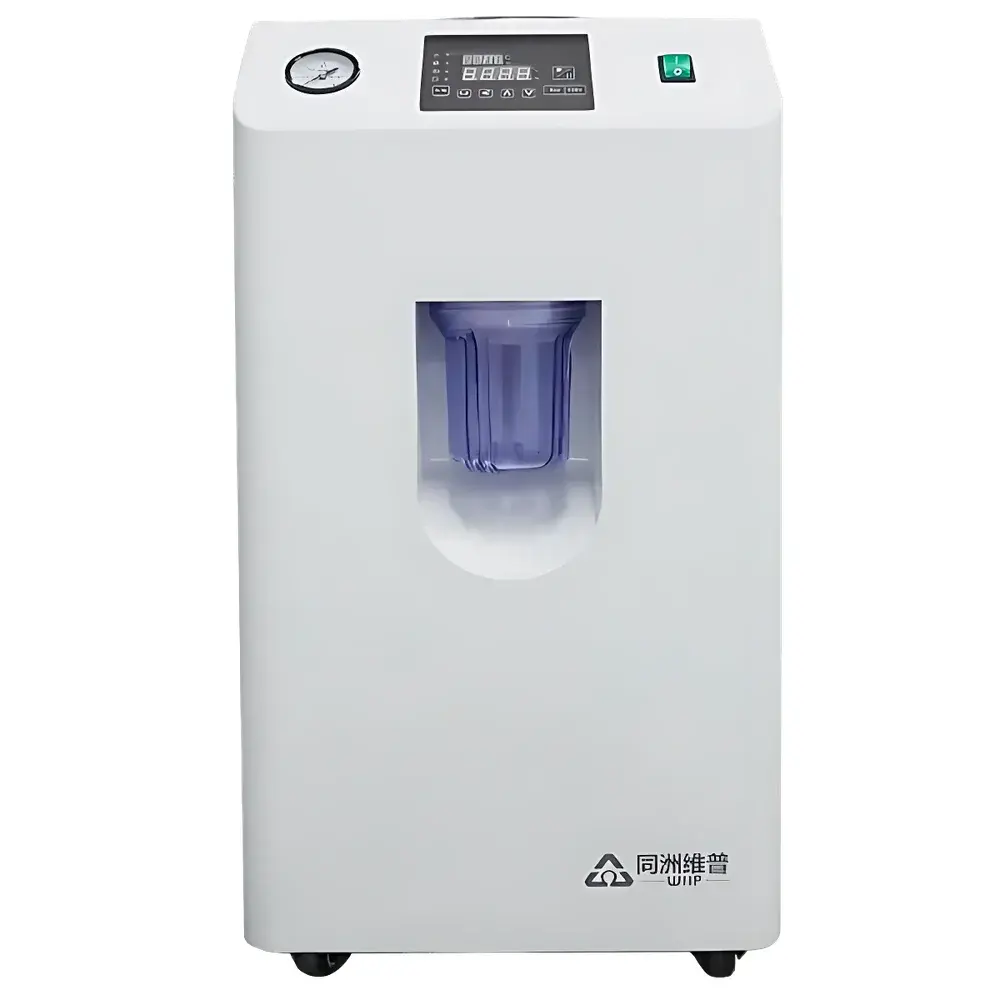
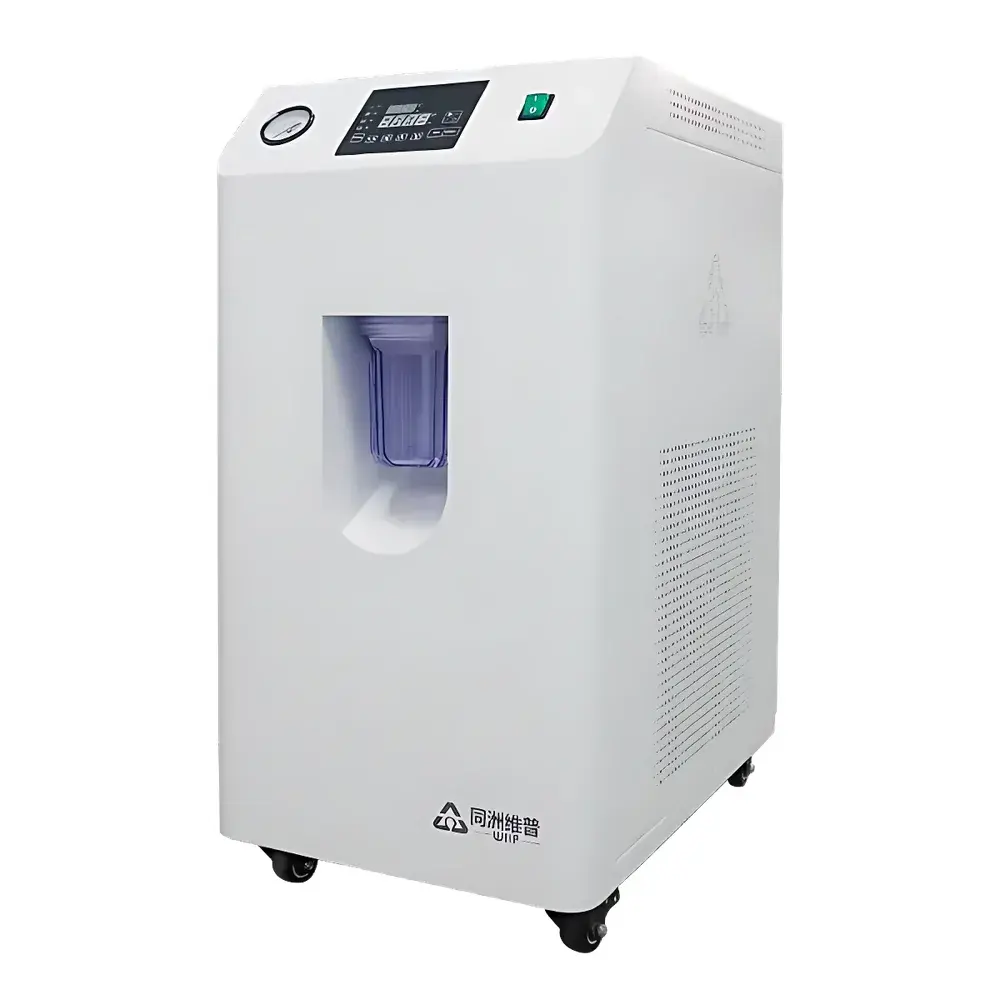
Tongzhou Weipu C2 Circulating Chiller for RIE Plasma Etching Systems
| Brand | Tongzhou Weipu |
|---|---|
| Origin | Beijing, China |
| Manufacturer Type | Direct Manufacturer |
| Instrument Type | Integrated Circulating Chiller |
| Cooling Method | Water-Cooled |
| Temperature Control Range | 5 °C to 35 °C |
| Cooling Capacity | 1600 W |
| Temperature Stability | ±0.1 °C |
| Reservoir Volume | 20 L |
| Refrigeration Principle | Phase-Change Compression Refrigeration |
Overview
The Tongzhou Weipu C2 Circulating Chiller is an integrated, water-cooled thermal management system engineered specifically for high-precision plasma-based semiconductor processing equipment—most notably Reactive Ion Etching (RIE) systems. It operates on a closed-loop phase-change compression refrigeration cycle, delivering stable, low-noise cooling with tight temperature regulation across extended operational cycles. Unlike generic laboratory chillers, the C2 is thermally and electrically optimized for the dynamic heat loads generated by RF-powered plasma sources, vacuum chamber wall conduction, and electrostatic chuck (ESC) cooling demands typical of RIE tools. Its design prioritizes thermal inertia minimization, rapid response to transient load changes, and long-term stability under continuous 24/7 operation—critical requirements for process repeatability in cleanroom environments.
Key Features
- Integrated architecture with built-in reservoir (20 L), pump, refrigeration module, and PID-controlled thermostat—no external components required.
- Precision temperature control within ±0.1 °C over a 5–35 °C operating range, validated per ISO 17025 traceable calibration protocols.
- 1600 W nominal cooling capacity at 20 °C ambient, scalable to maintain setpoint under peak RIE duty cycles (e.g., high-power RF bias, extended etch durations).
- Corrosion-resistant stainless-steel fluid path and EPDM/NBR-compatible wetted materials, ensuring compatibility with deionized water and low-conductivity coolant mixtures (e.g., 10% ethylene glycol).
- Low-vibration scroll compressor and acoustic damping enclosure to prevent mechanical coupling into sensitive RIE chambers or adjacent metrology tools.
- Dual-stage filtration (5 µm particulate + activated carbon) integrated into the recirculation loop to suppress microbial growth and particulate shedding—essential for maintaining vacuum integrity and preventing chamber contamination.
Sample Compatibility & Compliance
The C2 chiller is compatible with all major RIE platforms requiring external coolant circulation—including Oxford Instruments Plasmalab, SAMCO RIE-10NR, Trion Nova, and custom-built parallel-plate or ICP-coupled reactors. It meets mechanical interface standards per SEMI F47 (voltage sag immunity) and complies with CE marking requirements for electromagnetic compatibility (EN 61326-1) and safety (EN 61000-3-12). While not certified for Class 100 cleanroom use out-of-the-box, its sealed construction and low-outgassing materials support integration into ISO Class 5 (Class 100) environments when installed with appropriate HEPA-filtered air intake and non-shedding tubing (e.g., PFA or EPDM-lined stainless steel). The unit supports GLP/GMP-aligned operational documentation via optional RS485 Modbus RTU or Ethernet/IP connectivity for audit-ready temperature logging.
Software & Data Management
The C2 includes embedded firmware with local LCD interface for real-time monitoring of outlet temperature, flow rate (via calibrated turbine sensor), compressor status, and alarm history. Optional PC-based software (Windows/Linux compatible) enables remote configuration, data export in CSV/Excel format, and time-stamped event logging compliant with FDA 21 CFR Part 11 requirements—including electronic signatures, audit trails, and user role-based access control. All temperature records are timestamped with NTP-synchronized UTC clocks and retain ≥30 days of buffered history in non-volatile memory—even during power interruption.
Applications
- Cooling of RIE chamber electrodes, gas distribution plates, and electrostatic chucks during SiO₂, Si₃N₄, or photoresist etching processes.
- Thermal stabilization of PEALD reactor walls and showerheads during low-temperature ALD cycles (e.g., Al₂O₃, HfO₂).
- Heat extraction from ICP source coils and matching network components in high-density plasma etchers.
- Temperature control of RPT furnace cooling jackets and wafer backside helium cooling lines.
- Support for magnetic probe stations requiring sub-0.2 °C thermal drift suppression during Hall effect or magnetotransport measurements.
FAQ
What coolant types are compatible with the C2 chiller?
Deionized water (resistivity ≥1 MΩ·cm) is recommended; up to 15% ethylene glycol or propylene glycol may be used for freeze protection below 5 °C ambient. Glycol concentrations above 10% reduce effective cooling capacity by ~8–12% and require recalibration of flow sensors.
Can the C2 be integrated into a central plant cooling loop?
Yes—the unit accepts chilled water input (5–15 °C) via secondary heat exchanger mode, enabling hybrid operation where primary refrigeration is bypassed during low-load conditions to improve energy efficiency.
Is the C2 suitable for Class 100 cleanroom installation?
The base model is rated for ISO Class 8 environments; cleanroom-ready variants include upgraded seals, filtered air intakes, and PFA fluid path options—available upon request with full material certification (RoHS, REACH, USP Class VI).
Does the chiller support external PLC control?
Yes—Modbus RTU (RS485) and EtherNet/IP interfaces are standard; analog 0–10 V and 4–20 mA inputs/outputs are available for setpoint modulation and alarm relay signaling.
What maintenance intervals are recommended?
Compressor oil and refrigerant charge verification every 24 months; filter cartridges every 6 months under continuous operation; full system performance validation annually per ISO/IEC 17025-accredited procedures.



