
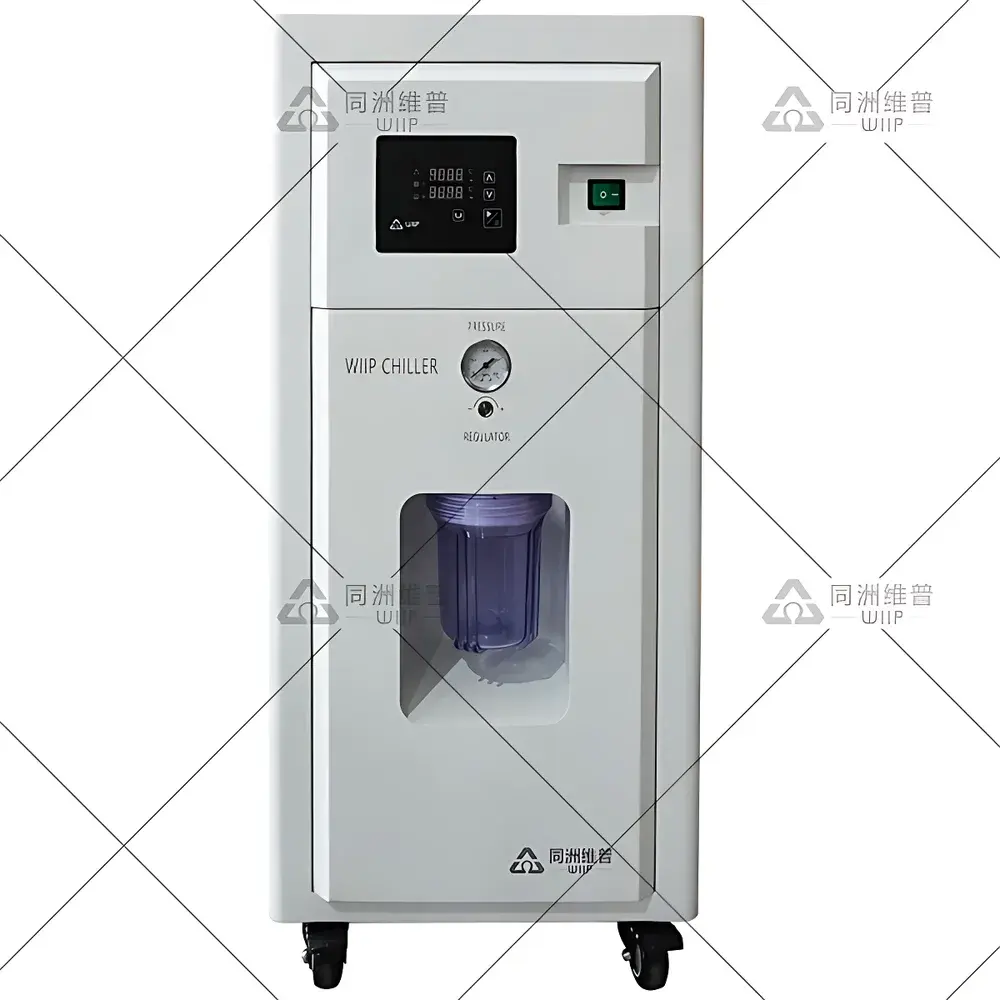
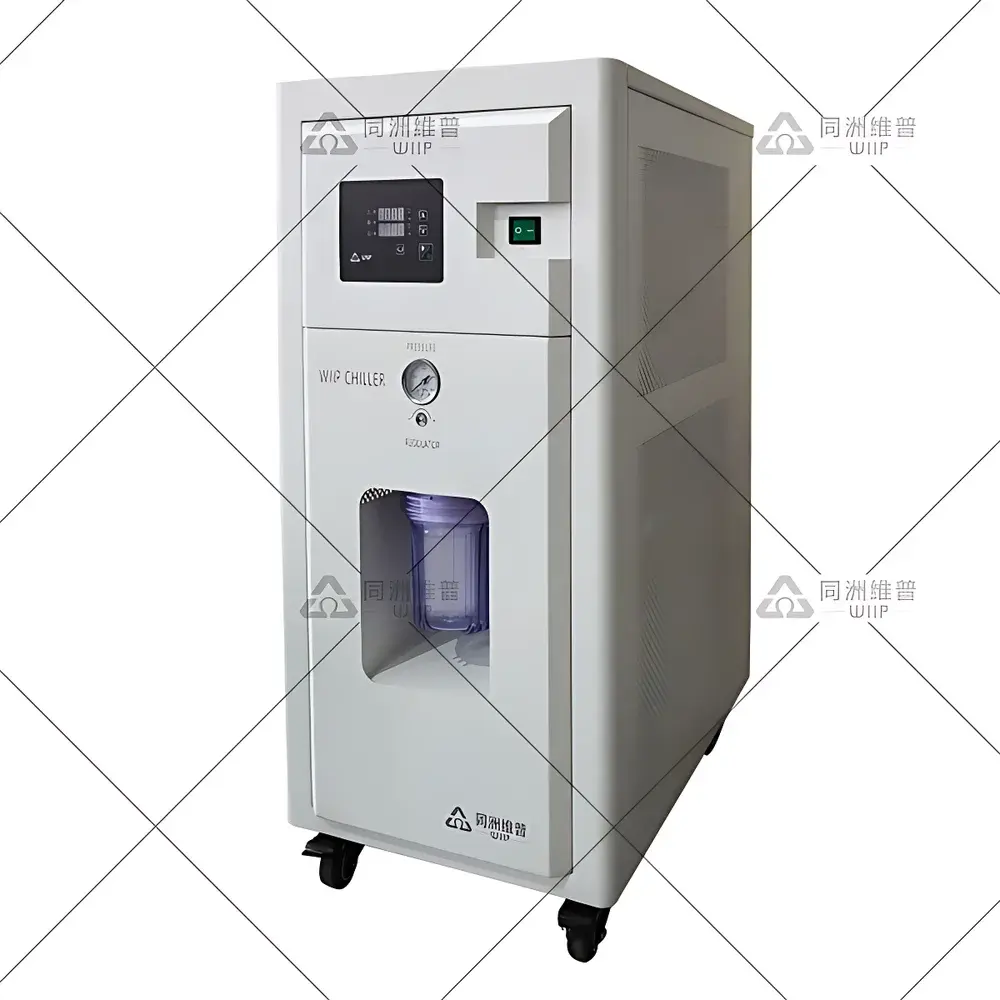
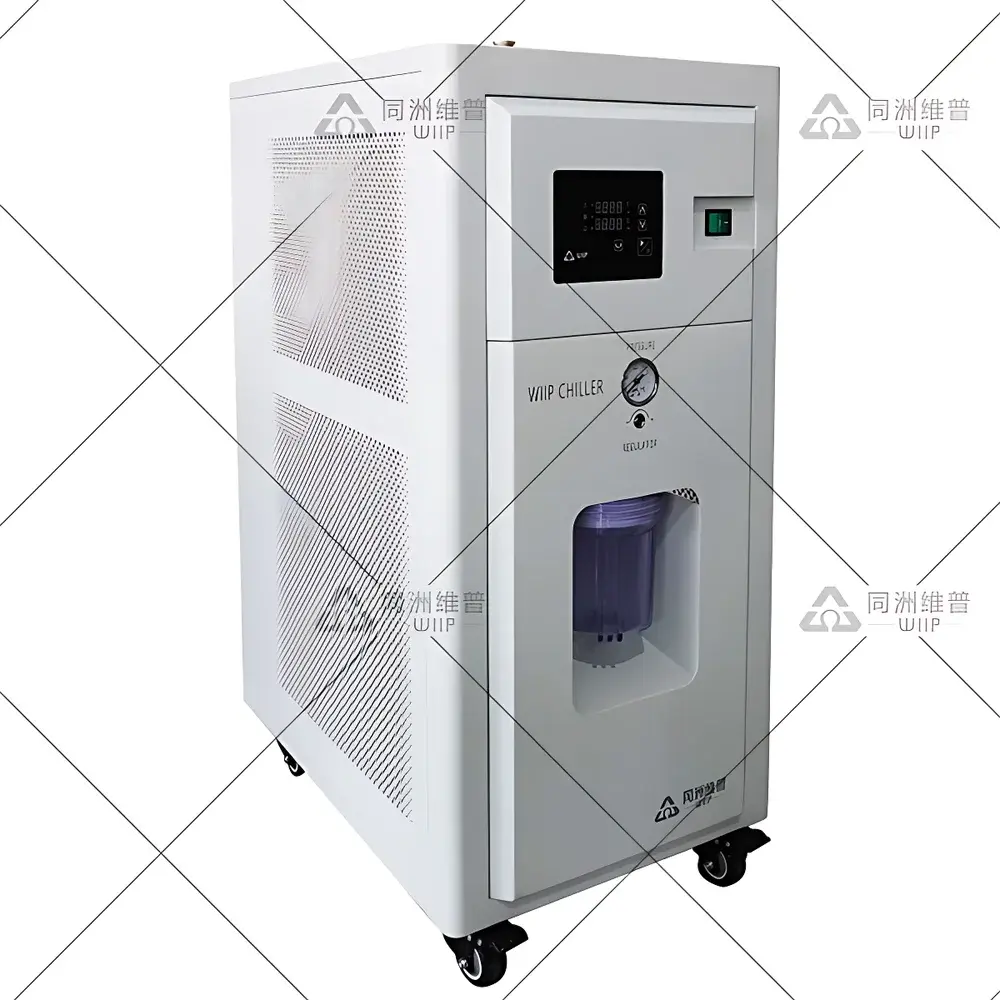
Tongzhou Weipu H2 Vertical Circulating Chiller
| Brand | Tongzhou Weipu |
|---|---|
| Origin | Beijing, China |
| Manufacturer Type | Direct Manufacturer |
| Instrument Type | Integrated Unit |
| Cooling Method | Water-Cooled |
| Temperature Control Range | −40 °C to 95 °C |
| Refrigeration Capacity | 1200–1400 W |
| Temperature Stability | ±0.1 °C to ±0.3 °C |
| Reservoir Volume | 2.5–8 L |
| Operating Principle | Phase-Change Refrigeration |
Overview
The Tongzhou Weipu H2 Vertical Circulating Chiller is an integrated, water-cooled temperature control system engineered for precision thermal management of high-sensitivity laboratory instrumentation. Utilizing a closed-loop phase-change refrigeration cycle with R404A or R507 refrigerant (depending on configuration), the H2 maintains stable bath temperatures across a broad operational range—from cryogenic conditions at −40 °C to elevated setpoints up to 95 °C—without requiring external cooling towers or chilled water infrastructure. Its vertical architecture optimizes floor space while enabling direct integration with analytical instruments that demand consistent coolant supply under variable thermal loads, including atomic absorption spectrometers (AAS), inductively coupled plasma optical emission spectrometers (ICP-OES), and mass spectrometers (ICP-MS). The chiller’s thermally insulated reservoir and low-noise scroll compressor ensure minimal ambient interference and long-term operational stability in ISO/IEC 17025-accredited laboratories.
Key Features
- Integrated vertical design with compact footprint (W × D × H ≈ 320 × 520 × 950 mm), suitable for benchtop or under-bench installation adjacent to analytical platforms.
- Wide temperature span: −40 °C to +95 °C, achieved via dual-stage refrigeration circuitry and PID-controlled electric heating element for seamless transition between cooling and heating modes.
- Precision temperature regulation with stability of ±0.1 °C (at 25 °C, static load) to ±0.3 °C (full dynamic range), verified per ASTM E2654–21 calibration guidelines.
- Adjustable reservoir volume (2.5 L standard; optional 5 L or 8 L configurations) with level sensor, overtemperature/overpressure protection, and dry-run prevention logic.
- High-efficiency centrifugal circulation pump (flow rate up to 20 L/min, max. head 4.5 bar) with stainless-steel wetted parts and adjustable pressure output to match instrument inlet requirements.
- Intuitive 4.3-inch color touchscreen interface supporting multi-language UI (English, German, French, Chinese), real-time trend logging, and password-protected parameter access.
Sample Compatibility & Compliance
The H2 chiller is compatible with a wide array of laboratory systems requiring regulated coolant delivery—including AAS graphite furnace assemblies, ICP torch cooling jackets, SEM cold stages, glovebox antechamber purge loops, and plasma etch chamber baseplates. Its fluid path is constructed from EPDM and fluorinated elastomer seals, ensuring chemical resistance to common laboratory coolants (e.g., 30% ethylene glycol/water mixtures) and compatibility with ISO 8573-1 Class 2 compressed air interfaces where used in hybrid cooling applications. The unit complies with CE marking requirements (2014/30/EU EMC Directive and 2014/68/EU PED), meets RoHS 2011/65/EU material restrictions, and supports GLP/GMP documentation workflows through audit-trail-capable event logging (optional firmware upgrade).
Software & Data Management
The embedded controller supports RS485 Modbus RTU and optional Ethernet TCP/IP communication protocols for integration into centralized lab infrastructure monitoring systems (e.g., LabVantage, Thermo Fisher SampleManager LIMS). Logged data—including setpoint history, actual bath temperature, pump status, compressor run time, and fault codes—is exportable as CSV or PDF reports. For regulated environments, optional 21 CFR Part 11-compliant firmware enables electronic signatures, user role-based permissions, and immutable audit trails. Remote diagnostics are accessible via secure HTTPS portal (TLS 1.2+), allowing OEM service engineers to perform predictive maintenance analysis without physical site visits.
Applications
- Thermal stabilization of plasma sources in ICP-OES and ICP-MS systems to minimize spectral drift and improve elemental detection limits.
- Cooling of high-power laser diodes and DPSS modules in spectroscopic and imaging setups where wavelength stability depends on junction temperature control.
- Temperature conditioning of sample introduction systems (e.g., autosampler chill trays, digestion blocks) in trace metal analysis workflows compliant with EPA Method 200.8 or ISO 17294-2.
- Process cooling for small-scale reaction calorimetry and flow chemistry reactors operating under exothermic conditions.
- Environmental simulation support for materials testing—such as thermal cycling of semiconductor packaging or polymer composites—per ASTM D696 and ISO 11359 standards.
FAQ
What is the recommended coolant composition for extended service life?
A 30% by volume mixture of inhibited ethylene glycol and deionized water (resistivity >1 MΩ·cm) is recommended to prevent corrosion and freezing at −40 °C operation.
Can the H2 operate continuously at its maximum refrigeration capacity?
Yes—rated for continuous duty (IEC 60034-1 S1 rating) with integrated thermal overload protection and automatic defrost cycling during low-load periods.
Is external water supply required for the water-cooled condenser?
Yes—the unit requires a clean, low-conductivity (≤100 µS/cm) municipal or recirculated water source at 15–30 °C inlet temperature and 2–4 bar pressure.
Does the H2 support external temperature feedback control?
Yes—via optional PT100 input port (0–10 V analog or Modbus register), enabling cascade control using process temperature readings from the connected instrument.
What safety certifications does the H2 hold for use in EU laboratories?
CE-marked per EN 61000-6-2 (immunity) and EN 61000-6-4 (emissions); pressure vessel components certified to PED 2014/68/EU Annex I, Group II, Category I.



