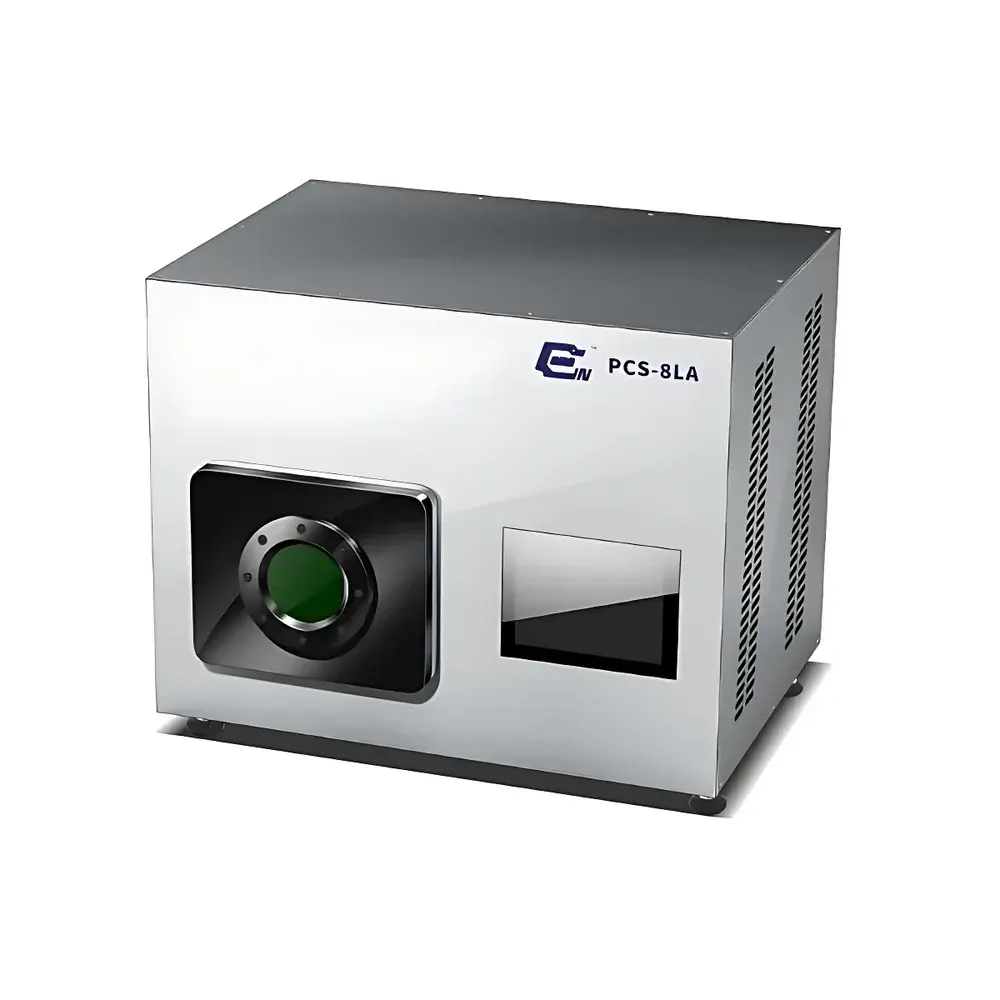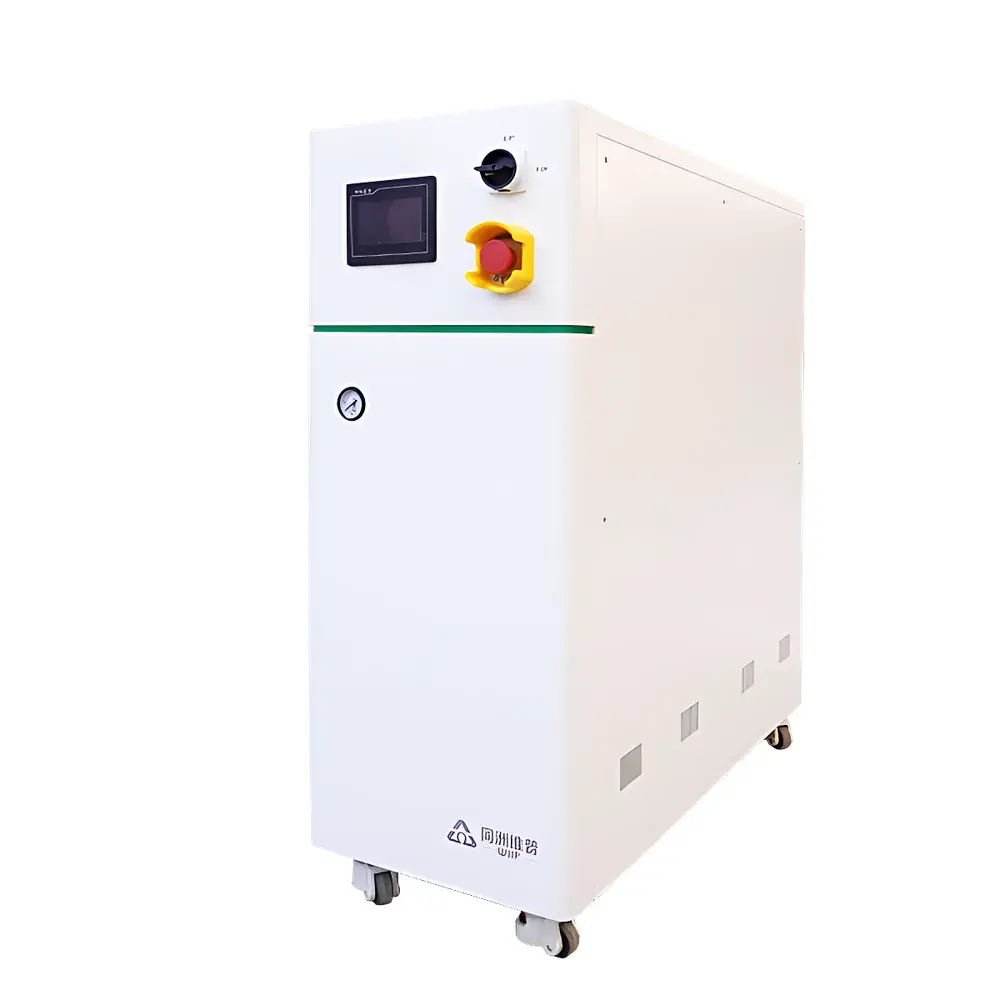
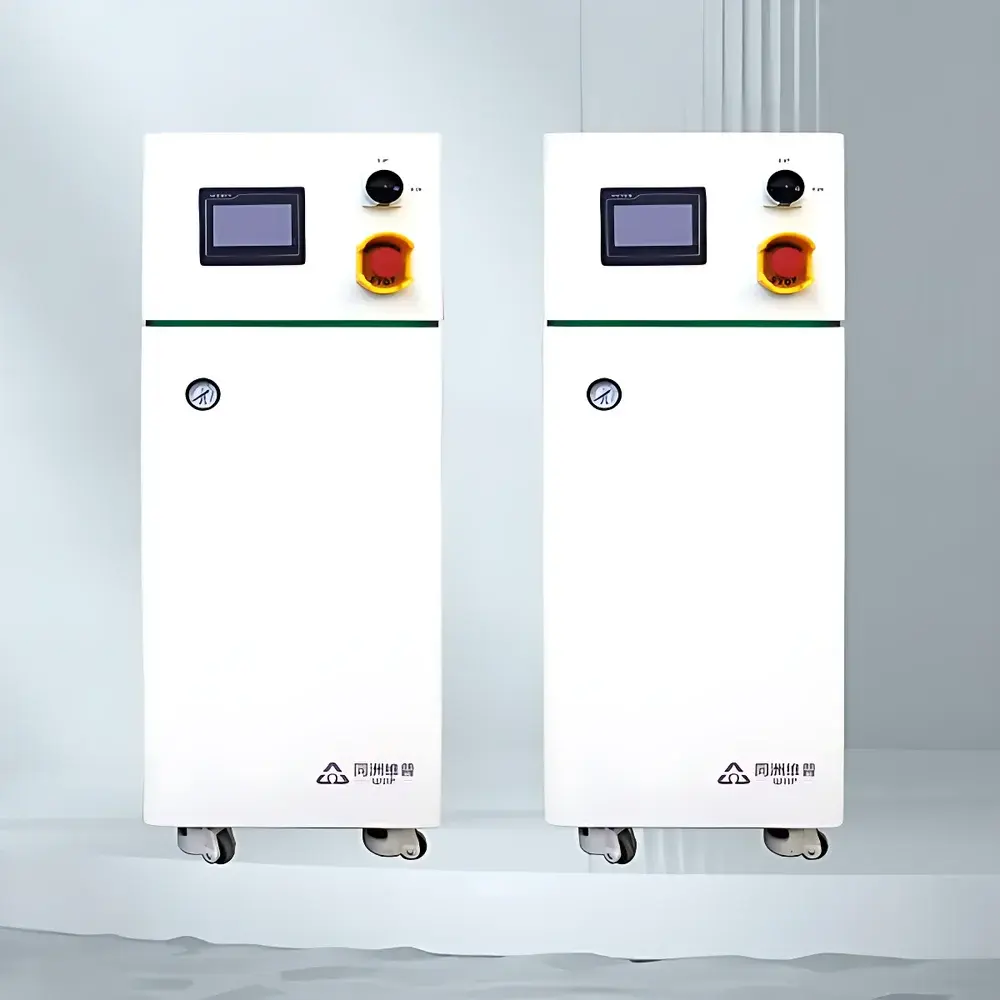
Tongzhou Weipu SCd Dual-Channel Semiconductor Etch Process Chiller
| Brand | Tongzhou Weipu |
|---|---|
| Origin | Beijing, China |
| Manufacturer Type | Direct Manufacturer |
| Product Origin | Domestic (China) |
| Model | SCd |
| Pricing | Available Upon Request |
| Temperature Control Range | −20 °C to 90 °C (per channel) |
| Independent Dual-Channel Control | Yes |
| Temperature Uniformity | ±0.1 °C |
| Refrigerant Flow Control | Electronic Expansion Valve |
| Compatible Heat Transfer Fluids | Perfluoropolyether (PFPE) electronic fluorinated liquid, Ethylene Glycol/Water mixture, Deionized Water, or High-Purity Water |
Overview
The Tongzhou Weipu SCd Dual-Channel Semiconductor Etch Process Chiller is an engineered thermal management system specifically designed for precision temperature control in plasma etch process chambers. It operates on a closed-loop recirculating principle, delivering independent, high-stability cooling to both the upper and lower electrodes—critical components whose thermal behavior directly influences plasma uniformity, etch rate consistency, and feature profile fidelity. Unlike general-purpose chillers, the SCd integrates semiconductor-grade fluid compatibility, ultra-stable temperature regulation (±0.1 °C), and SEMI-compliant mechanical and electrical architecture. Its design addresses the stringent requirements of front-end wafer fabrication, including low particulate generation, non-corrosive wetted materials (e.g., 316L stainless steel, EPDM/FFKM seals), and immunity to electromagnetic interference from RF-powered etch sources.
Key Features
- Dual independent cooling channels with fully decoupled PID control loops—enabling simultaneous yet distinct setpoints for upper and lower electrode zones
- Electronic expansion valve (EEV) modulation for dynamic refrigerant flow adjustment, ensuring rapid thermal response and minimal overshoot during process transients
- Temperature stability of ±0.1 °C over full operating range (−20 °C to 90 °C), validated per IEC 61000-4-30 and SEMI S2/S8 environmental test protocols
- Multi-fluid compatibility: certified for use with perfluoropolyether (PFPE)-based electronic fluorinated liquids (e.g., Galden® HT, 3M™ Novec™), ethylene glycol/water blends (up to 50% vol), and ultrapure deionized water (resistivity ≥18.2 MΩ·cm)
- Integrated leak detection, dry-run protection, pressure differential monitoring, and redundant temperature sensors at each outlet for fail-safe operation
- Compact footprint with front-access service layout, modular heat exchanger assembly, and vibration-damped mounting to minimize micro-vibrational coupling into sensitive process tools
Sample Compatibility & Compliance
The SCd chiller is compatible with mainstream capacitively coupled plasma (CCP) and inductively coupled plasma (ICP) etch platforms—including those from Lam Research, Applied Materials, Tokyo Electron, and Hitachi High-Tech. Its fluid pathways are constructed from electropolished 316L stainless steel and chemically inert elastomers (FFKM for PFPE, EPDM for aqueous/glycol systems), preventing metal ion leaching or organic degradation that could contaminate process environments. The unit complies with SEMI F47 (voltage sag immunity), SEMI S2 (safety), SEMI S8 (ergonomics), and SEMI E10 (definition of equipment reliability). Electrical certification includes CE marking (EMC Directive 2014/30/EU and LVD Directive 2014/35/EU), and it supports integration into ISO 9001-certified fab facilities under GLP/GMP-aligned maintenance tracking protocols.
Software & Data Management
The SCd features an embedded industrial controller with real-time logging of inlet/outlet temperatures, flow rates, refrigerant pressures, and alarm history. All operational data are timestamped and stored locally for ≥30 days; optional Ethernet/IP or Modbus TCP interfaces enable seamless integration with factory-level MES (Manufacturing Execution Systems) and CMMS (Computerized Maintenance Management Systems). Audit trails meet FDA 21 CFR Part 11 requirements when paired with user authentication and electronic signature modules. Remote diagnostics and firmware updates are supported via secure TLS 1.2–encrypted connections, with role-based access control (operator, engineer, administrator) configurable through the web-based HMI.
Applications
- Thermal stabilization of RF-powered electrostatic chucks (ESCs) during silicon, SiO₂, SiNₓ, and low-k dielectric etching
- Heat extraction from showerhead gas distribution plates to maintain consistent radical density and ion energy distribution
- Supporting atomic layer etching (ALE) sequences requiring sub-degree thermal repeatability across multi-step cycles
- Enabling high-aspect-ratio trench etching in 3D NAND and DRAM manufacturing where thermal drift induces sidewall bowing or notching
- Integration with cluster tools and multi-chamber platforms requiring synchronized thermal ramping and hold profiles
FAQ
What fluid types are certified for use with the SCd chiller?
Perfluoropolyether (PFPE) electronic fluorinated liquids, ethylene glycol/water mixtures (≤50% glycol), deionized water, and high-purity water—all verified for material compatibility and thermal performance across the full temperature range.
Does the SCd support remote monitoring and predictive maintenance?
Yes—via standard Modbus TCP or EtherNet/IP, with optional cloud-enabled analytics for compressor health trending, refrigerant charge estimation, and flow degradation alerts.
Is the SCd suitable for Class 1 cleanroom environments?
It meets ISO Class 5 particle emission limits when installed with HEPA-filtered cabinet ventilation and operated with non-shedding fluid lines; full cleanroom qualification requires site-specific validation per ISO 14644-1.
How is temperature uniformity validated across the channel output?
Using calibrated PT100 sensors traceable to NIST standards, measured at three spatial points within 100 mm of the outlet fitting under steady-state conditions at 25 °C, 50 °C, and 85 °C.
Can the SCd be integrated into existing facility chilled water infrastructure?
No—it is a self-contained refrigeration system with integrated compressors and condensers; however, it can operate as a secondary loop chiller interfaced with primary plant water via a plate-and-frame heat exchanger.