
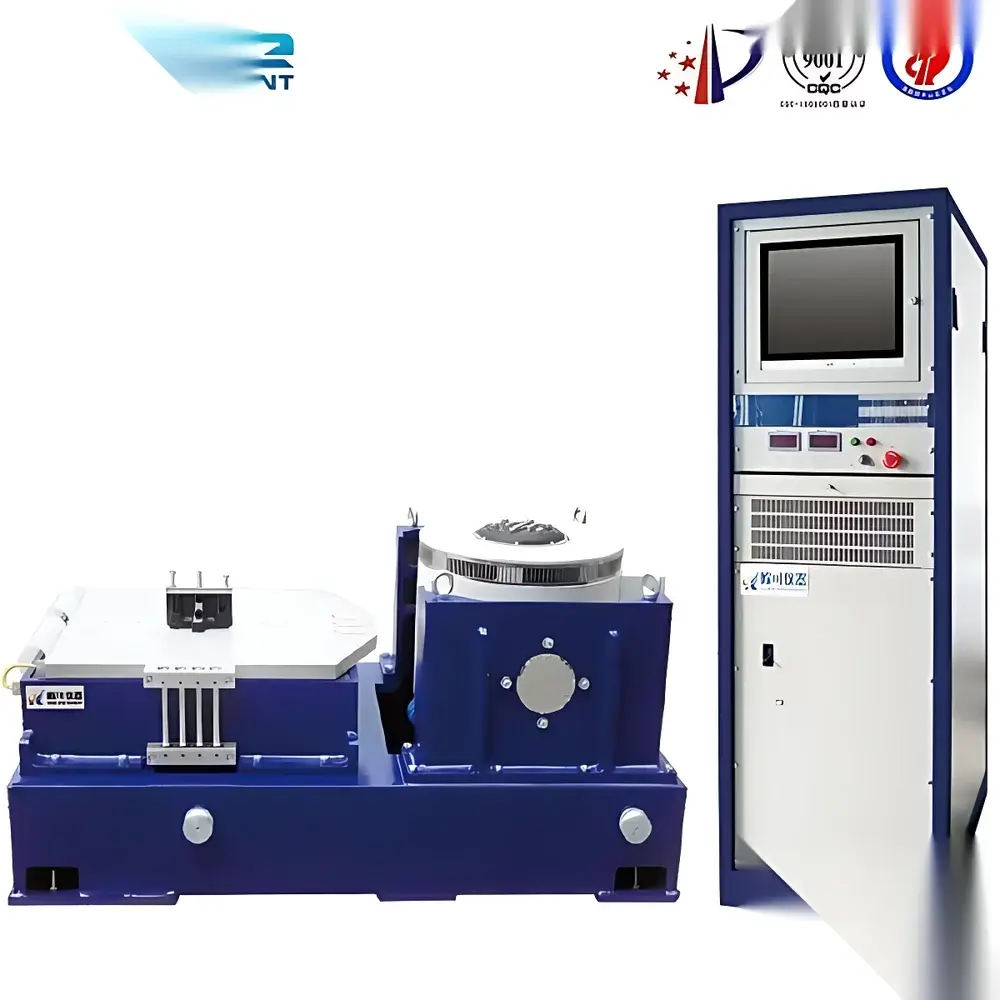
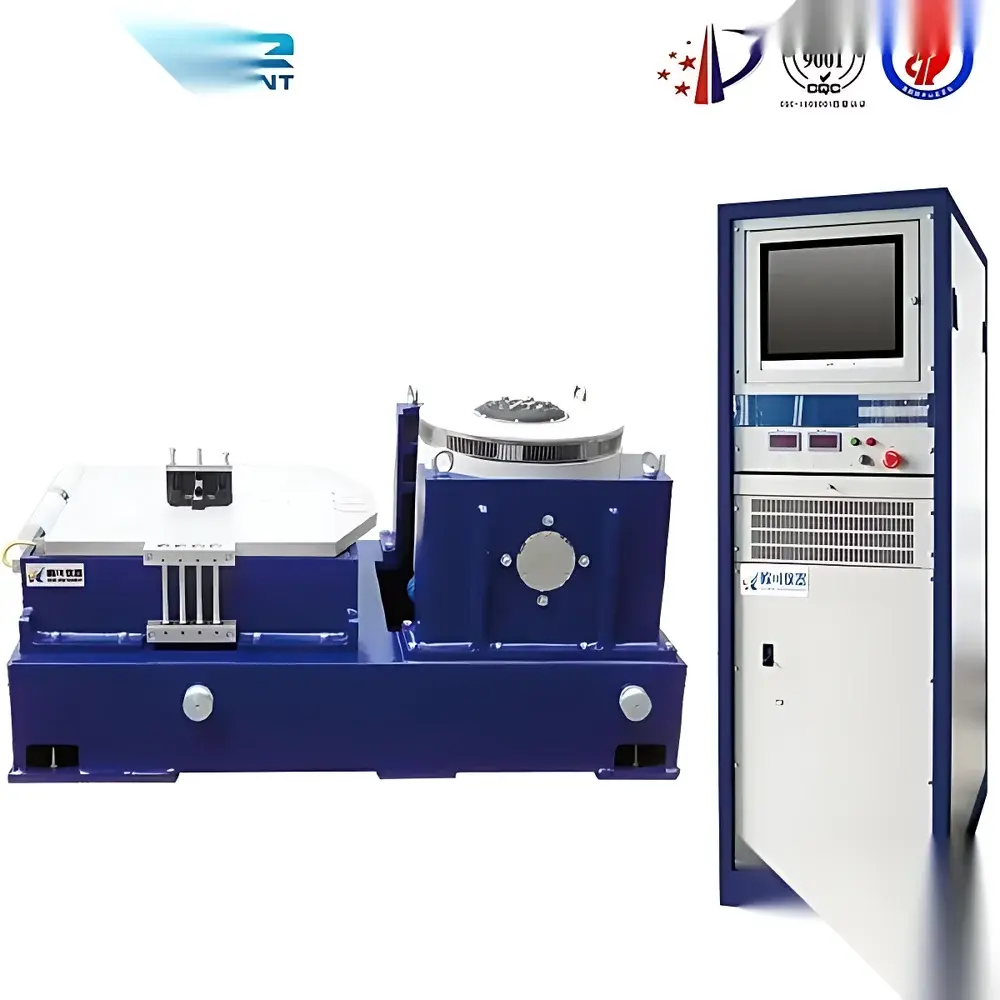
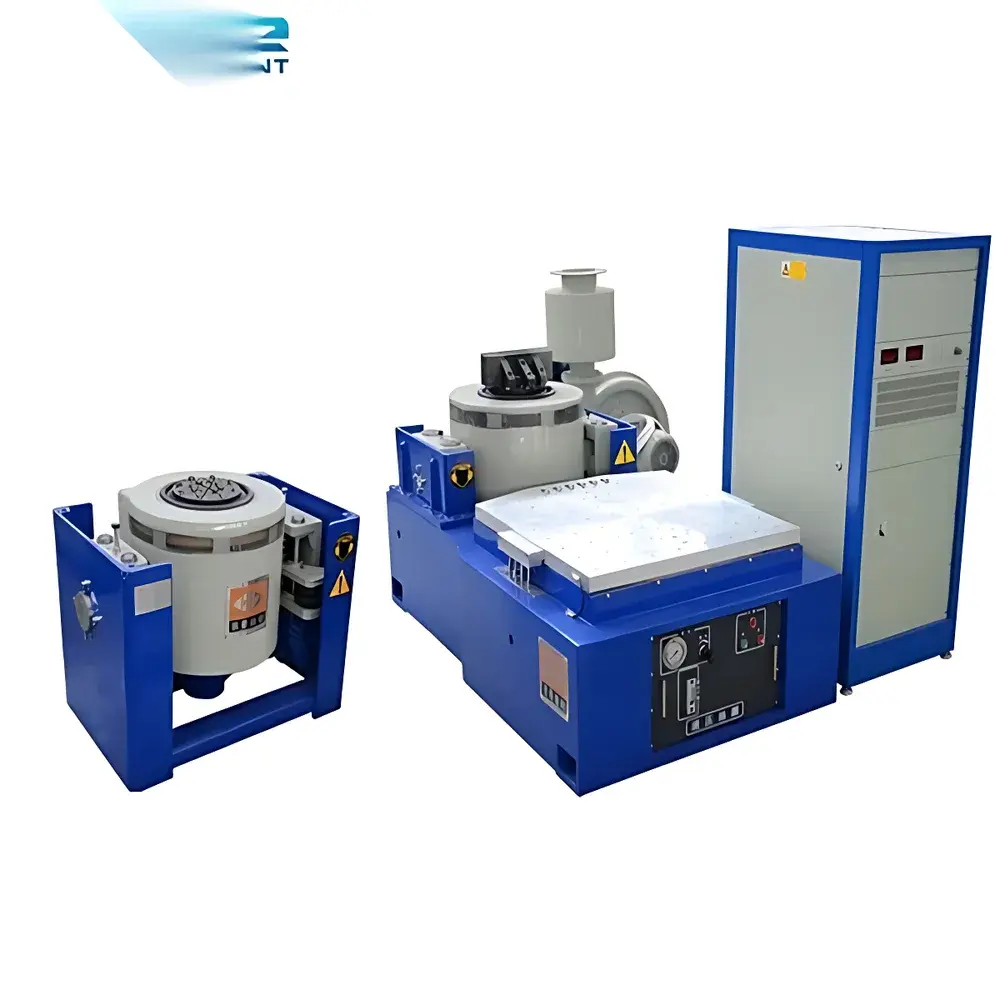
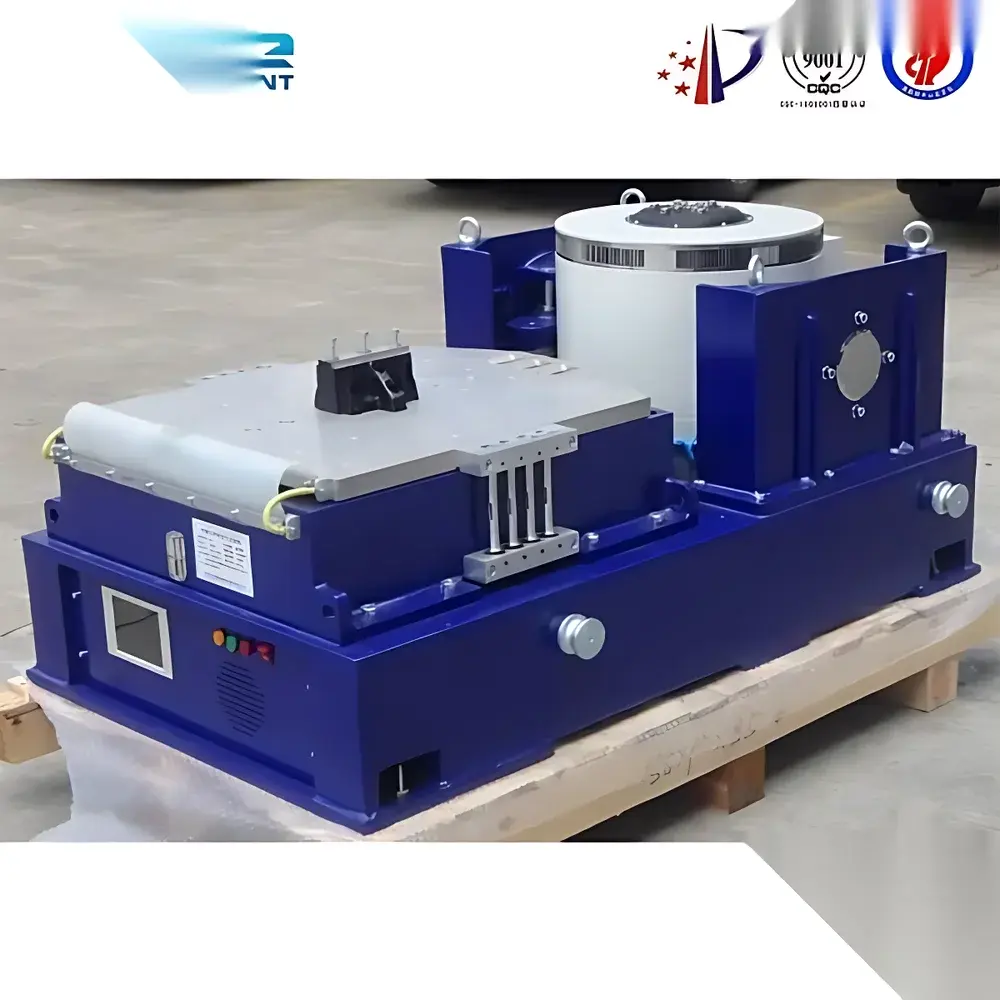
OK-ES-10 Dual-Axis (Vertical & Horizontal) Electromechanical Vibration Shaker
| Brand | OK Instruments |
|---|---|
| Model | OK-ES-10 |
| Type | Dual-Axis Electromechanical Vibration Shaker |
| Vibration Mode | Reciprocating (Linear, Bidirectional) |
| Frequency Range | 1.7–5.0 Hz (100–300 rpm) |
| Max. Acceleration | 20 g (196 m/s²) |
| Peak-to-Peak Amplitude | 5.0 mm (standard), up to 25.4 mm (1 in) at low frequency |
| Load Capacity | 50 kg (standard), 100 kg (reinforced configuration) |
| Effective Table Size | 1000 × 1000 mm |
| Timer Range | 0 s – 99 h 59 min |
| Speed Display Resolution | 0.1 rpm |
| Drive Motor | 1 HP (0.75 kW) DC Motor with Analog Speed Control |
| Power Supply | 380 V AC, 50 Hz, 3-phase |
| Dimensions (W×D×H) | 1100 × 1300 × 650 mm |
| Net Weight | ~300 kg |
| Compliance | ASTM D999, ISTA 3A/3B/3E, EN 60068-2-6, ANSI S2.18, UL 60950-1 |
Overview
The OK-ES-10 Dual-Axis (Vertical & Horizontal) Electromechanical Vibration Shaker is a precision-engineered test system designed for controlled mechanical excitation along two orthogonal axes—vertical (Z) and horizontal (X or Y)—to replicate real-world dynamic loading conditions. Unlike hydraulic or servo-hydraulic shakers, this unit employs a robust DC-motor-driven eccentric-mass mechanism, delivering repeatable reciprocating motion based on classical sinusoidal displacement theory. Its operational principle follows the relationship between acceleration (a), frequency (f), and peak-to-peak amplitude (D): a = 0.002 × f² × D, where a is in g, f in Hz, and D in mm. This enables precise calibration of acceleration profiles up to 20 g (196 m/s²) at low frequencies and maintains compliance with fundamental limits defined in ISO 5344 and IEC 60068-2-6. The shaker serves as a core platform for environmental stress screening (ESS), fatigue life assessment, structural integrity verification, and transport simulation—particularly in aerospace, automotive component validation, consumer electronics reliability testing, and defense-grade packaging qualification.
Key Features
- Dual-axis capability: Independent vertical and horizontal vibration modes selectable via mechanical reconfiguration—no software switching required.
- DC motor with analog speed control ensures stable rotational velocity across the full 100–300 rpm (1.7–5.0 Hz) range, with display resolution of ±0.1 rpm.
- Adjustable eccentric mass assembly allows empirical tuning of amplitude output; standard P-P amplitude is 25.4 mm (1 inch), scalable down to 5 mm for high-frequency, high-acceleration profiles per EN 60068-2-6.
- Heavy-duty welded steel frame and reinforced tabletop (1000 × 1000 mm, flatness ≤0.1 mm/m) support uniform load distribution and minimize modal coupling during multi-axis operation.
- Integrated digital timer with 0-second to 99-hour 59-minute range supports both short-duration shock screening and extended endurance tests under programmable duty cycles.
- Compliant with international safety and EMC standards including UL 60950-1, CE marking directives, and RoHS-compliant material construction.
Sample Compatibility & Compliance
The OK-ES-10 accommodates rigid and semi-rigid specimens up to 100 kg when configured with optional base reinforcement. Its large, perforated aluminum table surface (1.0 m × 1.0 m) permits secure mounting of fixtures, pallets, or custom adapters using M6–M10 threaded inserts. Test specimens include printed circuit board assemblies (PCBAs), automotive ECUs, handheld devices, medical enclosures, and shipping containers. The system meets essential requirements of multiple industry-specific test standards: ASTM D999 (vibration testing of packaged products), ISTA 3-series protocols (e.g., 3A for parcel delivery, 3E for mixed-load truck transport), EN 60068-2-6 (sinusoidal vibration), and ANSI S2.18 (vibration and shock testing of electronic equipment). While not inherently 21 CFR Part 11 compliant due to its analog control architecture, it may be integrated into GLP/GMP workflows when paired with external validated data acquisition systems and audit-trail-enabled software.
Software & Data Management
The OK-ES-10 operates as a standalone electromechanical instrument without embedded firmware or proprietary software. All control—including speed setpoint, timer activation, and mode selection—is executed via front-panel rotary dials and tactile push-buttons. For traceable data capture, users are advised to interface the unit’s tachometer output (0–10 V DC proportional to rpm) and optional accelerometer feedback channels with third-party DAQ platforms such as National Instruments CompactDAQ, Dewesoft X, or MATLAB Data Acquisition Toolbox. Calibration certificates (traceable to NIST or PTB equivalents) are supplied with each unit, covering speed linearity (±0.5% FS), timer accuracy (±0.1%), and mechanical runout (<0.05 mm). Firmware updates are not applicable; hardware-level recalibration is recommended annually or after 2,000 operational hours.
Applications
- Early-life failure detection (infant mortality screening) in electronic subassemblies prior to burn-in.
- Structural resonance mapping of housings, brackets, and chassis components using swept-sine or fixed-frequency dwell tests.
- Transport simulation per ISTA 3E to evaluate palletized cargo stability under simulated road vibration spectra.
- Qualification of adhesive bonds, solder joints, and thermal interface materials under cyclic mechanical stress.
- Verification of sensor mounting integrity in inertial measurement units (IMUs) and navigation modules used in UAVs and autonomous vehicles.
- Pre-compliance screening for MIL-STD-810H Method 514.8 (vibration) and DO-160 Section 8 (avionics environmental testing).
FAQ
What is the maximum payload capacity under vertical vs. horizontal vibration modes?
The rated load is 50 kg for standard operation in either axis. With optional structural reinforcement (including upgraded bearing supports and stiffened table mounting), the system supports up to 100 kg—verified under static load and 5 g, 10 Hz sine dwell conditions.
Can this shaker generate random or shock waveforms?
No. The OK-ES-10 produces only deterministic sinusoidal and fixed-frequency reciprocating motion. Random vibration and transient shock profiles require electrodynamic shakers with closed-loop controller integration.
Is the amplitude adjustable while the unit is running?
Amplitude adjustment requires mechanical repositioning of the eccentric mass counterweight and must be performed with the motor de-energized and locked out per LOTO procedures. Real-time amplitude modulation is not supported.
Does the unit include vibration isolation feet or require external isolators?
It ships with heavy-duty rubber isolation mounts rated for 300 kg static load. For laboratory environments sensitive to structure-borne transmission, additional passive pneumatic isolators (e.g., Technotrans Q-Base series) are recommended.
How is calibration maintained over time?
Annual mechanical inspection—including bearing preload verification, belt tension check, and amplitude repeatability validation against reference laser vibrometer measurements—is required. A calibration checklist and torque specifications are provided in the Operation & Maintenance Manual (OMM Rev. 2.1).



