TMA-202 Trace Moisture Analyzer
| Origin | Germany |
|---|---|
| Manufacturer Type | Authorized Distributor |
| Origin Category | Imported |
| Model | TMA-202 |
| Pricing | Upon Request |
Overview
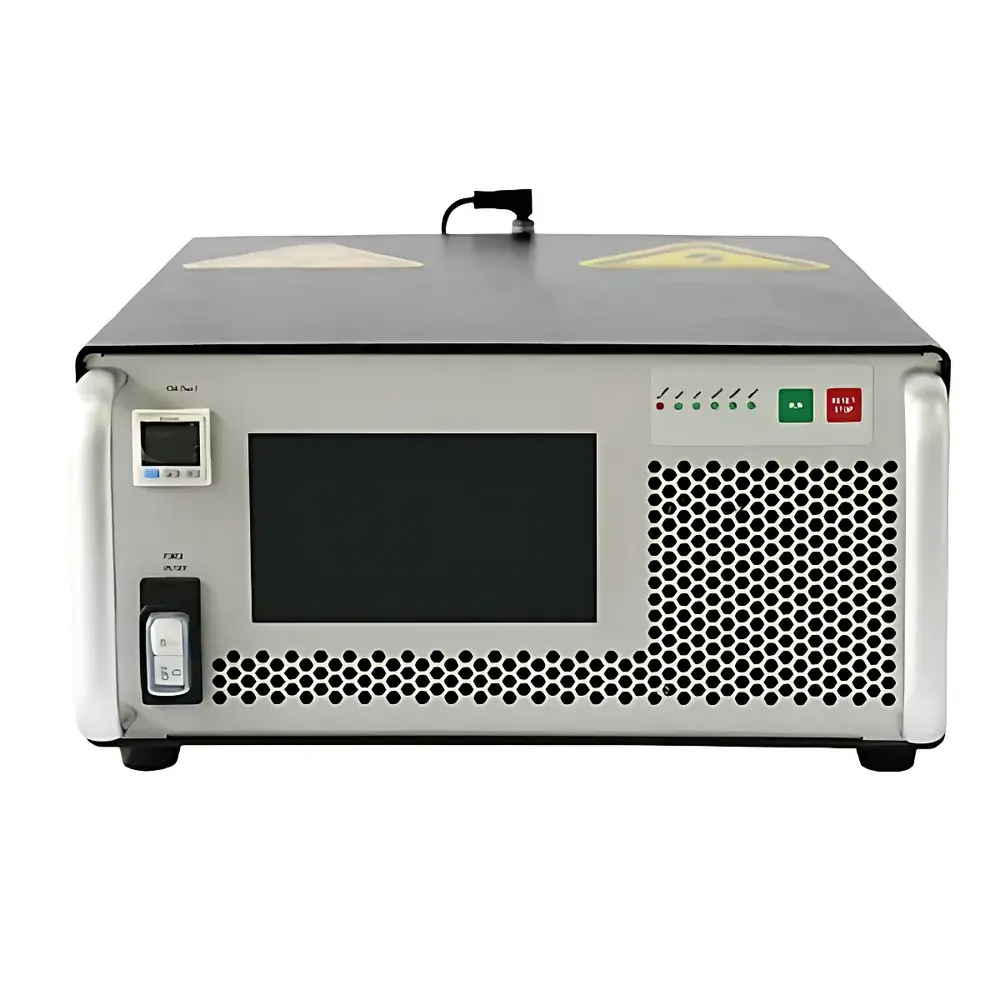
The TMA-202 Trace Moisture Analyzer is a high-precision, electrochemical gas-phase moisture measurement instrument engineered for continuous, absolute quantification of water vapor at trace levels in aggressive and reactive process gases. It operates on the principle of phosphorus pentoxide (P2O5) electrolytic detection — a primary standard method recognized for its fundamental metrological validity and absence of calibration drift under stable operating conditions. In this technique, moisture in the sample gas stream is irreversibly absorbed by a thin, hygroscopic film of phosphoric acid (H3PO4) deposited between two parallel electrodes (typically platinum or rhodium) housed within a fused-silica cylindrical cell. An applied DC voltage drives the electrolysis of adsorbed H2O into H2 and O2, regenerating P2O5 at the anode. The resulting steady-state electrolytic current is directly proportional to the mass flow rate of water entering the sensor — enabling linear, stoichiometric quantification without reliance on empirical calibration curves. This makes the TMA-202 especially suitable for demanding applications in semiconductor gas delivery, high-purity industrial gas production, cryogenic fluid handling, and chemical synthesis where trace moisture can induce catalyst poisoning, corrosion, or product degradation.
Key Features
- True absolute measurement principle — no periodic recalibration required under normal operation
- Electrode regeneration capability via integrated thermal/electrochemical conditioning cycle, extending sensor service life in corrosive environments
- Ultra-fast response time (T90 < 60 s) due to low-volume sensor cell and optimized gas diffusion path
- Microprocessor-controlled auto-ranging across four selectable full-scale ranges: 0–10 ppm, 0–100 ppm, 0–1000 ppm, and 0–2500 ppm
- Integrated self-diagnostic routine at power-on, verifying sensor integrity, electronics functionality, and power supply stability
- NAMUR-compliant output interface and electrical safety design for integration into hazardous-area control systems (zone classification dependent on installation)
- Robust mechanical architecture with IP20-rated enclosure for laboratory and controlled industrial environments
Sample Compatibility & Compliance
The TMA-202 demonstrates broad compatibility with inert, oxidizing, reducing, and highly corrosive gases including Xe, Ar, Kr, He, D2, N2, H2, O2, O3, SF6, CO2, CH4, natural gas, C2H2, Freon variants, HBr, PH3, and critically, high-purity acidic gases such as Cl2, HCl, SO2, and H2S. Compatibility is contingent upon absence of species that chemically degrade phosphoric acid films (e.g., strong alkalis or fluorinating agents). While not intrinsically safe, the analyzer meets EN 61000-6-2/6-4 for electromagnetic compatibility and conforms to IEC 61000-4 series immunity standards. Its measurement methodology aligns with ISO 8573-8 for compressed air purity class verification and supports GLP/GMP data integrity requirements when paired with compliant data logging systems.
Software & Data Management
The TMA-202 features embedded firmware supporting configurable analog output (selectable 0/4–20 mA or 0–10 V), one programmable alarm relay with latching/non-latching mode, and user-accessible menu navigation via LCD interface. Although it does not include onboard data storage or Ethernet connectivity, its analog output enables seamless integration with distributed control systems (DCS), programmable logic controllers (PLC), and SCADA platforms. When deployed in regulated environments (e.g., pharmaceutical or semiconductor manufacturing), the device supports audit-trail-capable external recording via third-party systems compliant with FDA 21 CFR Part 11 when configured with electronic signature and change-control protocols. All parameter settings — including range selection, alarm thresholds, backlight timeout, and output scaling — are retained in non-volatile memory during power loss.
Applications
- Monitoring moisture in ultra-high-purity (UHP) bulk and specialty gases for semiconductor fabrication tool purge lines
- In-line verification of desiccant dryer performance in nitrogen and argon blanketing systems
- Quality assurance testing of cylinder-filling stations for electronic-grade gases (e.g., Cl2, HCl, NH3)
- Process control in fluorine chemistry reactors and sulfur recovery units where H2O interference must be held below 1 ppmv
- Validation of cryogenic distillation column off-gas dryness prior to liquefaction
- Research-grade moisture profiling in fuel cell feed gas streams and hydrogen refueling infrastructure
FAQ
Does the TMA-202 require periodic calibration with certified moisture standards?
No — the P2O5 sensor operates on a primary electrochemical principle; calibration is inherently traceable to Faraday’s law. Routine verification using zero gas (e.g., dried N2) and span gas (certified at known ppmv level) is recommended annually or after sensor regeneration.
Can the analyzer measure moisture in chlorine gas without sensor damage?
Yes — the TMA-202 is specifically engineered for Cl2 and other acidic gases. Electrode material selection (e.g., rhodium) and optimized acid film thickness ensure long-term stability in halogen-rich environments.
What is the minimum detectable moisture level with the 0–10 ppm range?
The instrument achieves ±0.1% of full scale sensitivity, corresponding to ±0.01 ppm resolution in the lowest range, subject to signal-to-noise constraints and sample conditioning quality.
Is battery operation suitable for extended unattended use?
The internal sealed lead-acid battery provides up to 8 hours of continuous operation at nominal load (8 W); it is intended for transportability and backup power, not primary long-term deployment.
How often should the P2O5 sensor be regenerated?
Regeneration frequency depends on cumulative moisture exposure and gas matrix. Under typical UHP gas monitoring conditions, intervals exceed 6 months; the unit alerts users when regeneration is advised based on electrolytic current decay trends.