
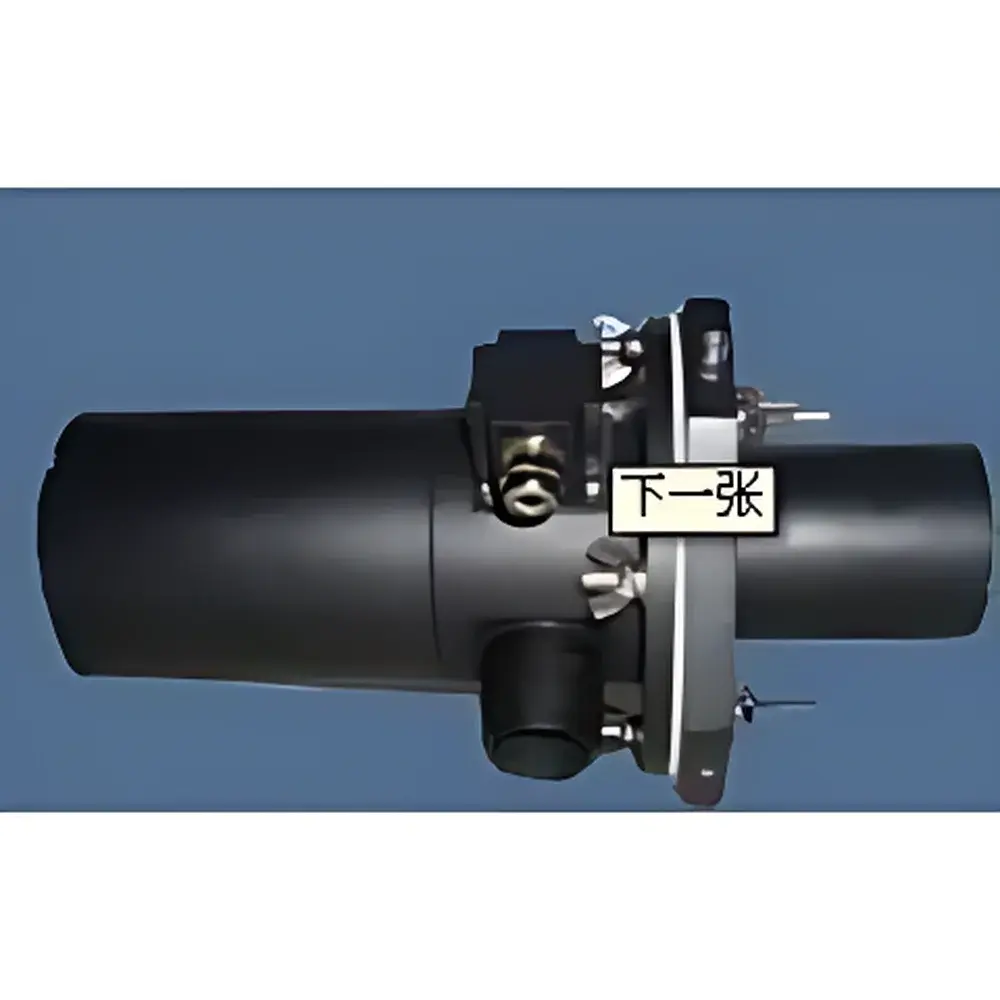
Model 2030 High-Precision Dust Monitor
| Origin | Beijing |
|---|---|
| Manufacturer Type | Distributor |
| Origin Category | Domestic |
| Model | 203000 |
| Price | Upon Request |
| Operating Principle | Laser Backscatter |
| Safety Rating | Explosion-Proof |
| Measurement Range | 0–4000 mg/m³ (configurable) |
| Resolution | 0.01% of full scale |
| Accuracy | ±2% FS |
| Relative Error | <2% FS |
Overview
The Model 2030 High-Precision Dust Monitor is an industrial-grade, in-situ optical particulate matter analyzer engineered for continuous, real-time measurement of dust and smoke concentration in flue gas streams. It operates on the principle of laser backscatter photometry—where a stabilized 650 nm ±20 nm diode laser beam traverses the stack cross-section, and suspended particulates scatter light backward toward a high-sensitivity photodetector. The intensity of the backscattered signal exhibits a monotonic, empirically calibrated relationship with mass concentration (mg/m³), enabling quantitative determination without physical sampling or extraction. Designed for permanent installation in harsh emission monitoring environments, the instrument meets the functional requirements of continuous emissions monitoring systems (CEMS) under ISO 12103-1, EN 15267-3, and EPA Method 9 compliance frameworks. Its explosion-proof enclosure (certified to IEC 60079-0/IEC 60079-1) permits safe deployment in hazardous zones associated with cement kilns, coke ovens, refinery FCC units, and coal-fired boiler stacks.
Key Features
- Stabilized laser source with adaptive optical power control to compensate for lens fouling and ambient temperature drift
- Low-zero-drift analog front-end incorporating phase-sensitive lock-in amplification for detection of micro-watt-level scattered signals
- In-field calibration capability: patented zero-point and span adjustment via integrated optical shutter and reference scatter cell—no disassembly required
- Ruggedized IP66-rated aluminum alloy housing (185 × 160 × 160 mm; 2.0 kg) with reinforced mounting flange and anti-vibration gasketing
- Wide dynamic range: configurable full-scale settings of 0–100, 500, 1000, 2000, or 4000 mg/m³ to match process-specific particulate loading profiles
- Fast response time ≤10 s (T90) with stability verified at ±2% FS over 24-hour periods for both zero and span
- Integrated environmental resilience: operational from −20 °C to +50 °C; surge-protected 24 VDC input (0.3 A); lightning-resistant signal isolation
Sample Compatibility & Compliance
The Model 2030 is validated for use in hot, humid, and corrosive flue gas environments typical of thermal power plants, sintering belts, rotary kilns, and catalytic cracking units. It accommodates stack diameters from 0.7 m to 20 m via adjustable mounting brackets and optional telescopic probe extensions. The device complies with electromagnetic compatibility (EMC) per IEC 61000-6-2/-6-3 and carries CE marking for industrial instrumentation. While not certified to US EPA Performance Specification 11 (PS-11) out-of-the-box, its measurement traceability supports audit-ready data generation when deployed within GLP-aligned QA/QC protocols—including daily zero/span checks, quarterly optical path verification, and annual NIST-traceable calibration using polydisperse PSL aerosol standards.
Software & Data Management
The monitor provides native analog output (4–20 mA, isolated, HART-compatible) for integration into DCS/SCADA systems. Digital communication occurs via RS485 Modbus RTU protocol (addressable, baud rate up to 115.2 kbps). Optional LSS2004-B variant adds four 4–20 mA analog inputs for synchronized acquisition of stack temperature, static pressure, velocity pressure, and volumetric flow—enabling automatic isokinetic correction and normalized concentration reporting (e.g., mg/Nm³ @ 11% O₂). All configuration parameters, calibration logs, alarm events, and diagnostic timestamps are stored onboard with non-volatile memory retention (>10 years). Data export supports CSV format via USB service port; remote firmware updates and parameter reconfiguration are supported through secure serial command interface compliant with IEC 62443-3-3 Level 1.
Applications
- Regulatory CEMS for stack-based PM10/PM2.5 compliance reporting under China’s GB 16297-1996 and EU IED Annex IV
- Real-time efficiency evaluation of electrostatic precipitators (ESPs), fabric filters, and wet scrubbers
- Combustion optimization via correlation of dust load with excess O₂, CO, and NOx trends
- Occupational exposure assessment in enclosed workshops (e.g., foundry shakeout areas, grain silo loading zones)
- Process troubleshooting during refractory lining degradation or air preheater fouling events
- Research-grade particulate characterization in pilot-scale pyrolysis reactors and biomass gasifiers
FAQ
Does the Model 2030 require periodic optical cleaning?
Yes—recommended every 3–6 months depending on flue gas composition and particulate loading; automated wiper kits are available as accessories.
Can it be used in wet or saturated flue gas conditions?
It is rated for relative humidity ≤95% non-condensing; optional heated purge air module (LSS-HPA) prevents condensation on optical windows.
Is the instrument compatible with third-party data acquisition platforms?
Yes—Modbus RTU implementation conforms to standard register mapping; DCS integration guides and test certificates are provided upon order.
What is the warranty and service support coverage?
Standard 24-month parts-and-labor warranty; extended calibration validation services available under annual maintenance contracts.
How is measurement traceability established for regulatory audits?
Each unit ships with factory calibration certificate referencing NIST-traceable PSL aerosol standards; on-site verification kits and SOPs for field recalibration are included.







