
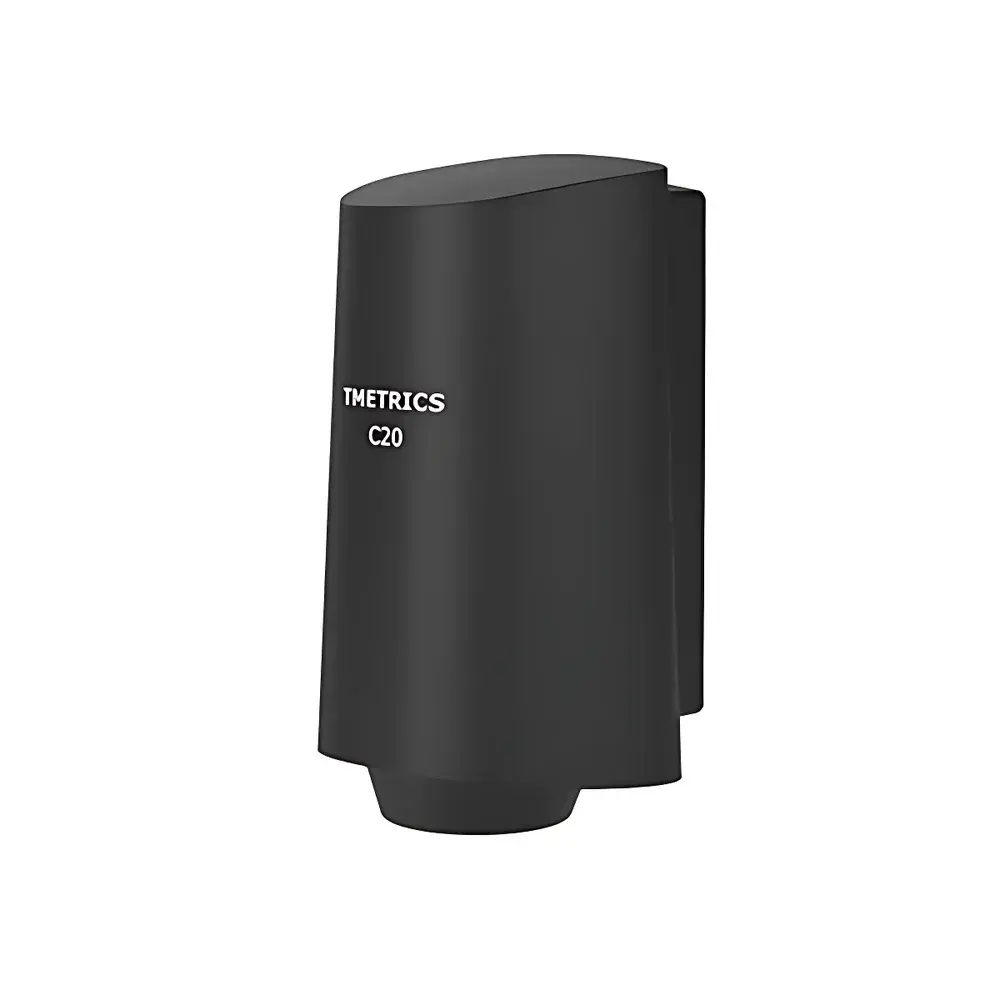
TUCSEN Tmetrics C20 Microscopic 3D Extended Depth-of-Field Camera
| Brand | TUCSEN |
|---|---|
| Origin | Fujian, China |
| Manufacturer Type | OEM Manufacturer |
| Regional Category | Domestic (China) |
| Model | Tmetrics C20 |
| Image Resolution | 1920×1080 |
| Pixel Size | 3.75 µm × 3.75 µm |
| Sensor Format | 1/2" CMOS |
| Frame Rate | 60 fps |
Overview
The TUCSEN Tmetrics C20 Microscopic 3D Extended Depth-of-Field Camera is an integrated optical imaging instrument engineered for high-fidelity, real-time 3D surface metrology at the micrometer scale. Unlike conventional microscope cameras that capture single-plane 2D images, the Tmetrics C20 employs hardware-accelerated extended depth-of-field (EDF) synthesis combined with focus-stacking algorithms executed directly on-board—eliminating reliance on external PCs or third-party software. Its core architecture leverages synchronized motorized Z-axis control (when interfaced with compatible focusing stages) and sub-pixel focus evaluation to reconstruct volumetric topography from a sequence of optically acquired focal planes. This enables true stereoscopic visualization and quantitative height mapping without geometric distortion induced by mechanical tilt, lens field curvature, or stage wobble—common artifacts in post-processed EDF workflows. Designed for integration with standard reflective microscopy platforms—including metallurgical, stereo, and monocular systems via universal C-mount interface—the Tmetrics C20 delivers turnkey 3D morphological analysis in QC labs, failure analysis centers, and academic microstructure research environments.
Key Features
- On-device EDF synthesis: Real-time depth fusion without PC dependency; eliminates latency and calibration drift associated with external frame-grabbing systems.
- Dual-mode 3D visualization: Supports both photorealistic texture-mapped rendering and false-color elevation mapping for intuitive topographic interpretation.
- Hardware-accelerated 360° model rotation & sectioning: Enables interactive cross-sectional analysis and arbitrary plane extraction directly on the embedded display interface.
- Automated 2D feature recognition: Built-in edge detection and geometric fitting algorithms support batch measurement of length, area, angle, and circularity per ASTM E112 and ISO 2360.
- Z-axis measurement accuracy: ≤2 µm at 10× objective magnification; repeatability ≤1 µm under controlled thermal and vibration conditions (per ISO 10360-2).
- Embedded reporting engine: Generates PDF/CSV reports with traceable metadata—including timestamp, objective ID, calibration certificate reference, and operator ID—aligned with GLP/GMP documentation requirements.
Sample Compatibility & Compliance
The Tmetrics C20 interfaces seamlessly with all C-mount-compatible reflective microscopes, including upright metallurgical systems (e.g., Nikon MA200, Zeiss Axio Imager), stereo microscopes (Leica M205 A, Olympus SZX16), and modular monocular platforms. It supports standard DIN 0.4×–100× objective families and accommodates sample heights up to 120 mm when paired with motorized vertical stages. All measurement outputs comply with ISO/IEC 17025:2017 clause 7.8.2 for result reporting integrity and are compatible with FDA 21 CFR Part 11-compliant audit trail configurations when deployed with networked data management servers. Calibration traceability is maintained through NIST-traceable step-height standards (e.g., VLSI Standards VS-100 series).
Software & Data Management
The embedded firmware includes a full-featured measurement suite with configurable pass/fail thresholds, statistical process control (SPC) charting, and GD&T annotation tools (per ASME Y14.5–2018). Raw image stacks (TIFF/RAW12), reconstructed 3D point clouds (PLY format), and measurement logs (XML-based structured data) are exportable via USB 3.0 or GigE Vision interface. Optional SDK access enables integration into custom LIMS or MES environments using RESTful APIs and HL7-compliant metadata tagging. Audit trails record every user action—including parameter modification, report generation, and calibration event—with immutable timestamps and SHA-256 hash verification.
Applications
- Metallurgical QA: Grain boundary mapping, inclusion quantification, and coating thickness profiling on polished cross-sections.
- Electronics inspection: Solder joint geometry verification, PCB pad coplanarity assessment, and MEMS device deformation analysis.
- Materials science: Surface roughness (Sa, Sq) computation per ISO 25178-2, wear scar volumetric loss tracking, and fracture surface characterization.
- Geoscience: Thin-section mineral topography, pore network reconstruction, and fossil surface morphology digitization.
- Forensics: Toolmark comparison, bullet striation analysis, and fiber surface texture classification.
FAQ
Does the Tmetrics C20 require a dedicated computer for operation?
No. All image acquisition, EDF reconstruction, 3D rendering, and measurement functions execute natively on the camera’s embedded ARM Cortex-A72 processor.
Can it be calibrated for traceable dimensional metrology?
Yes. The system supports multi-point spatial calibration using NIST-traceable grid targets and integrates with certified stage encoders for Z-axis traceability.
Is the 3D point cloud export compatible with third-party CAD or metrology software?
Yes. PLY and OBJ exports maintain vertex-normal and color-channel fidelity, enabling direct import into PolyWorks, Geomagic Control X, and CloudCompare.
What environmental conditions affect Z-axis repeatability?
Ambient temperature fluctuations >±2°C/hour or floor vibration exceeding ISO 2382-1 Class B may degrade sub-micron repeatability; recommended operating range is 18–25°C with <40% RH.
How is firmware updated and validated?
Updates are delivered as signed binary packages via USB stick; each release includes SHA-256 checksums and version-locked calibration coefficient tables verified per ISO/IEC 17025 clause 5.9.4.




