
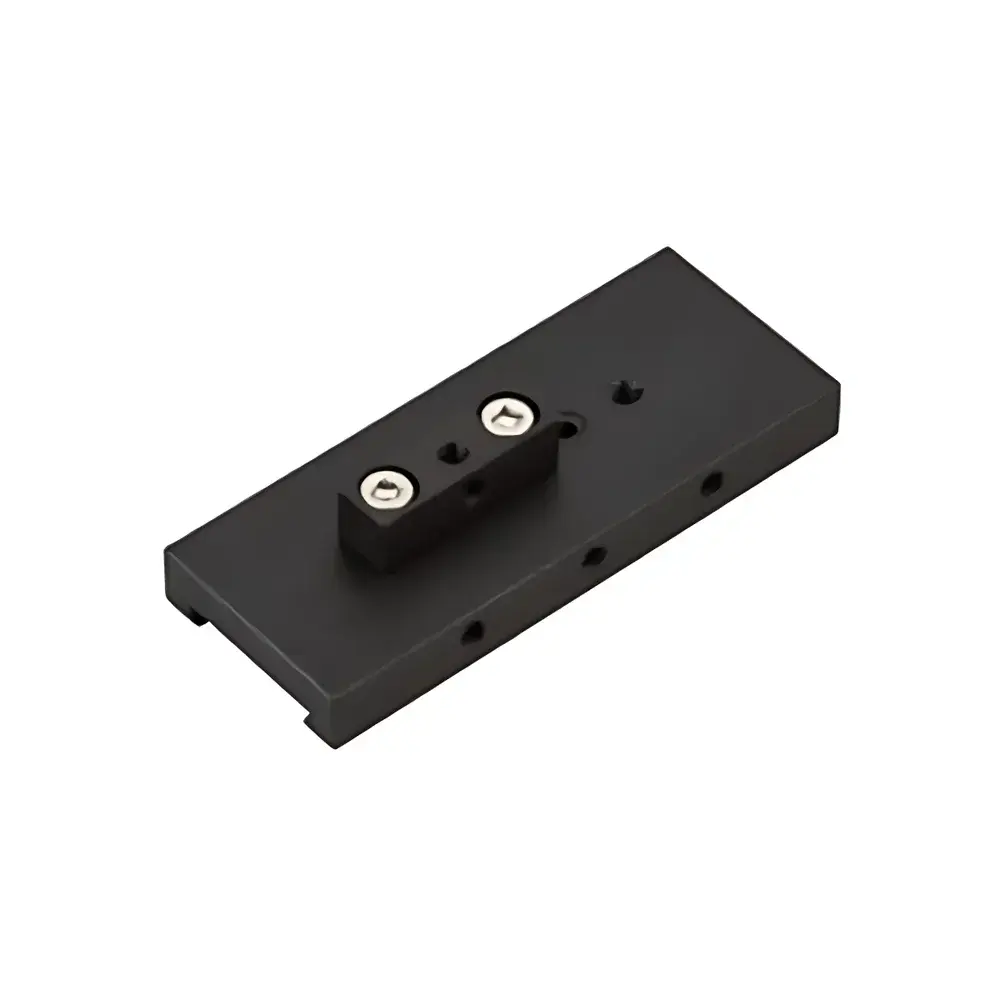
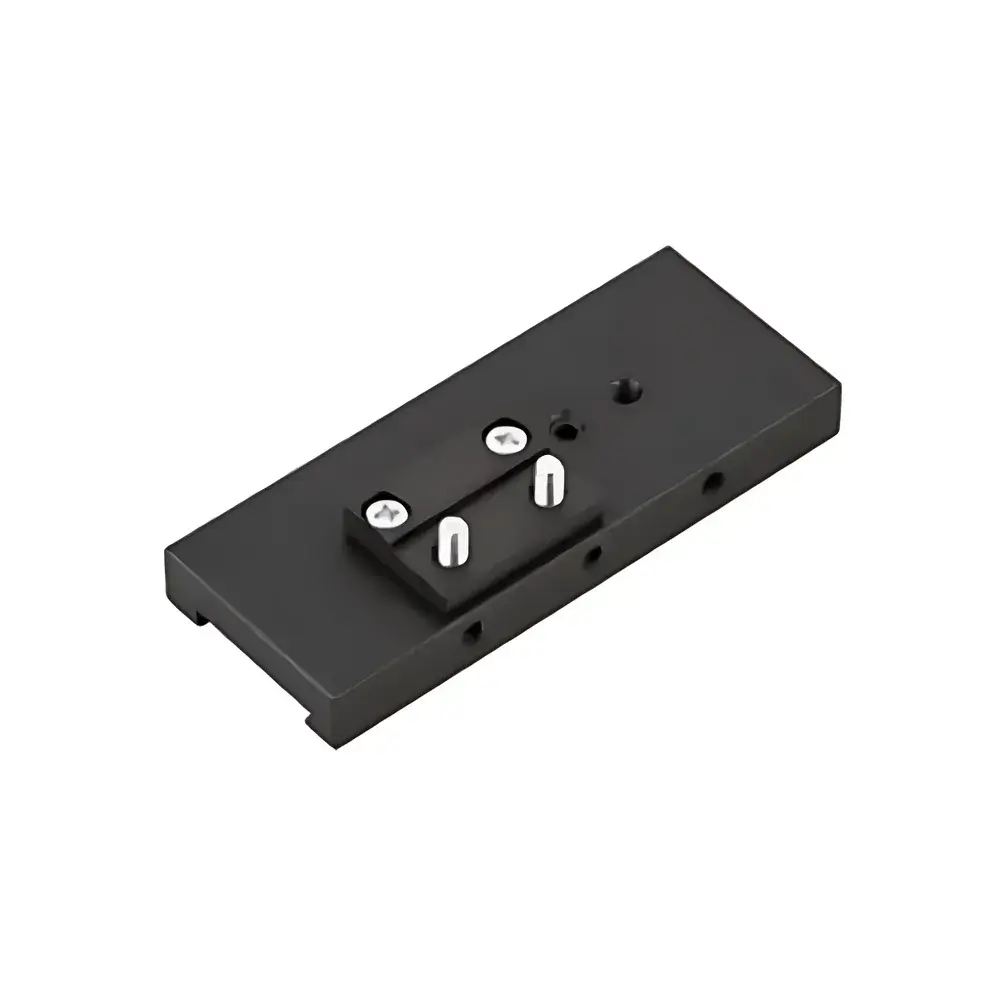
Narishige AP-13-2/3 Patch Clamp Electrode Holder
| Brand | Narishige |
|---|---|
| Origin | Japan |
| Model | AP-13-2/3 |
| Dimensions (AP-13-2) | 64 × 26 × 15 mm, 28 g |
| Dimensions (AP-13-3) | 64 × 26 × 12 mm, 27 g |
| Compatibility | AP-13-2 fits ø7 mm ball-joint mounts (e.g., B-9) |
Overview
The Narishige AP-13-2/3 Patch Clamp Electrode Holder is a precision-engineered mechanical mounting solution designed for high-stability positioning of glass micropipettes in whole-cell, cell-attached, and outside-out patch clamp electrophysiology configurations. It operates on a rigid mechanical coupling principle—leveraging standardized ball-and-socket (AP-13-2) or universal joint (AP-13-3) interfaces—to eliminate microvibrational drift and angular creep during long-duration recordings. Unlike conventional rod-based holders, the AP-13 series integrates directly with Narishige’s B-9 spherical joint or WR-6 hydraulic manipulator systems, enabling passive mechanical decoupling from stage motion while maintaining sub-micron positional fidelity under thermal and acoustic perturbations typical in live-cell imaging rigs. Its design adheres to ISO 9001-certified manufacturing protocols and supports compliance with GLP-aligned electrophysiology workflows requiring documented instrument stability and traceable mechanical setup.
Key Features
- Two distinct variants optimized for different manipulator architectures: AP-13-2 for ø7 mm ball-joint compatibility (e.g., B-9, MN-4), AP-13-3 for direct integration with UST-1 universal joints on WR-6 and similar hydraulic micromanipulators.
- Zero-backlash angular adjustment: Once locked, the electrode axis retains its orientation without slippage—even under repeated pipette retraction/advancement cycles—ensuring consistent tip-to-cell approach geometry across sequential trials.
- Compact monolithic aluminum alloy construction (anodized black finish) provides high stiffness-to-mass ratio, minimizing resonance at frequencies below 500 Hz—critical for noise-sensitive current-clamp and voltage-clamp measurements.
- Integrated hex-key retention slot eliminates tool loss; supplied 1.5 mm hex wrench fits standard Narishige accessory tooling and enables one-handed tightening without disassembly.
- Electrode clamping mechanism accommodates standard borosilicate or quartz capillaries (outer diameters 1.0–1.5 mm) with uniform radial pressure distribution, preventing capillary fracture during high-torque sealing maneuvers.
Sample Compatibility & Compliance
The AP-13-2/3 is compatible with all commercially available patch clamp amplifiers featuring headstage mounting flanges—including Axopatch 200B, MultiClamp 700B, EPC-10, and HEKA PatchMaster systems—via standardized M4 threaded interface points. Its mechanical interface conforms to DIN 47600 and JIS B 0010 dimensional standards for laboratory-grade ball joints and universal couplings. The holder itself carries no electrical functionality and is therefore exempt from IEC 61010-1 safety certification requirements; however, its use within FDA-regulated preclinical electrophysiology assays complies with 21 CFR Part 11 data integrity expectations when paired with validated amplifier software (e.g., pCLAMP 11+, PatchMaster v2x) that enforces audit-trail logging of hardware configuration metadata.
Software & Data Management
While the AP-13-2/3 is a purely passive mechanical component, its stable positioning directly enhances signal integrity metrics tracked by acquisition software: reduced baseline drift (85% within first 60 s). When used in conjunction with pCLAMP or PatchMaster, users can annotate electrode holder type and mounting configuration in experiment metadata fields—enabling retrospective correlation between mechanical setup variables and recording quality parameters during QC review or regulatory submission preparation.
Applications
- Neurophysiology: Stable positioning of patch pipettes for single-neuron current- and voltage-clamp recordings in acute brain slices, cultured neurons, or in vivo preparations.
- Cardiac electrophysiology: High-fidelity measurement of L-type Ca²⁺ currents and inward rectifier K⁺ currents in isolated cardiomyocytes under temperature-controlled perfusion.
- Ion channel pharmacology: Reproducible assessment of compound effects on hERG, Nav1.5, or TRPV1 channels using standardized seal-on-cell protocols compliant with ICH S7B guidelines.
- Stem cell differentiation studies: Long-term monitoring of maturation-dependent changes in resting membrane potential and action potential morphology in iPSC-derived neuronal or cardiac lineages.
FAQ
Can the AP-13-2 be used with non-Narishige manipulators?
Yes—provided the manipulator features a standardized ø7 mm spherical joint with M4 mounting threads (e.g., Sutter MP-285, Scientifica PatchStar), though mechanical play may increase if tolerance stack-up exceeds ±0.02 mm.
Does the AP-13-3 require calibration after installation?
No calibration is required; however, users should verify zero-position alignment using a calibrated stage micrometer before initiating quantitative experiments involving spatially referenced stimulation protocols.
Is the holder compatible with vibration-isolated optical tables?
Yes—the low mass and high rigidity minimize coupling to table resonances; for optimal performance, mount directly to the manipulator’s base plate rather than via intermediate adapter plates.
What is the maximum recommended torque for the electrode clamp screw?
Do not exceed 0.15 N·m; over-torquing may deform the internal brass collet and compromise repeatable clamping force across multiple pipettes.
Can AP-13-2 and AP-13-3 be interchanged within the same experimental rig?
Only with physical modification of the manipulator interface—AP-13-2 requires a ball joint, AP-13-3 requires a UST-1–compatible universal joint; they are not mechanically cross-compatible without adapter hardware.



