
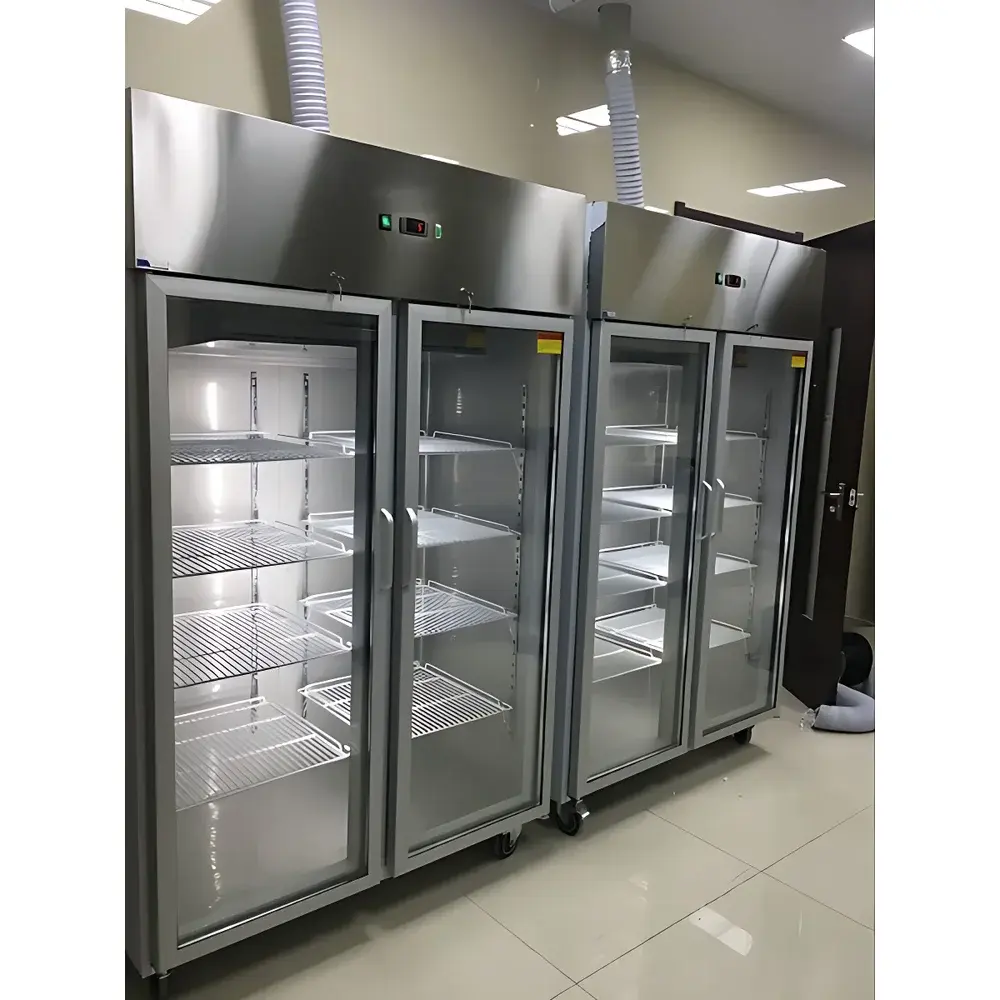
ZEEDO HS-801 Pathological Specimen Refrigerator
| Brand | ZEEDO |
|---|---|
| Origin | Zhejiang, China |
| Model | HS-801 |
| Refrigeration Temperature Range | 0–10°C |
| Effective Volume | ~1,000 L |
| External Dimensions (W×D×H) | 1200 × 680 × 1880 mm |
| Cooling Method | Compressor-based |
| Power Consumption | 400 W |
| Cabinet Material | SUS304 Brushed Stainless Steel (Exterior & Interior Liner) |
| Door | Double-glazed Hollow Plastic-Frame Door with Digital Temperature Display |
| Insulation | High-pressure Rigid Polyurethane Foam (≥50 mm Thickness) |
| Evaporator | Concealed TP2 Oxygen-Free Copper Tubing |
| Interior Liner Material | Food-grade ABS Engineering Plastic (Non-toxic, Odorless, Cleanable) |
Overview
The ZEEDO HS-801 Pathological Specimen Refrigerator is a purpose-engineered laboratory-grade cold storage unit designed specifically for the stable, compliant, and traceable preservation of formalin-fixed tissue specimens, cytology samples, biopsy cores, and other temperature-sensitive biological materials in clinical pathology, histology, and biomedical research laboratories. Operating within a tightly controlled 0–10°C range—optimal for inhibiting formaldehyde volatilization while preventing ice formation—the HS-801 maintains thermal uniformity and stability across its ~1,000 L effective volume. Its compressor-driven refrigeration system employs a high-efficiency, hermetically sealed rotary compressor, delivering rapid cooldown, low acoustic emission (<42 dB[A]), and long-term operational reliability under continuous 24/7 duty cycles. The unit complies with core design principles outlined in ISO 13485 (medical device quality management) and supports adherence to CLIA, CAP, and GLP-aligned specimen handling protocols through consistent thermal performance and passive data logging readiness.
Key Features
- Stainless steel construction: Exterior side panels and control fascia fabricated from brushed SUS304 stainless steel—resistant to corrosion, chemical splashes, and repeated disinfection with ethanol, sodium hypochlorite, or quaternary ammonium agents.
- High-integrity insulation: 50 mm thick rigid polyurethane foam injected under high pressure into the cabinet walls and door, achieving thermal conductivity ≤0.022 W/m·K and minimizing ambient heat ingress during power interruptions.
- Precision temperature control: Microprocessor-based digital controller with ±0.5°C accuracy and 0.1°C resolution; dual-sensor redundancy (air + evaporator feedback) ensures robust setpoint maintenance even under variable load conditions.
- Hygienic interior architecture: Seamless SUS304 inner liner with radius-curved corners; removable ABS plastic door liner and adjustable stainless steel shelves facilitate full-access cleaning and validation of residue-free surfaces.
- Low-noise, energy-optimized operation: 400 W nominal input power; optimized condenser airflow and vibration-dampened compressor mounting reduce mechanical noise and extend service intervals beyond 15,000 operating hours.
Sample Compatibility & Compliance
The HS-801 accommodates standard pathology workflows including formalin-filled specimen containers (e.g., 50 mL–500 mL wide-mouth jars), cassette racks (up to 200 units per shelf), paraffin blocks (stored upright or horizontal), and cryovial trays (when placed on secondary containment platforms). Its 0–10°C operating envelope meets the recommended storage condition for formalin-fixed tissues per College of American Pathologists (CAP) checklist ANP.42500 and aligns with ISO 15189:2022 clause 5.3.2 regarding pre-analytical environmental controls. While not certified as a medical device under FDA 21 CFR Part 820, the unit’s material biocompatibility (SUS304, food-grade ABS), non-off-gassing insulation, and absence of internal UV or ozone sources render it suitable for ISO Class 7 cleanroom-adjacent environments and GCP-compliant biobanking support roles.
Software & Data Management
The HS-801 operates via embedded firmware without proprietary cloud connectivity. It features a real-time digital display showing current temperature, setpoint, and alarm status (e.g., door ajar, high-temp deviation >±2°C, compressor fault). Optional RS-485 Modbus RTU interface enables integration with third-party building management systems (BMS) or centralized environmental monitoring platforms (e.g., SensiNet, TempTale Web). When paired with external validated data loggers (e.g., Vaisala viewLinc, DicksonOne), the unit supports 21 CFR Part 11-compliant audit trails—including user ID, timestamped setpoint changes, and alarm acknowledgments—required for CAP-accredited labs and pharmaceutical QC facilities.
Applications
- Clinical pathology departments: Short- to medium-term holding (≤72 h) of freshly resected specimens prior to grossing and fixation.
- Histology laboratories: Storage of processed cassettes and cut sections awaiting embedding or staining; retention of unstained slides during multi-day immunohistochemistry runs.
- Academic research cores: Preservation of primary tissue explants, organoids, or decellularized matrices at non-freezing temperatures to maintain extracellular matrix integrity.
- Forensic labs: Chain-of-custody compliant storage of evidentiary biological samples pending toxicology or DNA analysis.
- Veterinary diagnostic centers: Stabilization of necropsy specimens before submission to reference labs under IATA-permitted cold-chain parameters.
FAQ
What is the recommended temperature setpoint for formalin-fixed tissue storage?
The optimal setpoint is 4°C, as formaldehyde vapor pressure remains negligible below this threshold, minimizing occupational exposure risk and preserving tissue morphology.
Can the HS-801 be installed in an unconditioned utility room?
Ambient operating range is 10–32°C with ≤70% RH non-condensing; installation outside this envelope may impair compressor efficiency and temperature uniformity.
Is the interior lighting LED-based and dimmable?
Standard configuration includes a fixed-intensity white LED strip; no dimming or UV-A/B options are available.
Does the unit include a factory calibration certificate?
Yes—each HS-801 ships with a traceable NIST-equivalent temperature verification report (as-tested at 4°C, 10°C) performed using calibrated Fluke 1524 thermistors.
Are casters included for mobility?
Four heavy-duty locking casters (two swivel, two rigid) are standard equipment, rated for 150 kg static load per caster.




