Delers JY-1000 Molecular Hybridization Instrument
| Brand | Delers/DS |
|---|---|
| Origin | Beijing, China |
| Manufacturer Type | Authorized Distributor |
| Country of Origin | China |
| Model | JY-1000 |
| Instrument Type | Nucleic Acid Molecular Hybridization Instrument |
| Temperature Control Range | Room Temperature +5°C to 100°C |
| Temperature Uniformity | ≤ ±0.3°C @ 37°C |
| Rotation Speed | 5–30 rpm |
| Capacity | 10 hybridization tubes |
| Power Input | 1000 W |
| Voltage | AC 100–240 V, 50–60 Hz |
| Internal Chamber Dimensions (L×W×H) | 267 × 326 × 273 mm |
| External Dimensions (L×W×H) | 428 × 400 × 470 mm |
| Net Weight | 25 kg |
| Temperature Setting Resolution | 0.1°C |
| Time Setting Range | 1 min – 99 h 59 min or ∞ |
| Temperature Stability | ≤ ±0.3°C @ 37°C (chamber), ≤ ±0.1°C @ 37°C (tube) |
| Programmable Steps | 99 |
| Safety Protection | Dual hardware/software overtemperature cutoff |
| Auto-restart after power failure | Yes |
| Preheating function | Yes |
| Post-run hold temperature | Yes |
| Calibration capability | Built-in user-accessible temperature calibration |
Overview
The Delers JY-1000 Molecular Hybridization Instrument is a precision-engineered platform designed for controlled nucleic acid hybridization under rigorously maintained thermal and mechanical conditions. It operates on the fundamental principle of nucleic acid annealing—where complementary DNA or RNA strands form stable duplexes via Watson-Crick base pairing under defined temperature, time, and agitation parameters. Engineered for reproducibility in both research and diagnostic laboratories, the instrument integrates PID-based fuzzy logic temperature control with microstepping motor-driven rotation, enabling uniform thermal distribution across all hybridization tubes while minimizing thermal gradients and mechanical vibration artifacts. Its operational envelope spans from room temperature +5°C to 100°C, with certified stability of ≤ ±0.3°C at 37°C across the chamber and ≤ ±0.1°C within individual tubes—critical for stringent applications such as Southern/Northern blotting, in situ hybridization (ISH), and probe-based pathogen detection. The unit complies with general laboratory safety standards (IEC 61010-1) and supports GLP-aligned workflows through programmable protocols, audit-ready parameter logging, and built-in temperature calibration traceability.
Key Features
- High-precision PID temperature control system with real-time adaptive heating rate optimization—reducing pre-equilibration time without compromising thermal homogeneity.
- Low-noise, maintenance-free stepper motor drive delivering consistent 5–30 rpm orbital rotation—ensuring uniform reagent mixing and membrane wetting during hybridization.
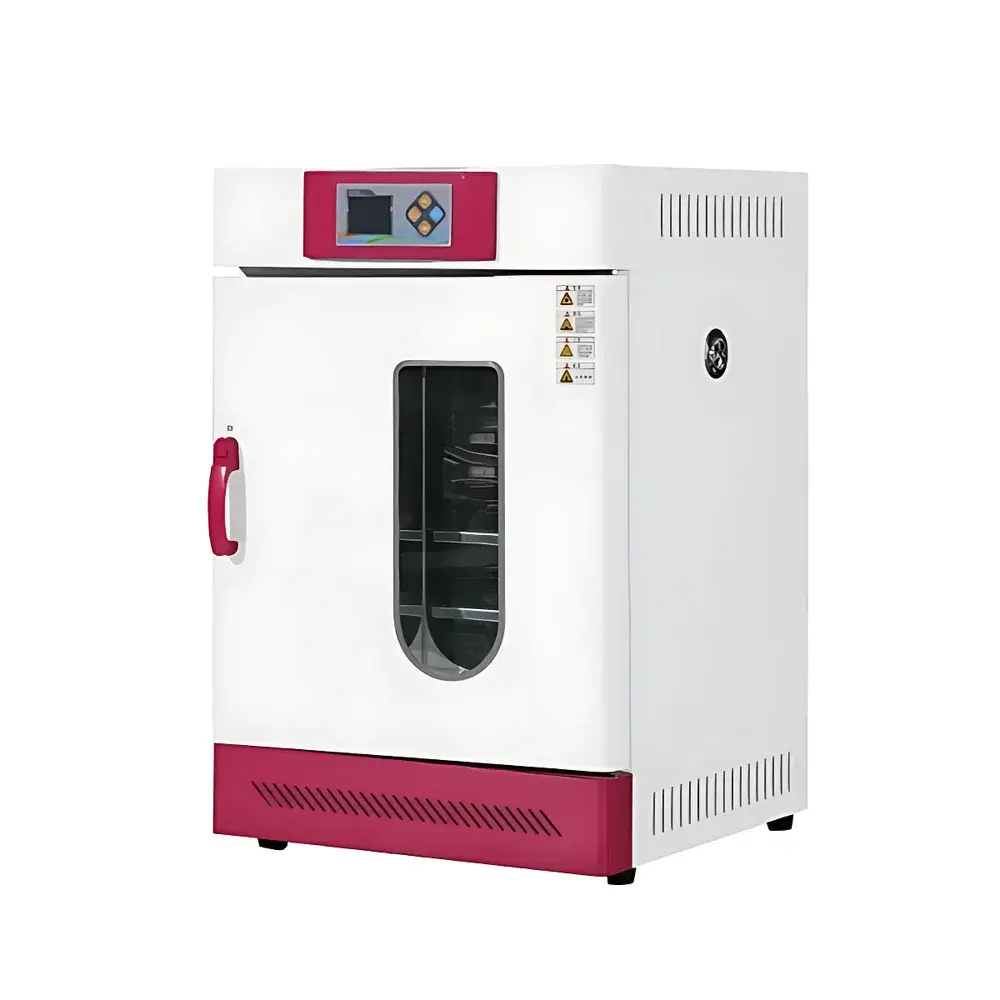
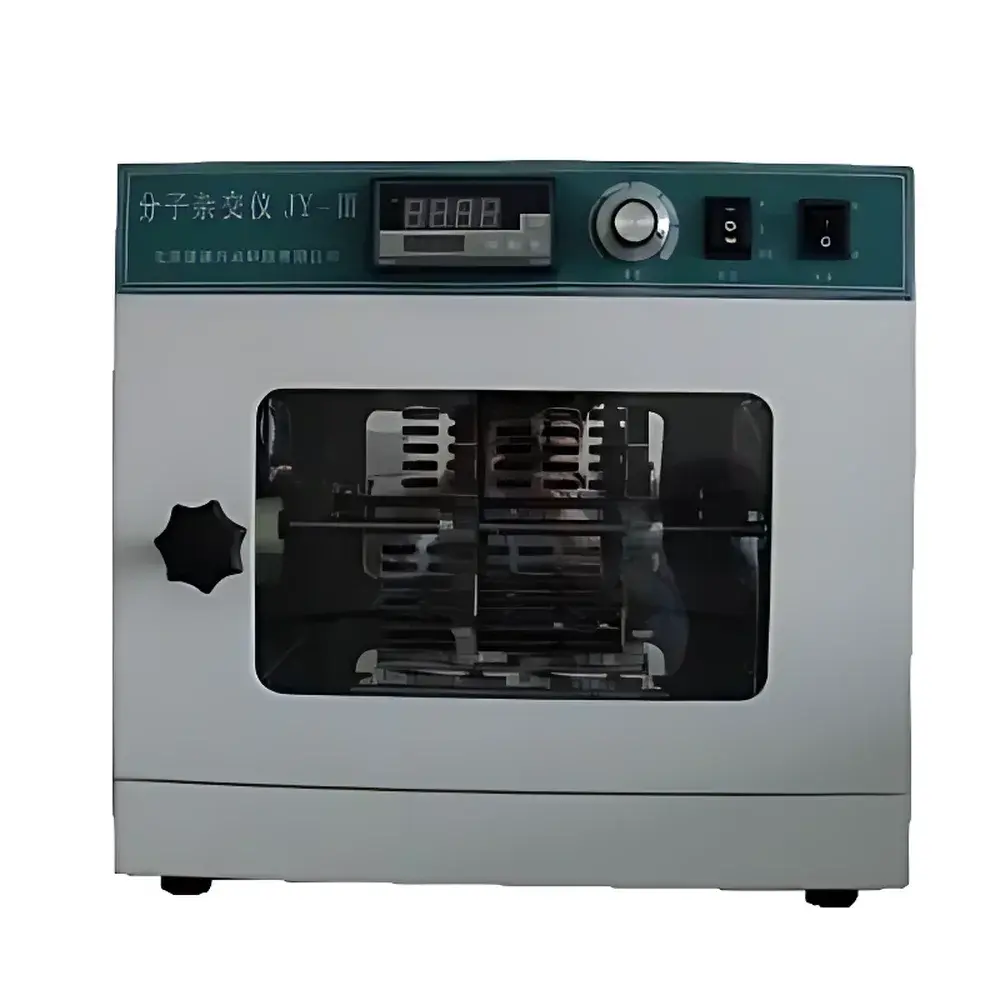
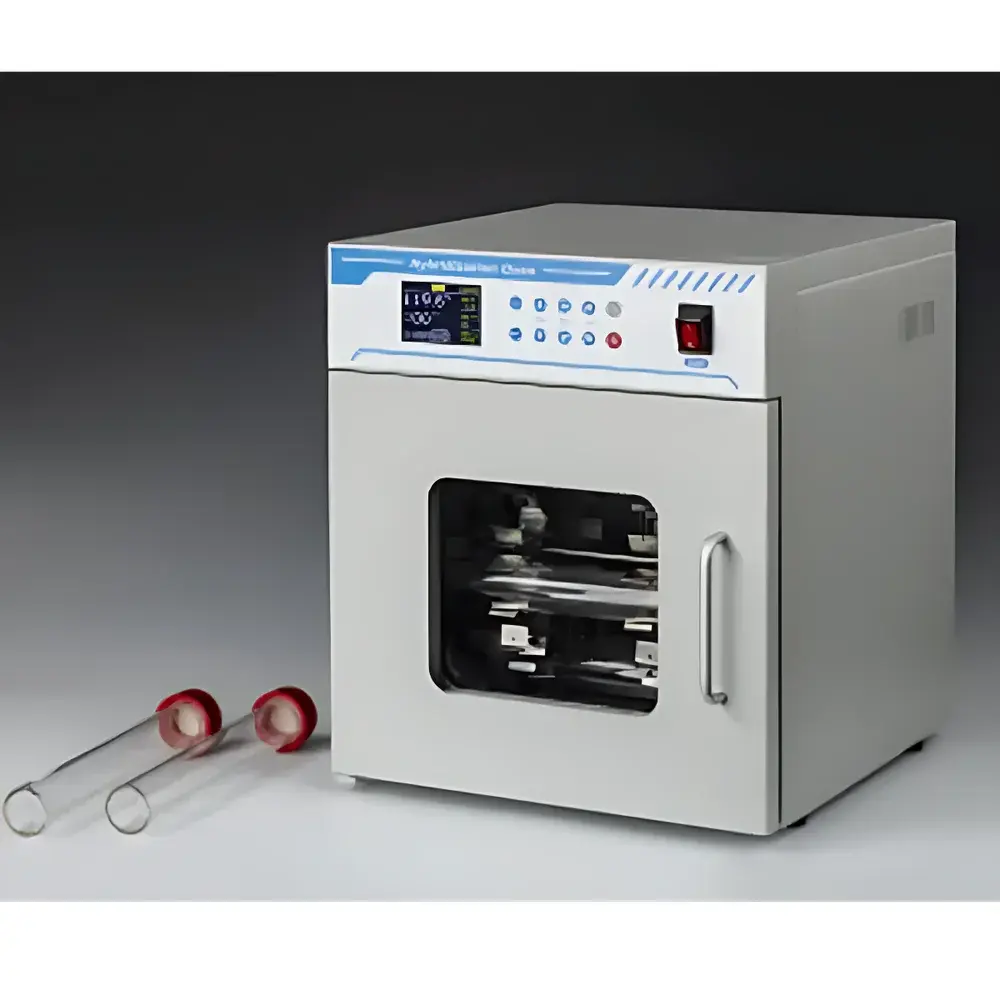
- Reinforced tempered glass front door with wide viewing angle—facilitating visual monitoring of tube positioning and hybridization progress without opening the chamber.
- Stainless steel interior chamber surface—resistant to corrosion from common hybridization buffers (e.g., SSC, SSPE, Denhardt’s solution) and compatible with routine decontamination protocols.
- Intuitive color LCD interface displaying setpoint, real-time chamber/tube temperature, elapsed time, remaining time, and active program step—enabling full operational transparency.
- Dual-layer overtemperature protection: independent hardware thermostat + software-monitored thermal cutoff—meeting IEC 61010-1 Class II safety requirements.
- Configurable post-run thermal hold function—maintaining target temperature for up to 99 hours post-cycle to support downstream washing or stripping steps.
- Auto-recovery mode resumes interrupted programs following unexpected power loss—preserving experimental integrity and reducing manual intervention.
- User-accessible temperature calibration utility—allowing periodic verification and adjustment against NIST-traceable reference thermometers.
- Modular tray design supporting interchangeable hybridization tube racks (10-tube standard configuration) and optional slide or microplate adapters for multiplexed assay formats.
Sample Compatibility & Compliance
The JY-1000 accommodates standard 10–15 mL hybridization tubes (e.g., Corning, Thermo Fisher) and is compatible with nitrocellulose, nylon, and PVDF membranes, glass slides, and microarray substrates. It supports all major hybridization chemistries—including radioactive (³²P), chemiluminescent (DIG, biotin), and fluorescent probe systems—without cross-contamination risk due to sealed chamber architecture. The instrument meets ISO/IEC 17025 general requirements for testing and calibration laboratories and is routinely deployed in CLIA-certified and CAP-accredited molecular pathology labs. While not FDA 510(k)-cleared as an IVD device, its operational parameters align with ASTM E2500-21 (good practice for verification of laboratory equipment) and USP guidelines for analytical instrument qualification (AIQ). Data integrity features—including timestamped parameter logs and non-editable cycle records—support compliance with FDA 21 CFR Part 11 when integrated into validated LIMS environments.
Software & Data Management
The embedded firmware provides standalone protocol management with storage for up to 99 multi-step programs, each configurable with independent temperature ramp rates, dwell times, rotation speeds, and hold durations. All runtime parameters—including actual vs. setpoint temperatures, motor status, and error codes—are logged internally with millisecond-resolution timestamps and exportable via USB flash drive in CSV format. No proprietary software installation is required; exported data are natively readable in Excel, GraphPad Prism, and LabArchives ELN platforms. Audit trail functionality records operator ID (via optional RFID badge integration), program modifications, calibration events, and alarm triggers—satisfying ALCOA+ data governance principles (Attributable, Legible, Contemporaneous, Original, Accurate, Complete, Consistent, Enduring, Available). Firmware updates are delivered via signed .bin files with SHA-256 checksum validation.
Applications
- Membrane-based nucleic acid hybridization (Southern, Northern, dot/slot blots)
- In situ hybridization (ISH) and fluorescence in situ hybridization (FISH) slide processing
- Probe labeling and hybridization optimization studies
- Antibody-antigen incubation in ELISA and Western blot workflows
- Controlled denaturation and renaturation kinetics experiments
- Pre-analytical sample conditioning for qPCR, digital PCR, and NGS library preparation
- Quality control of oligonucleotide probes and synthetic gene constructs
- Diagnostic assay development for viral (e.g., HBV, HIV, SARS-CoV-2) and bacterial (e.g., MTB, MRSA) nucleic acid detection
FAQ
What types of hybridization vessels are supported?
The standard configuration holds ten 10–15 mL round-bottom hybridization tubes. Optional accessories include slide racks (for up to 12 standard microscope slides) and microplate holders (96-well format).
Does the instrument support gradient hybridization protocols?
No—the JY-1000 maintains a single uniform temperature throughout the chamber. Gradient functionality requires dedicated thermal gradient hybridization systems.
Is remote monitoring or network connectivity available?
The unit operates as a standalone device with no Ethernet/Wi-Fi interface. Remote access is achievable only via local USB data export and subsequent integration into lab-wide networked systems.
Can the instrument be used for protein-based hybridization (e.g., far-Western)?
Yes—its precise temperature control and gentle agitation make it suitable for antibody incubation steps in protein blotting, provided buffer compatibility and non-denaturing conditions are maintained.
What regulatory documentation is provided with the instrument?
Each unit ships with a Factory Calibration Certificate (traceable to national standards), CE Declaration of Conformity (2014/30/EU EMC & 2014/35/EU LVD), RoHS compliance statement, and full technical manual including maintenance schedules and troubleshooting flowcharts.