
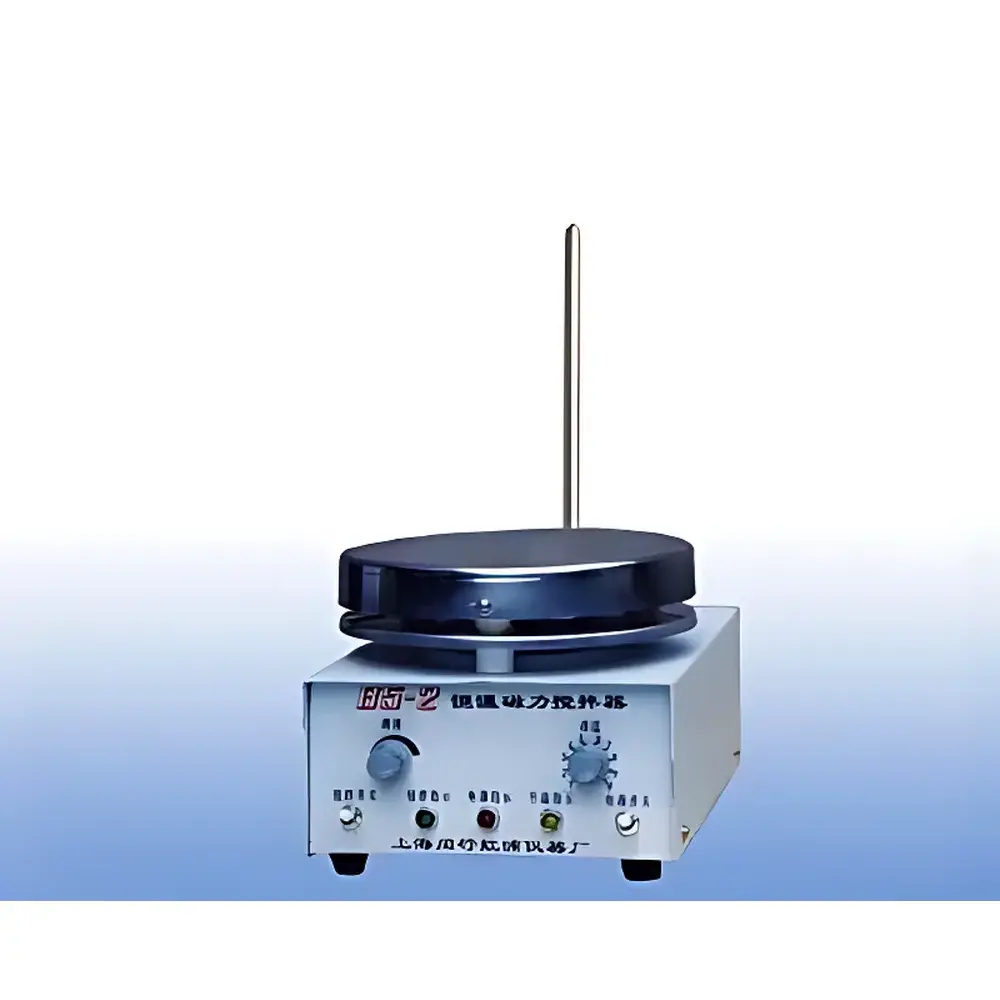
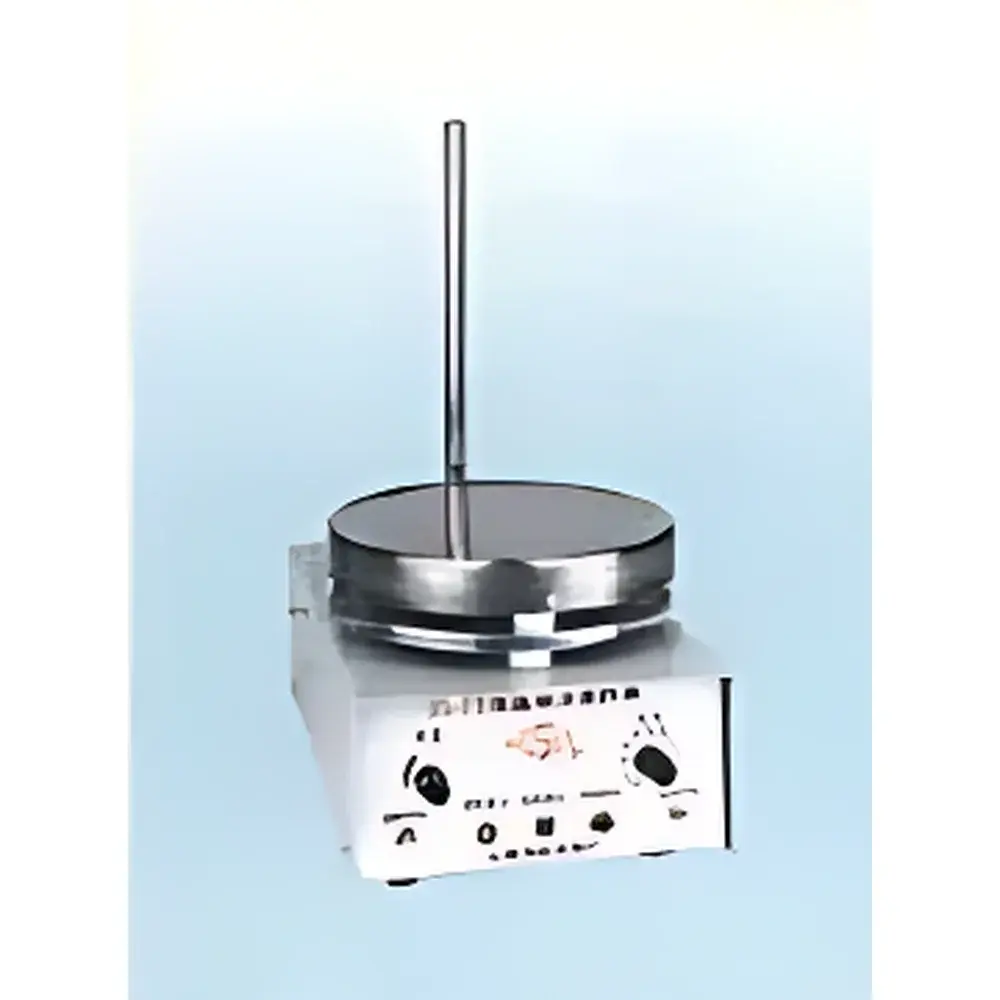
Shanghai LabTech 85-2 Constant-Temperature Magnetic Stirrer
| [Origin | Shanghai, China |
|---|---|
| Manufacturer Type | Authorized Distributor |
| Product Origin | Domestic (PRC) |
| Model | 85-2 |
| Power Supply | AC 220 V ±10% |
| Heating Power | Adjustable up to 400 W |
| Stirring Speed Range | 100–2000 rpm |
| Temperature Control Range | Ambient to 150 °C (for ≤1000 mL volume) |
| Temperature Accuracy | ±1 °C |
| Maximum Stirring Capacity | 10,000 mL |
| Motor Torque | 20 mN·m |
| Dimensions (W×D×H) | 250 × 150 × 130 mm |
| Heater Plate Diameter | 145 mm |
| Standard Stir Bars | D820 ×1, B740 ×1 |
| Temperature Sensor Interface | Dual-terminal for external contact mercury thermometer] |
Overview
The Shanghai LabTech 85-2 Constant-Temperature Magnetic Stirrer is an engineered solution for precise, reproducible mixing and thermal control in routine laboratory workflows. Designed around a brushless DC motor drive system, it delivers stable rotational torque across its full speed range without mechanical wear or electromagnetic interference—critical for long-duration experiments requiring consistent shear input. The integrated heating plate operates independently from stirring function, enabling simultaneous temperature regulation and agitation under controlled conditions. Its closed-loop temperature control architecture accepts externally connected contact-type mercury thermometers (user-supplied), allowing users to define setpoints within the ambient-to-150 °C range; automatic on/off cycling of the heater maintains thermal stability within ±1 °C for volumes up to 1000 mL. With a maximum stirring capacity of 10,000 mL and rated motor torque of 20 mN·m, the unit supports both low-viscosity aqueous solutions and moderately viscous organic media common in synthetic chemistry, pharmaceutical formulation, and biomedical sample preparation.
Key Features
- Brushless DC motor ensures maintenance-free operation, high-speed stability (100–2000 rpm), and extended service life compared to brushed alternatives
- Independent dual-control interface: separate knobs for speed adjustment and heating power regulation (0–400 W, continuously variable)
- Heating plate with 145 mm diameter provides uniform thermal distribution and accommodates standard labware including beakers, flasks, and crystallization dishes
- Integrated terminal block for external contact mercury thermometer enables basic PID-like on/off temperature control without software dependency
- Robust aluminum alloy housing and heat-resistant ceramic top plate enhance thermal safety and structural integrity during prolonged use
- Front-panel LED indicators provide real-time status feedback for power, stirring, and heating functions
- Compact footprint (250 × 150 × 130 mm) optimizes bench space in shared core facilities and teaching laboratories
Sample Compatibility & Compliance
The 85-2 stirrer accommodates a broad range of vessel geometries and materials—including borosilicate glass, stainless steel, and polypropylene containers—provided they are placed centrally over the heating zone and contain appropriately sized magnetic stir bars (supplied: D820 and B740 types). It meets general electrical safety requirements per IEC 61010-1 for laboratory equipment and complies with GB/T 12804–2011 (Chinese national standard for magnetic stirrers). While not certified for hazardous area use, its grounding terminal and insulated heater design support safe operation in non-explosive, low-humidity environments typical of academic and industrial QC labs. Note: Use with volatile solvents requires additional ventilation controls and adherence to local chemical handling protocols.
Software & Data Management
This analog-controlled instrument does not incorporate digital firmware, touchscreen interfaces, or data logging capabilities. Temperature and speed parameters are manually adjusted via calibrated rotary dials; no software installation, driver configuration, or network connectivity is required. This architecture eliminates cybersecurity concerns, reduces validation overhead, and aligns with GLP-compliant environments where traceability relies on operator-recorded setpoints and manual logbooks rather than electronic audit trails. For laboratories subject to FDA 21 CFR Part 11 requirements, procedural documentation—including calibration records for external thermometers and preventive maintenance logs—must be maintained separately as part of the facility’s quality management system.
Applications
- Solution homogenization prior to spectroscopic analysis (UV-Vis, FTIR) or chromatographic injection
- Controlled heating and mixing during reagent synthesis, buffer preparation, and titration standardization
- Cell culture media warming and dissolution of temperature-sensitive biomolecules
- Accelerated stability testing of pharmaceutical suspensions under defined thermal agitation profiles
- Teaching laboratory demonstrations of reaction kinetics, solubility equilibria, and heat transfer principles
- Preparative-scale mixing in pilot process development where programmable controllers are unnecessary
FAQ
Is the 85-2 compatible with non-magnetic vessels such as aluminum or ceramic containers?
No. Effective magnetic coupling requires ferromagnetic or paramagnetic base materials beneath the vessel. Glass, plastic, or quartz containers must rest directly on the heater plate; aluminum or thick-walled ceramic vessels may attenuate the magnetic field and impair stir bar rotation.
Can the unit maintain temperature setpoints without an external thermometer?
No. The 85-2 lacks an integrated temperature sensor. Automatic temperature regulation is only possible when a user-supplied contact mercury thermometer is wired to the rear terminals and immersed in the sample.
What is the recommended maintenance interval for the brushless motor?
The brushless DC motor requires no scheduled lubrication or commutator servicing. Routine cleaning of the heater surface and inspection of stir bar integrity constitute primary maintenance actions. Annual verification of voltage input tolerance and ground continuity is advised.
Does the device support external data acquisition or RS-232/USB output?
No. The 85-2 operates entirely through analog controls and has no digital communication ports or analog output signals for integration into SCADA or LIMS platforms.
Is the heating plate surface resistant to strong acids or alkalis?
The ceramic-coated aluminum plate offers moderate resistance to incidental splashes of dilute acids and bases but is not chemically inert. Prolonged exposure to concentrated HCl, NaOH, or HF will degrade the coating and compromise thermal performance.



