FRAS 4 Oxidative Stress Analyzer
| Origin | Italy |
|---|---|
| Manufacturer Type | Authorized Distributor |
| Origin Category | Imported Instrument |
| Model | FRAS 4 |
| Pricing | Available Upon Request |
Overview
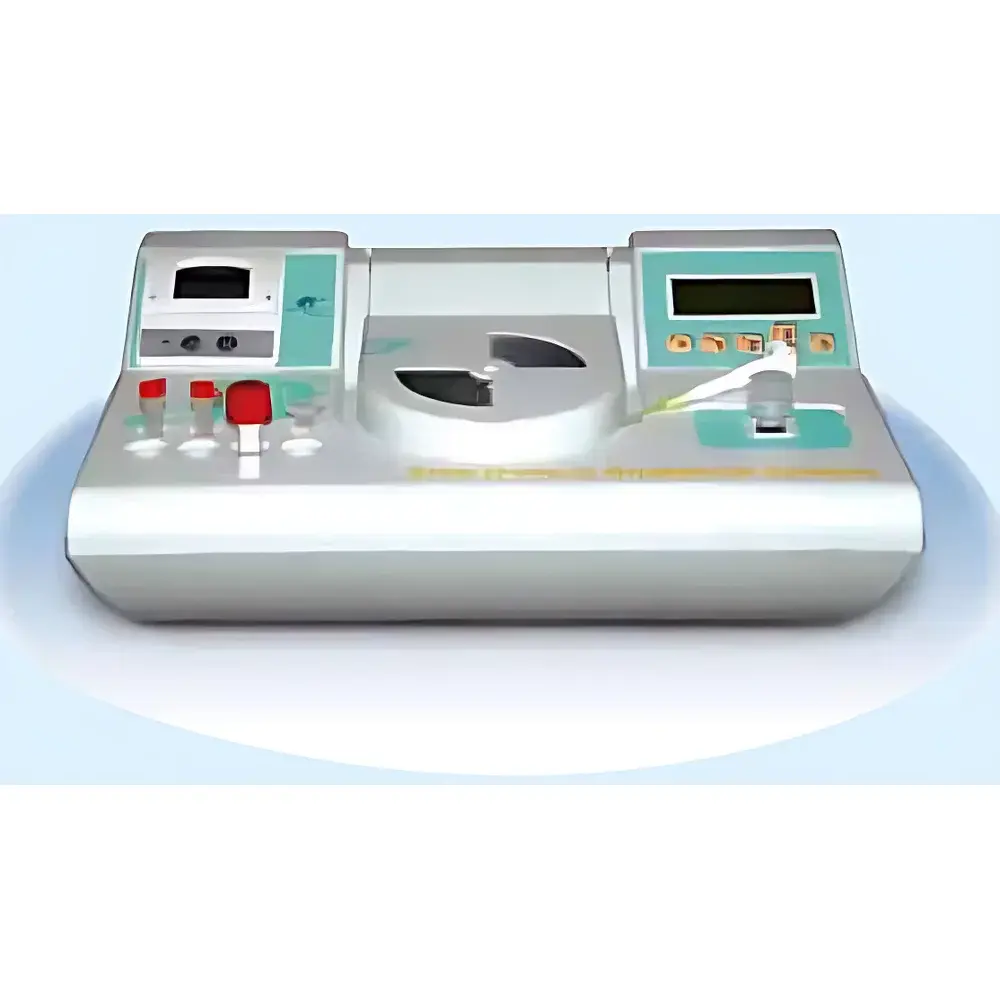
The FRAS 4 Oxidative Stress Analyzer is a CE-marked, clinical-grade benchtop instrument engineered for the quantitative assessment of systemic oxidative stress status in human biological samples. It operates on two complementary, internationally validated electrochemical principles: the d-ROMs (Derivatives of Reactive Oxygen Metabolites) test quantifies hydrophilic reactive oxygen species—primarily hydroperoxides (ROOH)—generated during oxidative damage to plasma proteins and lipids; the PAT (Biological Antioxidant Potential) test measures the total capacity of low-molecular-weight antioxidants (e.g., ascorbic acid, uric acid, bilirubin, thiols) to scavenge hypochlorous acid (HOCl) under standardized kinetic conditions. Together, these assays provide a dynamic, ratio-based index (d-ROMs/PAT) that reflects the redox equilibrium between pro-oxidant burden and antioxidant defense—a key biomarker in preventive medicine, metabolic disorder monitoring, and longitudinal health assessment.
Key Features
- Automated dual-assay platform: Simultaneous d-ROMs and PAT analysis from a single 20 µL plasma or serum sample
- Integrated photometric detection system with temperature-controlled cuvette holder (37 °C ± 0.2 °C)
- Pre-calibrated reagent kits compliant with ISO 15197:2013 for in vitro diagnostic use
- Onboard calibration verification using traceable reference standards (NIST-traceable controls included)
- Robust architecture designed for high-throughput clinical laboratories: <120-second assay cycle time per sample
- Internal quality control tracking with Levey-Jennings charting and Westgard multirule validation support
Sample Compatibility & Compliance
The FRAS 4 accepts lithium-heparin or EDTA plasma and serum specimens collected under standard phlebotomy protocols. Hemolyzed or lipemic samples are automatically flagged via optical density screening at 600 nm. The system complies with IVD Directive 98/79/EC and meets essential requirements outlined in EN ISO 13485:2016. All d-ROMs and PAT assay protocols have been published in peer-reviewed journals (e.g., Clinica Chimica Acta, Oxidative Medicine and Cellular Longevity) and referenced in consensus statements by the European Society for Clinical Investigation (ESCI) and the International Society for Redox Biology and Medicine (SfRBM). Data integrity adheres to ALCOA+ principles, supporting GLP-compliant studies and FDA 21 CFR Part 11–ready audit trails when paired with validated LIMS integration.
Software & Data Management
The FRAS 4 runs on embedded Linux-based firmware with a touchscreen GUI supporting multilingual operation (English, Italian, German, Spanish, French). Raw absorbance kinetics, endpoint values, and calculated d-ROMs (expressed in Carratelli Units, U.CARR), PAT (mmol/L HClO-scavenging equivalents), and the oxidative stress index (OSI = d-ROMs / PAT × 100) are stored locally with timestamp, operator ID, and QC status metadata. Export options include CSV, PDF reports compliant with HL7 v2.5.1, and direct DICOM-SR transmission for PACS integration. Software updates are delivered via secure HTTPS channel with SHA-256 signature verification. Audit logs record all user actions—including result modifications—with immutable timestamps and digital signatures.
Applications
- Early detection of subclinical oxidative imbalance in metabolic syndrome, type 2 diabetes, and non-alcoholic fatty liver disease (NAFLD)
- Monitoring redox adaptation during nutritional interventions (e.g., vitamin C/E supplementation, polyphenol-rich diets)
- Assessment of oxidative load in chronic inflammatory conditions (rheumatoid arthritis, COPD, CKD)
- Supporting reproductive health evaluation via seminal plasma oxidative stress profiling
- Pharmaceutical R&D: Quantifying pro-oxidant side effects of chemotherapeutics or evaluating antioxidant drug candidates
- Wellness and executive health screening programs requiring objective, quantitative biomarkers beyond conventional blood chemistry
FAQ
What sample volume is required for both d-ROMs and PAT tests?
A single 20 µL aliquot of fresh or frozen-thawed plasma or serum is sufficient for full dual-parameter analysis.
Is the FRAS 4 suitable for point-of-care use?
It is classified as a laboratory-based IVD device; however, its compact footprint (28 × 35 × 22 cm) and minimal hands-on time enable deployment in satellite labs or outpatient clinic laboratories meeting ISO 15189 pre-analytical requirements.
How are assay results traceable to international standards?
d-ROMs units are calibrated against the original Carratelli reference material (CRM-FRAS); PAT values correlate with certified antioxidant reference solutions traceable to NIST SRM 909b (human serum antioxidants).
Does the system support external QC program participation?
Yes—FRAS 4 exports raw data compatible with UK NEQAS, CAP, and RCPA external quality assurance schemes; participating labs receive automated EQA report generation.
Can the instrument be integrated into hospital LIS systems?
Native HL7 v2.5.1 ADT/ORU messaging is supported; custom API endpoints (RESTful JSON over TLS 1.2) are available for enterprise-level EHR/LIS interoperability upon request.