
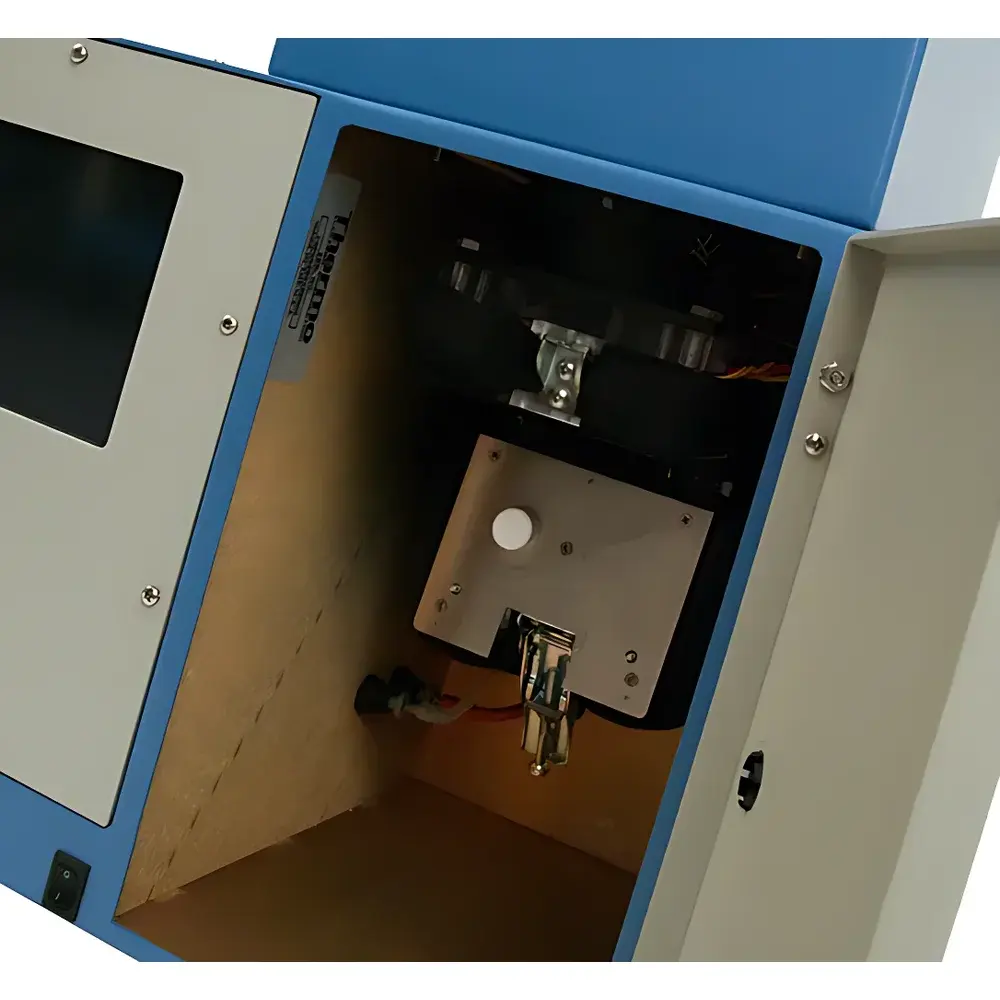
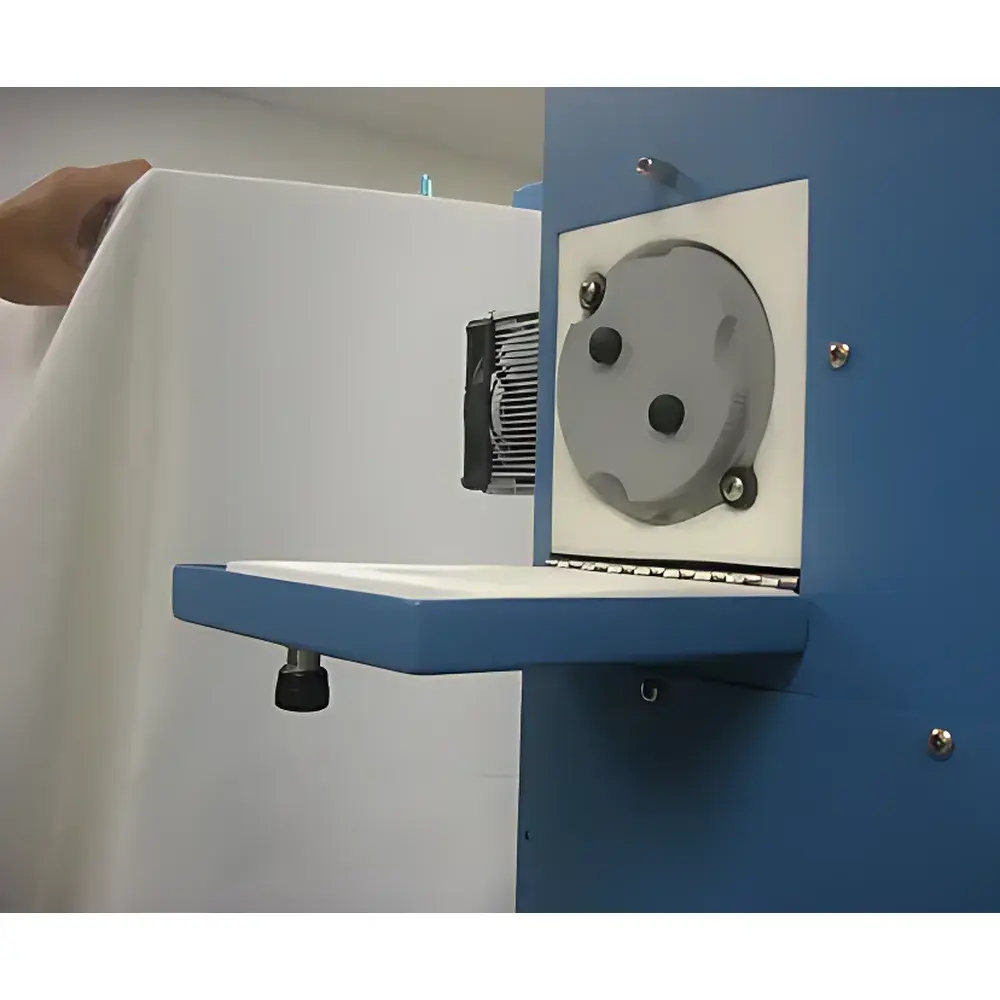
Thermo Scientific TEOM 1405-F Continuous Ambient Particulate Matter Monitor
| Brand | Thermo Fisher Scientific |
|---|---|
| Origin | USA |
| Manufacturer | Thermo Fisher Scientific |
| Model | TEOM 1405-F |
| Measurement Principle | Tapered Element Oscillating Microbalance (TEOM) with Filter Dynamic Measurement System (FDMS) |
| Measured Parameters | PM₁₀ and PM₂.₅ |
| Regulatory Designation | U.S. EPA Equivalent Method for PM₂.₅ (EQPM-0609-181) |
| Operating Temperature Range | -40 °C to +60 °C (sample gas) |
| Flow Rates | Main flow = 3.0 L/min |
| Mass Resolution | 0.1 µg/m³ |
| Accuracy | ±2.0 µg/m³ (1-hr average), ±1.0 µg/m³ (24-hr average) |
| Mass Measurement Uncertainty | ±0.75% (NIST-traceable) |
| Data Output Interval | Configurable from 10 seconds to 24 hours |
| Default | 6-minute update of 1-hr and 24-hr rolling averages |
| Data Storage Capacity | 500,000 records |
| Communication Interfaces | Ethernet, USB, RS-232, RS-485, FTP server |
| Analog I/O | 8 configurable analog outputs (0–1 V or 0–5 V DC), 4 analog inputs (0–5 V DC), 2 relay alarms |
| Power Requirements | 100–240 VAC, 440 VA, 47–63 Hz (main unit) |
| Dimensions (W×D×H) | 42.5 in × 47.5 in × 137.8 in (1080 mm × 1207.5 mm × 3500 mm) |
| Weight | 33 kg |
| Safety Certifications | CE (EN 61326, EN 61010-1), UL 61010-1:2004, CSA C22.2 No. 61010-1:2004, FCC Part 15 Subpart B Class B |
Overview
The Thermo Scientific TEOM 1405-F Continuous Ambient Particulate Matter Monitor is an EPA-equivalent method instrument (EQPM-0609-181) engineered for regulatory-grade, real-time measurement of ambient PM10 and PM2.5 mass concentrations. It employs the Tapered Element Oscillating Microbalance (TEOM) principle — a direct, NIST-traceable gravimetric technique — combined with the Filter Dynamic Measurement System (FDMS) to resolve the long-standing analytical challenge of semi-volatile aerosol loss during sampling. Unlike beta attenuation, optical scattering, or pressure-drop-based methods, the TEOM 1405-F measures particle mass directly via resonant frequency shift of a precision-tapered oscillating element, eliminating calibration drift and method-specific biases associated with indirect proxies.
Key Features
- Integrated FDMS architecture within a single weather-resistant enclosure, enabling simultaneous quantification of total, non-volatile, and volatile aerosol mass fractions (in µg/m³)
- Active temperature and humidity control: Nafion® dryer maintains sample gas dew point below sensor operating temperature; refrigerated FDMS filter holder (4 °C) suppresses volatilization of semi-volatile organic compounds (SVOCs) and ammonium nitrate
- Activol™ mass-flow-controlled sampling system with real-time compensation for ambient temperature and pressure, ensuring stable volumetric flow (3.0 L/min main stream; 13.67 L/min bypass)
- Embedded 1/4-VGA touchscreen interface with intuitive menu-driven operation; no external PC required for routine monitoring or configuration
- Comprehensive I/O suite: 8 programmable analog outputs, 4 analog inputs, 2 dry-contact alarm relays, plus native support for Ethernet, USB, RS-232, RS-485, and integrated FTP server for remote data retrieval
- Regulatory-compliant data handling: Built-in audit trail, time-stamped records, and ePort™ software for secure local/remote configuration, diagnostics, and firmware updates
Sample Compatibility & Compliance
The TEOM 1405-F is validated for continuous ambient air monitoring in diverse environments — urban, rural, industrial perimeters, and near-roadway locations — where semi-volatile species (e.g., nitrates, organics, certain sulfates) constitute a significant fraction of fine particulate mass. Its FDMS design meets U.S. EPA requirements for PM2.5 equivalence under 40 CFR Part 53, and its hardware/software architecture supports GLP/GMP-aligned operational practices. Data integrity is reinforced through NIST-traceable mass calibration, internal temperature/pressure sensors with automated compensation, and compliance with FDA 21 CFR Part 11 for electronic records when deployed with validated ePort™ configurations. The instrument satisfies electromagnetic compatibility (EMC) and safety standards including EN 61326, EN 61010-1, UL 61010-1, CSA C22.2 No. 61010-1, and FCC Part 15 Class B.
Software & Data Management
Data acquisition and reporting are managed by embedded firmware supporting configurable averaging intervals (from 10 seconds to 24 hours), with default output of 1-hour and 24-hour rolling mass averages updated every 6 minutes. The internal data logger stores up to 500,000 timestamped records, including raw TEOM frequency, FDMS reference and compensated mass signals, environmental parameters (T, P, RH), and diagnostic flags. ePort™ software provides secure, role-based access for remote system control, historical data export (CSV, XML), alarm management, and firmware version tracking. All data exports include metadata required for regulatory submissions, such as instrument ID, calibration history, and QA/QC event logs. Optional RPCOMM™ utilities enable integration into SCADA or central data acquisition systems via Modbus TCP or ASCII protocols.
Applications
- Regulatory compliance monitoring for national ambient air quality standards (NAAQS) and EU Directive 2008/50/EC
- Source apportionment studies requiring speciated volatile/non-volatile PM mass partitioning
- Long-term trend analysis of secondary aerosol formation in photochemically active regions
- Validation and co-location studies with reference-grade beta attenuation monitors (BAM) and laser scattering instruments
- Indoor/outdoor air quality assessment in sensitive environments (e.g., schools, hospitals, cleanrooms) where rapid response to PM excursions is critical
- Field deployment in mobile laboratories or fixed-site networks requiring high data availability (>95% uptime) and minimal maintenance intervention
FAQ
How does the TEOM 1405-F distinguish volatile from non-volatile particulate mass?
It uses dual-channel FDMS operation: one channel samples ambient air through a heated filter (removing volatiles), while the other passes air through a refrigerated filter (retaining volatiles). The difference between the two mass signals yields the volatile fraction.
Is the TEOM 1405-F suitable for unattended operation in extreme climates?
Yes — the instrument enclosure is rated for outdoor use with optional thermal management; the internal electronics and TEOM sensor are actively maintained at 8–25 °C regardless of ambient conditions ranging from –40 °C to +60 °C.
What filter media are used, and are they compatible with subsequent lab analysis?
The primary sampling filter is Pallflex® TX40 (13 mm diameter); the FDMS collection filter is a standard 47 mm membrane, mounted in a temperature-controlled holder — fully recoverable for offline chemical speciation (e.g., IC, GC-MS, XRF).
Does the system meet data integrity requirements for regulatory reporting?
Yes — all measurements are time-stamped, internally logged with diagnostic metadata, and exportable in formats compliant with EPA Air Quality System (AQS) and EEA reporting protocols. Audit trails and electronic signature support are available via ePort™ with appropriate configuration.







