
Thermo Scientific Dilution-Method Continuous Emission Monitoring System (CEMS)
| Brand | Thermo Fisher |
|---|---|
| Origin | USA |
| Manufacturer Type | Original Equipment Manufacturer (OEM) |
| Product Category | Imported |
| Model | Dilution |
| Instrument Type | Flue Gas Continuous Emission Monitoring System (CEMS) |
| Measurement Accuracy | ±0.5% of full scale (typical for certified dilution CEMS per EPA PS-2 and ISO 14956) |
| Repeatability | <0.3% RSD (under stable operating conditions) |
| Response Time (T90) | <120 s for SO₂ and NOₓ |
| Long-Term Stability | <1% drift over 7 days (with daily system calibration) |
Overview
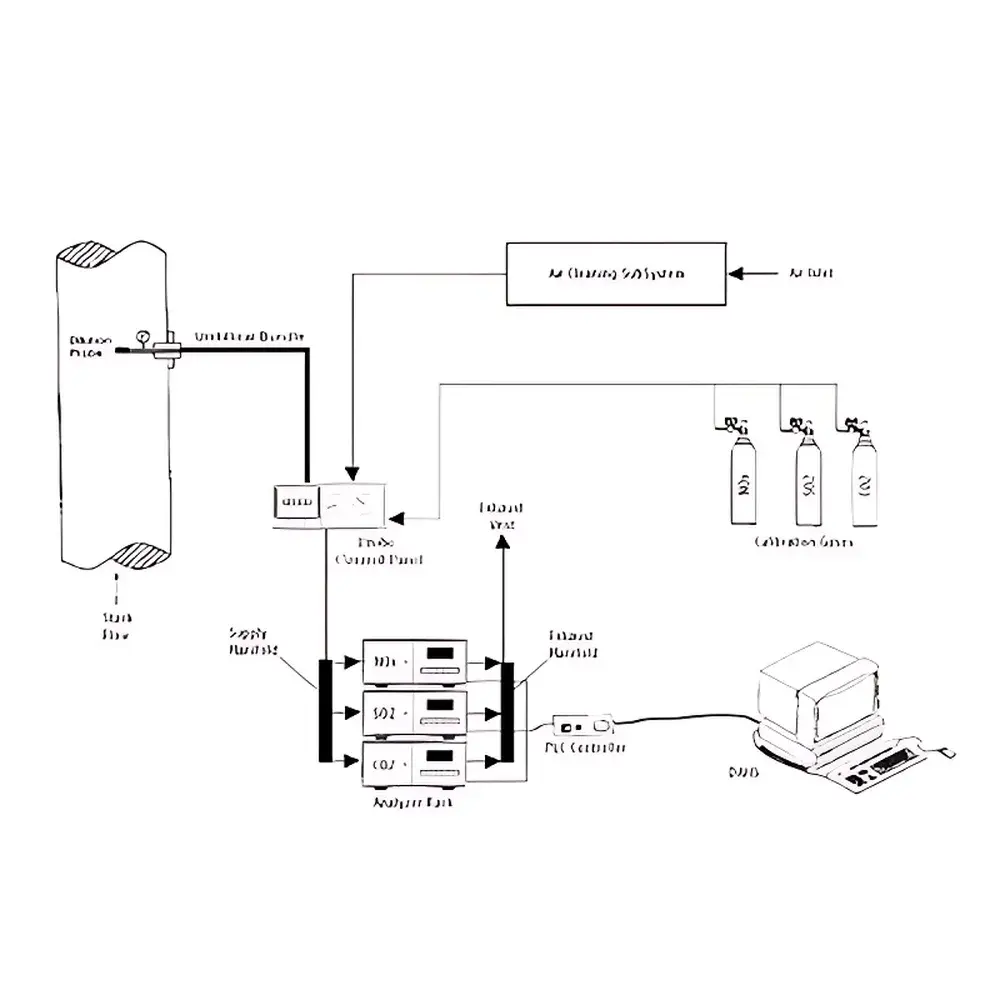
The Thermo Scientific Dilution-Method Continuous Emission Monitoring System (CEMS) is an EPA-recognized, wet-gas measurement platform engineered for regulatory-grade compliance monitoring of stack emissions under low-concentration, high-moisture, and high-dust conditions. Unlike extractive hot-wet or cold-dry sampling systems, this CEMS employs a fundamental physical principle—critical-flow orifice-based proportional dilution at the probe tip—to deliver representative, dew-point-lowered sample gas to analyzers without condensation, corrosion, or particulate interference. The system operates on a fixed dilution ratio (typically 25:1 to 250:1), achieved via a sonic orifice calibrated to maintain mass flow independence from upstream temperature and pressure fluctuations—ensuring traceable, metrologically robust sample conditioning per EPA Performance Specification 2 (PS-2), ISO 14956, and EN 15267-3.
Key Features
- Probe-integrated critical-flow dilution using Inconel 600, Hastelloy C276, or 304 stainless steel wetted materials—engineered for resistance to acidic condensates and abrasive fly ash in coal-fired, waste incineration, and cement kiln stacks.
- No heated sample line required: Diluted sample dew point is maintained below ambient minimum temperature, eliminating condensation, corrosion, and associated analyzer downtime.
- True system-level calibration: Certified zero and span gases are injected at the probe tip, validating the entire sampling train—including probe filter, dilution orifice, transport lines, and analyzer modules—per EPA Method 205 and EU BREF guidelines.
- Low sample flow rate (50 mL/min) reduces filter loading by >98% versus non-dilution probes (~3500 mL/min), extending maintenance intervals and lowering consumables cost.
- Four-line PTFE sampling manifold: Two positive-pressure lines for calibration gas and dry instrument air; one for diluted sample delivery; one for vacuum monitoring—eliminating leak-induced bias and removing need for sample pumps or precision flow controllers.
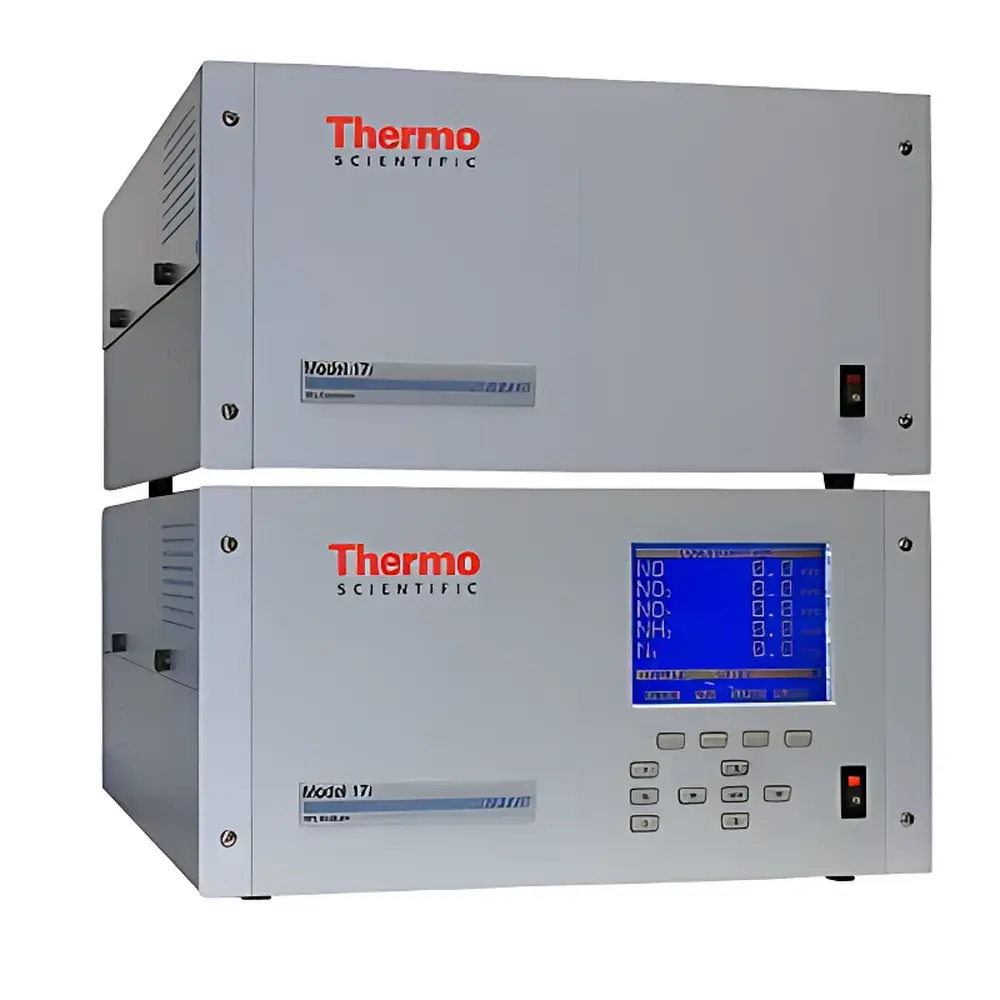
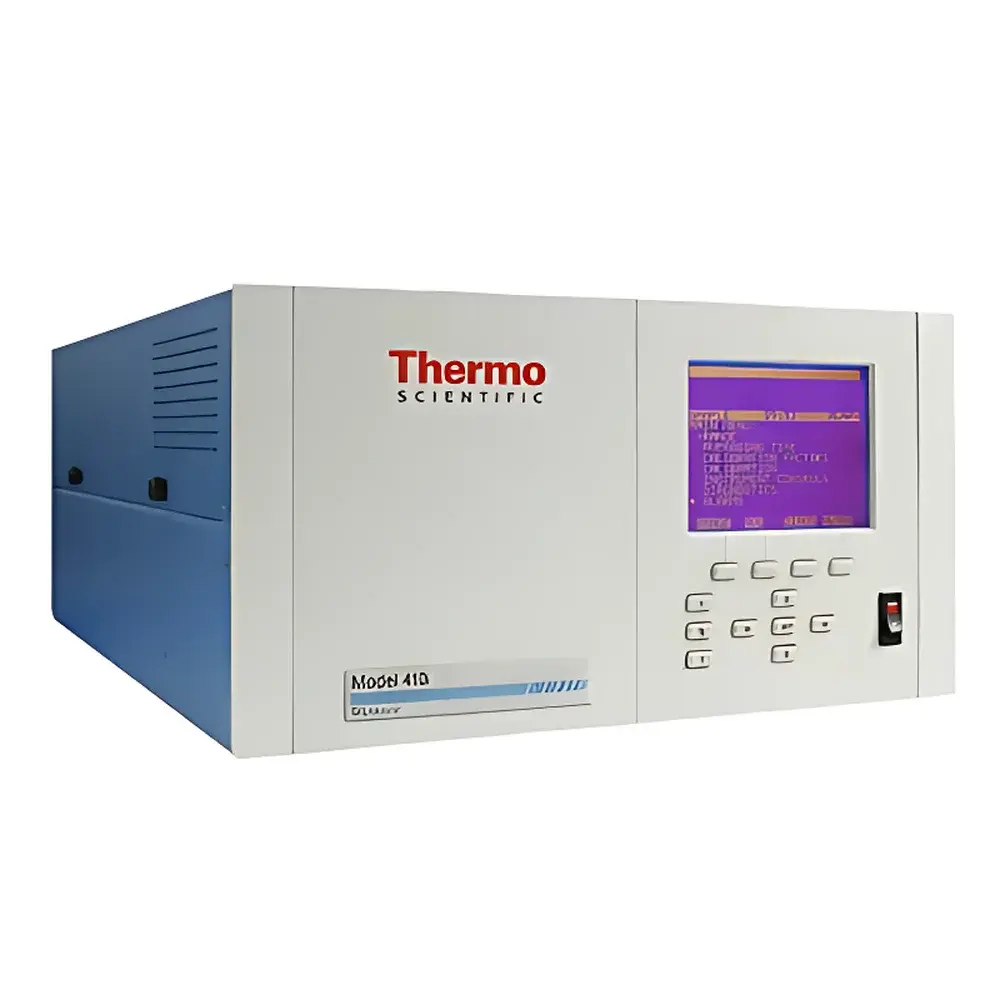
- Modular analyzer architecture: Independent UV fluorescence SO₂ analyzers (invented and patented by Thermo Scientific), chemiluminescence NOₓ analyzers, and beta-attenuation or laser scattering PM monitors—each optimized for sensitivity, linearity, and long-term stability.
Sample Compatibility & Compliance
This CEMS is validated for continuous measurement of SO₂ (detection limit ≤10 mg/m³), NOₓ (≤5 mg/m³), and particulate matter (≤5 mg/m³) in flue gases with moisture content up to 25% v/v and dust loadings exceeding 100 mg/m³. It complies with U.S. EPA PS-2, PS-11, and Method 205 for dilution CEMS; meets EU Directive 2010/75/EU (IED) and EN 14181 requirements for QAL1–QAL3 validation; and supports full auditability under FDA 21 CFR Part 11 and ISO/IEC 17025 via secure electronic records, user access control, and automated calibration logs. All hardware carries CE marking, UL 61010-1 certification, and RoHS compliance.
Software & Data Management
The integrated data acquisition and handling system (DAHS) provides fully localized Chinese-language interface while maintaining international data formatting standards (ISO 8601 timestamps, SI units, UTF-8 encoding). It performs real-time concentration-to-mass conversion using wet-basis volumetric flow, automatically compensating for stack temperature, pressure, and O₂ content per EPA Method 19 and EN 13284-1. All raw analog inputs, calibration events, maintenance logs, and QA/QC flags are stored with immutable timestamps and user attribution. Data export conforms to EPA CDX (Central Data Exchange) schema and supports FTP/SFTP transmission to national emission reporting platforms such as China’s National Pollutant Discharge Permit System (NPDES) and U.S. EPA’s EDRS.
Applications
The system is deployed across thermal power plants (coal, biomass, gas), municipal solid waste incinerators, glass and ceramic kilns, chemical process heaters, and metallurgical smelters—particularly where low-emission limits (e.g., China’s GB 13223–2011 ultra-low emission standards), high sulfur fuel, or intermittent combustion create challenging sampling environments. Its wet-measurement fidelity ensures no SO₂ or NOₓ loss during sample conditioning—a documented limitation of permeation dryers and Nafion dryers—making it the reference method for regulatory enforcement and third-party verification audits.
FAQ
Why does dilution CEMS eliminate the need for heated sample lines?
Because the fixed-ratio dilution with dry instrument air lowers the sample dew point below local ambient minima—preventing condensation throughout unheated PTFE tubing.
How is calibration traceability ensured across the entire sampling path?
By injecting certified zero and span gases directly at the probe tip, validating every component from orifice to detector per EPA PS-2 mandatory system calibration protocol.
What materials are used in the probe to resist corrosion in high-acid flue gas?
Probe wetted surfaces utilize Inconel 600, Hastelloy C276, or 304 stainless steel—selected per ASTM G48 and ISO 9223 corrosion classification for severe industrial atmospheres.
Does the system support remote diagnostics and firmware updates?
Yes—via secure TLS-encrypted Ethernet or cellular modem connection, enabling OEM-level troubleshooting, parameter adjustment, and DAHS software patching without onsite service visits.
Can the system comply with China’s HJ 75–2017 and HJ 76–2017 technical specifications?
Yes—certified configuration includes QAL1 validation reports, 7-day stability testing per HJ 76–2017 Annex D, and automatic data upload compatibility with provincial environmental monitoring centers’ APIs.







