
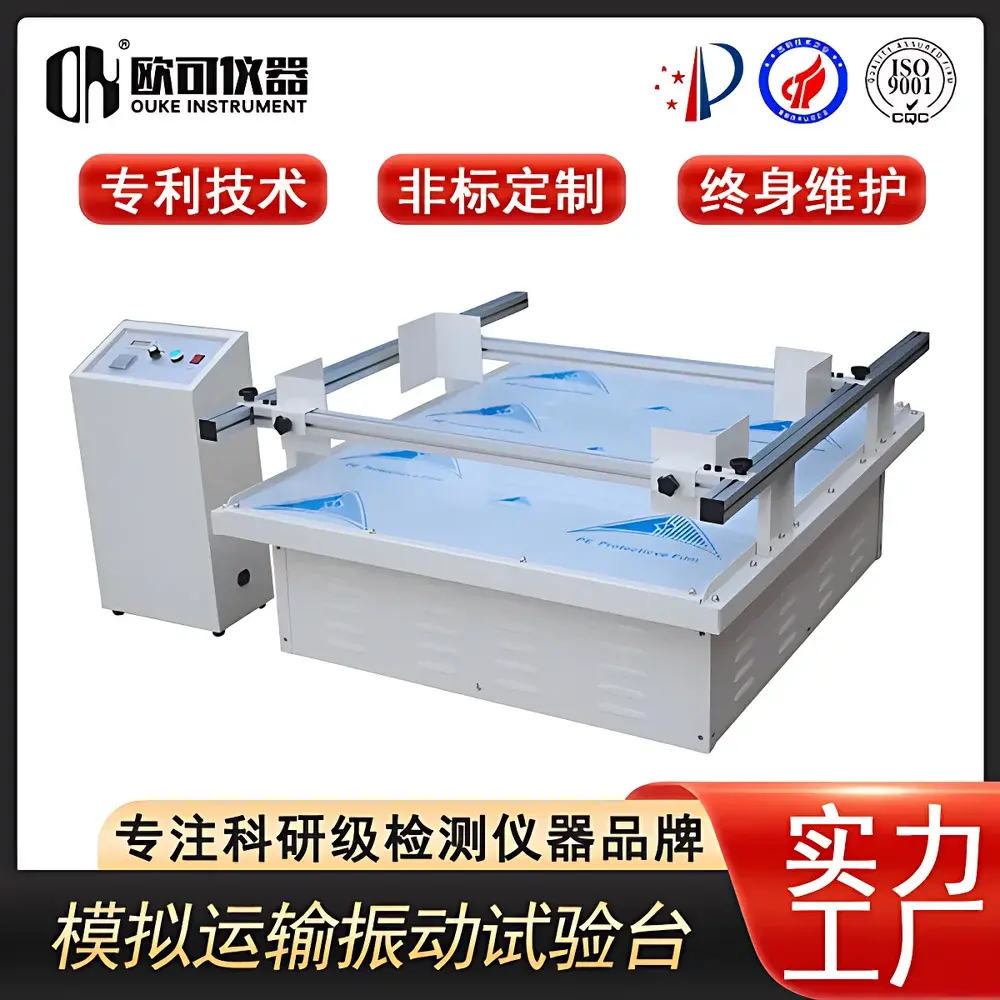
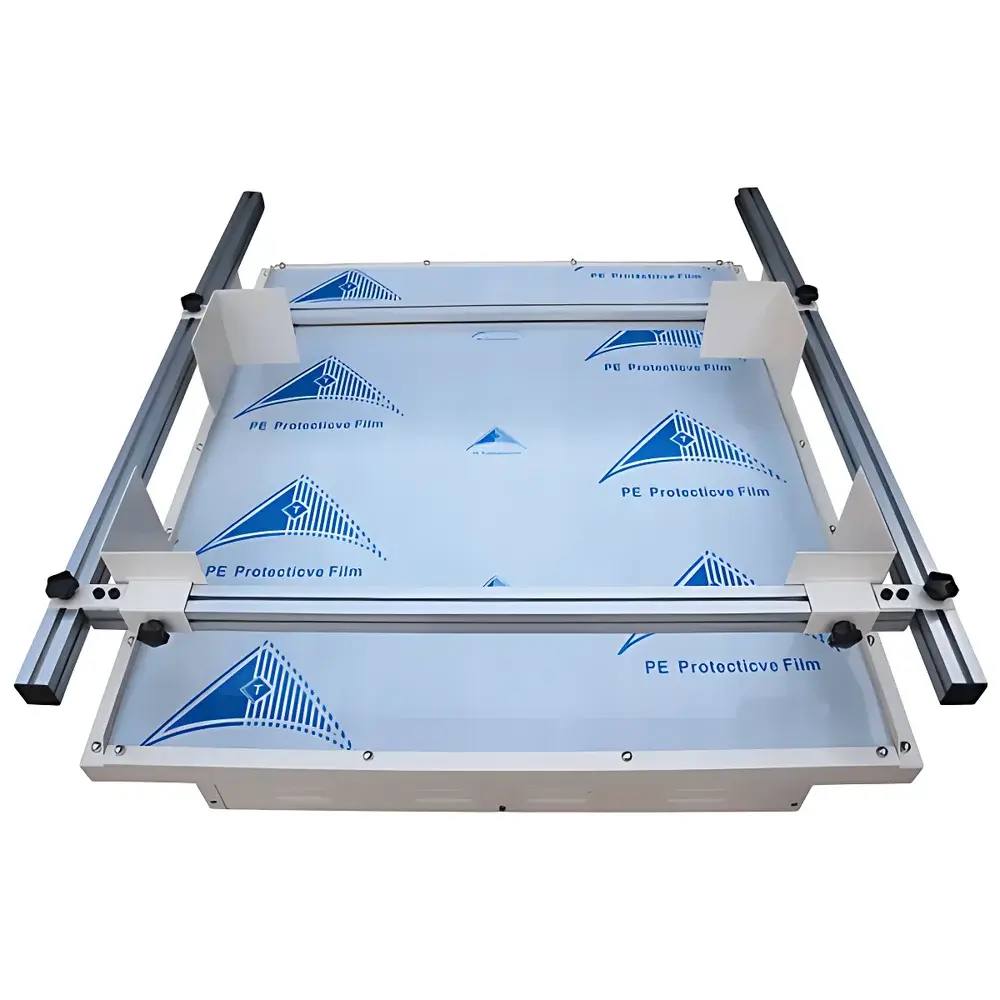
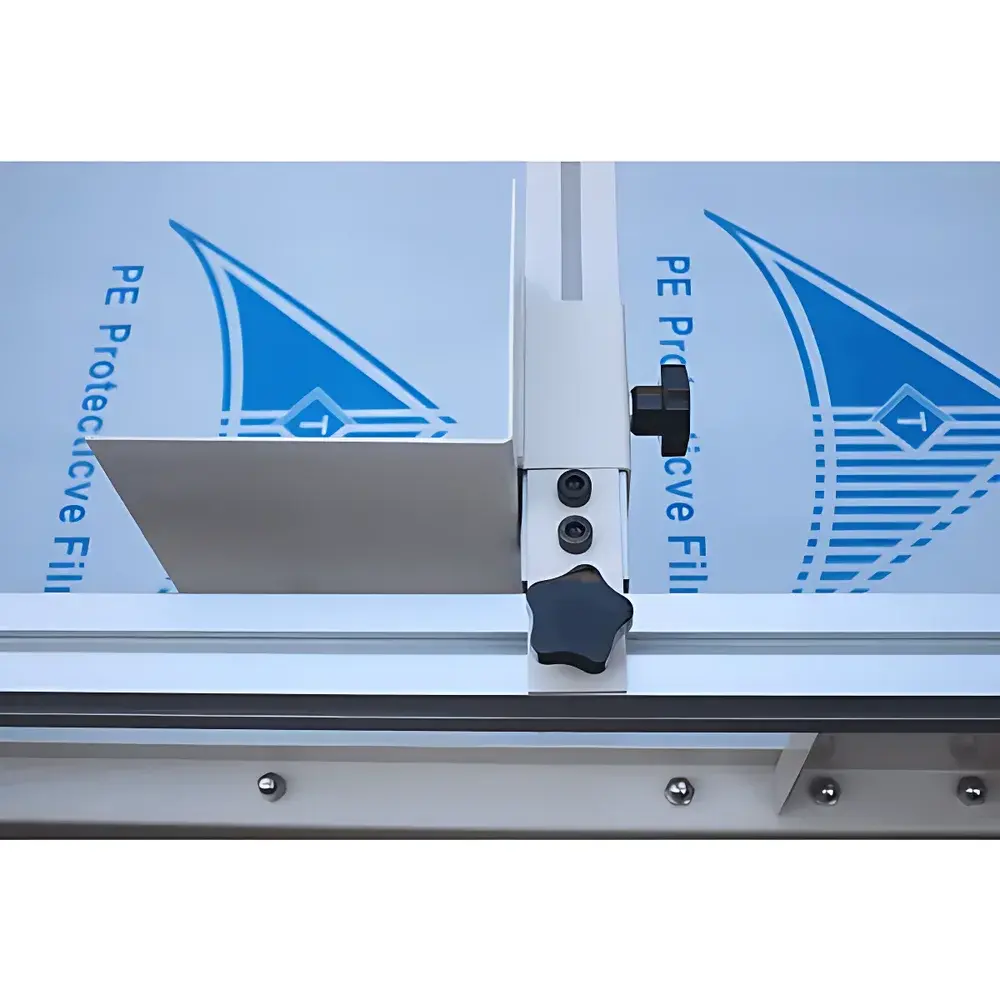
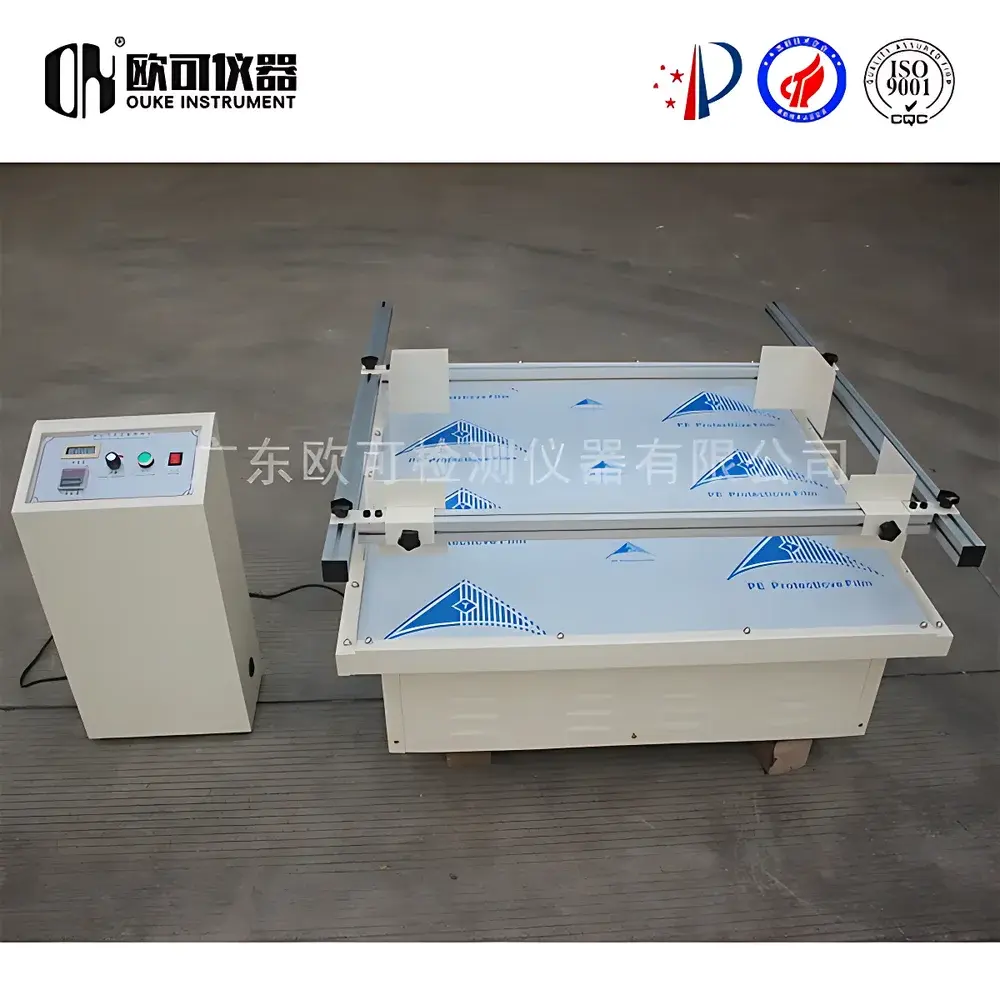
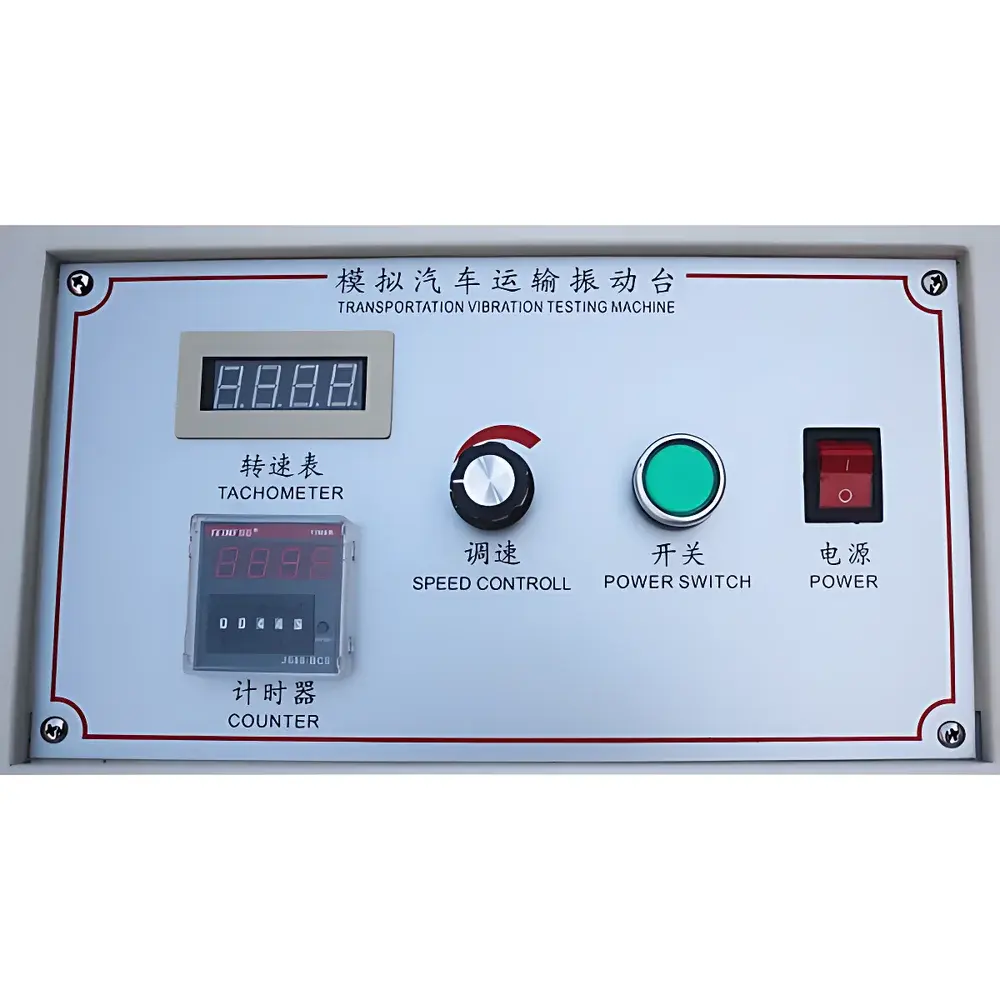
OK-500 Electromagnetic Transport Simulation Vibration Shaker
| Brand | OK Instruments |
|---|---|
| Origin | Guangdong, China |
| Manufacturer Type | Direct Manufacturer |
| Product Category | Domestic |
| Model | OK-500 |
| Instrument Type | Automotive & Logistics Transport Simulation Test System |
| Rated Thrust | 1.98 kN |
| Rated Frequency Range | 5–5000 Hz |
| Maximum Test Load | 70 kg |
| Table Surface Dimensions | 1500 × 1300 mm |
| Peak Acceleration | 10 g |
Overview
The OK-500 Electromagnetic Transport Simulation Vibration Shaker is a high-fidelity electrodynamic vibration test system engineered for laboratory-based replication of real-world transportation-induced mechanical stress. It operates on the principle of Lorentz force actuation: an aluminum moving coil suspended within a high-intensity magnetic field generates controlled, broadband vibratory motion when driven by amplified current signals. Unlike mechanical (cam-driven) shakers limited to fixed-frequency sinusoidal excitation, the OK-500 delivers programmable, closed-loop-controlled vibration profiles—including swept sine, random PSD (Power Spectral Density), and classical shock waveforms (e.g., half-sine, trapezoidal)—to emulate the dynamic environments encountered during road, rail, air, and maritime logistics. Its design targets pre-market validation of packaging integrity, structural robustness, and functional reliability under transport-relevant mechanical loading, serving as a critical tool in reliability engineering workflows aligned with international transport testing standards.
Key Features
- Electrodynamic actuation architecture enabling precise, wideband vibration generation from 5 Hz to 5000 Hz
- Rated thrust output of 1.98 kN—sufficient to accelerate up to 70 kg payloads at peak acceleration of 10 g
- Large horizontal test table (1500 mm × 1300 mm) accommodating full-size shipping containers, palletized loads, or multi-unit fixtures
- Integrated closed-loop control system with real-time accelerometer feedback for amplitude and spectral fidelity compliance
- Support for standardized test profiles per ISTA 2A, ISTA 3E, ASTM D999, ASTM D4728, GB/T 4857.7, and GB/T 4857.23
- Thermally managed power amplifier and voice coil assembly ensuring sustained operation under high-duty-cycle random vibration tests
- Modular controller interface compatible with third-party signal generation software and custom PSD import (e.g., .sdf, .rsd formats)
Sample Compatibility & Compliance
The OK-500 accommodates rigid and semi-rigid test specimens ranging from consumer electronics enclosures and medical device housings to household appliances and automotive ECUs. Fixture design must ensure secure mounting without resonance coupling; load center-of-gravity alignment is recommended within ±15% of table geometric center. The system complies with electromagnetic compatibility (EMC) requirements per IEC 61000-6-3 and safety directives per IEC 61010-1. All vibration profiles are traceable to NIST-traceable calibration protocols, supporting GLP-compliant documentation for regulated industries. While not FDA-certified as standalone equipment, its test outputs meet data integrity requirements for 21 CFR Part 11–aligned validation protocols when deployed with compliant software and audit trail configuration.
Software & Data Management
Control and analysis are executed via OK’s proprietary VibeControl™ platform (Windows-based), which provides ISO 5344–compliant test sequencing, real-time FFT monitoring, and automatic pass/fail evaluation against user-defined tolerance bands. Raw acceleration time histories and PSD spectra are exported in IEEE Std 1159-compliant CSV and UFF 58 formats. The system supports automated report generation including test parameter logs, spectral deviation plots, and statistical summary tables—exportable as PDF or XML for integration into enterprise quality management systems (QMS). Optional API access enables synchronization with LIMS or PLM platforms for end-to-end test traceability.
Applications
- Package performance validation: assessing cushioning efficacy of corrugated boxes, molded pulp, foam inserts, and wooden skids under simulated transit vibration
- Structural resonance mapping: identifying modal frequencies and damping characteristics of assemblies to mitigate bolt loosening, solder joint fatigue, or display delamination
- Electronic reliability screening: detecting intermittent faults in PCB interconnects, connector mating stability, and MEMS sensor drift induced by broadband excitation
- Automotive Tier-1 component qualification: verifying durability of lighting modules, ADAS sensors, and infotainment units prior to OEM submission
- Medical device transport certification: fulfilling IEC 60601-1 clause 9.4.2 mechanical stress requirements for portable diagnostic instruments
- Industrial valve and pump housing validation: evaluating seal integrity and mounting bracket fatigue life under low-frequency road-induced oscillations
FAQ
What standards does the OK-500 support out-of-the-box?
Preloaded test templates include ISTA 2A, ISTA 3E, ASTM D999 (rotary vibration), ASTM D4728 (random vibration), and GB/T 4857.7 (sine sweep). Custom PSD profiles can be imported for proprietary or OEM-specific specifications.
Can the OK-500 perform shock testing?
Yes—it executes classical shock waveforms (half-sine, sawtooth, trapezoidal) with programmable pulse duration and peak acceleration, compliant with MIL-STD-810H Method 516.7 and ISO 13373-3.
Is thermal derating required during extended random vibration tests?
The integrated liquid-cooled amplifier and forced-air–assisted shaker armature maintain rated performance for continuous operation up to 8 hours at 70% of maximum thrust, per manufacturer’s thermal management specifications.
How is calibration maintained over time?
Annual recalibration is recommended using NIST-traceable triaxial accelerometers and laser vibrometry; OK Instruments provides certified calibration certificates and maintains a documented calibration history log within VibeControl™.
Does the system support multi-axis vibration simulation?
The OK-500 is a single-axis (vertical Z-axis) shaker. For multi-axis testing, OK offers synchronized multi-shaker configurations (e.g., OK-500 + OK-300 lateral module) with phase-coherent controller integration.



