
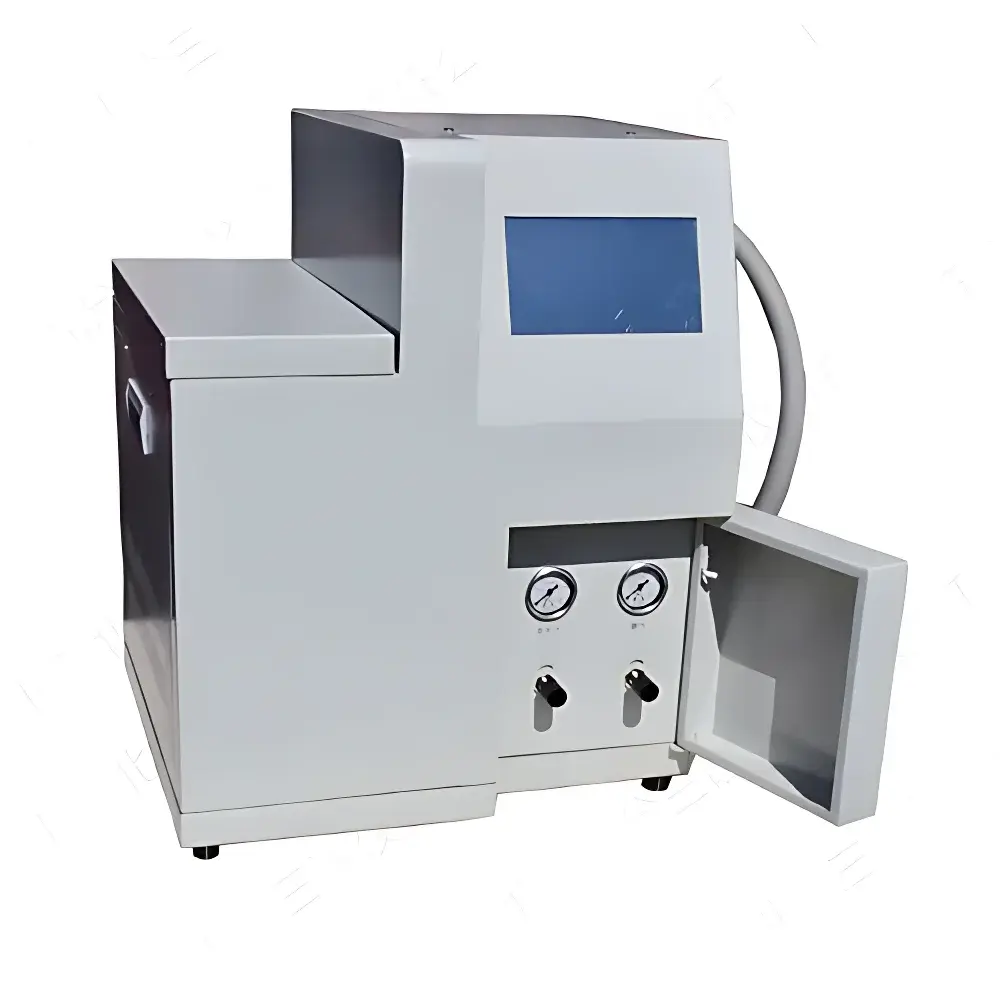
Beifen Sanpu A1HS-20A Plus 20-Position Fully Automated Static Headspace Sampler
| Brand | Beifen Sanpu |
|---|---|
| Origin | Beijing, China |
| Manufacturer Type | OEM Manufacturer |
| Instrument Type | Static Headspace Sampler |
| Automation Level | Fully Automatic |
| Sample Tray Capacity | 20 positions |
| Vial Size Compatibility | 10 mL or 20 mL (customizable) |
| Vial Heating Range | Ambient to 200 °C (1 °C increments) |
| Valve & Transfer Line Temperature Control Range | 40–220 °C |
| Temperature Accuracy | ±0.5 °C |
| Temperature Stability | < ±0.5 °C |
| Quantitative Loop Volume | 1 mL (optional: 0.5 / 2 / 5 mL) |
| Pressurization Range | 0–0.25 MPa (continuously adjustable) |
| Pressurization Time | 0–999 s |
| Sampling Time | 0–30 min |
| Injection Time | 0–999 s |
| Bake-out/Clean Time | 0–30 min |
| Time Resolution | 1 ms |
| RSD | < 1.0% (measured with 100 ppm ethanol in water) |
| Purge Flow Rate | 0–100 mL/min (adjustable) |
| Communication Interface | USB |
| Compliance | GA/T 842–2009, GB 5749–2006, GB 8537–2008, HJ 642–2013, HJ 643–2013, HJ 714–2014, HJ 736–2015, HJ 810–2016, ChP 2015 Vol. III & IV, YC/T 207–2014, SN/T 3616–2013, SN/T 4068–2014 |
Overview
The Beifen Sanpu A1HS-20A Plus is a fully automated static headspace sampler engineered for precision, reproducibility, and seamless integration into regulated laboratory workflows. It operates on the principle of equilibrium headspace analysis: volatile and semi-volatile analytes partition from liquid or solid matrices into the gas phase above the sample (the “headspace”) under controlled temperature and pressure conditions. Once thermodynamic equilibrium is achieved, a precise volume of headspace gas is withdrawn via pressurized transfer and introduced directly into a gas chromatograph (GC) through a high-inertness six-port valve and heated transfer line. This method eliminates matrix interference, minimizes carryover, and ensures quantitative recovery of target volatiles—critical for environmental monitoring, pharmaceutical residual solvent testing, food packaging migration studies, forensic toxicology, and quality control in chemical manufacturing.
Key Features
- Fully motor-driven actuation system—no external carrier gas required for sample handling, enhancing operational safety and simplifying lab infrastructure.
- Integrated thermal management: independently controlled heating zones for sample vials (ambient to 200 °C), injection valve (40–220 °C), and transfer lines (40–220 °C), all with ±0.5 °C accuracy and < ±0.5 °C stability over time.
- Optimized fluidic path: deactived fused-silica or SilcoNert®-treated stainless-steel tubing throughout the sampling loop, valve, and transfer line—eliminating adsorption, catalytic degradation, and cross-contamination.
- Zero-dead-volume six-port valve configuration with internal heating—ensures complete analyte transfer and preserves integrity of thermally labile compounds.
- Positive-pressure sampling architecture: enables robust quantitation of both aqueous and heterogeneous solid samples without baseline drift or column overloading.
- Intuitive 7-inch TFT LCD interface with animated workflow guidance; supports standalone operation or full remote control via USB-connected PC running vendor-neutral GC software.
- Comprehensive self-diagnostic suite: automatic tray positioning verification, vial presence detection, mechanical motion error logging, and real-time fault alerts—including collision avoidance logic when empty vial positions are encountered.
- Flexible protocol programming: supports single-vial multi-injection, single-vial single-injection, and multi-vial sequential injection modes—all with sub-millisecond timing resolution (1 ms).
Sample Compatibility & Compliance
The A1HS-20A Plus accommodates standard 10 mL and 20 mL crimp-top headspace vials (ISO 11923-compliant), with optional support for 50 mL and 100 mL formats upon request. Its design meets essential requirements for GLP/GMP-aligned laboratories, including audit-trail-capable parameter logging (date/time stamping, user ID, method version), electronic signature readiness, and full traceability of run sequences. The instrument complies with multiple international and national standards governing volatile organic compound (VOC) analysis—including HJ 642–2013 and HJ 643–2013 (China EPA methods for soil/sediment and solid waste), HJ 810–2016 (water VOCs), GA/T 842–2009 (forensic blood alcohol), GB 5749–2006 (drinking water), ChP 2015 Vol. III & IV (pharmaceutical residual solvents), and YC/T 207–2014 (tobacco paper solvent residues). All thermal and pressure parameters are digitally recorded and exportable for regulatory submissions.
Software & Data Management
Control and method development are performed either locally via the embedded GUI or remotely using Windows-based configuration software delivered with the system. All method parameters—including vial heat ramp profiles, equilibration dwell times, pressurization setpoints, loop fill durations, injection volumes, and post-run bake-out cycles—are stored as encrypted binary files with version metadata. The USB communication interface supports bidirectional synchronization with third-party GC data systems (e.g., Agilent OpenLab, Thermo Chromeleon, Shimadzu GCsolution), enabling hardware-triggered acquisition start, method recall, and status feedback. Raw thermal logs, event timestamps, and error codes are retained internally for ≥30 days and exportable in CSV format for LIMS integration or 21 CFR Part 11 compliance documentation.
Applications
- Pharmaceutical QC: Residual solvents (ICH Q3C Class 1–3) in APIs and excipients per USP <467> and ChP general chapter 0861.
- Environmental testing: VOCs and halogenated hydrocarbons in water, soil, and sediment per EPA Method 502.2 analogs and Chinese HJ-series standards.
- Food & packaging safety: Migration of solvents (e.g., benzene, toluene, ethyl acetate) from printed films and laminates into simulants (e.g., 10% ethanol, olive oil).
- Forensic toxicology: Quantitative ethanol, methanol, and acetone in whole blood and urine matrices.
- Chemical manufacturing: Reaction mixture headspace profiling for process optimization and impurity tracking.
- Consumer product safety: Formaldehyde and other aldehydes in adhesives, resins, and composite wood products.
FAQ
Is the A1HS-20A Plus compatible with non-Beifen Sanpu gas chromatographs?
Yes—it features universal GC triggering (TTL-level dry contact or voltage pulse) and is validated for interoperability with Agilent, Thermo Fisher, Shimadzu, PerkinElmer, and other major GC platforms.
Can the instrument be configured for 300 °C vial heating?
Yes—high-temperature vial ovens (up to 300 °C) and corresponding valve/transfer line modules are available as factory-installed options upon order specification.
What validation documentation is provided?
Each unit ships with a Factory Acceptance Test (FAT) report, IQ/OQ templates aligned with ISO/IEC 17025 and GMP Annex 15, and a Certificate of Conformance referencing applicable Chinese and international standards.
Does it support 21 CFR Part 11 compliance?
The system supports electronic signatures, audit trails, and role-based access control when operated within a validated IT environment using approved third-party LIMS or chromatography data systems.
Are consumables and spare parts available globally?
Yes—standardized vial caps, septa, O-rings, and deactived transfer tubing are stocked by regional distributors; critical components (valve assemblies, heater cartridges) are available with ≤5 business day lead time worldwide.
Related Products





