
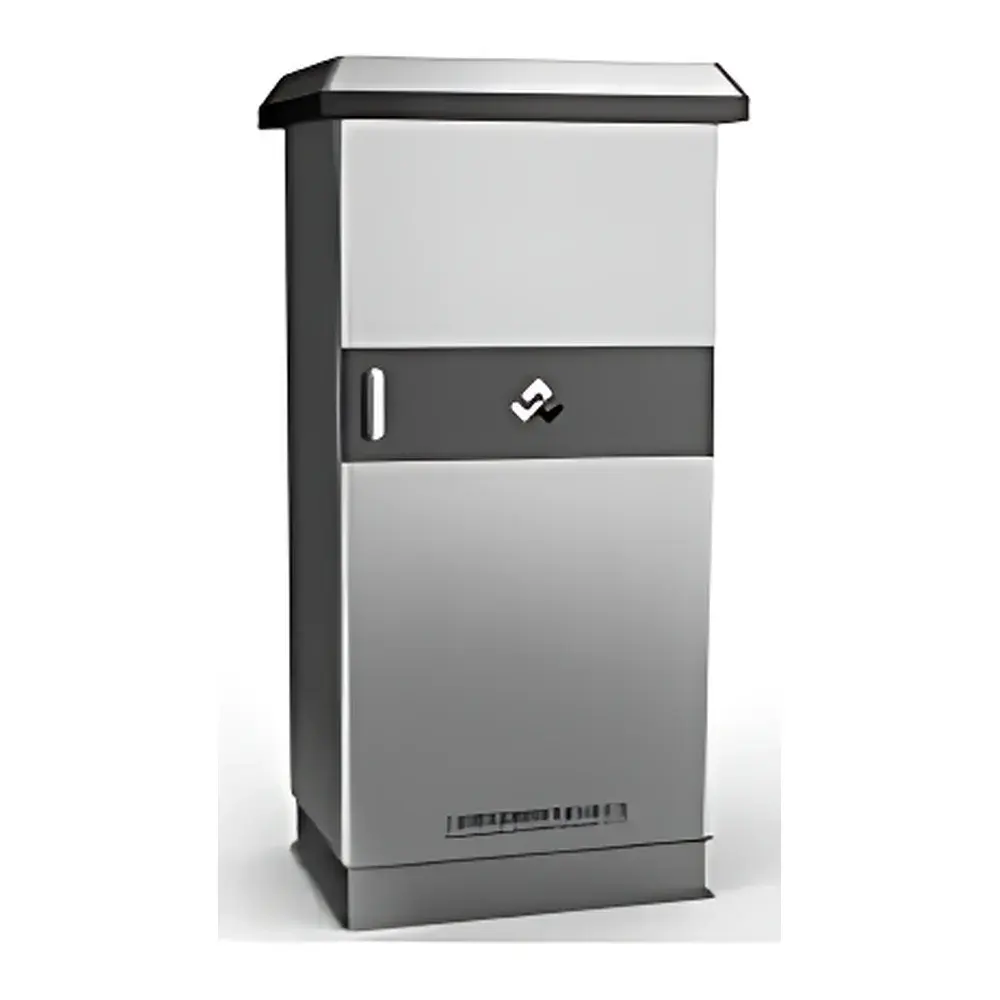
Beifen Sanpu BFS-9860 Online Transformer Oil Dissolved Gas Analysis (DGA) System
| Brand | Beifen Sanpu |
|---|---|
| Origin | Beijing, China |
| Manufacturer | Yes |
| Type | Domestic |
| Model | BFS-9860 |
| Pricing | Upon Request |
| Detection Gases | H₂ (0–2000 µL/L, LOD 2 µL/L, RSD ≤10%), CO (0–5000 µL/L, LOD 25 µL/L, RSD ≤10%), CH₄ (0–1000 µL/L, LOD 0.5 µL/L, RSD ≤10%), C₂H₄ (0–1000 µL/L, LOD 0.5 µL/L, RSD ≤10%), C₂H₆ (0–1000 µL/L, LOD 0.5 µL/L, RSD ≤10%), C₂H₂ (0–1000 µL/L, LOD 0.5 µL/L, RSD ≤10%), H₂O (optional, 2–100% RH, LOD 2% RH, RSD ≤10%), CO₂ (optional, 0–15000 µL/L, LOD 25 µL/L, RSD ≤10%) |
| Analysis Cycle | ≥1 hour (user-configurable) |
| Data Retention | 10 years |
| Temperature Control Accuracy | ±0.1°C |
| Operating Ambient | −40°C to +70°C, 5–95% RH (non-condensing) |
| Power Supply | AC 220 V ±10%, 50 Hz, THD <5% |
| Carrier Gas | High-purity compressed air (≥400 analyses per cylinder) |
| Mechanical Robustness | Compliant with GB/T 14537 (Shock, Class I) and GB/T 11287 (Vibration, Class I) |
| EMC Compliance | GB/T 17626, IEC 61000, Q/GDW 535–2010 |
| Communication Interfaces | RS-485, Ethernet, Fiber Optic, CAN bus, GPRS/CDMA |
| Network Scalability | Up to 16 field units per central server |
| Alarm Output | Dual-level (audible/visual), remote signal transmission |
| Software Platform | SQL Server 2000, role-based access control, IEC 61850 support, TCP/IP native |
Overview
The Beifen Sanpu BFS-9860 Online Transformer Oil Dissolved Gas Analysis (DGA) System is an industrial-grade, continuous-monitoring solution engineered for predictive maintenance of oil-immersed power equipment. Based on gas chromatographic separation coupled with high-sensitivity detection, the system quantifies key fault-characteristic gases dissolved in transformer insulating oil—including hydrogen (H₂), carbon monoxide (CO), methane (CH₄), ethylene (C₂H₄), ethane (C₂H₆), and acetylene (C₂H₂)—in accordance with IEEE C57.104 and IEC 60599 guidelines. Its core analytical architecture integrates vacuum-assisted headspace degassing, a robust dual-loop thermostatic control system, and a microprocessor-driven six-port electromagnetic valve for precise, contamination-free sample introduction. Unlike laboratory-based GC systems, the BFS-9860 operates unattended in harsh substation environments, delivering real-time DGA data critical for early detection of incipient faults such as partial discharge, thermal decomposition, and arcing.
Key Features
- Vacuum-assisted headspace degassing technology ensures rapid phase equilibrium between oil and dissolved gases—minimizing analysis time while preserving trace-gas integrity and eliminating oil contamination risks.
- High-stability thermal management: dual-loop temperature control maintains column and detector zones within ±0.1°C across ambient extremes (−40°C to +70°C), ensuring retention time reproducibility and quantitative accuracy.
- Stainless-steel seamless tubing and Swagelok® fittings throughout oil and gas pathways guarantee long-term leak-tightness and compatibility with transformer-grade mineral oil.
- Auto-calibration capability—manual or scheduled—compensates for sensor drift and column aging, sustaining measurement fidelity over extended deployment cycles without field intervention.
- IEC 61850-compliant communication stack enables seamless integration into smart substation automation architectures, supporting GOOSE and MMS services for real-time status reporting and event-triggered data upload.
- EMC-hardened design certified to GB/T 17626 (equivalent to IEC 61000-4 series) and mechanical ruggedness validated per GB/T 14537 (shock) and GB/T 11287 (vibration), both Class I severity levels.
Sample Compatibility & Compliance
The BFS-9860 is validated for use with standard mineral-based, silicone, and ester-based transformer insulating oils. It meets operational requirements for 110 kV and higher voltage class equipment—including power transformers, shunt reactors, instrument transformers, and arc-furnace transformers—per national grid technical specifications (Q/GDW 535–2010). All gas measurements adhere to ASTM D3612 (Standard Test Method for Determination of Dissolved Gases in Electrical Insulating Oil by Gas Chromatography) and ISO 10438-3 (Petroleum and natural gas industries – Analyzers for process analysis – Part 3: Gas chromatographs). The system supports GLP-aligned audit trails, including timestamped calibration logs, alarm events, and user-access records—essential for regulatory review under utility asset management frameworks.
Software & Data Management
The embedded DGA analysis software utilizes Microsoft SQL Server 2000 as its relational database engine, ensuring transactional consistency and multi-user concurrency. Role-based authentication enforces strict separation of duties: administrators configure hardware parameters (sampling interval, calibration schedule, alarm thresholds), engineers perform spectral diagnostics, and operators view real-time dashboards only. Diagnostic algorithms include the Duval Triangle, Rogers Ratios, Doernenburg Method, and IEC 60599-based fault classification trees—all executed automatically upon each analysis cycle. Raw chromatograms are stored with full metadata (retention time, peak area, baseline correction flags) and support interactive zoom, overlay comparison, and baseline reintegration. Data export complies with IEEE 1344 and IEC 61850-7-410 formats, enabling interoperability with enterprise SCADA, PAS, and CMMS platforms. Audit logging satisfies 21 CFR Part 11 requirements for electronic records and signatures when deployed in regulated utility environments.
Applications
- Continuous condition monitoring of transmission-class power transformers in regional grid substations.
- Early warning of thermal faults (>300°C), partial discharge, and low-energy sparking in generator step-up (GSU) transformers.
- Supporting risk-based maintenance scheduling in compliance with ISO 55001 asset management standards.
- Integration into digital twin models for transformer thermal aging estimation using DGA trend vectors (e.g., C₂H₂/C₂H₄ ratio kinetics).
- Remote diagnostics for distributed assets in rail traction substations, steel mill arc furnaces, and offshore wind farm collector stations.
FAQ
What carrier gas does the BFS-9860 require, and how often must it be replaced?
The system uses high-purity compressed air (≥99.999% purity, dew point ≤−40°C) as carrier gas. A standard 10-L cylinder supports ≥400 analyses under typical 2-hour sampling intervals.
Does the BFS-9860 support remote firmware updates and configuration changes?
Yes—via secure HTTPS-based web interface or IEC 61850 MMS service. All updates are digitally signed and logged with rollback capability.
How does the system handle oil degradation products that may interfere with gas detection?
The vacuum headspace method selectively extracts volatile species; non-volatile oxidation byproducts remain in the oil phase and do not enter the GC column.
Is third-party validation data available for measurement uncertainty assessment?
Independent verification reports per ISO/IEC 17025 are available upon request, covering repeatability, linearity, and matrix interference testing across 15 oil samples from certified reference laboratories.
Can the BFS-9860 be integrated with existing substation fire suppression or cooling control systems?
Yes—through dry-contact relay outputs or Modbus TCP mapping of alarm states to external PLCs or BAS controllers.






