
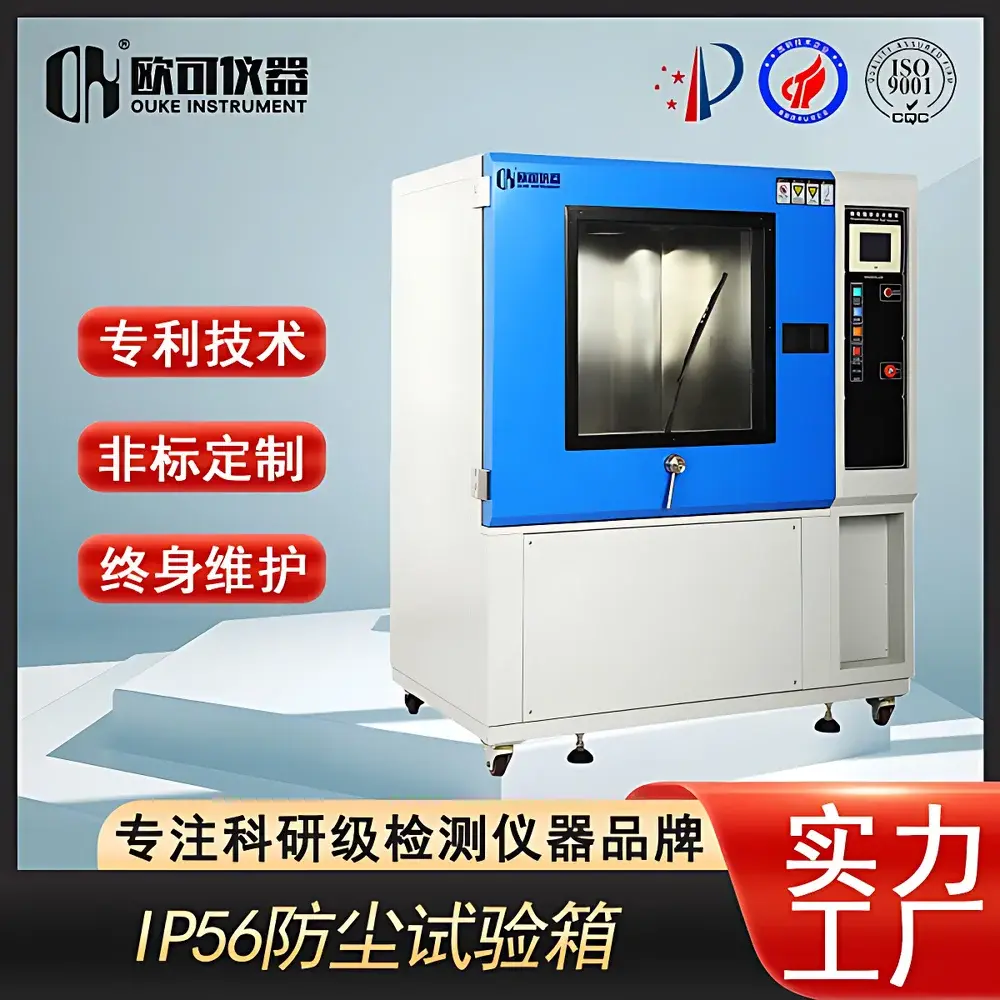
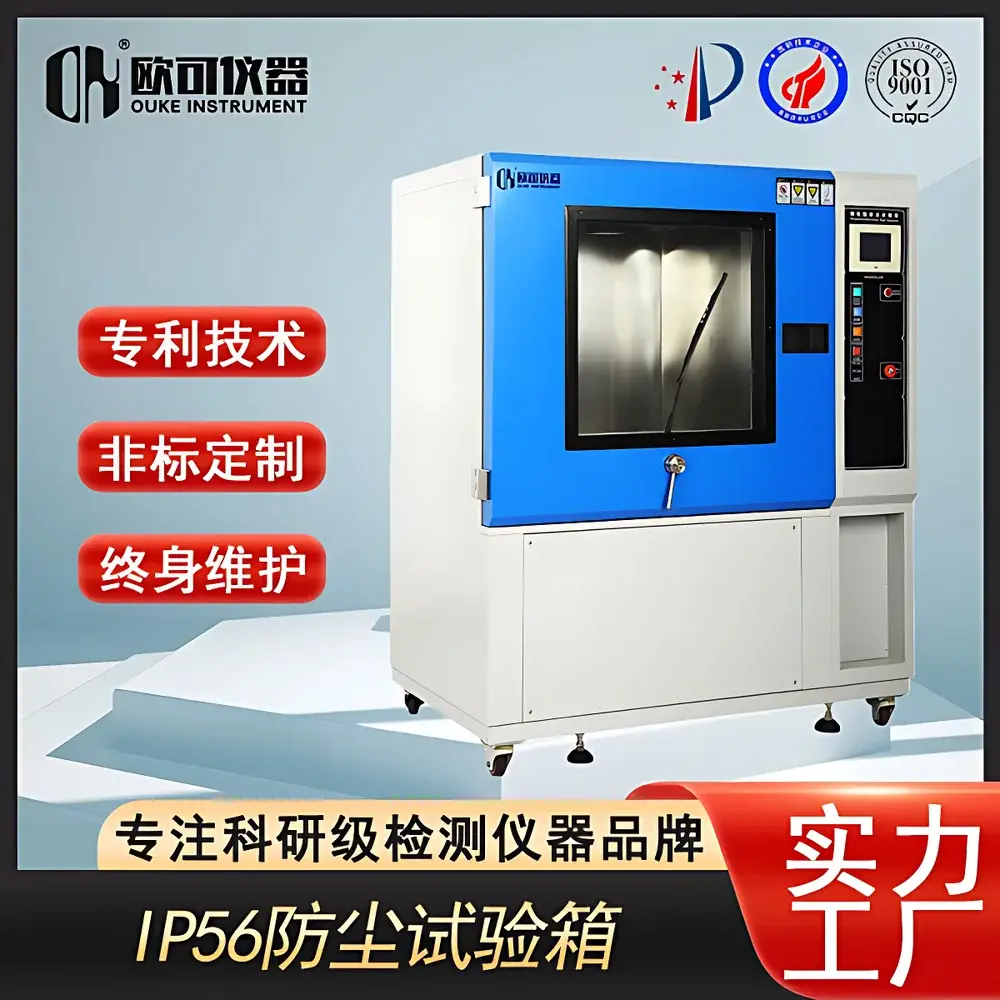
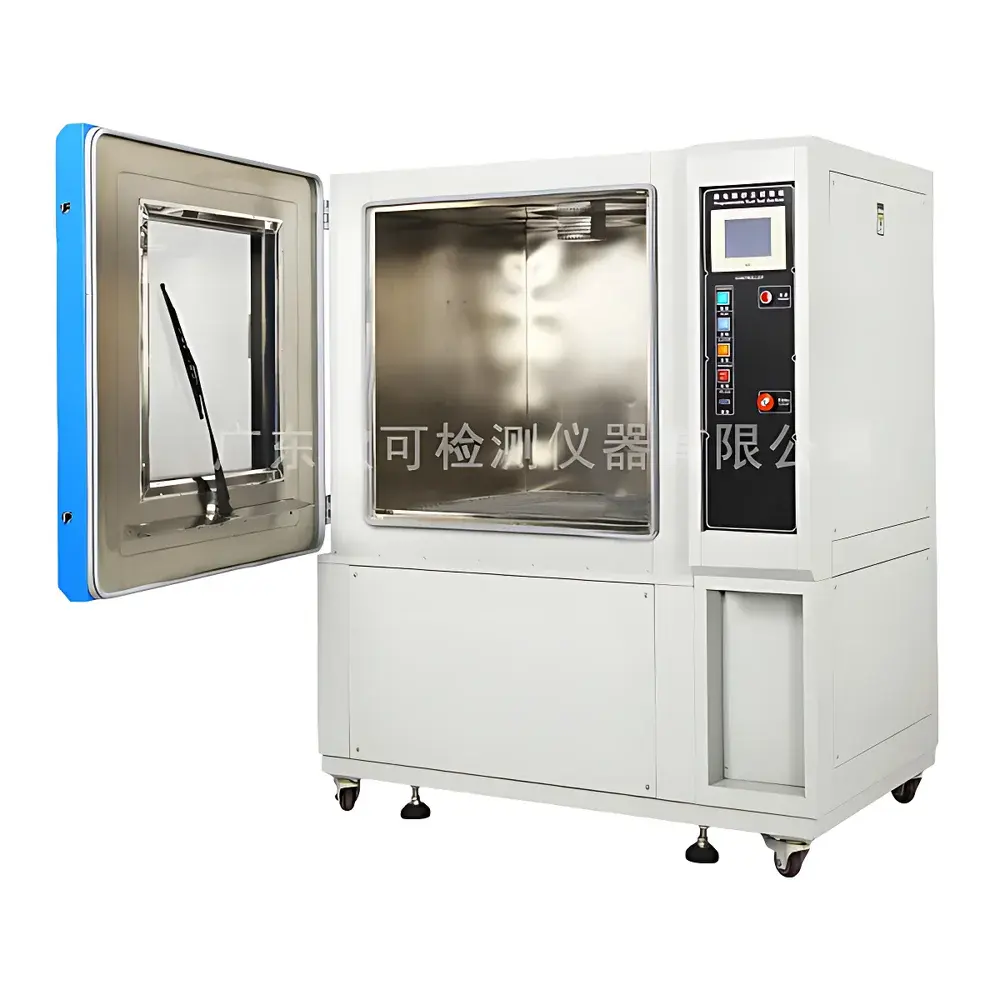
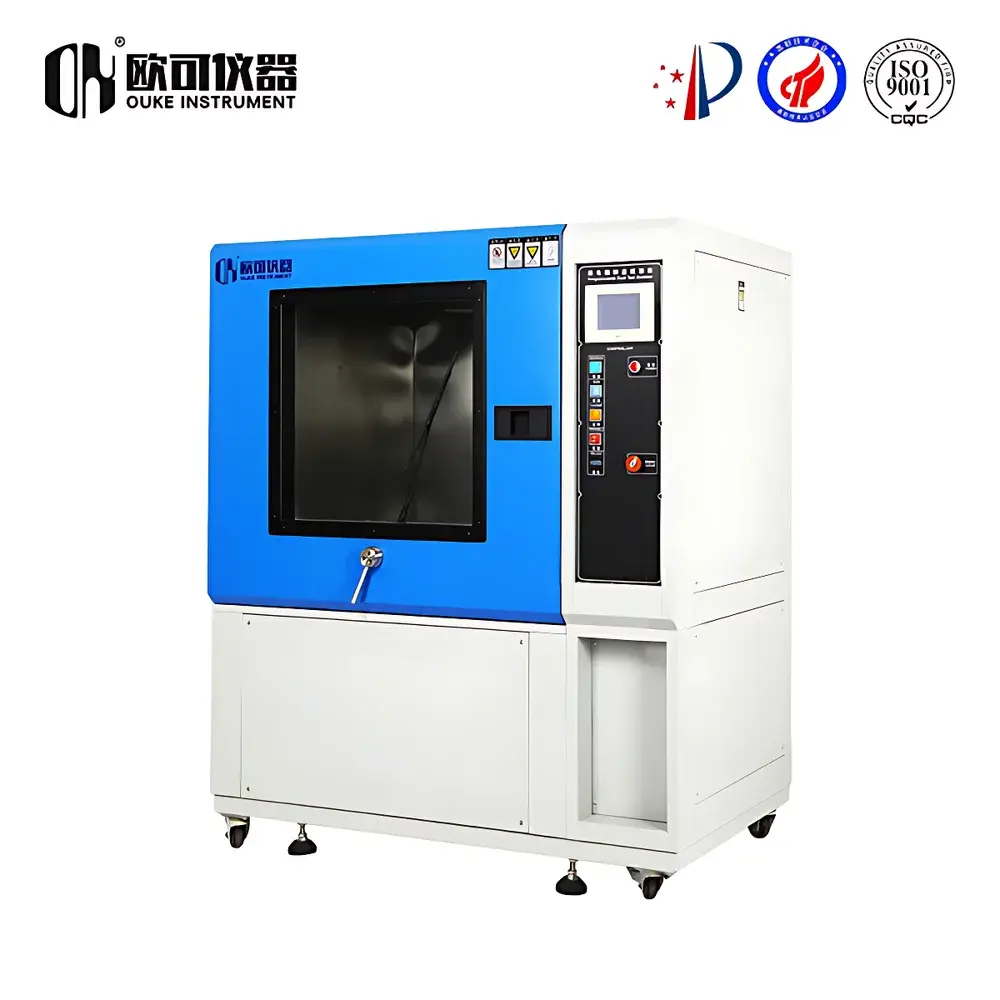
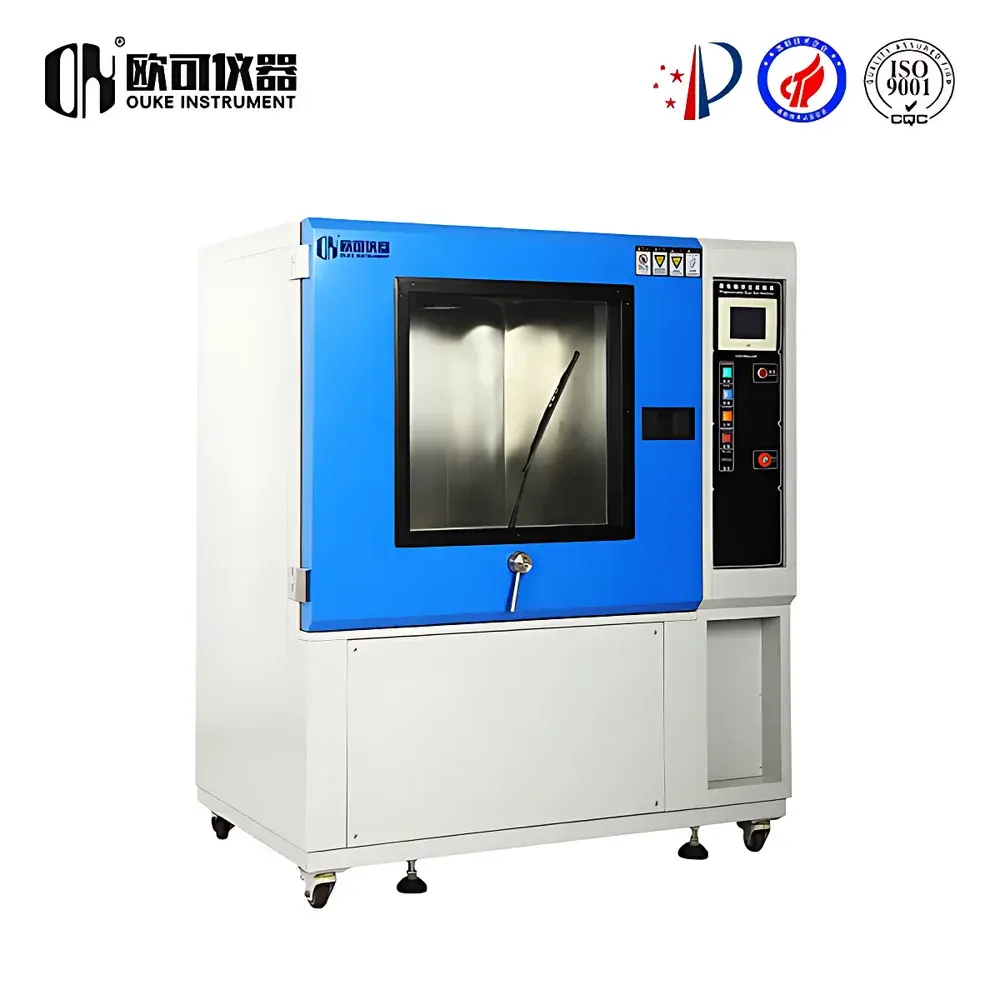
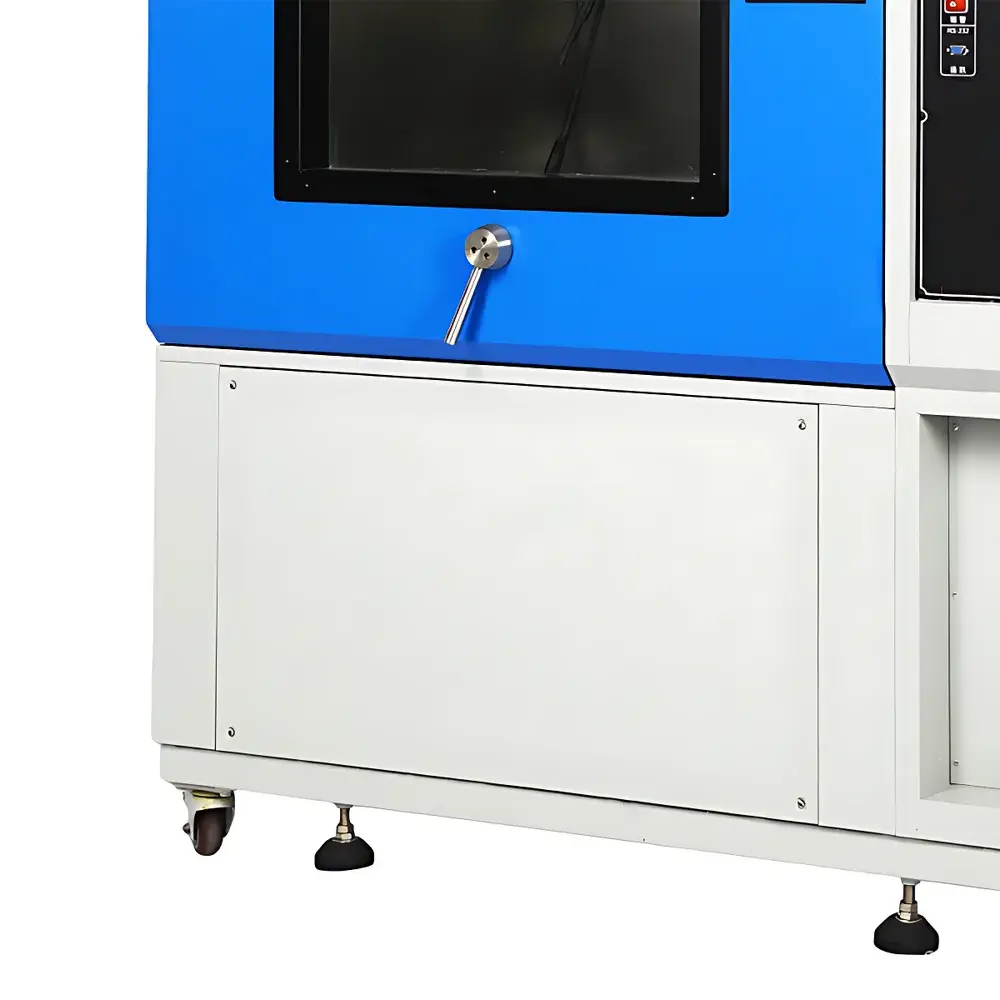
OK-HC-900.0200 Dust Ingress Protection Test Chamber (IP5X)
| Brand | OK Instruments |
|---|---|
| Origin | Guangdong, China |
| Manufacturer Type | Direct Manufacturer |
| Model | OK-HC-900.0200 |
| Test Dust Composition | 97–99% crystalline silica (SiO₂) |
| Dust Concentration (Blowing) | 1.1 g/m³ ±0.25 g/m³ to 2.2 g/m³ ±0.5 g/m³ |
| Air Velocity (Blowing) | 0–29 m/s |
| Dust Concentration (Dust Suspension) | 0.1–10.6 g/m³ ±7 g/m³ |
| Air Velocity (Dust Suspension) | 8.9 m/s ±1.2 m/s |
Overview
The OK-HC-900.0200 Dust Ingress Protection Test Chamber is an engineered environmental test system designed specifically for evaluating the dust resistance performance of enclosures in accordance with IEC 60529 and GB/T 4208 standards—primarily targeting IP5X (“dust protected”) classification. Unlike IP6X (“dust-tight”) test systems, which emphasize high-velocity sand projection and absolute particulate exclusion, the OK-HC-900.0200 replicates low-energy, gravity-driven dust suspension environments where fine airborne particles (≤75 µm) settle onto and infiltrate enclosure apertures under controlled airflow conditions. Its operational principle relies on turbulent yet non-erosive air circulation to maintain a stable, reproducible dust cloud within the chamber volume, enabling standardized assessment of whether ingress of non-hazardous levels of respirable dust compromises functional safety, electrical integrity, optical clarity, or mechanical operability.
Key Features
- Calibrated dual-mode aerosol delivery: independent control of blowing-mode (for directed particle introduction) and suspension-mode (for uniform ambient dust dispersion)
- Adjustable axial fan system with laminar-to-turbulent transition capability, supporting air velocities from 0 to 29 m/s (blowing) and precisely regulated at 8.9 ±1.2 m/s (suspension mode)
- High-fidelity dust concentration management: real-time feedback loop maintains target concentrations between 0.1–10.6 g/m³ (±7 g/m³ tolerance) during suspension tests and 1.1–2.2 g/m³ (±0.25–0.5 g/m³) during blowing cycles
- Chamber constructed from corrosion-resistant stainless steel (AISI 304), featuring double-lip silicone door seals and positive-pressure purge interlock to prevent external contamination and internal leakage
- Integrated cyclonic recirculation path with HEPA H13 filtration (≥99.95% @ 0.3 µm) ensures operator safety, lab environment protection, and long-term dust reuse consistency
- Programmable controller with ISO/IEC 17025-aligned logging: records time-stamped parameters including duration, cycle count, velocity setpoints, and concentration deviations for audit-ready traceability
Sample Compatibility & Compliance
The OK-HC-900.0200 accommodates samples up to 900 mm × 900 mm × 900 mm (W×H×D), with configurable static mounting platforms and optional slow-rotation sample turntables (0.5–2 rpm) for enhanced exposure uniformity. It fully supports testing per IEC 60529 Ed. 2.2 (2013), GB/T 4208–2017, and aligns with supplementary requirements in MIL-STD-810H Method 510.6 (Dust) for non-erosive particulate exposure. While not certified for IP6X validation due to its absence of rotary sample support and high-velocity sand nozzle assembly, it satisfies all technical prerequisites for IP5X verification—including defined dust composition (crystalline SiO₂ ≥97%), particle size distribution (median D₅₀ ≤50 µm, verified by laser diffraction prior to each test series), and chamber homogeneity (±15% spatial concentration variance across three orthogonal measurement planes).
Software & Data Management
The embedded test controller runs firmware compliant with FDA 21 CFR Part 11 Annex 11 principles, offering role-based access control, electronic signatures, and immutable audit trails. All test sequences—including dwell time, velocity ramp profiles, dust injection intervals, and recovery phases—are stored as encrypted XML files with SHA-256 checksums. Optional PC-based software (OK-TestSuite v3.2) provides graphical overlay of real-time concentration vs. time curves, deviation heatmaps across chamber zones, and automated report generation conforming to ISO/IEC 17025 clause 7.8. Data exports support CSV, PDF/A-2, and XML formats for integration into LIMS or QMS platforms operating under GLP/GMP frameworks.
Applications
- Validation of consumer electronics enclosures (smartphones, wearables, IoT gateways) against dust-induced thermal throttling or sensor occlusion
- Functional safety verification of automotive ECUs, lighting modules, and ADAS housings exposed to desert or industrial airborne particulates
- Medical device qualification per IEC 60601-1 clause 11.3.2, ensuring no dust accumulation impairs sterilization port integrity or display readability
- Industrial control panel certification for food processing, mining, and cement manufacturing environments where fine silica exposure is endemic
- Research-grade studies on dust deposition kinetics, filter media efficiency, and electrostatic charge effects on particle adhesion
FAQ
Does the OK-HC-900.0200 meet IEC 60529 requirements for IP5X testing?
Yes—it implements all mandatory procedural and environmental parameters specified in Clause 13.4 of IEC 60529 Ed. 2.2 for dust protection evaluation, including defined test dust composition, concentration tolerances, airflow characteristics, and exposure duration.
Can this chamber be used for IP6X testing?
No. IP6X requires continuous sample rotation at 1–3 rpm and high-velocity sand projection (≥18 m/s) using calibrated nozzles—capabilities not present in this model. For dual IP5X/IP6X compliance, consider the OK-HC-900.0600 variant.
How is dust concentration verified during operation?
An integrated gravimetric sampling port enables periodic extraction of suspended particulate matter; concentration is confirmed via pre-calibrated microbalance (±0.01 mg resolution) and validated against reference aerosol photometers traceable to NIST SRM 1691.
Is the test dust reusable?
Yes—the closed-loop cyclonic recovery system retains >92% of introduced dust mass after filtration, minimizing consumable cost and ensuring consistent particle morphology across repeated test cycles.
What maintenance is required for long-term calibration stability?
Biannual verification of airflow sensors (hot-wire anemometers), annual recalibration of pressure transducers and concentration monitors, and quarterly inspection of door seal compression force (minimum 15 N/cm required per EN 14351-1 Annex C).



