
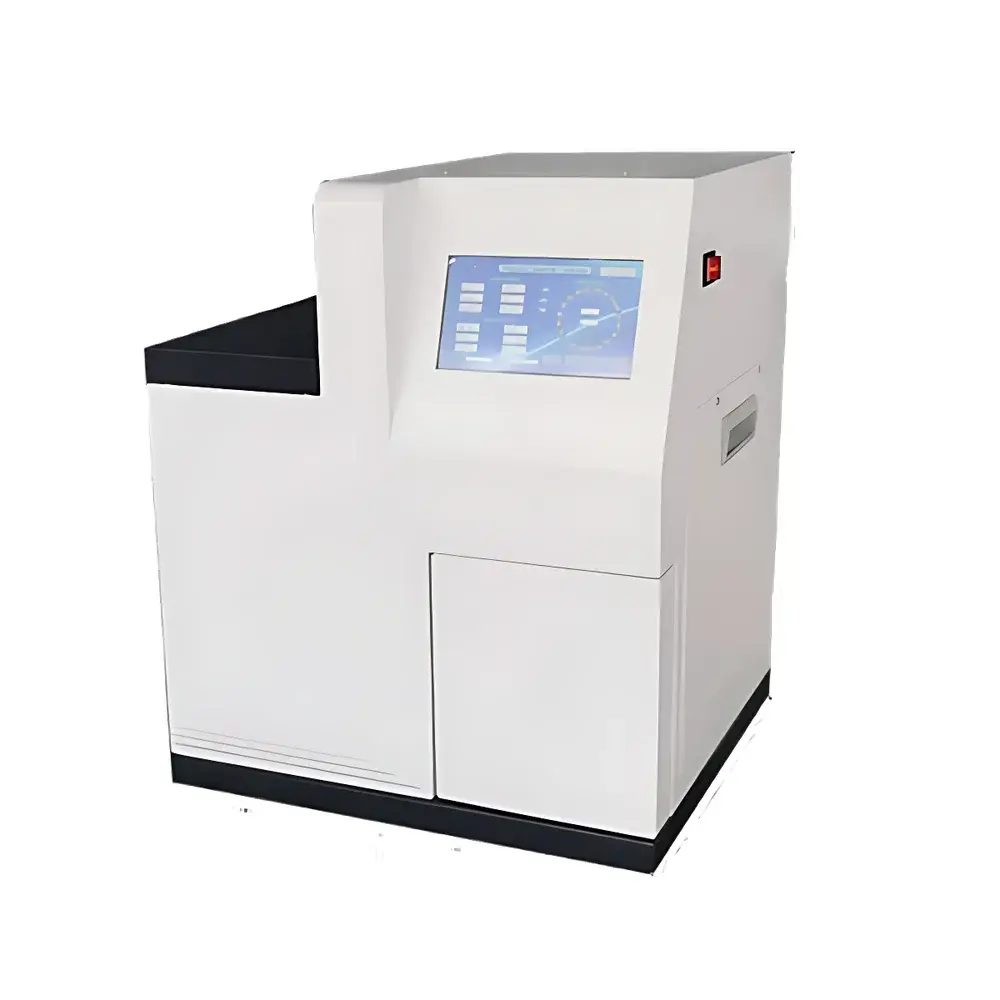
Beifen Sanpu GAHS-20A Plus Fully Automated Headspace Sampler
| Brand | Beifen Sanpu |
|---|---|
| Origin | Beijing, China |
| Manufacturer Type | Direct Manufacturer |
| Product Origin | Domestic (China) |
| Model | GAHS-20A Plus |
| Price | Upon Request |
| Sample Capacity | 20 positions |
| Vial Size Compatibility | 10 mL and 20 mL (customizable up to 100 mL) |
| Quantitative Loop Volume | 1 mL (optional: 0.5 mL, 2 mL, 5 mL) |
| Sample Heating Range | 40–220 °C (up to 300 °C optional), ±0.5 °C stability |
| Valve & Transfer Line Heating Range | 40–220 °C (up to 300 °C optional) |
| Pressure Control Range | 0–0.25 MPa (continuously adjustable) |
| Pressurization Time | 0–999 s |
| Sampling Time | 0–30 min |
| Injection Time | 0–999 s |
| Bake-out/Flush Time | 0–30 min |
| Minimum Time Resolution | 1 ms |
| Carrier Gas Flow Control | EPC-compatible (optional) |
| RSD | <1.0% (for 100 ppm ethanol in water) |
| Interface | USB |
| Display | 7-inch TFT LCD with Chinese UI (English firmware available upon request) |
Overview
The Beifen Sanpu GAHS-20A Plus Fully Automated Headspace Sampler is a robust, laboratory-grade sample introduction system engineered for precise, reproducible analysis of volatile and semi-volatile organic compounds (VOCs and SVOCs) in complex solid and liquid matrices. It operates on the principle of equilibrium headspace sampling—where a sealed vial containing sample and headspace is thermostatically equilibrated, allowing analytes to partition into the vapor phase according to their vapor pressure, temperature, and matrix composition. The instrument then introduces this gas-phase aliquot directly into a gas chromatograph (GC) via pressurized transfer, eliminating solvent handling and minimizing contamination risk. Designed for routine QC/QA labs, environmental testing facilities, pharmaceutical stability studies, and forensic toxicology workflows, the GAHS-20A Plus delivers high inter-run repeatability (RSD <1.0%) and full method traceability under GLP-compliant operation.
Key Features
- Fully automated 20-position carousel with automatic vial recognition and positional fault avoidance—prevents mechanical collision during loading/unloading even when vials are missing or misaligned.
- Independent, PID-controlled heating zones for sample vials, six-port valve, and transfer lines—all maintained within ±0.5 °C stability and calibrated to 0.5% accuracy across the full operating range (40–220 °C standard; 300 °C optional).
- Positive-pressure sampling architecture using inert, de-activated fused-silica or SilcoNert®-treated tubing throughout the entire flow path—including quantitative loop, valve internal channels, and needle assembly—to eliminate carryover and ensure analytical integrity.
- Optimized low-dead-volume configuration: Six-port valve integrated within the heated oven compartment, with direct connection to the quantitative loop and transfer line—eliminating cold spots and preserving thermolabile analyte integrity.
- Motor-driven actuation system—no external pneumatic supply required—enhancing safety, reducing maintenance, and enabling stable operation in laboratories without compressed air infrastructure.
- Flexible injection protocols: Supports single-vial multi-injection, single-vial single-injection, and multi-vial single-injection modes—all programmable via front-panel interface or remote USB command set.
- Comprehensive self-diagnostic suite: Power-on system check, real-time positional verification, thermal sensor validation, and hardware fault logging with on-screen alerts and error code reporting.
Sample Compatibility & Compliance
The GAHS-20A Plus accommodates standard 10 mL and 20 mL crimp-top or screw-cap headspace vials, with custom support available for 50 mL and 100 mL formats. It handles aqueous solutions, polymers, soils, biological tissues, pharmaceutical tablets, and food matrices without modification. All wetted surfaces meet USP Class VI and ASTM F814 biocompatibility standards. The instrument supports audit-trail-enabled method storage and execution, aligning with FDA 21 CFR Part 11 requirements when used with compliant chromatography data systems (CDS). Its thermal and timing parameters adhere to ISO 15197 and ASTM D6866-22 guidelines for headspace-based VOC quantification in regulated environments.
Software & Data Management
Control is implemented via embedded firmware with dual-mode operation: local configuration through the 7-inch graphical LCD (with intuitive animated workflow guidance) or remote parameter setting and sequence scheduling via USB-connected PC. All method parameters—including equilibration time, pressurization pressure, sampling duration, loop fill volume, and post-injection purge flow—are digitally stored with timestamped version history. The device provides TTL-level synchronization signals to initiate GC oven ramping, detector acquisition, and CDS data capture—ensuring temporal alignment between sample introduction and chromatographic detection. Optional EPC (Electronic Pressure Control) module enables closed-loop carrier gas flow regulation for enhanced retention time stability.
Applications
This system is routinely deployed in: residual solvent analysis per ICH Q3C guidelines; ethanol content determination in pharmaceutical excipients (USP ); BTEX and PAH profiling in soil and groundwater (EPA Method 502.2, 8260D); flavor compound profiling in beverages and dairy products; packaging migration testing (ISO 10993-12); and forensic blood alcohol quantification (SWGTOX recommendations). Its precision and automation make it suitable for unattended overnight runs in high-throughput clinical and contract research laboratories.
FAQ
What vial sizes does the GAHS-20A Plus support?
Standard configurations accommodate 10 mL and 20 mL headspace vials; custom trays for 50 mL and 100 mL vials are available upon request.
Is the instrument compatible with third-party GC systems?
Yes—it features universal TTL triggering and analog/digital I/O ports for seamless integration with Agilent, Thermo Fisher, Shimadzu, PerkinElmer, and other major GC platforms.
Can the system be operated without a computer?
Absolutely—the full method library, real-time status monitoring, and manual override functions are accessible via the onboard touchscreen interface.
Does it support electronic record keeping for regulatory audits?
When paired with a 21 CFR Part 11–compliant CDS, all method parameters, run logs, and calibration records are retained with user authentication and immutable timestamps.
What maintenance is required for long-term reliability?
Recommended quarterly inspection of septa, valve rotor seal integrity, and quantitative loop cleanliness; no routine gas cylinder servicing due to motor-driven actuation design.






