
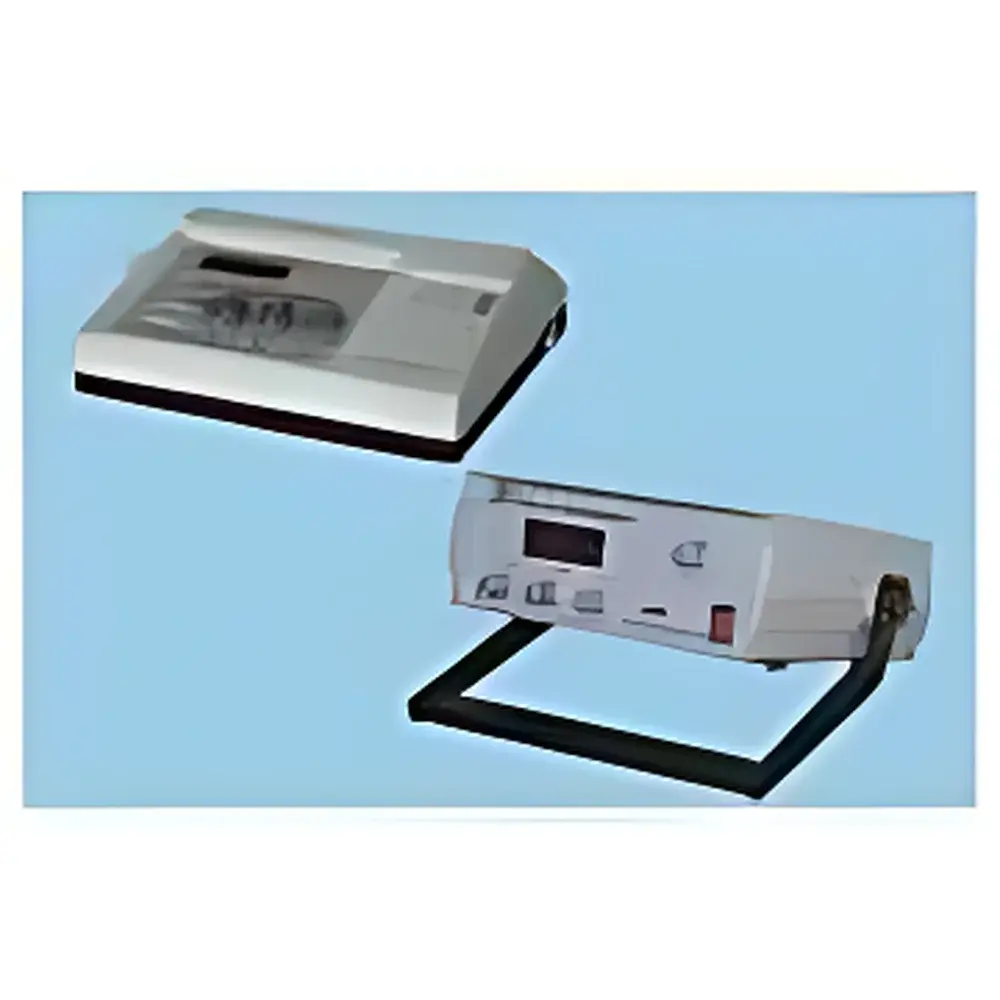
Beifen Sanpu PHS-3C Portable pH Meter
| Brand | Beifen Sanpu |
|---|---|
| Origin | Hebei, China |
| Manufacturer Type | Direct Manufacturer |
| Product Type | Portable pH Meter |
| Model | PHS-3C |
| Measurement Range | 0.00–14.00 pH / ±1999 mV |
| Resolution | 0.01 pH / 1 mV |
| Accuracy | ±0.01 pH (electronic unit) / ±0.02 pH (system, including electrode) |
| Temperature Compensation Range | 0–60 °C |
| Input Impedance | ≥1 × 10¹² Ω |
| Input Current | ≤2 × 10⁻¹² A |
| Stability | ±0.01 pH ±1 digit / 3 h |
| Repeatability | ≤0.01 pH |
| Display | 3½-digit LED |
| Power Consumption | ≤5 W |
| Dimensions (L×W×H) | 260 × 190 × 70 mm |
| Weight | 1.5 kg |
| Operating Environment | 5–40 °C, RH ≤85%, AC 220 V ±10%, 50 Hz |
| Calibration | One-point or two-point with standard USA pH buffers |
| Compliance | Meets Chinese National Standard JJG 919–2008 (pH meter verification regulation), aligned with ISO 7027 and ASTM D1293 for aqueous pH measurement traceability |
Overview
The Beifen Sanpu PHS-3C Portable pH Meter is a precision electrochemical instrument engineered for reliable, field-deployable, and laboratory-grade pH and millivolt (mV) measurements in aqueous solutions. Based on the potentiometric principle, it measures the electromotive force (EMF) generated across a glass pH electrode and reference electrode pair, converting the Nernstian potential difference into a calibrated pH value. Designed to meet Class 0.01 accuracy requirements per JJG 919–2008—the Chinese national metrological verification regulation for pH meters—the PHS-3C delivers high reproducibility and long-term stability under controlled environmental conditions. Its compact form factor, low power consumption (1 × 10¹² Ω) minimize electrode loading effects and ensure accurate readings even with high-resistance sensing elements such as double-junction or gel-filled reference electrodes. The instrument supports both direct pH mode and relative mV mode with automatic polarity detection, enabling applications ranging from routine quality control in water treatment facilities to educational lab demonstrations and environmental field sampling.
Key Features
- 3½-digit LED display with dual-parameter readout (pH and mV) for simultaneous monitoring and cross-validation
- Manual temperature compensation (0–60 °C) using integrated thermistor input—compatible with standard Pt100 or NTC sensors (external probe optional)
- One-point or two-point calibration protocol compliant with IUPAC-recommended buffer standards (e.g., USA-certified pH 4.01, 7.00, and 10.01 buffers)
- High-input-impedance amplifier architecture minimizes signal drift and ensures compatibility with legacy and modern combination electrodes
- Stability specification of ±0.01 pH ±1 digit over 3 hours supports extended unattended operation during batch testing
- Compact benchtop/portable hybrid design (260 × 190 × 70 mm; 1.5 kg) with non-slip rubber feet and recessed electrode holder for secure placement
- Low-power AC operation (220 V ±10%, 50 Hz) with internal voltage regulation—no battery dependency, eliminating charge-state variability
Sample Compatibility & Compliance
The PHS-3C is validated for use with aqueous samples meeting ISO 7027:2016 and ASTM D1293-22 criteria for pH measurement in drinking water, wastewater, surface water, and process streams. It is not intended for non-aqueous, highly viscous, or strongly oxidizing media without appropriate electrode selection and procedural validation. The instrument conforms to JJG 919–2008 verification requirements for Class 0.01 pH meters—including electronic unit error (±0.01 pH), system-level error (±0.02 pH ±1 digit), and repeatability (≤0.01 pH). While not inherently 21 CFR Part 11–compliant due to lack of audit trail or electronic signature capability, its documented calibration procedures, manual logbook support, and traceable buffer usage align with GLP and basic GMP documentation practices when integrated into controlled laboratory workflows.
Software & Data Management
The PHS-3C operates as a standalone hardware platform with no embedded firmware-based data logging or USB/Bluetooth connectivity. All measurement records must be manually transcribed or captured via external devices (e.g., digital lab notebooks, LIMS-integrated tablets). However, its stable analog output stage and consistent mV response make it suitable for integration with third-party analog-to-digital acquisition systems (e.g., LabVIEW-compatible DAQ modules) when continuous trending or automated reporting is required. Calibration history, electrode performance logs, and environmental condition notes are recommended to be maintained per ISO/IEC 17025 Clause 7.7 to ensure measurement traceability and uncertainty budgeting.
Applications
- Environmental monitoring: Field and lab-based pH assessment of freshwater, effluent, and soil leachates
- Education and training: Undergraduate chemistry labs demonstrating acid-base equilibria, buffer capacity, and electrode theory
- Food & beverage QC: Monitoring rinse water, brine solutions, and product slurry pH prior to packaging
- Pharmaceutical water systems: Conductivity-pH correlation checks in purified water (PW) and water-for-injection (WFI) loops (per USP )
- Electroplating and metal finishing: Process bath pH verification to maintain optimal deposition kinetics
- Aquaculture and hydroponics: Daily nutrient solution pH tracking to prevent ion imbalance and root stress
FAQ
What calibration buffers are recommended for the PHS-3C?
Use NIST-traceable or USA-certified pH 4.01, 7.00, and 10.01 standard buffers—preferably single-use sachets or freshly prepared solutions stored at 25 °C.
Can the PHS-3C measure ORP (oxidation-reduction potential)?
Yes—when operated in mV mode, it functions as a high-impedance voltmeter compatible with platinum or redox electrodes per ASTM D3223.
Is temperature compensation automatic or manual?
Manual compensation only; users enter the sample temperature via front-panel keys before measurement.
Does the instrument support electrode diagnostics or slope calculation?
No—slope and asymmetry potential must be calculated externally using calibration mV values and the Nernst equation (59.16 mV/pH at 25 °C).
What is the expected service life of the internal electronics?
With proper handling and stable AC supply, the solid-state amplifier and display circuitry typically exceed 10 years of operational duty under ISO 17025 environmental class II conditions.




