
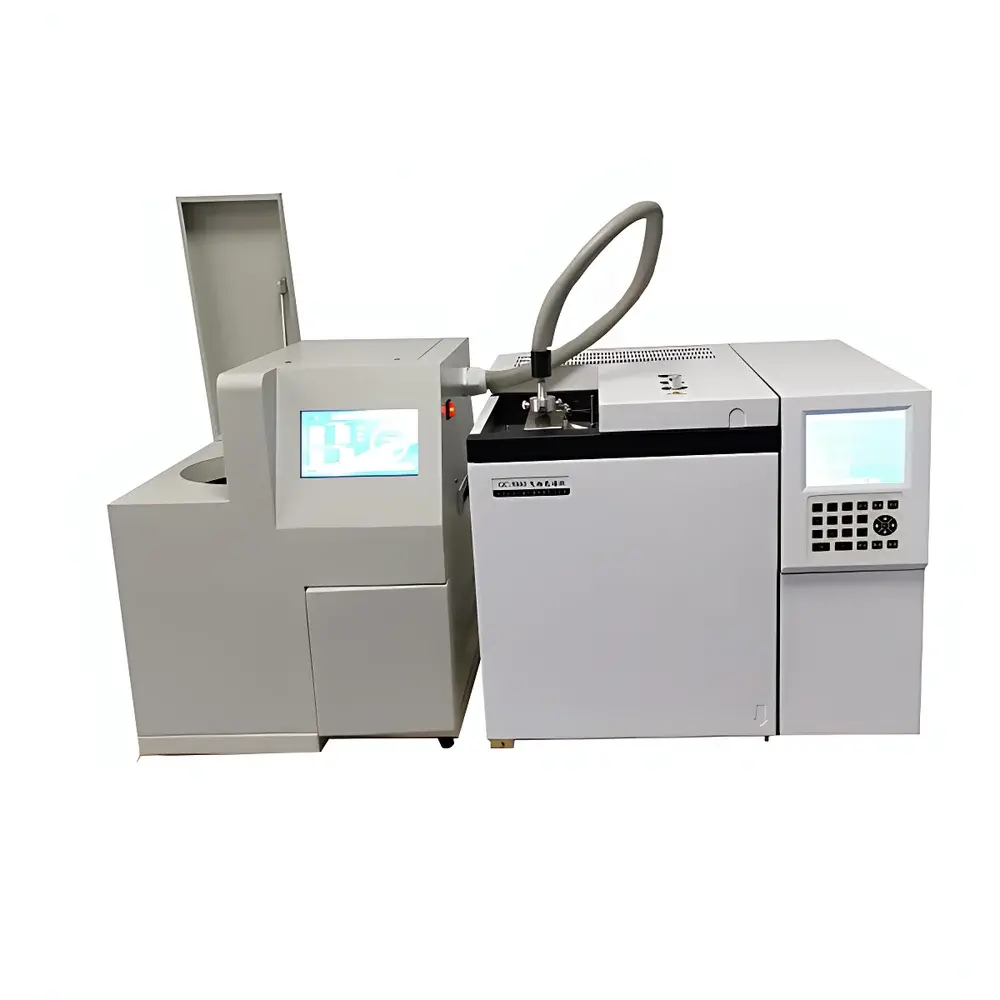
Beifen Sanpu AHS-20A PLUS Fully Automated Static Headspace Sampler for Pharmaceutical Residual Solvent Analysis
| Brand | Beifen Sanpu |
|---|---|
| Origin | Beijing, China |
| Manufacturer Type | Original Equipment Manufacturer (OEM) |
| Regional Category | Domestic (China-made) |
| Model | AHS-20A PLUS |
| Instrument Type | Static Headspace Sampler |
| Automation Level | Fully Automatic |
| Vial Heating Range | Ambient to 200 °C (1 °C increments) |
| Valve & Transfer Line Temperature Control Range | 40–220 °C (±1 °C accuracy) |
| Sample Loop Volume | 1 mL |
| Sample Capacity | 20-position carousel |
| Compatible Vial Sizes | 10 mL and 20 mL vials |
Overview
The Beifen Sanpu AHS-20A PLUS is a fully automated static headspace sampler engineered for precise, reproducible, and regulatory-compliant residual solvent analysis in pharmaceutical development and quality control laboratories. It operates on the principle of phase equilibrium partitioning: solid or liquid samples are sealed in crimp-top vials and heated to a precisely controlled temperature, allowing volatile analytes—including Class 1–3 residual solvents specified in ICH Q3C—to equilibrate between the sample matrix and the headspace gas phase. A calibrated 1 mL loop then injects a representative aliquot of this equilibrium vapor directly into a coupled gas chromatograph (GC), minimizing matrix interference and eliminating carryover risks associated with liquid injection. Designed to meet the stringent method requirements of the Chinese Pharmacopoeia (ChP), USP , and ICH Q3C guidelines, the AHS-20A PLUS supports validated workflows for GMP-regulated environments where trace-level quantification (down to low ppm levels) and analytical robustness are non-negotiable.
Key Features
- Fully automated 20-position sample carousel with programmable sequence execution, enabling unattended overnight analysis of large QC batches.
- Independent, high-stability temperature control for both vial oven (ambient to 200 °C, ±0.5 °C) and valve/transfer line (40–220 °C, ±1 °C), ensuring thermal integrity throughout the entire vapor transfer path.
- 1 mL fixed-volume sampling loop with inert, deactivated internal surfaces—optimized for quantitative transfer of polar and non-polar volatiles without adsorption or catalytic degradation.
- Integrated pressure-balanced vial pressurization system to ensure consistent headspace volume and minimize equilibrium time variability across heterogeneous sample types (e.g., viscous syrups, suspensions, lyophilized powders).
- Modular design compatible with major GC platforms (Agilent, Shimadzu, Thermo Fisher, PerkinElmer) via standard pneumatic and communication interfaces (RS-232 or optional Ethernet).
- Robust mechanical architecture with stainless-steel fluidic pathways and corrosion-resistant heating elements—engineered for long-term reliability under daily pharmaceutical lab use.
Sample Compatibility & Compliance
The AHS-20A PLUS accommodates standard 10 mL and 20 mL crimp-top headspace vials (with PTFE/silicone septa), supporting diverse pharmaceutical matrices: active pharmaceutical ingredients (APIs), excipients, final dosage forms (tablets, capsules, ointments), and biologics intermediates. Its performance aligns with critical pharmacopeial monographs, including ChP General Chapter 0521 (Residual Solvents), USP , and EP 2.4.24. All thermal and timing parameters are digitally logged and exportable, supporting audit readiness for GLP and GMP inspections. When operated within validated methods, the system meets FDA 21 CFR Part 11 requirements for electronic records and signatures when paired with compliant chromatography data systems (CDS).
Software & Data Management
The instrument is controlled via Beifen Sanpu’s dedicated HS-Link software, which provides full method parameterization—including vial equilibration time, oven ramp rates, valve bake-out cycles, and multi-step injection protocols. All acquisition parameters, run logs, and error flags are timestamped and stored in a relational database structure. Raw method files support version control and user-defined access permissions. Export functions generate ASTM E1985-compliant .csv and .txt reports for integration with LIMS and enterprise QA/QC systems. Audit trail functionality records operator actions, parameter changes, and system events—fully traceable for regulatory review.
Applications
- Quantitative determination of ICH Q3C-listed residual solvents (e.g., methanol, ethanol, acetone, dichloromethane, ethyl acetate, toluene) in APIs and drug products.
- Analysis of volatile impurities in excipients such as polyethylene glycols (PEGs), polysorbates, and cyclodextrins.
- Stability-indicating assays tracking solvent evolution during accelerated storage studies (ICH Q1A).
- Support for compendial methods involving ethanol content determination (e.g., ChP monographs for tinctures and elixirs), alkoxy group analysis (methoxy, ethoxy, hydroxypropoxy), and 2-ethylhexanoic acid profiling.
- Front-end sample introduction for GC–MS confirmation of unknown volatiles in root-cause investigations of out-of-specification (OOS) results.
FAQ
Is the AHS-20A PLUS compatible with third-party GC data systems?
Yes—it supports industry-standard communication protocols (RS-232, TTL, and optional Ethernet) and integrates seamlessly with Agilent OpenLab, Thermo Chromeleon, Shimadzu LabSolutions, and Waters Empower.
What validation documentation is provided?
Beifen Sanpu supplies a comprehensive IQ/OQ protocol package, including temperature mapping reports, loop volume verification data, carryover testing results, and system suitability test (SST) templates aligned with USP .
Can the system handle viscous or semi-solid samples?
Yes—equilibration parameters (time, temperature, agitation) can be optimized per matrix; optional vial shakers are available for enhanced mass transfer in suspensions or gels.
Does it support dynamic headspace or purge-and-trap modes?
No—the AHS-20A PLUS is a static headspace platform only; dynamic applications require dedicated purge-and-trap instrumentation.
How is calibration traceability maintained?
All temperature sensors are NIST-traceable and factory-calibrated; users receive calibration certificates with each unit, and annual recalibration services are available through authorized service centers.
Related Products





