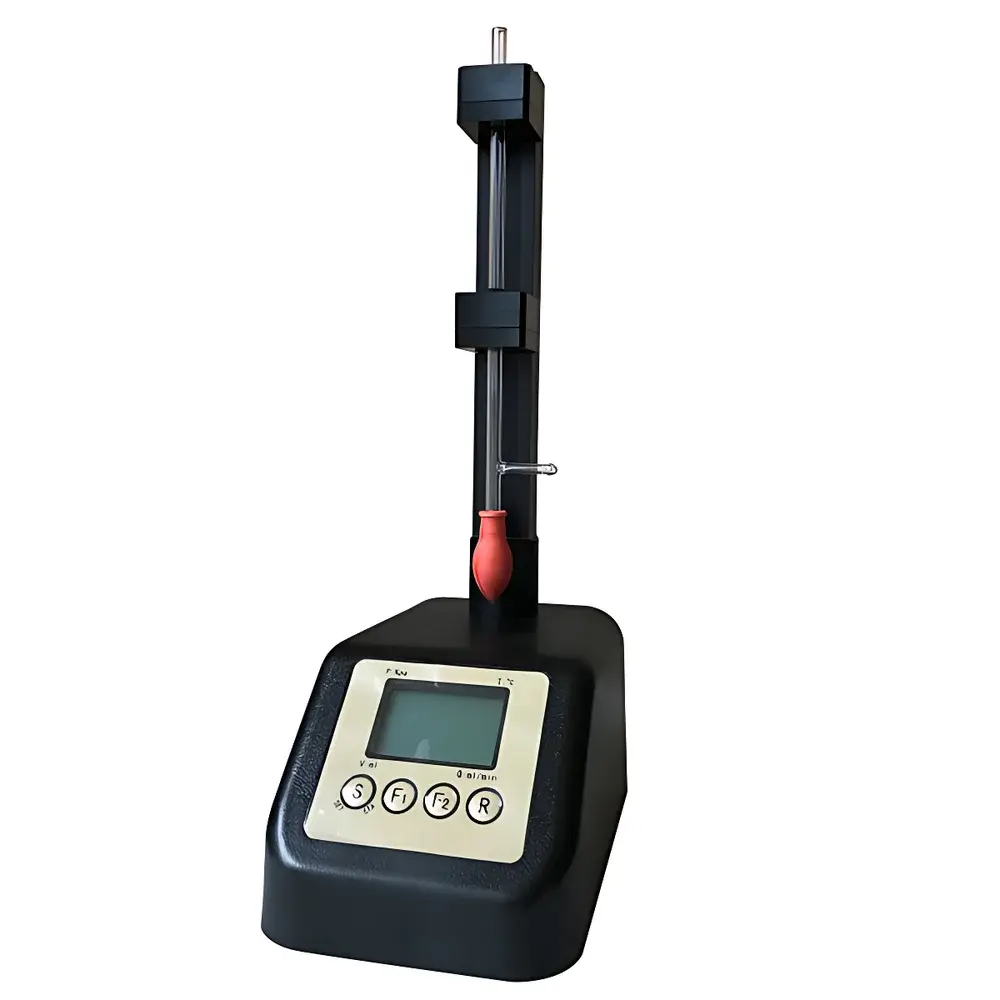
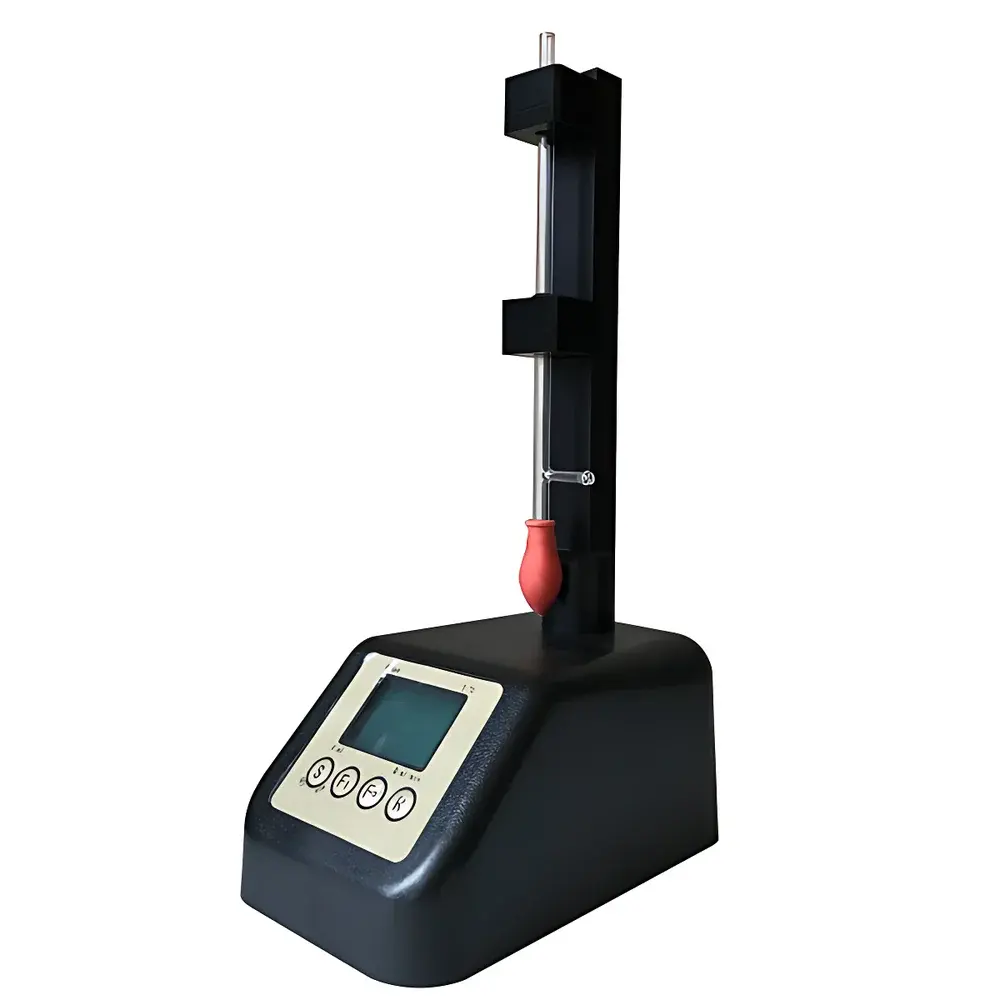
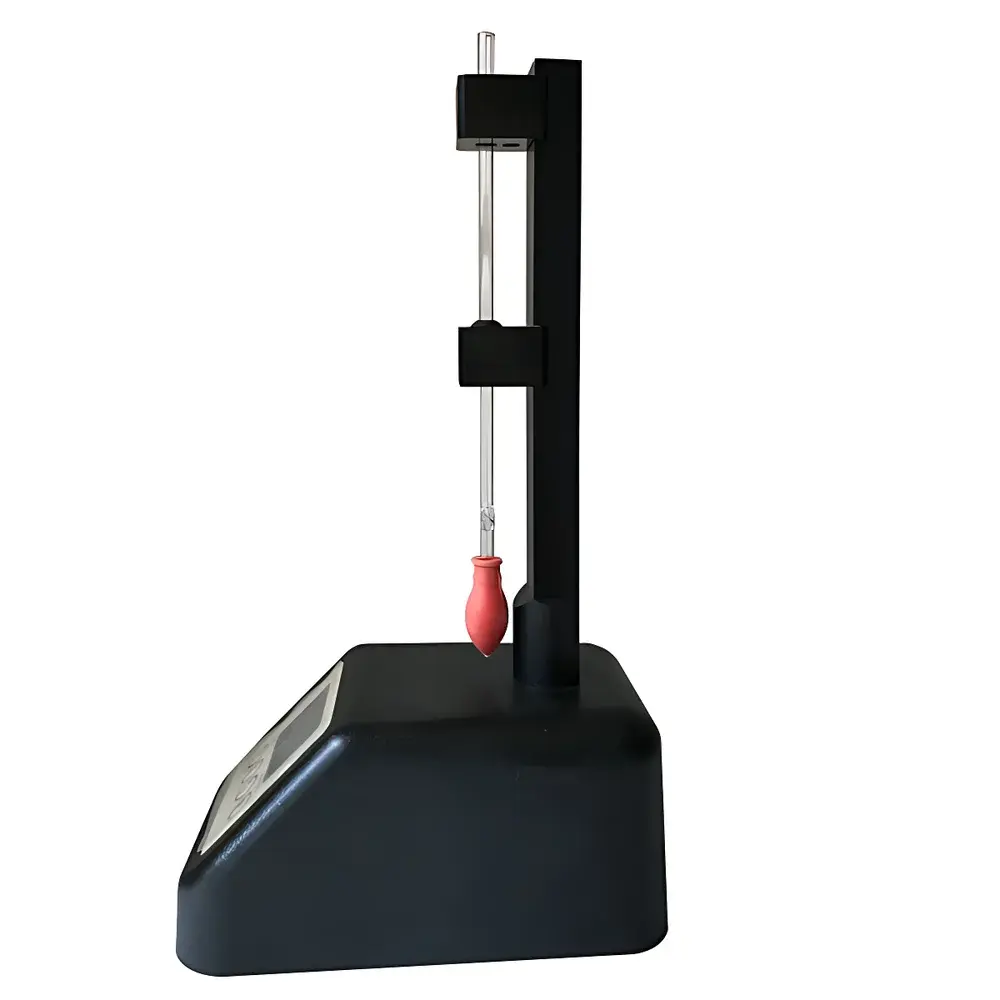
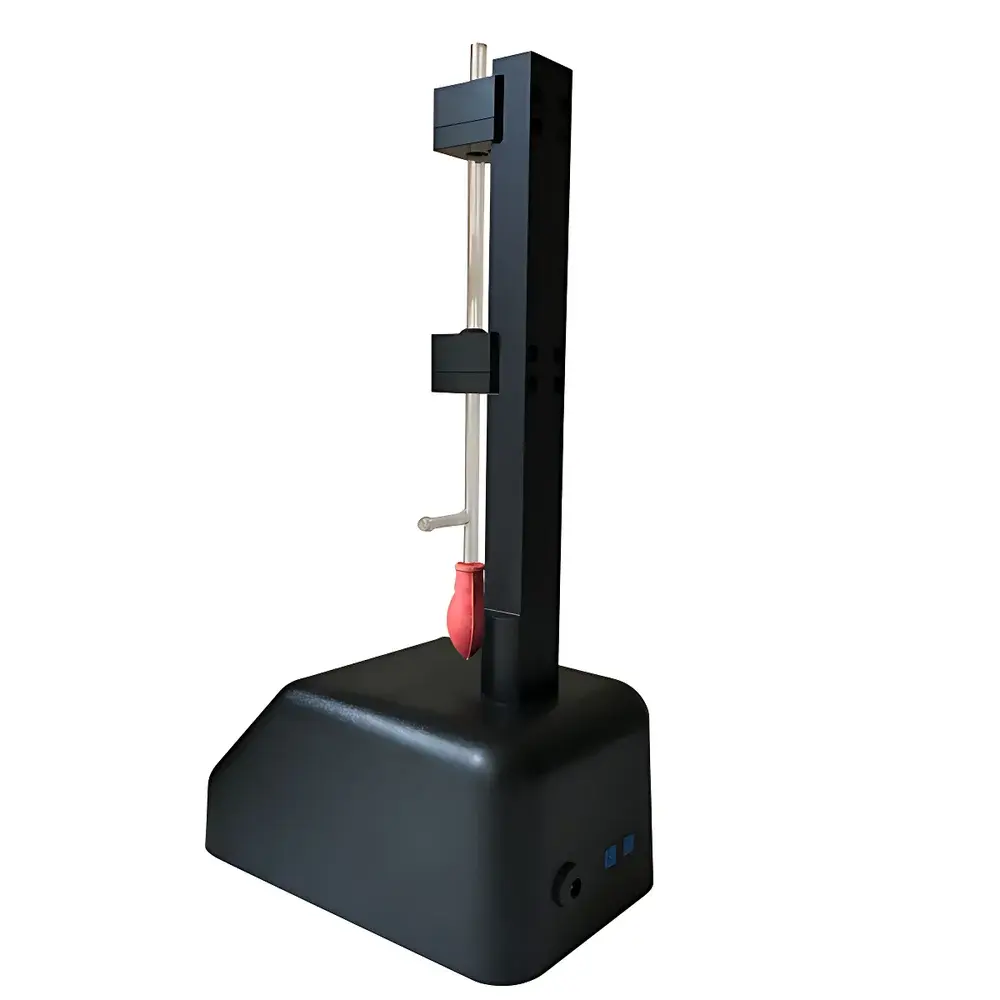
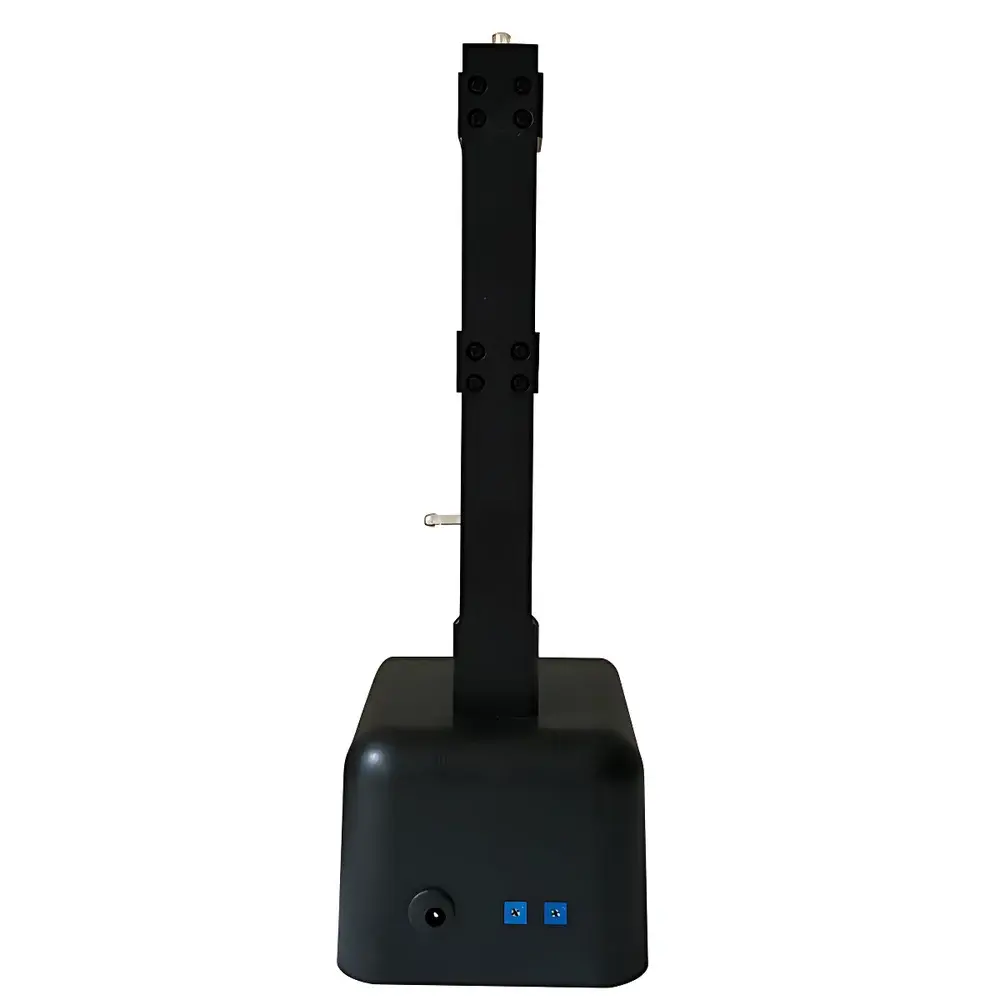
Sanpu GL-101B Electronic Soap Film Flowmeter
| Brand | Sanpu |
|---|---|
| Model | GL-101B |
| Type | Volumetric Flowmeter |
| Measurement Principle | Soap Film Displacement (Capillary Tube Method) |
| Flow Range (Lever 1) | 0.1–100 mL/min |
| Accuracy | ±1% of reading |
| Time Resolution | 0.01 s (0.1–600.0 s) |
| Display | LCD with simultaneous readout of temperature, pressure, volume, and flow rate |
| Power | Rechargeable 4.8 V / 700 mAh battery (standby >300 h |
| External Power | 9 V DC input with in-situ charging capability |
| Operating Environment | Ambient temperature and pressure compensation enabled |
| Compliance | Designed for laboratory calibration, QC verification, and field validation per ISO 4064-2, ASTM D1079, and EPA Method 1021 guidelines |
Overview
The Sanpu GL-101B Electronic Soap Film Flowmeter is a precision volumetric flow measurement instrument engineered for high-reproducibility gas and low-viscosity liquid flow quantification in analytical laboratories, environmental monitoring stations, and industrial process validation settings. It operates on the fundamental principle of soap film displacement within a calibrated vertical glass tube: a thin, stable soap film is introduced into the tube and driven by the sample flow; elapsed time for the film to traverse a known reference distance is measured electronically with 0.01-second resolution. This time-of-flight measurement—combined with real-time ambient temperature and absolute pressure sensing—enables automatic calculation of both volumetric flow rate (mL/min or L/min) and standardized mass flow rate (e.g., sccm or slm) using ideal gas law corrections. Unlike thermal or differential-pressure meters, the GL-101B delivers direct, primary-standard traceability without requiring fluid-specific calibration curves or zero-point drift compensation. Its lever-based modular design allows users to select interchangeable tube assemblies optimized for distinct flow ranges—Lever 1 (0.1–100 mL/min) being the standard configuration for GL-101B—ensuring optimal signal-to-noise ratio across orders of magnitude.
Key Features
- Volumetric measurement via optically tracked soap film displacement—no moving mechanical parts or sensor fouling risk
- Integrated temperature and absolute pressure sensors for real-time NTP (Normal Temperature and Pressure) and STP (Standard Temperature and Pressure) correction
- High-resolution LCD display showing concurrent readings of elapsed time, measured volume, ambient T & P, uncorrected flow, and corrected volumetric/mass flow
- Three-button interface enabling rapid start/stop, data hold, and five-point statistical averaging (mean, min, max, SD)
- Dual-power architecture: internal 4.8 V / 700 mAh rechargeable battery (≥300 h standby, ≥500 cycles) + external 9 V DC input with simultaneous battery charging
- Calibration-ready architecture: user-performed span verification using certified reference volumes or gravimetric methods compliant with ISO/IEC 17025 requirements
Sample Compatibility & Compliance
The GL-101B is validated for use with non-corrosive, non-particulate gases (e.g., air, N₂, O₂, He, CO₂) and low-viscosity liquids (e.g., water, ethanol, isopropanol) where surface tension permits stable film formation. It is not suitable for high-viscosity fluids, aerosols, or vapors containing condensable components. The instrument meets essential metrological criteria outlined in ISO 4064-2 (water meters – Part 2: Test methods), ASTM D1079 (Standard Test Method for Flow Rate of Gases Through Porous Media), and U.S. EPA Method 1021 (Soap Film Flowmeter Calibration for Stack Gas Sampling). Its firmware supports manual entry of gas composition for enhanced mass flow accuracy under non-ideal conditions. All hardware and firmware are designed to support GLP/GMP audit readiness, including timestamped measurement logs and immutable calibration event records.
Software & Data Management
While the GL-101B operates as a fully self-contained handheld instrument, its measurement data can be exported via optional RS-232 or USB-to-serial interface (adapter sold separately) for integration into LIMS or QA/QC databases. Exported CSV files include column headers for timestamp, raw transit time (s), measured volume (mL), ambient temperature (°C), barometric pressure (kPa), uncorrected flow (mL/min), corrected volumetric flow (mL/min @ 25°C/101.325 kPa), and calculated mass flow (mg/min or g/h based on user-defined molecular weight). No proprietary software is required; exported files are compatible with Excel, Python pandas, MATLAB, and LabVIEW. Firmware supports configurable auto-zero during idle periods and stores up to 200 measurement sessions with full parameter metadata—critical for ISO 17025-compliant uncertainty budgeting.
Applications
- Calibration and verification of gas chromatography carrier gas flow rates (He, H₂, N₂) in GC systems including Sanpu GC-8000 and GC-9860 series
- Verification of flow outputs from gas generators (e.g., BF-2L air, BF-300E H₂, BF-300N N₂) prior to instrument connection
- Field validation of sampling pumps used in EPA TO-17, NIOSH 5515, and ISO 16000-6 air quality monitoring protocols
- Flow characterization of purge-and-trap, headspace (AHS-610/DK-6900), and multi-port valve (ED-6A) subsystems
- Teaching and demonstration of primary volumetric flow principles in university analytical chemistry and instrumentation labs
- QC release testing of gas delivery modules in medical device manufacturing (e.g., sterilization with ethylene oxide)
FAQ
What is the maximum allowable operating pressure for the GL-101B?
The instrument is rated for atmospheric pressure operation only (±10 kPa deviation); overpressure will rupture the soap film and damage the optical sensor.
Can the GL-101B measure humidified or saturated gas streams?
Yes—provided condensation does not form inside the measurement tube; users should install an inline desiccant or chilled mirror dew point monitor upstream if RH exceeds 80%.
Is firmware upgrade supported in the field?
Yes—via UART bootloader mode using standard terminal software; version history and release notes are available on Sanpu’s technical documentation portal.
How often must the soap film tube be cleaned or replaced?
Glass tubes require cleaning with isopropanol and lint-free wipes after every 50 measurements when used with hydrocarbon-laden streams; typical service life exceeds 10,000 cycles under clean-air conditions.
Does the GL-101B comply with FDA 21 CFR Part 11 requirements?
The standalone unit does not implement electronic signatures or audit trails; however, exported CSV logs—when ingested into validated LIMS platforms—fully satisfy Part 11 record retention and integrity mandates.