
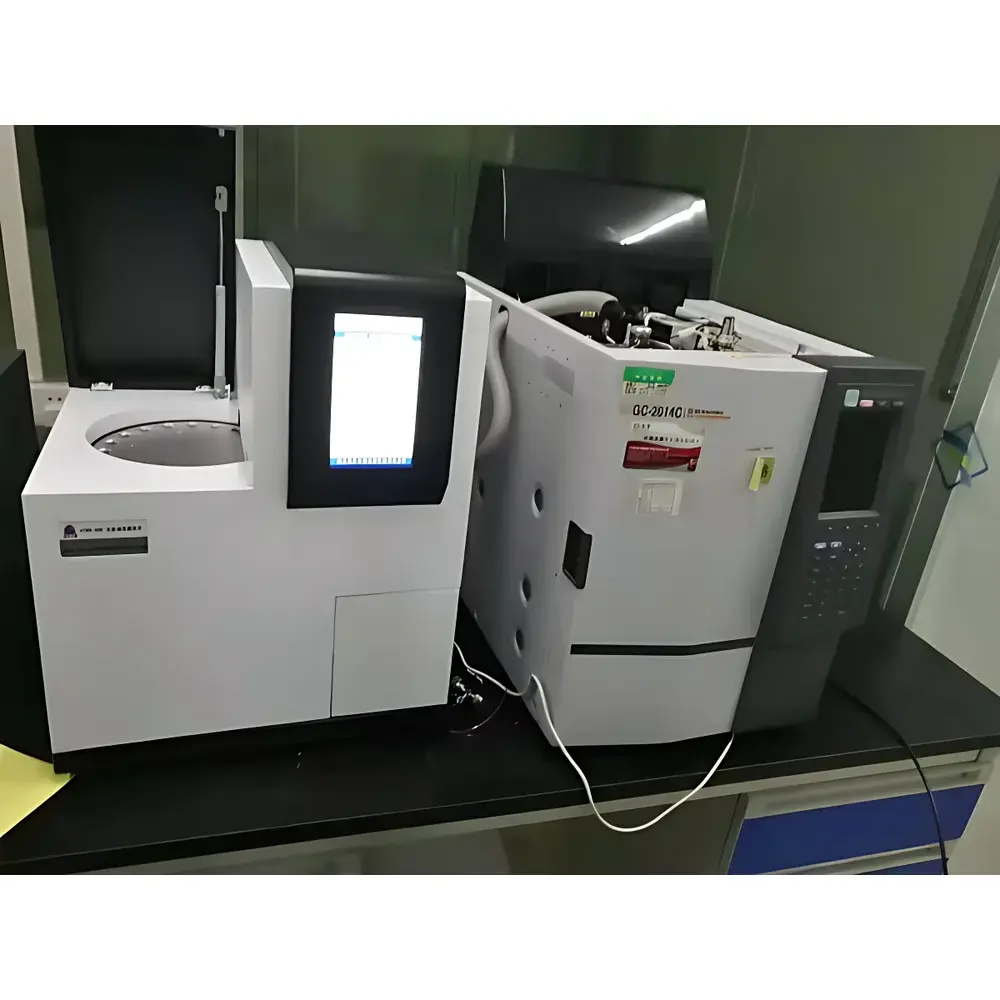
Beifen Sanpu GC-3420A Portable Gas Chromatograph for TVOC (Total Volatile Organic Compounds) Analysis
| Brand | Beifen Sanpu |
|---|---|
| Origin | Beijing, China |
| Manufacturer Type | Direct Manufacturer |
| Instrument Type | Portable Gas Chromatograph |
| Model | GC-3420A |
| Price Range | USD 4,200 – 7,000 |
| Application Field | General-purpose Environmental Air Monitoring |
| Temperature Control Range | Ambient to 400 °C |
| Ramp Rate | Up to 40 °C/min |
| Cooling Rate | Forced air cooling, <5 min from 300 °C to 50 °C |
| Carrier Gas Flow Range & Control | 0–100 mL/min (N₂, H₂, He), electronic pressure/flow control (EPC) |
| Inlet Pressure Range | 0–100 psi |
| Maximum Inlet Temperature | 450 °C |
Overview
The Beifen Sanpu GC-3420A is a purpose-built portable gas chromatograph engineered for standardized quantification of Total Volatile Organic Compounds (TVOC) in ambient and indoor air matrices. It operates on the principle of capillary gas chromatography coupled with flame ionization detection (FID), conforming to key regulatory methodologies including GB/T 18883–2002, HJ 644–2013, and ASTM D5197–22. The system is designed around thermal desorption–GC workflows: air samples are collected onto Tenax TA sorbent tubes, followed by automated two-stage thermal desorption (using the optional ATDS-20A unit), introduction into the GC via cold trap focusing, separation on a non-polar fused-silica capillary column (50 m × 0.32 mm × 1.0 µm), and detection by dual FID. This architecture ensures high sensitivity (detection limit ≤ 0.1 µg/m³ for target analytes), reproducible peak shape, and robust resolution of complex VOC mixtures — particularly critical when resolving co-eluting isomers such as m-/p-xylene and o-xylene within the C6–C11 retention window (n-hexane to n-hexadecane).
Key Features
- Integrated dual-FID configuration with independent signal processing channels for simultaneous analysis and system verification
- Modular inlet system supporting both packed-column and split/splitless capillary injection, optimized for thermal desorption interfaces
- Precision electronic pressure and flow control (EPC) for carrier, makeup, and detector gases — enabling method transferability and retention time stability (RSD < 0.1% over 24 h)
- Programmable oven with rapid heating (up to 40 °C/min) and active air-cooling, ensuring cycle times ≤ 25 min per sample under standard TVOC methods
- Pre-calibrated temperature zones: column oven, inlet, and detector compartments independently controlled and validated per ISO/IEC 17025 traceable protocols
- Designed for field deployment: compact footprint (≤ 45 cm W × 50 cm D × 35 cm H), low power consumption (< 800 W), and shock-resistant optical bench construction
Sample Compatibility & Compliance
The GC-3420A is validated for use with standard EPA TO-17 and Chinese national standard-compliant Tenax TA adsorption tubes (e.g., Beifen Sanpu proprietary tubes meeting GB/T 5750.8–2023 pressure drop specifications ≤ 3.5 kPa at 100 mL/min). It supports both single-stage and two-stage thermal desorption protocols — the latter delivering >95% analyte recovery for C6–C12 aliphatics and aromatics, with peak asymmetry (As) < 1.2 across the full calibration range. Regulatory alignment includes full compatibility with GB/T 18883–2002 TVOC definition (retention between n-hexane and n-hexadecane), US EPA Method TO-17, and ISO 16000-6:2011 for indoor air VOC monitoring. Data acquisition and reporting meet GLP requirements, with audit-trail-enabled software supporting 21 CFR Part 11-compliant user access controls and electronic signatures when paired with BF-2002 Chromatography Workstation.
Software & Data Management
The BF-2002 Chromatography Data System provides ISO/IEC 17025-aligned instrument control, peak integration (with customizable baseline algorithms), calibration curve generation (linear, quadratic, or weighted), and report export in PDF, CSV, and XML formats. It supports automatic identification of the nine priority TVOC markers (benzene, toluene, ethylbenzene, xylenes, styrene, heptane, octane, nonane, undecane) using retention time locking and library matching against NIST MS Search (when coupled with optional GC-MS). All raw data files include embedded metadata: instrument parameters, operator ID, sample ID, calibration status, and hardware diagnostic logs — essential for laboratory accreditation audits. Remote monitoring and method synchronization are supported via secure LAN/Wi-Fi connectivity.
Applications
- Indoor air quality (IAQ) assessment in residential, commercial, and healthcare facilities per GB/T 18883 and WHO guidelines
- Occupational exposure monitoring in manufacturing, printing, coating, and electronics assembly environments
- Post-construction indoor air clearance testing following LEED v4.1 IEQ Credit 3.2 or China Green Building Evaluation Standard (GB/T 50378)
- Environmental site assessments for soil vapor intrusion and landfill perimeter monitoring
- Method development and validation studies for emerging VOCs (e.g., terpenes, glycol ethers) within the 50–260 °C boiling point range
- Quality control of building materials, adhesives, and coatings per GB 18580–2017 and EN 717-1
FAQ
Does the GC-3420A comply with Chinese national standards for TVOC analysis?
Yes — it is fully compatible with GB/T 18883–2002, HJ 644–2013, and HJ 583–2010, including specified column polarity (polydimethylsiloxane, polarity index <10), retention window definition, and quantification methodology using toluene equivalence.
Can the system be upgraded for GC-MS coupling?
The GC-3420A features a standard 1/8″ or 1/4″ column outlet port and configurable interface pressure settings, enabling seamless integration with third-party quadrupole or TOF mass spectrometers without hardware modification.
What maintenance intervals are recommended for routine TVOC analysis?
FID jet cleaning every 200 injections; inlet liner replacement every 500 injections; column trimming (0.5–1 m) every 1,000 runs; EPC sensor recalibration annually or after major pressure adjustments.
Is remote diagnostics supported?
Yes — the BF-2002 workstation includes secure remote desktop capability (TLS 1.2 encrypted) for real-time troubleshooting and firmware updates, subject to customer network policy approval.
Are certified reference materials and method validation packages available?
Beifen Sanpu provides NIST-traceable TVOC standard mixtures (Certified Reference Material CRM-102), method validation kits (including precision, accuracy, LOD/LOQ verification protocols), and ISO/IEC 17025-compliant IQ/OQ documentation upon request.





