
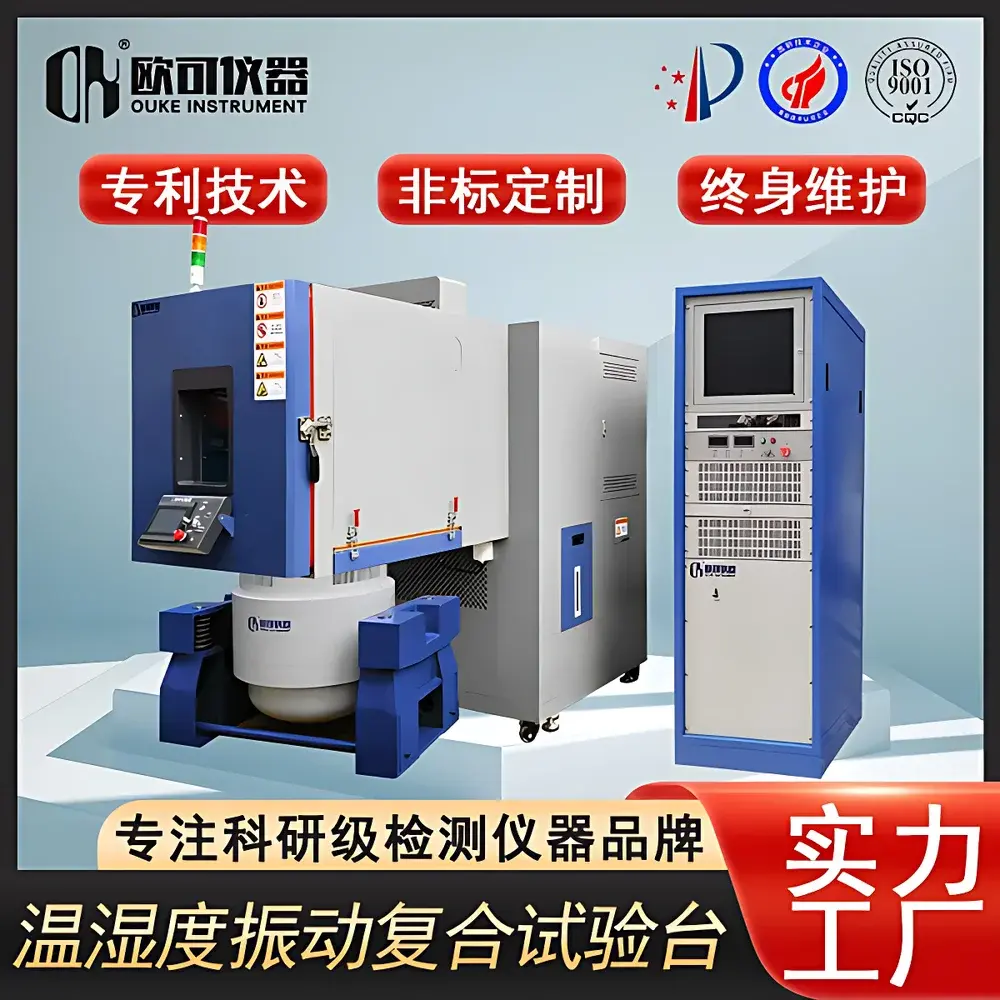
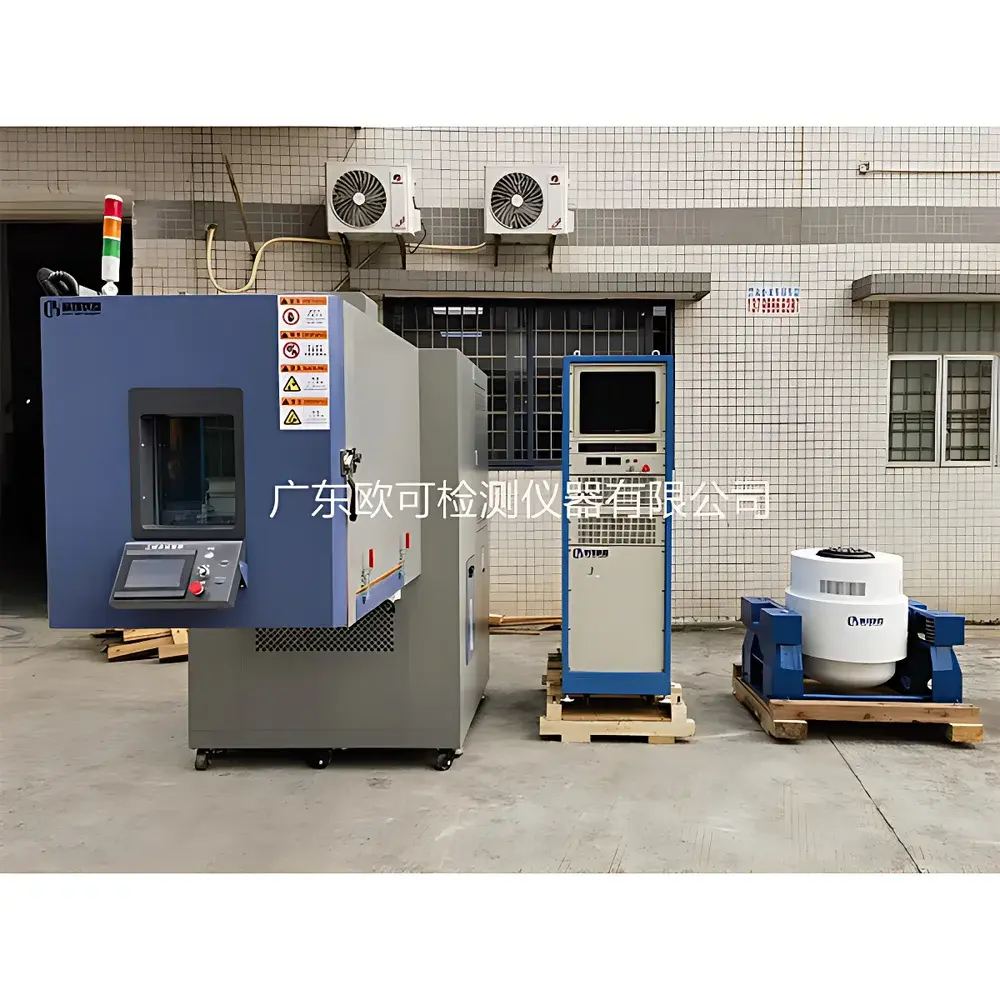
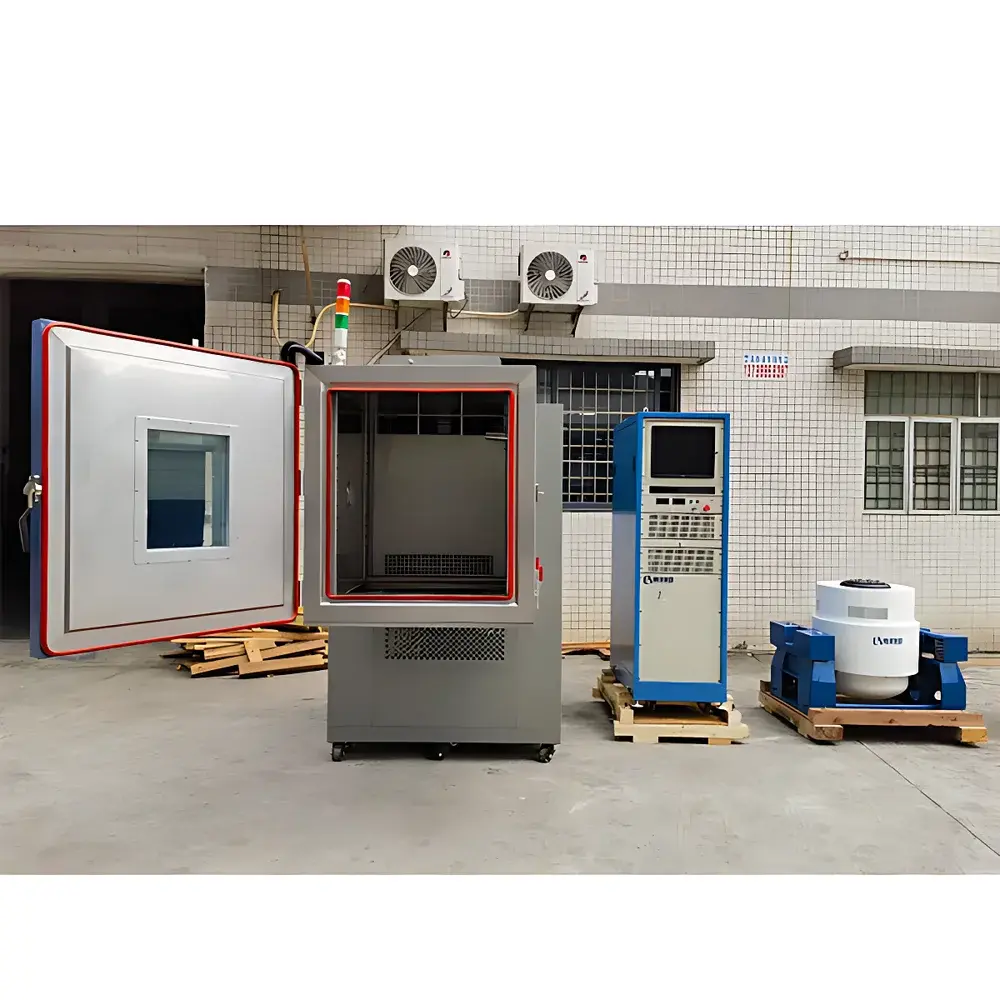
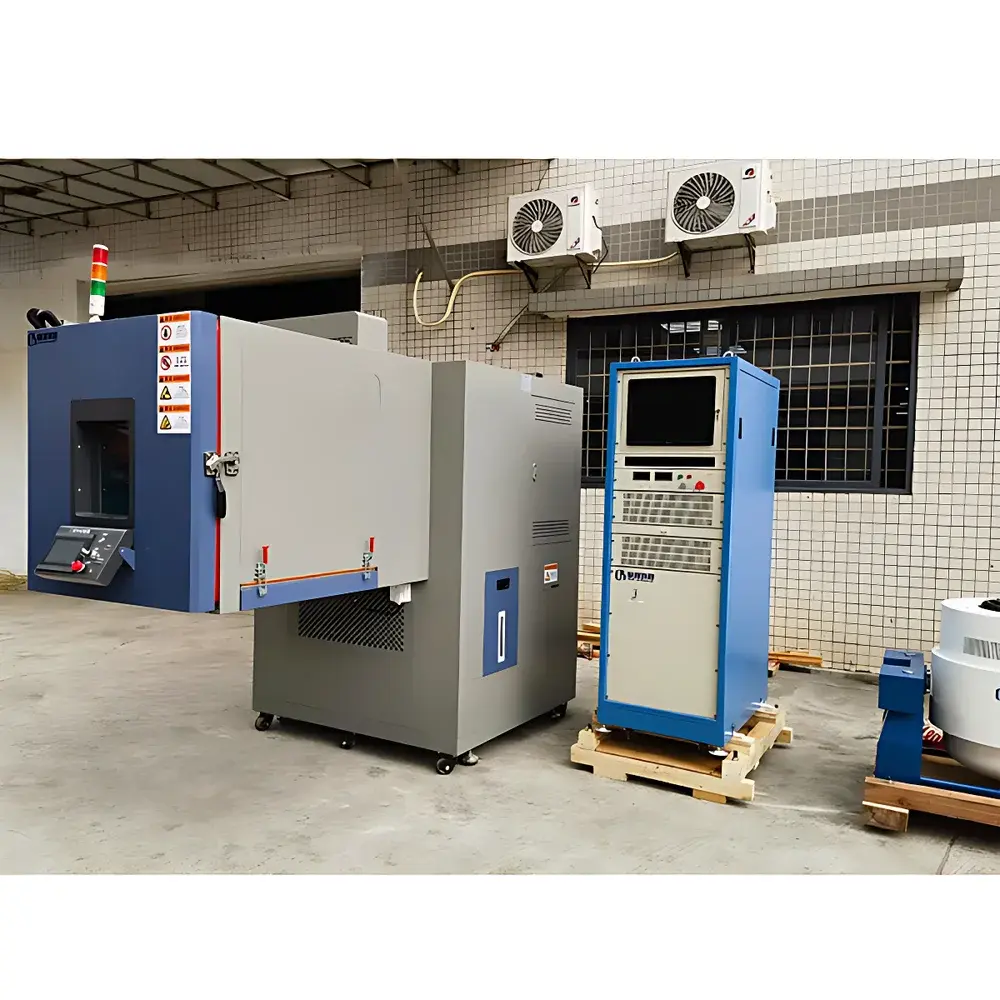
OK Instruments OK-ZTH-512.1688 Combined Temperature-Humidity-Vibration Test System
| Brand | OK Instruments |
|---|---|
| Origin | Guangdong, China |
| Manufacturer Type | Direct Manufacturer |
| Product Origin | Domestic (China) |
| Model | OK-ZTH-512.1688 |
| Temperature Range | −70 °C to +150 °C |
| Humidity Range | 20–98 %RH at 20–85 °C |
| Temperature Ramp Rate | 5 / 10 / 15 °C/min |
| Temperature Uniformity | ≤ ±0.5 °C |
| Standard Load Capacity | 15 kg aluminum mass, 350 W internal heat dissipation |
Overview
The OK Instruments OK-ZTH-512.1688 Combined Temperature-Humidity-Vibration Test System is an engineered solution for accelerated environmental reliability testing under simultaneous multi-stress conditions. It integrates three critical physical stress domains—controlled thermal cycling, regulated humidity exposure, and mechanically induced vibration—within a single, synchronized test chamber. Unlike sequential or single-stress testing methods, this tri-combined system replicates the synergistic environmental loads experienced during real-world operational life cycles, such as automotive road excitation under extreme climatic gradients, airborne equipment operation during ascent/descent, or maritime electronics deployment in high-salinity, thermally variable environments. The system operates on a unified control architecture grounded in Couette-flow-compatible thermal management, closed-loop humidity regulation via steam injection and refrigerant-based dehumidification, and electrodynamic vibration actuation with real-time force feedback. Its design conforms to fundamental principles of accelerated life testing (ALT) and physics-of-failure (PoF) modeling, enabling correlation between laboratory-induced degradation mechanisms—such as solder joint fatigue, polymer creep, condensation-induced corrosion, or connector fretting—and field failure modes.
Key Features
- Triple-stress synchronization: Simultaneous application of temperature, humidity, and vibration within a single test volume, with programmable phase alignment and interlocked safety thresholds.
- High-fidelity thermal performance: Wide operating range from −70 °C to +150 °C, supported by cascade refrigeration and PID-controlled resistive heating; ramp rates selectable at 5, 10, or 15 °C/min with stability maintained at ≤ ±0.5 °C across the working zone.
- Precision humidity control: Steam-based humidification and direct-expansion dehumidification enable stable RH regulation from 20% to 98% RH within the 20–85 °C ambient envelope, traceable to NIST-traceable hygrometric standards.
- Electrodynamic vibration subsystem: Vertical-axis shaker table rated for 15 kg payload (aluminum reference mass), compatible with sine, random, and mixed-mode profiles per ISO 5344 and IEC 60068-2-64.
- Integrated safety architecture: Hardware-level interlocks prevent vibration activation during out-of-spec temperature/humidity states; over-temperature, over-humidity, and over-acceleration cut-offs are independently monitored and logged.
- Robust mechanical integration: Vibration-isolated chamber base, thermally compensated mounting interface, and low-thermal-expansion sample fixture interface ensure mechanical integrity across full thermal excursion.
Sample Compatibility & Compliance
The OK-ZTH-512.1688 supports test specimens up to 15 kg with maximum power dissipation of 350 W, accommodating typical automotive ECUs, battery modules, avionics line-replaceable units (LRUs), and industrial power converters. Fixture adaptability includes standardized ISO 13373-2 mounting interfaces and optional thermal break adapters for high-conductivity DUTs. The system is designed and validated for compliance with internationally recognized test standards including IEC 60068-2-1 (cold), IEC 60068-2-2 (dry heat), IEC 60068-2-30 (damp heat cyclic), IEC 60068-2-6 (vibration—sinusoidal), IEC 60068-2-64 (vibration—random), MIL-STD-810H Methods 502.7, 507.7, and 514.7, ISO 16750-4 (road vehicles—climate load), and GB/T 2423.1–2423.10 series. All control algorithms and data acquisition firmware support audit-ready operation under GLP and GMP frameworks, with optional 21 CFR Part 11-compliant electronic signature and audit trail modules available upon configuration.
Software & Data Management
The system runs on OK-TestSuite™ v4.2—a deterministic real-time control platform built on Linux RT kernel with dual-channel Ethernet redundancy. Test profile definition supports hierarchical nesting of temperature/humidity ramps, dwell phases, and vibration spectra—including user-defined PSDs, resonance dwell sweeps, and time-history replay. All sensor inputs (Pt100 RTDs, capacitive RH sensors, IEPE accelerometers) are sampled at ≥10 kHz with 24-bit resolution and timestamped to UTC via NTP synchronization. Raw data export is available in HDF5 and CSV formats; metadata embedding includes calibration certificates, operator ID, environmental chamber status logs, and vibration controller diagnostic snapshots. Optional cloud gateway enables remote monitoring, predictive maintenance alerts (based on compressor discharge temperature trends and shaker coil impedance drift), and automated report generation aligned with ISO/IEC 17025 documentation requirements.
Applications
This tri-combined test system serves as a core validation tool across multiple high-reliability sectors. In automotive electronics, it evaluates ADAS domain controllers under combined thermal shock and road-induced random vibration while exposed to condensing humidity—directly addressing failure modes identified in ISO 16750-4 Annex C. For aerospace applications, it supports DO-160G Section 24 (temperature), Section 25 (humidity), and Section 8 (vibration) qualification of flight-critical components. Defense contractors utilize the system for MIL-STD-810H Method 520.5 (combined environments) verification of tactical radios and guided munition guidance units. Renewable energy developers apply it to validate grid-tied inverters and EV charging infrastructure against combined desert heat, coastal humidity, and transport-induced mechanical shock. Additional use cases include accelerated aging of conformal coatings, evaluation of MEMS packaging hermeticity, and qualification of medical device enclosures under IEC 60601-1 environmental clauses.
FAQ
What is the maximum allowable sample size and weight for this system?
The standard test volume accommodates samples up to 15 kg mass, with dimensional constraints defined by the internal chamber cavity (available upon request); custom configurations support larger payloads with extended cooling capacity.
Can the system perform vibration testing at sub-zero temperatures?
Yes—the electrodynamic shaker and control electronics are rated for continuous operation down to −40 °C; below that, optional cryogenic-rated actuators and cold-chamber-compatible cabling are required.
Is third-party calibration and certification available?
OK Instruments provides factory calibration traceable to CNAS-accredited laboratories; on-site ISO/IEC 17025 certification and uncertainty budgeting services are available through authorized partners.
How does the system handle heat generated by the DUT during testing?
The integrated refrigeration system is sized to reject up to 350 W of internal heat load while maintaining specified temperature and humidity setpoints; higher dissipation requires auxiliary cooling or derated test profiles.
Does the software support automated pass/fail evaluation against predefined limits?
Yes—OK-TestSuite™ includes configurable limit monitoring with real-time deviation alerts, statistical process control (SPC) charting, and automatic flagging of out-of-tolerance events based on user-defined thresholds per channel.



