
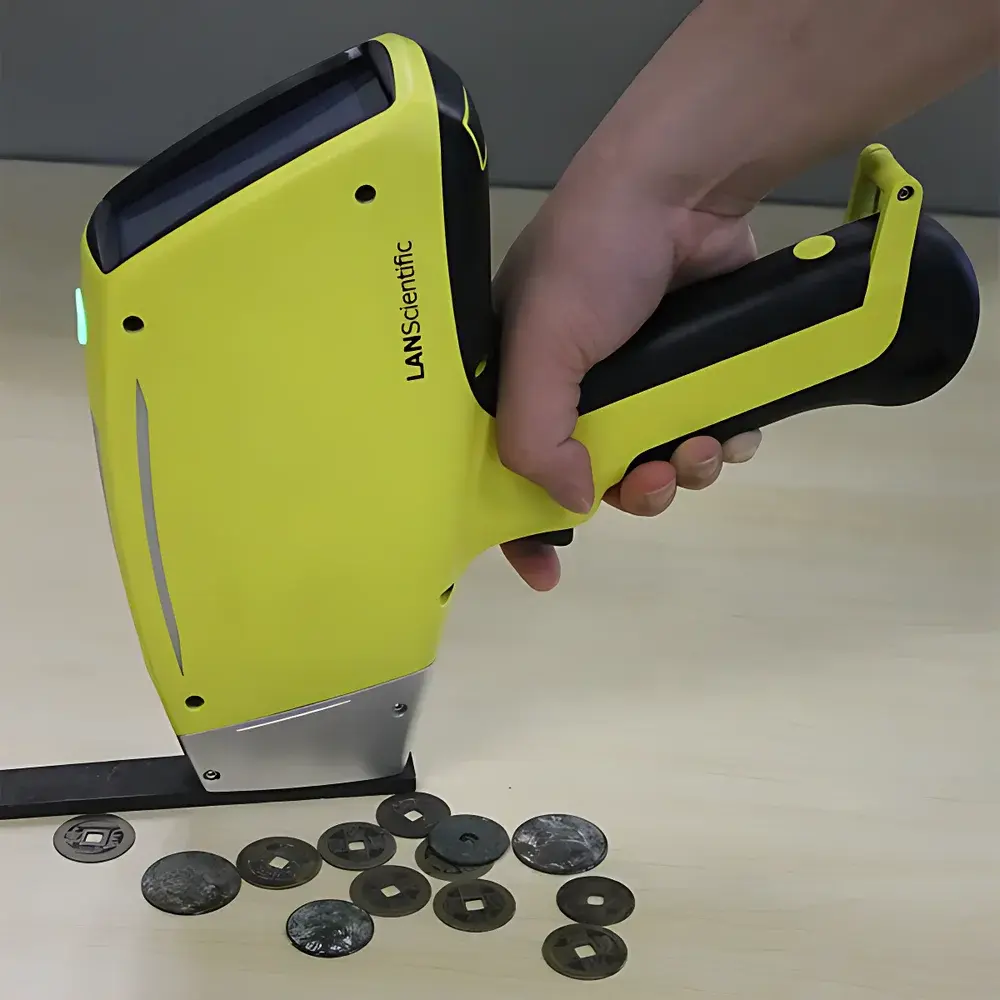
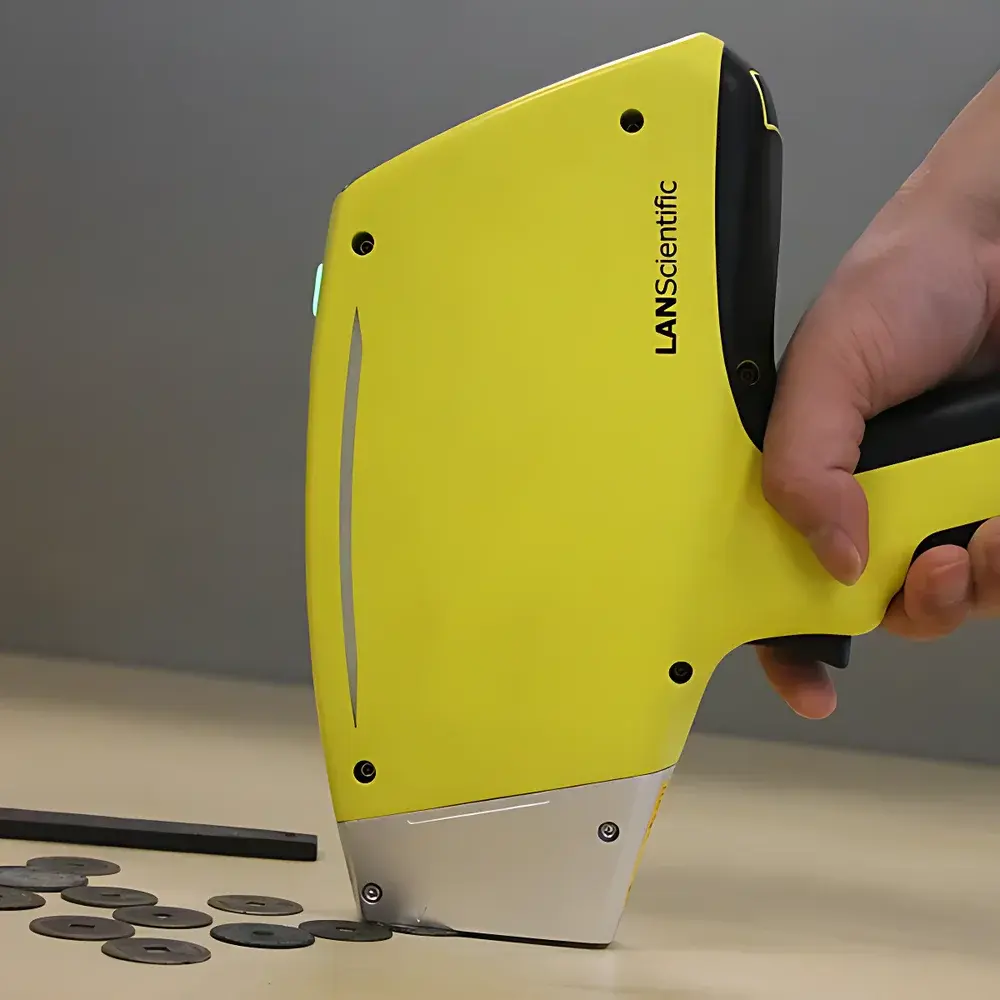
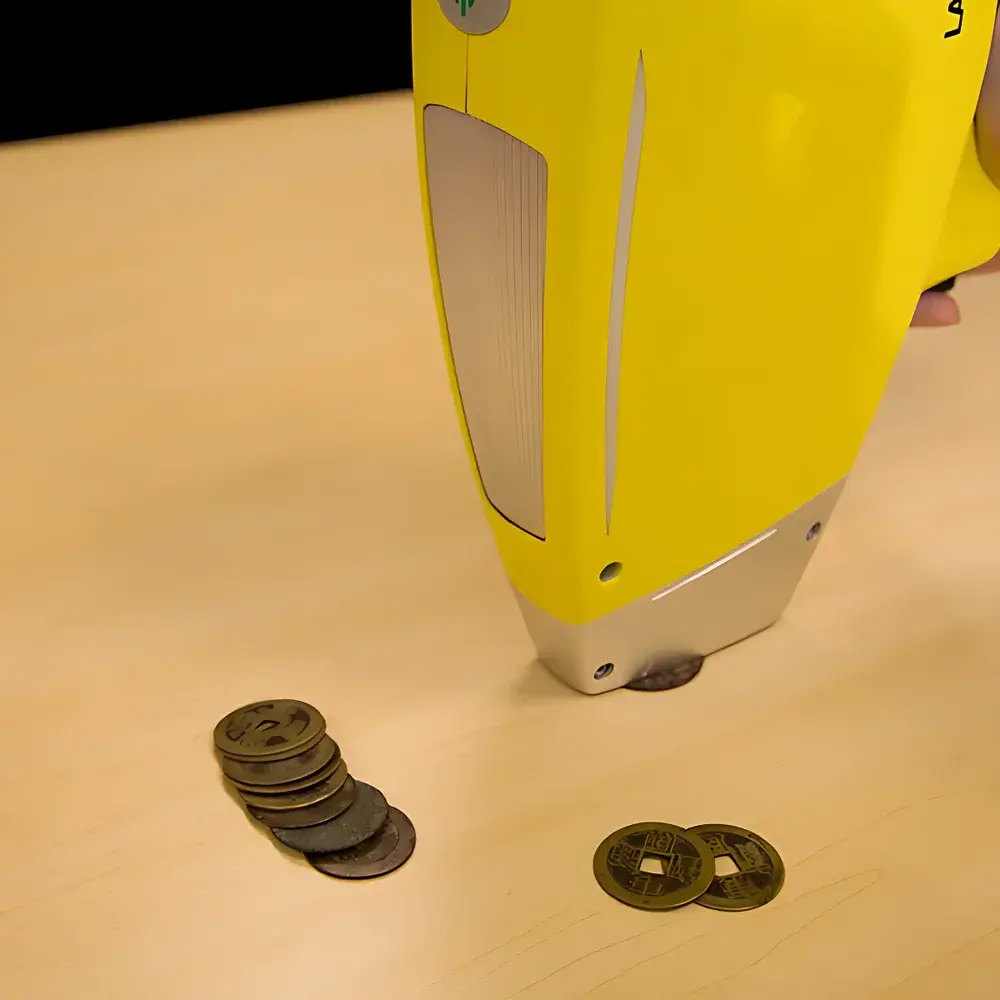
Brookfield TrueX 1000 Portable Handheld Archaeological ED-XRF Spectrometer
| Brand | LANScientific |
|---|---|
| Origin | Jiangsu, China |
| Manufacturer Type | Direct Manufacturer |
| Regional Classification | Domestic (China) |
| Model | TrueX 1000 |
| Application | Field-Portable |
| Instrument Type | Conventional ED-XRF |
| Industry-Specific Use | Cultural Heritage & Archaeological Science |
| Elemental Range | Mg (12) to U (92) |
Overview
The Brookfield TrueX 1000 is a field-deployable, handheld energy dispersive X-ray fluorescence (ED-XRF) spectrometer engineered specifically for non-invasive elemental analysis of archaeological artifacts, historical objects, and cultural heritage materials. Based on fundamental XRF physics—where primary X-rays excite atoms in the sample, inducing characteristic secondary (fluorescent) X-ray emission—the instrument quantifies elemental composition by measuring energy spectra and peak intensities. Its design prioritizes analytical integrity under real-world constraints: no sample preparation, no surface ablation, and zero physical contact beyond gentle positioning. The TrueX 1000 operates across the full detectable range from magnesium (Mg, Z = 12) to uranium (U, Z = 92), enabling comprehensive characterization of major, minor, and trace elements critical to provenance studies, chronological attribution, and technological reconstruction in archaeometry.
Key Features
- True non-destructive analysis: No sampling, grinding, coating, or vacuum required—preserves artifact integrity and satisfies strict museum conservation protocols.
- Lightweight ergonomic design: Weighing only 1.5 kg with balanced center-of-gravity distribution, optimized for extended handheld use during excavation campaigns or museum inventory surveys.
- Rapid acquisition: Delivers quantitative elemental results—including semi-quantitative concentrations for Mg–U—in under 10 seconds per measurement point, supporting high-throughput screening of large artifact assemblages.
- Intuitive human-machine interface: 4.3-inch capacitive color touchscreen with ambient-light adaptive brightness control; fully graphical menu navigation with icon-driven workflow logic.
- One-touch operational sequence: Power-on → auto-calibration check → collimator alignment → trigger press → real-time spectrum display → on-screen concentration table — minimal training required for field archaeologists or conservators.
- Extended field endurance: Rechargeable Li-ion battery supports ≥8 hours of continuous operation at 25°C, with hot-swappable capability to maintain uninterrupted data collection across multi-day campaigns.
Sample Compatibility & Compliance
The TrueX 1000 accommodates heterogeneous, irregular, and fragile surfaces—including ceramics, bronze alloys, glass tesserae, painted plaster, stone tools, and corroded metalwork—without requiring flatness, homogeneity, or conductivity enhancement. Measurement geometry is optimized for variable standoff distances (0–5 mm), mitigating topographic interference. Instrument firmware incorporates matrix-matched calibration libraries for common archaeological material classes (e.g., silicate matrices, copper-based alloys, lead-glazed ceramics), with user-definable empirical calibrations supported via PC-based configuration software. All spectral data acquisition, processing, and reporting comply with ISO 17025:2017 general requirements for competence of testing and calibration laboratories, and aligns with ASTM E1621–22 Standard Guide for X-Ray Emission Spectrometry for Elemental Analysis of Metals and Alloys. Data audit trails and user access logs are configurable to meet GLP documentation standards.
Software & Data Management
Instrument control and spectral interpretation are managed through TrueX Analyze Pro v3.2 software, compatible with Windows 10/11. The suite provides real-time spectrum visualization, peak deconvolution using fundamental parameter (FP) algorithms, multi-point mapping export (CSV, XML), and batch report generation compliant with ISO/IEC 17025 documentation templates. Raw spectra (.trd) and processed reports (.pdf/.xlsx) are time-stamped, digitally signed, and stored with embedded metadata (operator ID, GPS coordinates if enabled, environmental temperature/humidity). Software supports 21 CFR Part 11-compliant electronic signatures and role-based user permissions when deployed in regulated research environments.
Applications
- Authenticity assessment of antiquities via elemental fingerprinting against regional ore deposit databases and known workshop compositional signatures.
- Chronological attribution through temporal trends in alloying practices (e.g., Sn/Pb ratios in bronze, Mn/Ca in Roman glass).
- Provenance determination using rare-earth element (REE) patterns and trace-element ratios (e.g., Sr/Nd isotopes inferred from bulk Sr/Zr/Y signatures).
- Technological reconstruction of manufacturing methods—such as identifying flux additives in glazes or distinguishing cold-working versus casting traces in metal artifacts.
- Conservation science support: Mapping chloride ingress in bronze disease, detecting residual cleaning agents, or monitoring pigment degradation kinetics over time.
- Geoarchaeological correlation: Linking ceramic clay bodies or lithic tools to geological source terrains using multivariate statistical clustering of elemental profiles.
FAQ
Is the TrueX 1000 certified for use in UNESCO World Heritage Sites or national museum collections?
Yes—its Class I radiation safety certification (GBZ 188-2014 / IEC 62495) and non-contact operation meet international guidelines for in situ analysis of protected heritage assets.
Can it distinguish between surface corrosion layers and bulk substrate composition?
Yes—by adjusting tube voltage (15–50 kV) and current (10–200 µA), users can tune penetration depth from ~1–50 µm, enabling stratified analysis of patinas, gilding, or paint layers.
Does the instrument require annual recalibration by the manufacturer?
No—field recalibration is performed using built-in reference foils (Mg, Al, Ti, Fe, Cu, Pb); factory calibration certificates are provided with each unit and remain valid for 24 months under normal usage conditions.
How is data security handled during remote field deployments?
All onboard storage uses AES-256 encryption; USB data export requires authenticated session handshake, and cloud sync (optional) employs TLS 1.3 with OAuth 2.0 authorization.




