
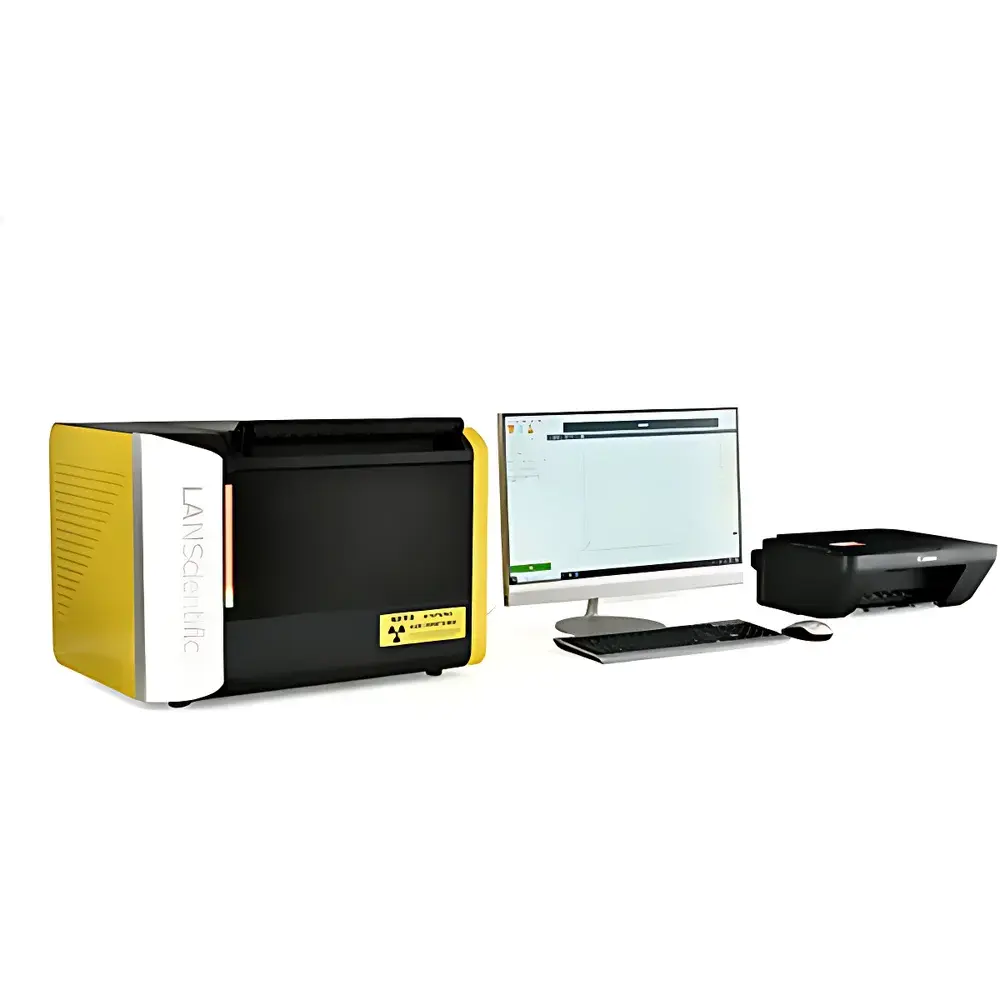
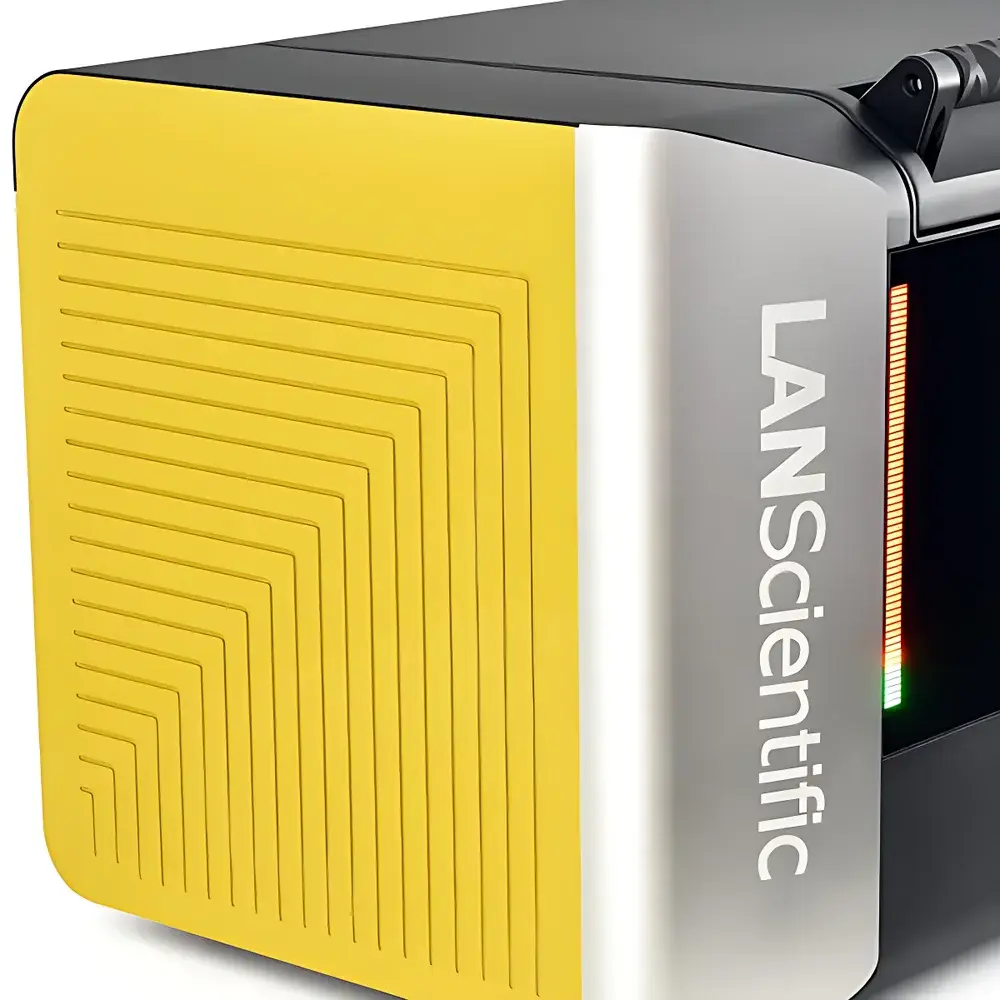
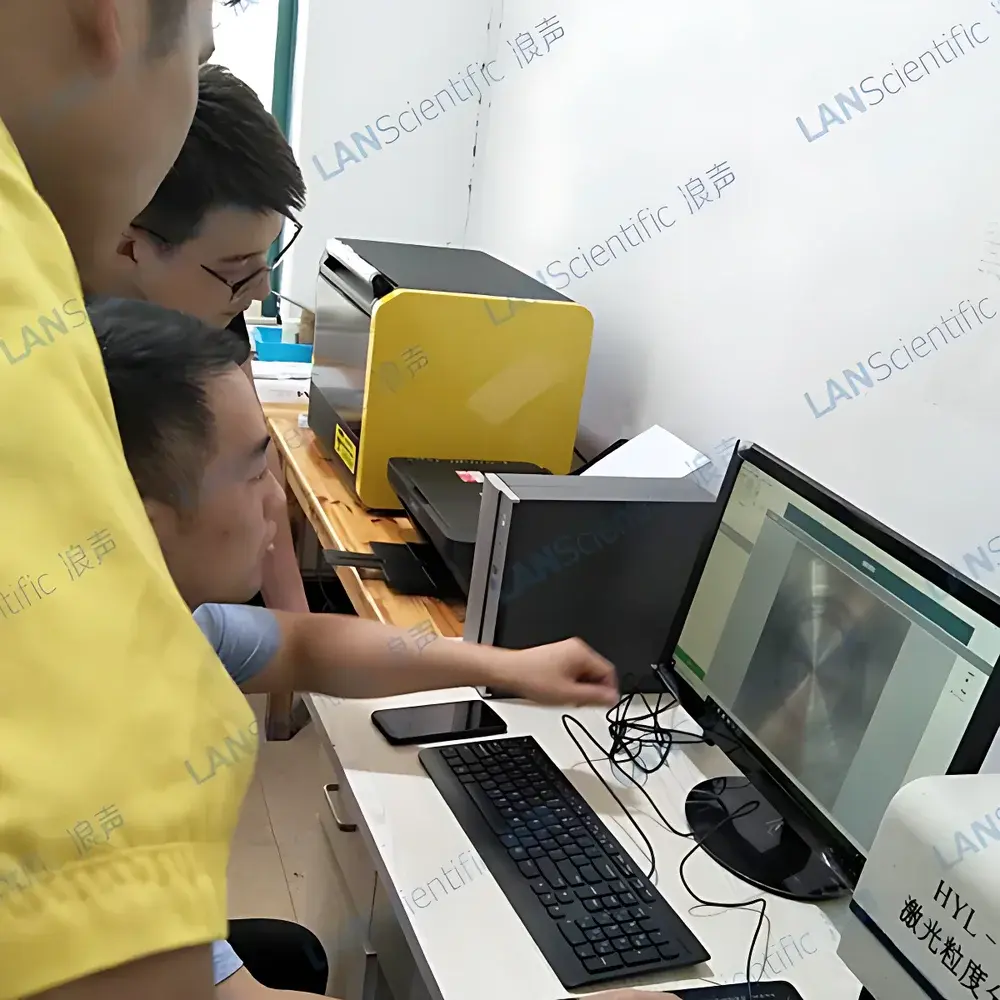
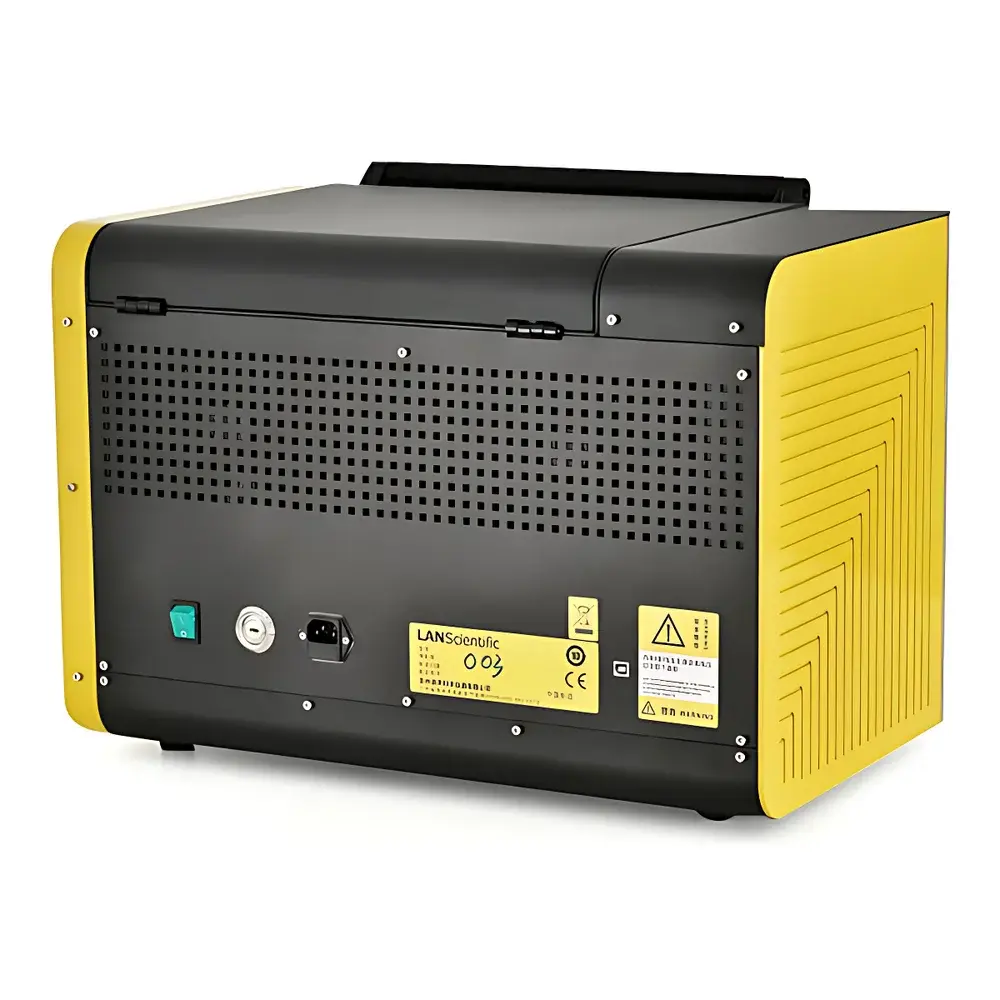
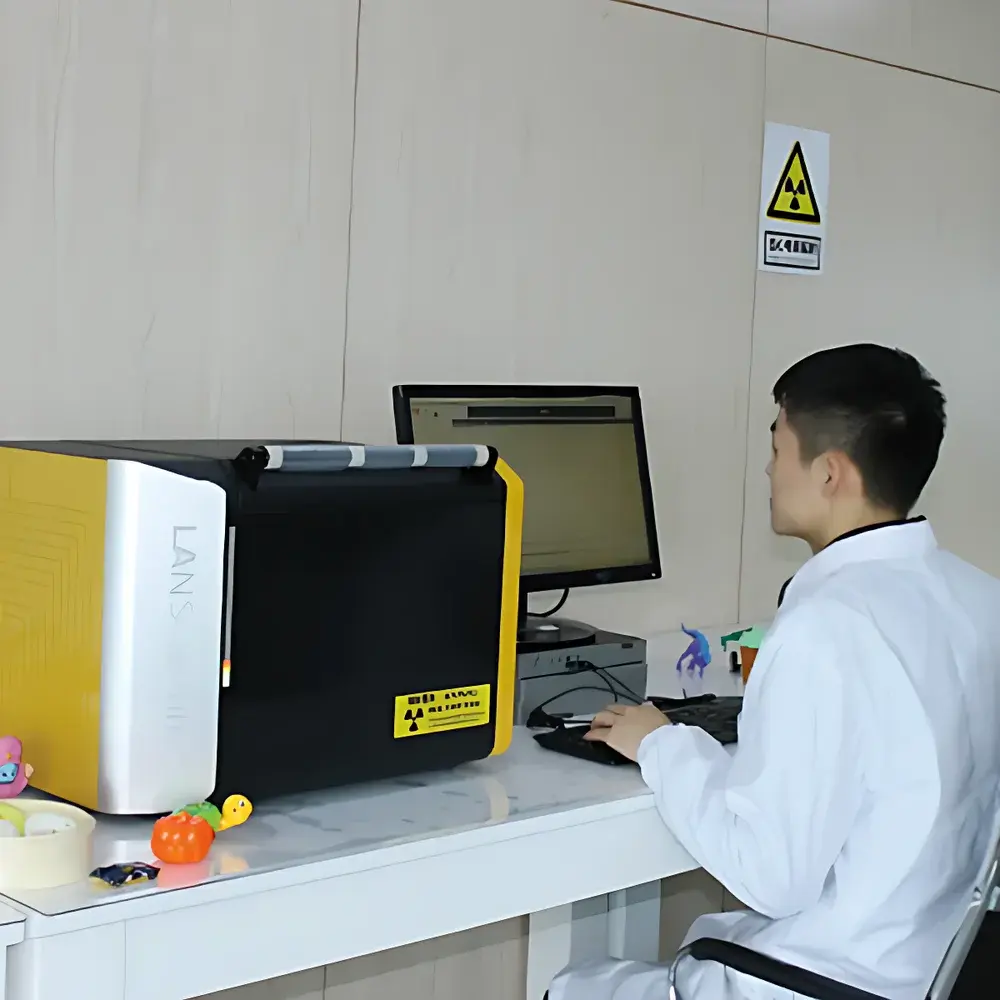
LANScientific ScopeX CSA 600 Benchtop Energy Dispersive X-Ray Fluorescence Spectrometer (ED-XRF) for RoHS, ELV and Halogen Screening
| Brand | LANScientific |
|---|---|
| Origin | Jiangsu, China |
| Manufacturer Type | Direct Manufacturer |
| Regional Classification | Domestic (China) |
| Model | ScopeX CSA 600 |
| Form Factor | Benchtop |
| Instrument Type | Conventional ED-XRF |
| Application Scope | General-Purpose Regulatory Compliance Analysis |
| Elemental Range | Mg to U (Z = 12–92) |
| Detection Limit | 1 ppm (for Cd, Pb, Hg, Cr, Br, Cl under optimized conditions) |
| Energy Resolution | <125 eV at Mn Kα (5.89 keV) |
| Repeatability | ≤0.1% RSD (for homogeneous reference materials, n=10) |
Overview
The LANScientific ScopeX CSA 600 is a benchtop energy dispersive X-ray fluorescence (ED-XRF) spectrometer engineered for regulatory compliance screening of restricted substances in electrical and electronic equipment (EEE), automotive components, and industrial materials. It operates on the fundamental principle of X-ray fluorescence: primary X-rays from a high-power microfocus tube excite inner-shell electrons in sample atoms; upon electron relaxation, characteristic secondary X-rays are emitted and resolved by a silicon drift detector (SDD). The resulting spectrum enables qualitative identification and quantitative determination of elemental composition from magnesium (Mg) through uranium (U). Designed specifically for RoHS Directive 2011/65/EU, ELV Directive 2000/53/EC, and halogen-free (IEC 61249-2-21) compliance verification, the CSA 600 integrates vacuum capability to enhance sensitivity for light elements (Cl, S, P, Si, Al, Mg), enabling reliable detection down to 1 ppm for key analytes including Cd, Pb, Hg, Cr(VI), Br, and Cl — without requiring wet chemistry or destructive sample preparation.
Key Features
- High-efficiency microfocus X-ray tube with programmable voltage (5–50 kV) and current (0–1 mA), optimized for low-energy excitation of light elements
- Silicon drift detector (SDD) with active area ≥25 mm² and <125 eV energy resolution at Mn Kα, ensuring precise peak separation for overlapping spectral lines (e.g., S Kα/Pb Mα, Cl Kα/K Kα)
- Integrated vacuum chamber with auto-purge control, reducing atmospheric absorption of low-energy X-rays and improving signal-to-noise ratio for Mg–Cl quantification
- Dual quantification algorithms: Empirical coefficient method (requiring matrix-matched calibration standards) and fundamental parameters (FP) method (enabling analysis of unknown or heterogeneous samples without dedicated standards)
- Motorized sample stage with programmable positioning and optional multi-sample carousel for unattended batch analysis
- Rugged, CE-compliant benchtop enclosure with interlocked safety shutter and real-time radiation monitoring per IEC 62495
Sample Compatibility & Compliance
The CSA 600 accepts solid, powder, and thin-film samples up to 100 mm in diameter and 40 mm in height. It supports direct analysis of printed circuit boards (PCBs), plastic housings, metal alloys, solder joints, coatings, and composite materials — with no digestion or pelletization required. Method validation aligns with ASTM E1621–22 (Standard Guide for XRF Analysis of Environmental Samples) and IEC 62321-5:2013 (Determination of Cadmium, Lead, Mercury, Chromium(VI), Polybrominated Biphenyls and Polybrominated Diphenyl Ethers in Electrical and Electronic Equipment). Data integrity meets GLP and GMP expectations through audit-trail-enabled software, supporting FDA 21 CFR Part 11 compliance when deployed with networked user authentication and electronic signature modules.
Software & Data Management
ScopeX Analyze™ v4.2 provides intuitive workflow-driven operation: automated method selection (RoHS Quick Scan, Halogen Mode, Full Spectrum Quant), real-time spectral visualization, and customizable reporting templates compliant with ISO/IEC 17025 documentation requirements. All raw spectra, processing parameters, calibration logs, and operator actions are time-stamped and stored in encrypted SQLite databases. Export formats include CSV, PDF, XML (for LIMS integration), and proprietary .spc files with embedded metadata (instrument ID, measurement date, vacuum status, tube settings). Remote diagnostics and firmware updates are supported via secure HTTPS-based maintenance portal.
Applications
- Routine screening of RoHS-restricted elements (Cd, Pb, Hg, Cr, Br, Cl) in consumer electronics, white goods, and ICT devices
- ELV-compliant analysis of automotive plastics, gaskets, wiring harnesses, and catalytic converter substrates
- Verification of halogen-free status per IPC-4101 and JPCA-ES-01 standards in PCB laminates and encapsulants
- Quantitative thickness measurement of metallic coatings (e.g., Sn, Ni, Zn, Au) on Cu or steel substrates using FP-based layer modeling
- Elemental mapping support (via optional XYZ stage) for localized contamination assessment in failure analysis labs
- Raw material incoming inspection for polymer compounds, pigments, and filler additives
FAQ
Does the CSA 600 require certified reference materials (CRMs) for calibration?
Yes — for highest accuracy in regulated environments, calibration against traceable CRMs (e.g., NIST SRM 2582, BAM ERM-EF202a) is recommended. The FP method reduces dependency on CRMs but does not eliminate the need for periodic verification.
Can it distinguish between Cr(III) and Cr(VI)?
No — ED-XRF measures total chromium content only. Speciation requires complementary techniques such as ion chromatography coupled with ICP-MS (per IEC 62321-7-2).
Is vacuum operation mandatory for halogen analysis?
Vacuum is strongly recommended for Cl and Br detection below 500 ppm; air mode may suffice for Br >1,000 ppm in homogeneous polymers, but with reduced precision and higher uncertainty.
What sample preparation is needed for plastics?
Flat, clean, and homogenous specimens ≥10 mm × 10 mm are sufficient. No grinding or pressing is required unless surface roughness exceeds 5 µm Ra.
How is instrument performance verified daily?
Built-in check sources (e.g., Fe-55, Cd-109) enable automated energy calibration and resolution verification before each analytical session, with pass/fail criteria logged automatically.




